Why India Leads Herbal and Pharmaceutical Manufacturing
Native crops, three thousand years of monographs, AYUSH regulation, the standardized extract industry, and the most USFDA-approved plants outside the United States.
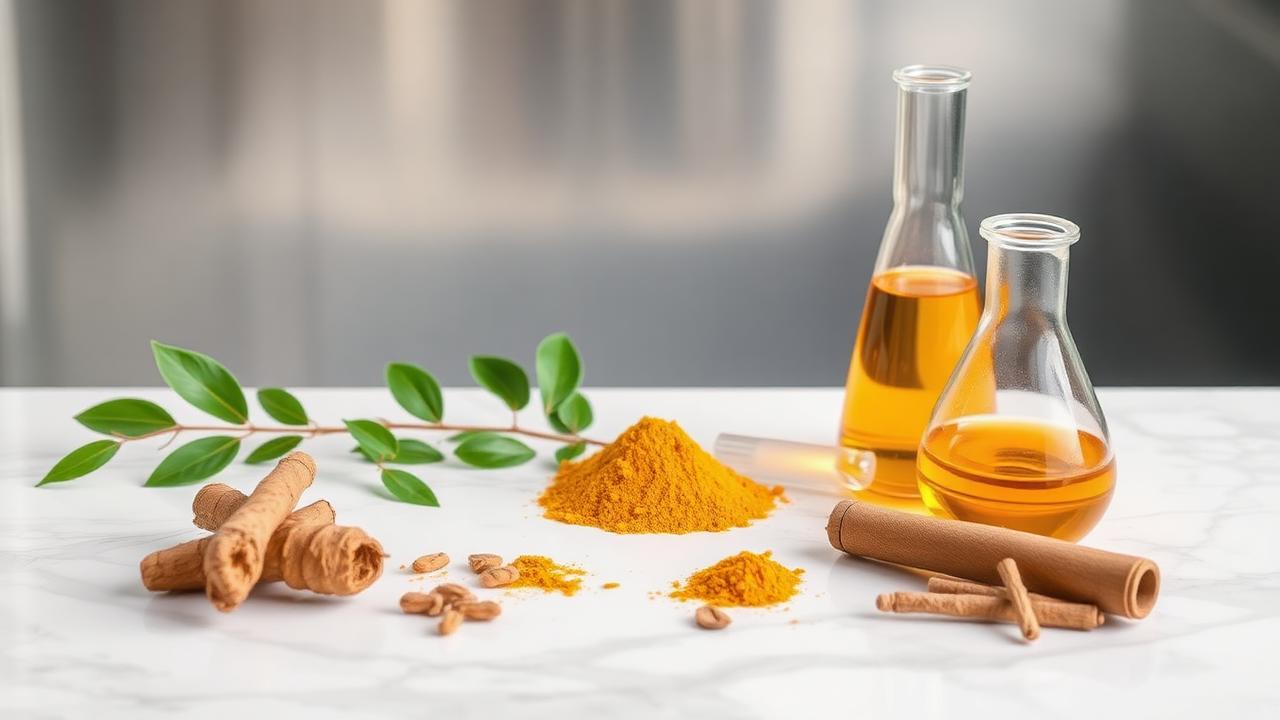
- 1India supplies over 20% of global generic drug exports and holds the highest number of USFDA-approved manufacturing plants outside the United States.
- 2Roughly 45% of US generic medicines by volume come from Indian production — that inspection-driven GMP culture sits alongside its nutraceutical plants.
- 3Ashwagandha, turmeric, boswellia, bacopa, holy basil, amla, moringa and guggul are native Indian crops with established agronomy and short farm-to-extraction chains.
- 4The Ayurvedic Pharmacopoeia of India and the Ministry of AYUSH give botanicals identity and quality standards most producing countries simply do not have.
- 5Standardization — '5% withanolides', '95% curcuminoids', '65% boswellic acids' — was largely developed by Indian ingredient houses, along with the clinical dossiers behind them.
- 6The real risk is adulteration and heavy metals, not origin. Per-lot identity testing and marker-compound verification are the controls that matter.
Short answer
If you open the ingredient panel of almost any herbal supplement sold in the United States, the actives most likely came from India. The same is true of the generic medicines in an American pharmacy. That is not a coincidence and it is not just cost — it is a stack of four advantages that no other country has assembled in one place, sitting underneath a pharmaceutical industry built for export-grade inspection.
For the wider country comparison, read USA vs China vs India supplement manufacturing.
1. The plants are native and cultivated at scale
The most basic reason herbs come from India is that the herbs grow in India. Ashwagandha, turmeric, boswellia, bacopa, holy basil, amla, moringa, gymnema, guggul and shatavari are native or long-domesticated crops with commercial agronomy behind them: known cultivars, established farmer networks, harvest windows tuned to marker-compound peak, and drying and storage infrastructure at the growing region.
That proximity matters more than it sounds. Botanical degradation starts at harvest — moisture, heat and time all eat marker compounds. When the extraction plant sits a few hours from the field instead of an ocean away, you start from better material, and no amount of downstream processing recovers what was lost in transit.
2. Three thousand years of documented use
Ayurveda gives Indian botanicals something almost no other traditional system provides at this depth: written specificity. Not "ashwagandha is calming", but which part of the plant is used, when it is harvested, how it is prepared, what it is combined with, and at what dose.
Note
Why a brand should care: traditional-use documentation is one of the pillars regulators and retailers look at when assessing a botanical's history of safe use. An ashwagandha root extract has centuries of documented use behind it. A leaf-heavy extract sold under the same name does not — which is exactly why the root-versus-leaf distinction is a testing question, not a marketing one.
3. A real regulatory framework for botanicals
Most botanical-exporting countries have agriculture ministries and food rules. India has a dedicated framework for medicinal plants:
- The Ayurvedic Pharmacopoeia of India (API). Official monographs giving identity, description, purity limits and assay parameters for individual botanicals — the botanical equivalent of a USP monograph.
- The Ministry of AYUSH. A cabinet-level ministry governing Ayurveda, Yoga, Unani, Siddha and Homoeopathy, including licensing and manufacturing standards for herbal producers.
- GMP requirements for herbal manufacture under Schedule T of the Drugs and Cosmetics Rules, distinct from generic food processing rules.
- Export-grade overlays. Serious exporters carry WHO-GMP, ISO, USFDA registration, organic certifications and often EU-GMP on top of domestic requirements.
The practical effect is that when you ask an Indian extract house for identity data, there is a defined standard to test against. That is not true everywhere, and it is a large part of why unstandardized botanical material from less structured origins is so much harder to qualify.
4. The standardized extract industry was built there
The single most important shift in the herbal supplement industry was the move from ground plant powder to standardized extract — material manufactured and tested to a defined percentage of a marker compound. That shift largely happened in Indian laboratories, and the branded, clinically studied botanical ingredients Western brands pay a premium for are disproportionately Indian-developed.
| Botanical | Typical standardization | What it's used for |
|---|---|---|
| Ashwagandha (Withania somnifera) | Root extract, 2.5–5% withanolides | Stress, sleep, cortisol positioning |
| Turmeric (Curcuma longa) | 95% curcuminoids, plus bioavailability systems | Joint and inflammatory-response support |
| Boswellia serrata | 65% boswellic acids, AKBA-enhanced grades | Joint comfort formulas |
| Bacopa monnieri | 20–55% bacosides | Memory and cognitive support |
| Gymnema sylvestre | 25–75% gymnemic acids | Metabolic and sugar-support blends |
| Amla (Emblica officinalis) | Standardized tannins/vitamin C complex | Antioxidant and hair-skin-nails formulas |
| Holy basil (Tulsi) | 2–2.5% ursolic acid | Adaptogen blends |
| Moringa oleifera | Leaf powder or standardized extract | Greens and micronutrient blends |
| Black pepper (Piper nigrum) | 95% piperine | Bioavailability enhancement across formulas |
| Shilajit | Standardized fulvic acid | Energy and men's health positioning |
Deeper dives on two of the biggest: ashwagandha manufacturing and adaptogenic herbs. For the branded-versus-generic ingredient decision, see are branded ingredients worth the cost.
5. The pharma effect: why GMP discipline is different
Here is the part that separates India from every other botanical-producing country: the extract industry grew up next door to one of the world's largest pharmaceutical industries, operating under continuous American regulatory scrutiny.
| Metric | Figure | Source context |
|---|---|---|
| Global rank by production volume | 3rd largest pharmaceutical producer | Government of India / industry reporting |
| Share of global generic exports | Over 20% | CII industry overview, 2025 |
| US generic medicines sourced from India | ~45% by volume | CareEdge Ratings, 2025 |
| USFDA-approved plants | Highest number outside the United States | CareEdge Ratings / CII |
| USFDA inspections of Indian sites (CY24) | 256+ | CareEdge Ratings |
| OAI (adverse) inspection outcomes | ~7%, down from 15–20% a decade earlier | CareEdge Ratings |
| Pharma exports FY25 | ~USD 30.5 billion | Government of India, 2026 |
Why does a supplement brand care about generic drug statistics? Because compliance culture is contagious. Decades of USFDA inspection built habits — validated processes, documented change control, deviation investigation, cleaning validation, real stability programs, analytical method validation — that a food-grade blending operation has never needed. The nutraceutical plants operating in that ecosystem inherit the baseline. That, more than price, is the reason India's supplement output can meet pharmaceutical-adjacent expectations.
The historical driver was the 1970 Patents Act, which recognized process patents rather than product patents on pharmaceuticals. Indian chemists spent thirty years engineering better routes to known molecules, which produced exactly the process-engineering depth that later made the country the default supplier of affordable generics — and the default problem-solver for difficult actives.
The Indian botanicals in your formula
If your catalog includes a stress, sleep, joint, cognition, metabolic, immunity or beauty-from-within SKU, Indian material is almost certainly in it. Common category mappings:
- Stress and sleep: ashwagandha, holy basil, brahmi — see our sleep supplement guide.
- Joint: boswellia, turmeric, and often Indian-sourced collagen support blends — see the joint health guide.
- Cognition: bacopa, gotu kola, shankhpushpi — see nootropic manufacturing.
- Metabolic and GLP-1 companion: gymnema, fenugreek, berberine-adjacent botanicals.
- Immunity: amla, tulsi, guduchi — see immune formula manufacturing.
- Greens and superfoods: moringa, wheatgrass, spirulina — see the greens powder guide.
The risks — adulteration, metals and monsoons
None of this means Indian sourcing is automatically safe. It means the ceiling is high and the floor is low, so the plant and the testing regime decide your outcome.
- Adulteration. The classic failures are leaf and stem substituted where a root claim is made, synthetic curcumin sold as extract, and dyes or undeclared fillers used to hit a spec cheaply. High-value marker compounds create high-value incentives to cheat.
- Heavy metals. Botanicals concentrate lead, arsenic, cadmium and mercury from soil and water. This is a category risk everywhere, and per-lot testing with defined limits is the only real control — particularly with Prop 65 thresholds in play.
- Harvest variability. Monsoon strength, soil and harvest timing swing marker-compound yield year to year. Standardization exists precisely to absorb that variability, which is why unstandardized material is a false economy.
- Uneven facility quality. A USFDA-registered export plant and a domestic-only operation can be an hour apart. Audit the facility, not the country.
- Documentation gaps at the small end. Smaller traders may not hold the certificates a US retailer's quality team will ask for. Qualify the supplier before, not during, a launch.
How to source Indian botanicals safely
- Buy standardized, not "herb powder". Specify the marker compound and its percentage in the purchase spec, then test against it.
- Require per-lot identity testing. HPLC or HPTLC for extracts, DNA barcoding where raw plant material is in question.
- Require per-lot heavy metals with stated limits, and confirm the limits satisfy Prop 65 if you ship to California.
- Confirm the plant part. Root versus leaf, rhizome versus whole plant. This is where the most common quiet substitution happens.
- Qualify two suppliers per critical botanical. A tariff move or a poor harvest should not be able to end your bestselling SKU.
- Finish and release in the US. Blend, encapsulate, test and hold under 21 CFR Part 111 so verification and jurisdiction sit domestically — the model described in our three-country comparison.
- Let your manufacturer carry the import complexity. Extract MOQs, customs, duty exposure and supplier audits are a poor use of a growing brand's balance sheet.
Peakfinity Labs has been manufacturing since 1980 with deep Indian botanical sourcing relationships and pharmaceutical-grade quality systems — every incoming lot identity-tested, every batch released with a COA. See our herbal supplement manufacturing and best Ayurvedic supplement manufacturer pages.
Frequently Asked Questions
Why do most herbal supplement ingredients come from India?
Because four advantages stack. The plants are native and cultivated at commercial scale, so the material is fresh and cheap at source. Ayurveda provides three thousand years of documented plant part, preparation and dose. The Ayurvedic Pharmacopoeia of India and the Ministry of AYUSH give botanicals a codified regulatory framework few other producing countries have. And Indian ingredient houses built the standardized extract industry — marker compounds, HPLC methods and human clinical trials — that Western brands now buy as branded ingredients.
Why is India called the pharmacy of the world?
India is the third-largest pharmaceutical producer globally by volume and supplies over 20% of the world's generic medicine exports, reaching about USD 30.5 billion in pharma exports in FY25. It holds the highest number of USFDA-approved manufacturing plants outside the US, and roughly 45% of US generic medicines by volume are sourced from India. The nickname reflects volume, price and regulatory reach at the same time.
Is Indian GMP the same as US GMP?
They are different frameworks with substantial overlap, and the relevant question is which certifications a specific plant actually holds. An Indian export facility carrying USFDA registration, WHO-GMP, EU-GMP or 21 CFR Part 111 compliance is operating to the standard your US retailer expects. A domestic-only Indian plant may not be. Country is not the credential — the facility's certification and inspection record is.
What does 'standardized extract' actually mean?
It means the extract is manufactured and tested to deliver a specified percentage of a defined marker compound — for example ashwagandha root standardized to 5% withanolides, turmeric to 95% curcuminoids, or boswellia to 65% boswellic acids. Without standardization you are buying dried plant powder whose potency varies with soil, weather, harvest timing and processing. Standardization is the difference between a formula you can dose and a formula you can only hope about.
Are Indian herbal extracts safe from heavy metals?
Botanicals of every origin concentrate whatever is in their soil and water, so lead, arsenic, cadmium and mercury are a category-wide issue rather than an Indian one. The control is per-lot heavy-metals testing with defined limits, plus California Prop 65 thresholds for anything shipping into that state. Any manufacturer that cannot show you per-lot results on a botanical is not managing the actual risk.
What is adulteration and how do I prevent it?
Adulteration is substituting or bulking a high-value botanical with cheaper material — leaf and stem used where a root claim is made, synthetic curcumin passed off as extract, or dyes and undeclared fillers added to hit a spec. Prevention is identity testing with an appropriate method (HPLC, HPTLC, and DNA barcoding for raw material), marker-compound verification on every incoming lot, qualified suppliers with audit history, and retained samples. Trusting a supplier certificate alone is how brands end up in third-party lab reports.
Should I buy Indian ingredients directly or through a manufacturer?
Through a manufacturer, in almost every case. Direct import means you own the qualification, the identity testing, the customs and duty exposure, the import documentation and the storage — before you have the volume to justify any of it. A manufacturer with established Indian sourcing relationships already qualified the suppliers, already tests each lot, and absorbs the MOQ mismatch between a 500 kg extract drum and your 2,000-unit run.
Does using Indian ingredients affect my Made-in-USA claim?
It affects the wording, not your ability to make a truthful claim. Under FTC guidance, 'Made in USA' unqualified requires that all or virtually all of the product be domestic. Most supplements use the qualified form — 'Made in USA from domestic and imported ingredients' — which is accurate, common and fully compliant when the finishing genuinely happens in a US facility.

Tushar
Licensed Pharmacist and COO @ Peakfinity Labs
Written by the Peakfinity Labs R&D Team — 46+ years of supplement formulation expertise. Our team of formulation chemists, manufacturing specialists, and regulatory experts has helped thousands of eCommerce brands bring their products to market successfully since 1980.
Related Articles

USA vs China vs India: Where Supplements Are Really Made
Ingredient origin, GMP culture, tariffs and cost compared across the three countries that produce almost every supplement on the US market.
What Custom Supplement R&D Really Costs — and Why It Doesn't Have To
Where a $40,000–$60,000 supplement R&D budget actually goes, which line items are genuinely necessary, and how AI-first manufacturing removes most of the rest.
Stick Pack vs Tub: Choosing a Single-Serve Powder Format
Cost per serving, blend uniformity, fill tolerance, film barrier and carton math compared for powder supplement brands.