Stick Pack vs Tub: Choosing a Single-Serve Powder Format
Cost per serving, blend uniformity, fill tolerance, film barrier, and carton math — the decisions behind a single-serve powder SKU.
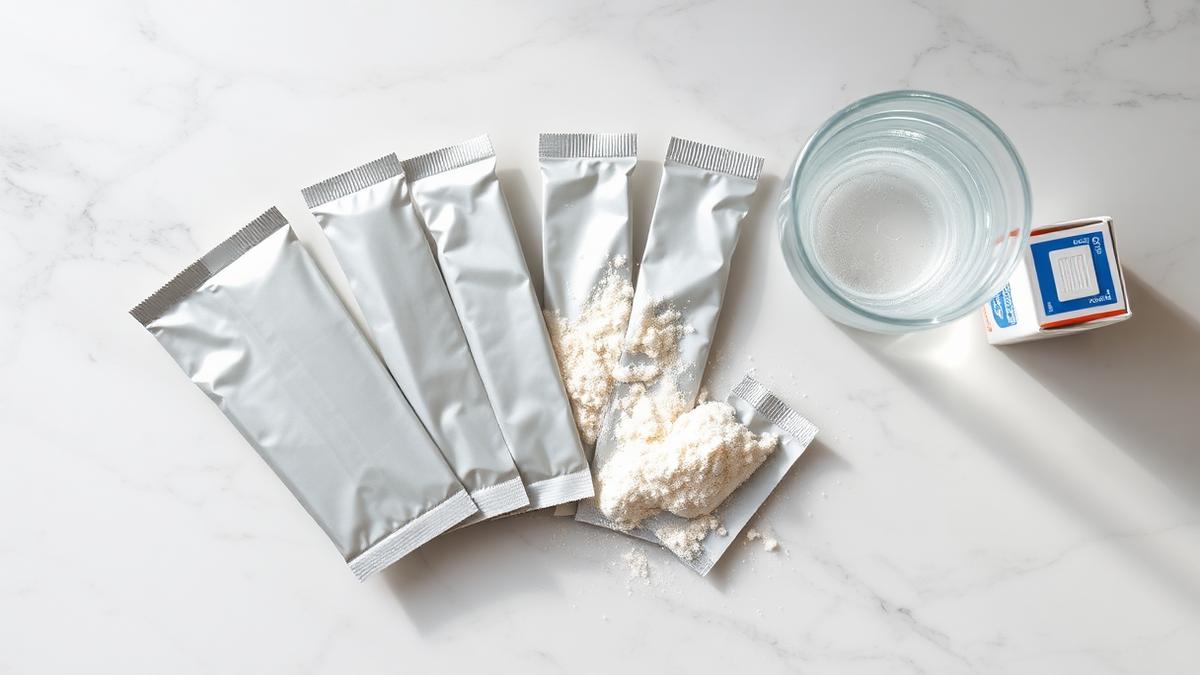
- 1A stick pack costs more per serving than a tub and wins anyway when trial, travel, subscription, or dose control is central to the brand.
- 2Blend uniformity is the whole game. A tub forgives an imperfect blend because the customer scoops an average; a stick pack delivers exactly what fell into that one pack.
- 3Fill weight tolerance on a well-run stick line is roughly ±3%. If your active is dosed near a claim threshold, you formulate the overage in, you don't hope.
- 4Film choice is a shelf-life decision: foil laminate for hygroscopic or oxygen-sensitive actives, metallized PET for cost, and recyclable mono-material only when the formula tolerates a weaker barrier.
- 5Peakfinity Labs runs stick packs at a flat 2,000-unit MOQ with blend uniformity testing and seal integrity validation on every run, 4–6 week turnaround.
Short answer
A tub is the cheapest way to deliver 30 servings. A stick pack is the best way to deliver one — and single-serve is what drives trial, travel use, subscription cadence, and dose accuracy. Choose the tub when cost per serving is the deciding factor; choose the stick pack when the customer experience is. For the manufacturer shortlist see our best stick pack manufacturers guide.
Stick pack vs tub, side by side
| Factor | Stick pack | Tub |
|---|---|---|
| Cost per serving | 30–80% higher (film, carton, slower line) | Lowest in the category |
| Dose accuracy | Exact, pre-measured, ±3% fill tolerance | Depends on the customer's scoop technique |
| Trial conversion | Excellent — low price point, low commitment | Poor — a full tub is a big first purchase |
| Travel and gym use | Designed for it | Bag of powder in a baggie |
| Shelf presence | Carton reads smaller on shelf | Strong physical block |
| Freight and 3PL | Light, dense, cheap to ship | Bulky, dimensional-weight penalties |
| Barrier protection | Per-serving — the last stick is as fresh as the first | Whole tub degrades once opened |
| Sustainability story | Harder — multilayer film is difficult to recycle | HDPE tubs are widely recyclable |
| Manufacturing complexity | High — uniformity and seal validation are critical | Low |
When a stick pack is the right call
- Hydration and electrolytes. The category was effectively created by the stick pack. Single-serve is the product.
- Trial and sampling. A 5-stick sample carton at $9 converts to a $45 subscription far better than a discount on a full tub.
- Anything hygroscopic. Electrolytes, greens, collagen creamers, and citrulline-heavy blends stay dry in a sealed stick and cake in an opened tub.
- Probiotics and sensitive actives. Per-serving barrier protection preserves potency to the last dose. See our probiotic manufacturing guide for stability specifics.
- Subscription models. A 30-count carton maps exactly to a monthly cadence, which is the cleanest retention math in DTC.
- Creatine and pre-workout on the go. Both travel badly in tubs. For dose-density considerations read the pre-workout formulation guide.
What actually has to be engineered
- Blend uniformity. Match particle sizes across your actives and excipients, blend to a validated time, and pull stratified samples from top, middle, and bottom of the batch. A stick pack has no averaging — each pack is a finished dose.
- Fill weight tolerance. Roughly ±3% on a well-maintained auger line. Free-flowing granular blends hold tighter; fluffy, static-prone, or low-density powders drift more.
- Formulation overage. When the label claim sits near a threshold, formulate so the low end of the tolerance band still meets claim. This is arithmetic, not optimism.
- Flowability. Static and bridging in the hopper cause underfills. Silica, granulation, or a light agglomeration step fixes it before the line ever runs.
- Serving size ceiling. Practical single-stick fill tops out around 12–15 g for most standard stick widths. A 20 g clinical pre-workout dose needs a wide-format stick or a two-stick serving.
Note
The test that matters: content uniformity across the run, not a single composite sample. Ask your manufacturer for the sampling plan in writing before the run, not the certificate after it.
Film selection and seal integrity
| Structure | Barrier | Relative cost | Use for |
|---|---|---|---|
| PET / foil / PE laminate | Excellent (moisture, oxygen, light) | 1.3–1.6x | Electrolytes, greens, probiotics, vitamins, anything hygroscopic |
| Metallized PET / PE | Good | 1x (baseline) | Stable dry blends, protein, flavored powders |
| Clear PET / PE | Moderate | 0.9x | Short shelf-life or product-visibility SKUs |
| Mono-material PE (recyclable) | Moderate, improving | 1.2–1.4x | Sustainability-led brands with validated stability data |
| Paper-look laminate | Depends on inner layers | 1.2–1.5x | Clean-label aesthetics — confirm the actual barrier layers |
- Seal integrity validation. Dye penetration or burst testing on samples pulled across the run. A pinhole seal is a silent recall.
- Tear notch placement. Trivial to specify, and the single most-mentioned detail in stick pack reviews when it's wrong.
- Print method. Rotogravure for large runs with the best fidelity; digital printing for low MOQ and multi-flavor runs without separate plate costs.
MOQ, COGS, and carton math
| SKU | MOQ | Approx. COGS / unit | Retail target |
|---|---|---|---|
| Electrolyte stick carton (30 count, 5 g) | 2,000 cartons | $6–$10 | $32–$45 |
| Greens stick carton (20 count, 8 g) | 2,000 cartons | $9–$15 | $45–$69 |
| Pre-workout stick carton (20 count, 12 g) | 2,000 cartons | $9–$15 | $42–$65 |
| Protein stick carton (20 count, 35 g) | 2,000 cartons | $10–$16 | $39–$59 |
| Trial pack (5 count) | 2,000 packs | $1.50–$3 | $8–$12 |
MOQ is counted in finished retail cartons at Peakfinity Labs, not individual sticks. The most common structure we run is a single production batch split into a 30-count subscription carton and a 5-count trial pack — one blend, one film, two SKUs. Broader cost context is in our supplement manufacturing costs breakdown, and the protein-specific version in our protein powder launch guide.
Five mistakes we see on first stick pack runs
- Designing artwork before confirming stick dimensions. Width, length, and seal area come from the machine, not from the designer's canvas.
- Ignoring the fill-volume ceiling. A 20 g dose doesn't fit a standard stick. Confirm bulk density before you promise a serving size.
- Choosing film on price alone. A cheaper barrier that costs you six months of shelf life is not cheaper.
- Skipping uniformity testing. The one test that catches the failure mode unique to single-serve.
- Launching only a 30-count. Without a trial pack you're asking a stranger for a $45 first purchase.
The bottom line
Stick packs cost more and demand more of the manufacturer — uniformity, fill control, film selection, seal validation. In return you get the format that converts trial, travels, protects sensitive actives, and maps cleanly to subscription. If single-serve is core to how your customer uses the product, the premium is not a cost, it's the product.
Frequently Asked Questions
Is a stick pack more expensive than a tub?
Per serving, yes — usually 30–80% more once you count film, carton, and slower line speed. Per unit of customer trust, often no: single-serve removes scoop confusion, guarantees dose accuracy, travels, and converts far better as a trial or sample. Most brands find the stick pack pays for itself in subscription retention and Amazon trial conversion rather than in unit margin.
What is blend uniformity and why does it matter more for stick packs?
Blend uniformity is how evenly your actives are distributed across the whole batch. In a tub, minor unevenness averages out over 30 scoops, so nobody notices. In a stick pack, each 5 g pack is its own finished dose — an uneven blend means some customers get 80% of the label claim and some get 130%. Proper V-blender or ribbon-blender time, particle size matching, and stratified sampling at multiple points in the batch are how it's controlled.
How accurate is stick pack fill weight?
A well-maintained auger-fill stick line holds roughly ±3% on fill weight, tighter on free-flowing powders and looser on light, fluffy, or static-prone blends. If your label claim sits near a regulatory or marketing threshold, you build a formulation overage so the low end of the tolerance band still meets claim.
What film should I use for stick packs?
Foil laminate (PET/foil/PE) for anything hygroscopic, oxygen-sensitive, or light-sensitive — electrolytes, greens, probiotics, most vitamins. Metallized PET is cheaper with a good-but-not-great barrier and works for stable, dry blends. Recyclable mono-material PE structures are the sustainability option but carry the weakest barrier, so only use them where you've validated stability. Kraft-look laminates are a print finish, not a barrier class — check the inner layers.
What's the MOQ for a stick pack product?
Peakfinity Labs runs stick packs at a flat 2,000-unit MOQ, where a unit is a finished retail carton (commonly 14, 20, or 30 sticks) rather than an individual stick. Turnaround is 4–6 weeks from locked formula and film artwork.
How many sticks should go in a carton?
Fourteen for a two-week trial, 20 for the most common retail carton, and 30 for a monthly subscription cadence. Thirty-count aligns cleanly with subscription billing and is the best retention format; 14-count is the better Amazon and sampling entry point. Many brands ship both off the same production run.
Ready-to-Launch Formulations in This Category
Stock-ready formulations you can private label with your own branding — 2,000 unit MOQ.
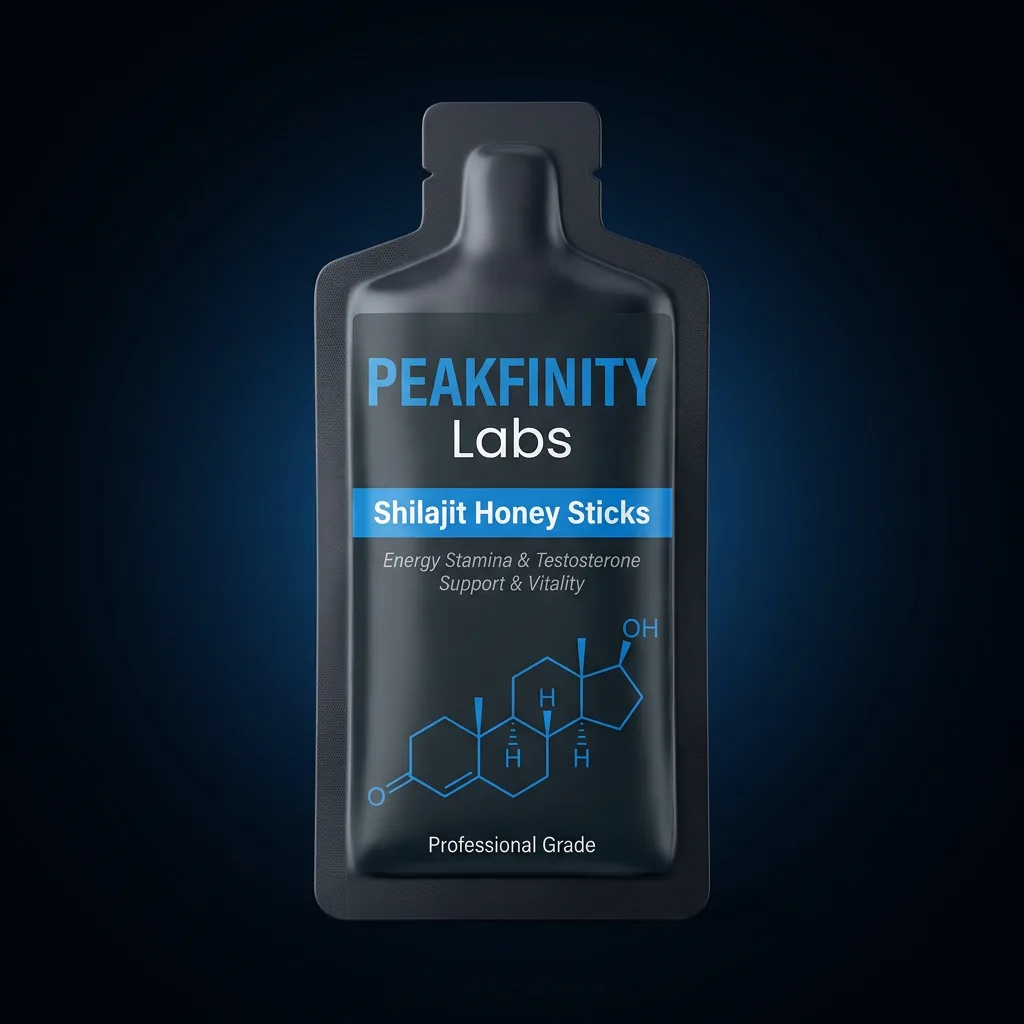
Shilajit Honey Sticks
Mens Health Supps · Sachet
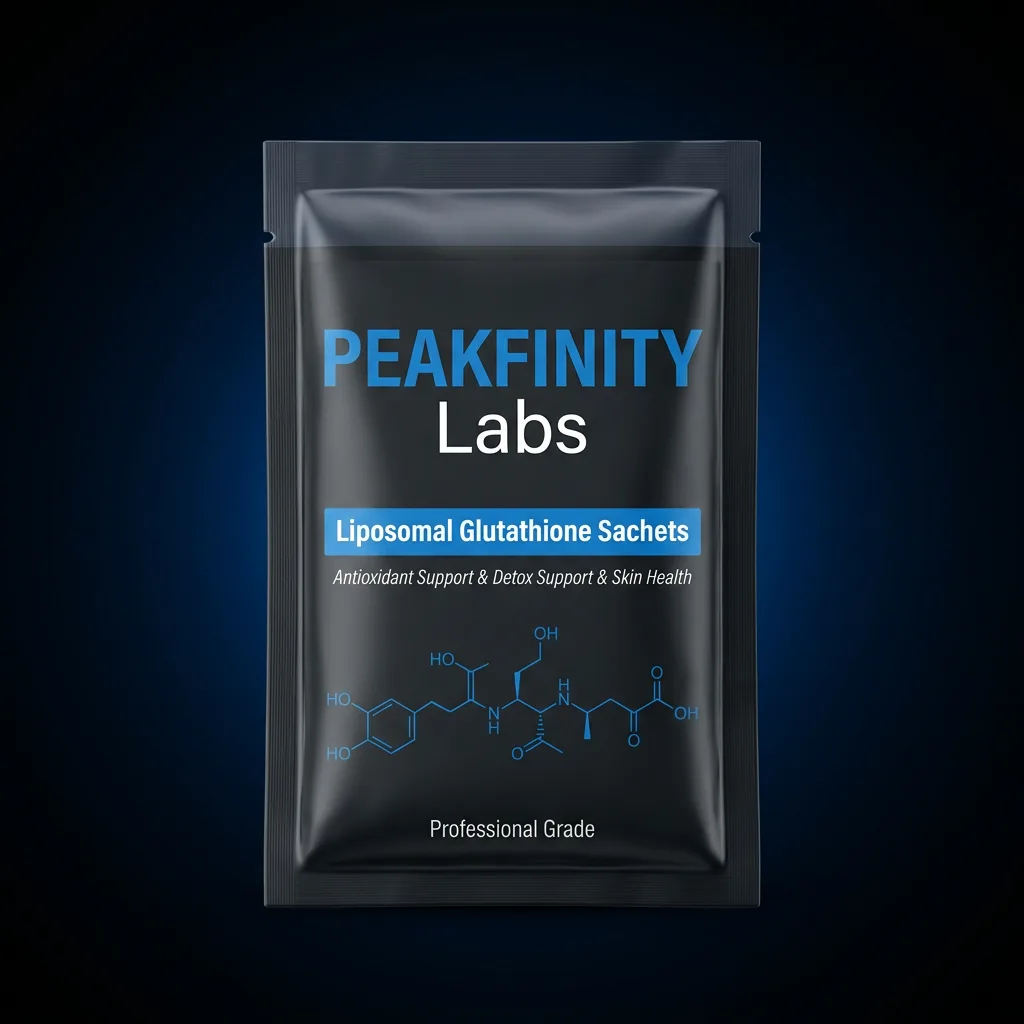
Liposomal Glutathione Sachets
General Wellness · Sachet
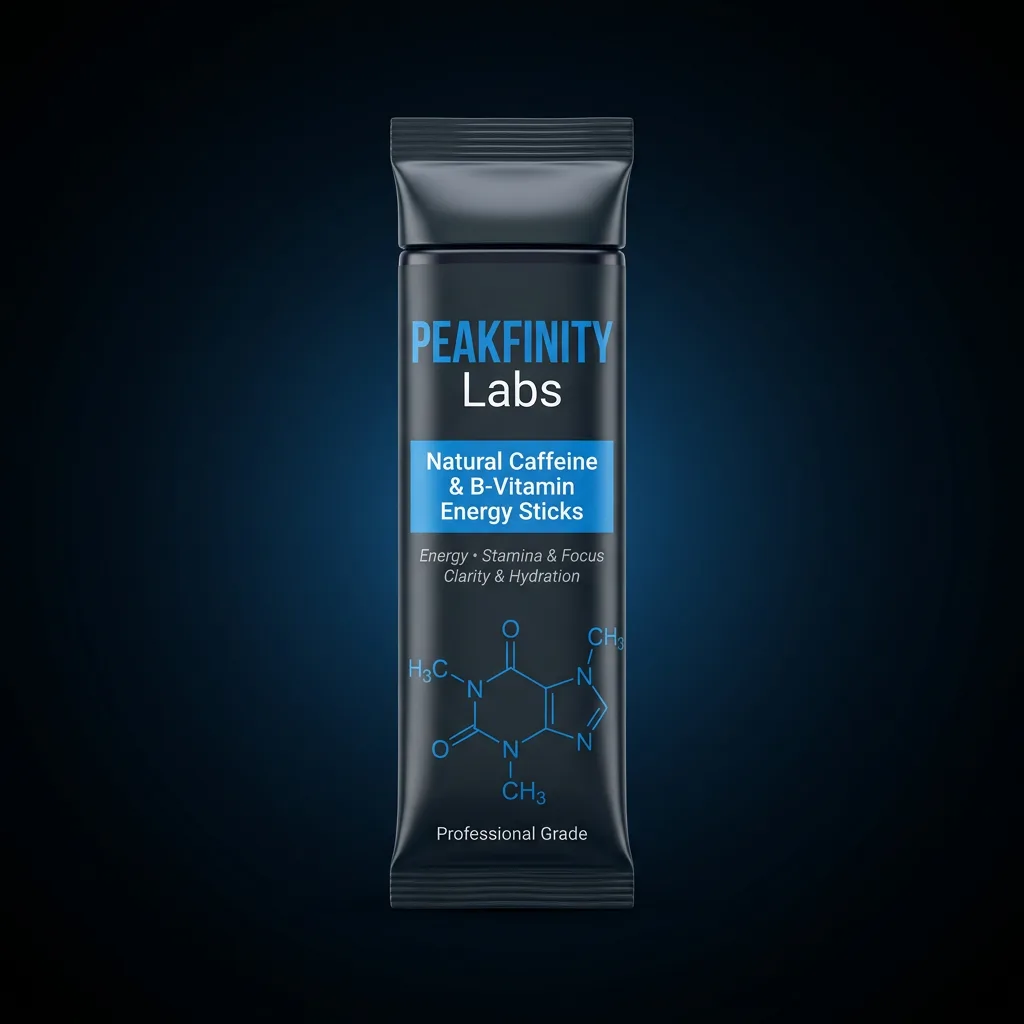
Natural Caffeine & B-Vitamin Energy Sticks
Energy Focus · Powder Stick
Hydration + Collagen Electrolyte Sticks
Beauty Supps · Powder Stick

Tushar
Licensed Pharmacist and COO @ Peakfinity Labs
Written by the Peakfinity Labs R&D Team — 46+ years of supplement formulation expertise. Our team of formulation chemists, manufacturing specialists, and regulatory experts has helped thousands of eCommerce brands bring their products to market successfully since 1980.
Related Articles

USA vs China vs India: Where Supplements Are Really Made
Ingredient origin, GMP culture, tariffs and cost compared across the three countries that produce almost every supplement on the US market.
Why India Leads Herbal and Pharmaceutical Manufacturing
Native crops, Ayurvedic monographs, AYUSH regulation, standardized extracts and the most USFDA-approved plants outside the US — plus the risks to test for.
What Custom Supplement R&D Really Costs — and Why It Doesn't Have To
Where a $40,000–$60,000 supplement R&D budget actually goes, which line items are genuinely necessary, and how AI-first manufacturing removes most of the rest.