Pre-Workout Formulation Guide: Clinical Doses vs Fairy Dusting
What a real pre-workout costs to build, why transparent labels win, how to pick a caffeine strategy, and the caking problem nobody warns you about.
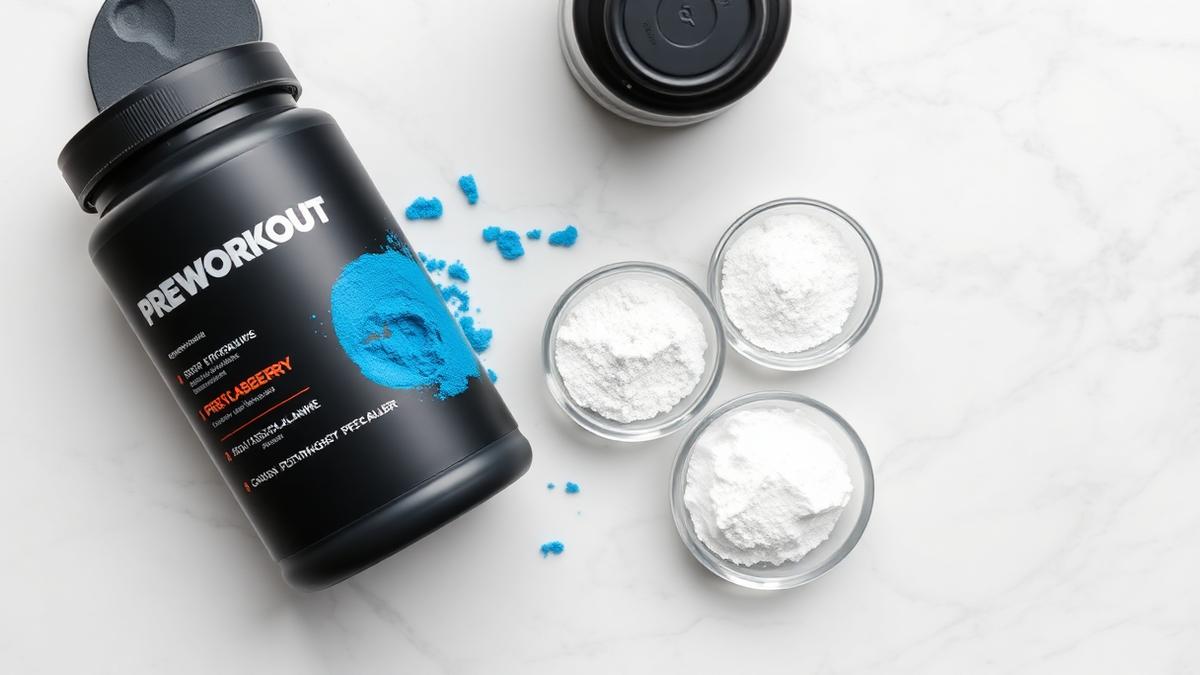
- 1A clinically dosed pre-workout costs more per scoop than most founders expect: 6–8 g of citrulline malate and 3.2 g of beta-alanine alone push scoop size past 12 g before flavor.
- 2Proprietary blends are the industry's polite word for hiding under-doses. A transparent label is now a competitive advantage, not a compliance burden.
- 3Caffeine strategy is a brand decision, not a chemistry one: 150–200 mg for a broad wellness audience, 250–350 mg for a hardcore audience, and a stim-free SKU for the evening-training and stim-sensitive segment.
- 4Hygroscopic ingredients — citrulline malate, betaine, and some electrolytes — will cake without moisture control, anti-caking agents, and the right liner. This is the #1 quality complaint in pre-workout.
- 5Peakfinity Labs manufactures transparent-label pre-workout in tubs, stick packs, and capsules at a flat 2,000-unit MOQ with a 4–6 week production turnaround.
Short answer
Pre-workout is the most-reviewed, most-scrutinized category in sports nutrition. The buyer reads the panel. That means your formula decision is really a cost decision: either you pay for clinical doses and charge accordingly, or you build a light formula and compete on price and flavor. Both are viable businesses. What doesn't work in 2026 is a proprietary blend pretending to be the first while costing like the second. For the manufacturer shortlist, see our best pre-workout manufacturers guide.
Clinical doses vs fairy dusting
| Ingredient | Clinical dose | Common fairy dust | What it actually does |
|---|---|---|---|
| Citrulline malate | 6–8 g | 500 mg – 2 g | Nitric oxide precursor — pump, blood flow, fatigue resistance |
| Beta-alanine | 3.2 g | 800 mg – 1.6 g | Carnosine buffering for 60–240 second efforts (also the tingle) |
| Betaine anhydrous | 2.5 g | 500 mg | Power output and cellular hydration |
| Creatine monohydrate | 3–5 g | 1 g | ATP resynthesis — the most-evidenced ingredient in the category |
| L-tyrosine | 1–2 g | 250 mg | Catecholamine support under stress; focus |
| Caffeine anhydrous | 150–350 mg | — | Central stimulant; perceived exertion drops |
| L-theanine | 100–200 mg | 50 mg | Smooths the caffeine curve; reduces jitter |
| Taurine | 1–2 g | 250 mg | Hydration and endurance support |
| Alpha-GPC | 300–600 mg | 50 mg | Choline source for mind-muscle focus |
Note
Do the math before you fall in love with a formula: citrulline malate at 8 g plus beta-alanine at 3.2 g plus betaine at 2.5 g is already 13.7 g of scoop before flavor, sweetener, and everything else. Clinical dosing is a scoop-size and COGS commitment.
If creatine is a centerpiece of your formula rather than an add-on, our creatine manufacturing guide covers form selection and dose density in detail.
The core stack and what each ingredient does
- Pump layer. Citrulline malate is the backbone. Glycerol powder (65% HydroMax-style) at 1–2 g adds a real hyperhydration pump but is aggressively hygroscopic and complicates manufacturing — decide early.
- Endurance layer. Beta-alanine at the full 3.2 g. Warn about paresthesia on the label; the tingle is a feature for experienced buyers and a support ticket from new ones.
- Power layer. Betaine and creatine. Creatine in a pre-workout is fine chemically as a dry powder, but say clearly on the panel that daily consistency matters more than pre-workout timing.
- Focus layer. Caffeine plus tyrosine plus theanine, optionally alpha-GPC. This layer is where most of the perceived "does it work" judgment happens in the first week of use.
- Support layer. Electrolytes (sodium, potassium, magnesium), Himalayan salt for the clean-label story, and AstraGin or BioPerine if you want an absorption claim — both are legitimate branded ingredients but neither is load-bearing.
Stimulant strategy
| Positioning | Caffeine | Companion | Audience |
|---|---|---|---|
| Wellness / women's | 100–175 mg | Theanine, B12, electrolytes | Daily trainers, morning use, stim-sensitive |
| Mainstream performance | 200–275 mg | Theanine, tyrosine | The broad market — safest commercial default |
| High stim | 300–350 mg | Tyrosine, alpha-GPC, dynamine | Experienced users; expect more return and review volatility |
| Stim-free | 0 mg | Full pump and endurance stack | Evening training, second scoops, stacking with coffee |
A stim-free companion SKU is the most under-built product in the category. It costs almost nothing extra to develop off your existing base, it doubles your subscription attach rate, and it opens the evening-training audience. For a broader look at the caffeine-free energy space see our clean energy supplements guide.
Flavor, solubility, and caking control
- Acid balance. Citrulline malate is sour and beta-alanine is bitter. Most successful pre-workout flavors are tart fruit profiles (blue raspberry, cherry limeade, mango) because the acidity is working with the base, not against it.
- Solubility. Clumping and floaties in the shaker are the top review complaint after caking. Particle size, a wetting agent, and a small silica load fix it.
- Anti-caking. Silicon dioxide at 0.5–2% plus manufacturing-floor humidity control. Non-negotiable if you're using glycerol or high-dose citrulline.
- Packaging barrier. Induction-sealed HDPE tub with a desiccant, or a high-barrier foil stick pack. A poorly sealed tub will turn a good formula into a brick in a Florida garage.
- Colorant decision. Natural colors fade under UV and shift over shelf life; synthetic dyes are stable but carry clean-label objections and are restricted in some export markets. Pick with your channel in mind.
Tub, stick pack, or capsule
| Format | Typical serving | Pros | Cons |
|---|---|---|---|
| Tub (20–30 servings) | 12–22 g scoop | Best cost per serving, category standard, shelf presence | Caking exposure, bulky, weak trial vehicle |
| Stick pack | 10–15 g | Travel, gym-bag, sampling, subscription-friendly, no caking across the whole tub | Higher cost per serving; clinical doses can exceed a comfortable stick fill |
| Capsule | 4–6 caps | No flavor system needed, precise dosing, stim-focused SKUs | Can't fit gram-scale actives like citrulline — focus/stim formulas only |
Stick packs are the best trial format in the category and the most common second SKU. If you're weighing that decision, read our stick pack vs tub comparison.
MOQ, COGS, and scoop economics
| SKU | MOQ | Approx. COGS / unit | Retail target |
|---|---|---|---|
| Clinically dosed tub (20 servings) | 2,000 units | $8–$13 | $39–$59 |
| Mainstream tub (30 servings) | 2,000 units | $6–$10 | $32–$45 |
| Stim-free tub (20 servings) | 2,000 units | $8–$13 | $39–$55 |
| Stick pack carton (20 count) | 2,000 units | $9–$15 | $42–$65 |
| Focus capsule SKU (60 caps) | 2,000 units | $4–$7 | $24–$36 |
The scoop is the honest signal. If a competitor sells 30 servings at $29 with a 7 g scoop, they physically cannot be clinically dosed. Price yourself against what's in the tub, not the shelf price next to you. Full category cost context lives in our supplement manufacturing costs breakdown.
Claims and label compliance
- Defensible: "supports energy," "supports focus," "supports muscular endurance," "supports blood flow and pump," "supports power output."
- Off-limits: anything implying a drug effect or disease benefit, plus any comparative claim you can't substantiate with your own data.
- Required warnings: caffeine content disclosure, a not-for-under-18 statement, and a pregnancy/nursing and medical-consultation warning. Beta-alanine paresthesia disclosure is optional but reduces support tickets.
- Banned-substance testing: if you're selling to collegiate or professional athletes, budget for Informed Sport or NSF Certified for Sport. It's a real cost and a real moat.
The full label picture is in our supplement label requirements guide.
The bottom line
Pre-workout rewards honesty more than any other supplement category, because the audience reads panels and posts about them. Pick a dose philosophy, publish it on the front of the tub, solve caking at the manufacturing stage, and give the stim-free variant a chance. That's a formula people re-order.
Frequently Asked Questions
What's a clinically dosed pre-workout?
One where each active is present at the dose used in the human studies that support its claim. In practice that means roughly 6–8 g citrulline malate (or 3–4.5 g L-citrulline), 3.2 g beta-alanine, 2.5 g betaine anhydrous, 3–5 g creatine monohydrate if included, and a defined caffeine dose. A scoop hitting all of those lands around 18–22 g, which is why credible pre-workouts have big scoops and higher COGS than the $19 tubs on marketplaces.
What is fairy dusting?
Including an ingredient at a token amount so it can appear on the label without contributing an effect — 500 mg of citrulline when the studied dose is 6 g, for example. It's usually hidden behind a proprietary blend, where only the total blend weight is disclosed. The fix on your own product is simple: publish every dose on the panel.
Should my pre-workout use a proprietary blend?
No. Transparent labeling has become the default expectation for the informed pre-workout buyer, and review sites, Reddit communities, and YouTube reviewers actively penalize proprietary blends. If your doses are real, disclosing them is free marketing. If they aren't, disclosing them tells you the formula needs work.
How much caffeine should I use?
150–200 mg for a general fitness or women's-positioned brand, 250–350 mg for a performance or hardcore audience, and 0 mg for a stim-free SKU. Above 400 mg per serving you're outside the FDA's generally-cited safe daily intake for a single serving and you're taking on real liability and marketplace-listing risk. Pairing caffeine with 100–200 mg L-theanine smooths the jitter profile and is a cheap, well-received addition.
Why does pre-workout clump in the tub?
Citrulline malate, betaine, and several electrolyte salts are hygroscopic — they pull moisture from the air. Without humidity control during blending, an anti-caking agent like silicon dioxide, a properly induction-sealed container, and a desiccant, the powder will bind into a brick. It's the most common quality complaint in the category and it's entirely preventable at the manufacturing stage.
What's the MOQ and cost for a pre-workout?
Peakfinity Labs manufactures pre-workout at a flat 2,000-unit MOQ with a 4–6 week turnaround. A fully clinically dosed 20-serving tub typically lands at $8–$13 per unit fully packed; a lighter, lower-dose formula can come in at $5–$8. Add 2–4 weeks up front for custom flavor development.
Ready-to-Launch Formulations in This Category
Stock-ready formulations you can private label with your own branding — 2,000 unit MOQ.
Nitric Oxide Beet Root Gummies
Heart Health · Gummies
Premium Nitric Oxide Booster Capsules
Sports Nutrition · Capsules
Pre-Workout Performance Matrix with Caffeine & Citrulline
Sports Nutrition · Powder
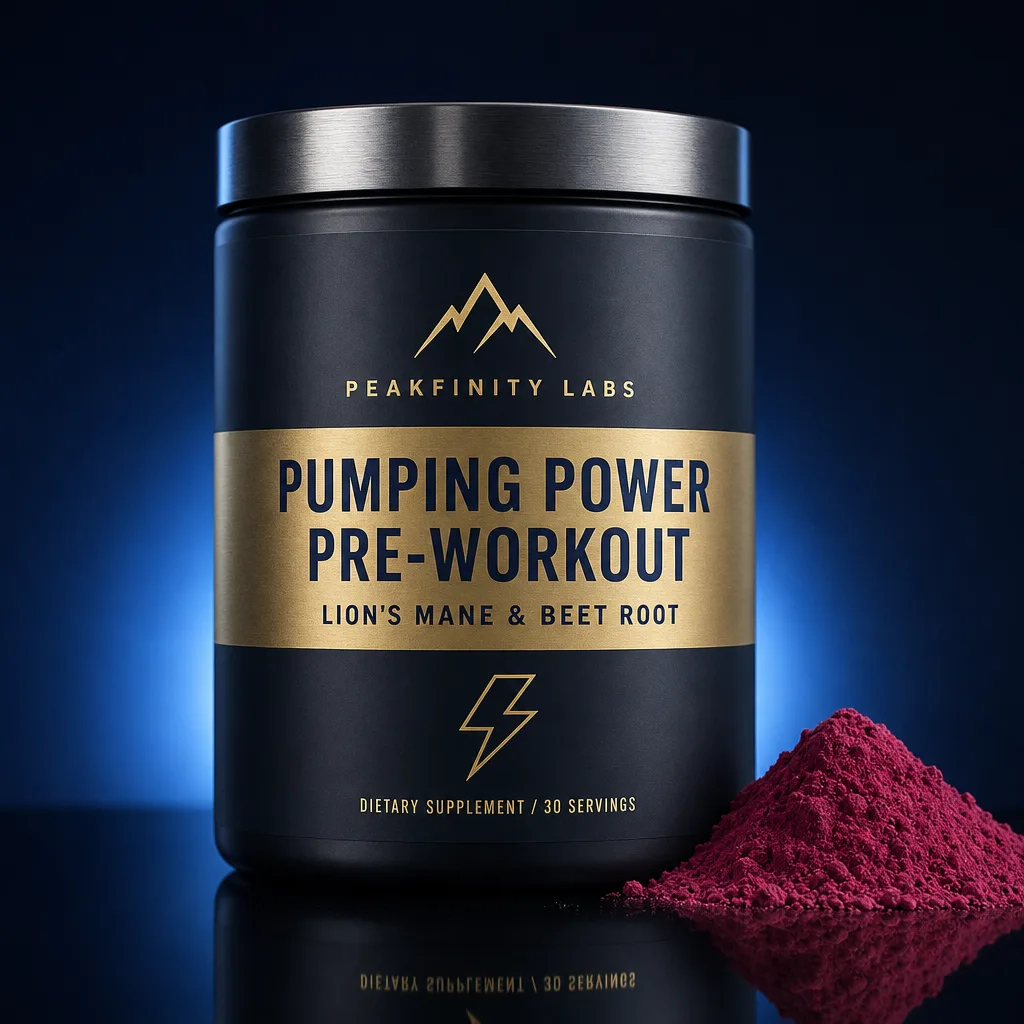
Advanced Pumping Power Pre-Workout with Lion's Mane & Beet Root
Sports Nutrition · Powder

Tushar
Licensed Pharmacist and COO @ Peakfinity Labs
Written by the Peakfinity Labs R&D Team — 46+ years of supplement formulation expertise. Our team of formulation chemists, manufacturing specialists, and regulatory experts has helped thousands of eCommerce brands bring their products to market successfully since 1980.
Related Articles
Protein Powder Manufacturing Guide
From protein sources to flavor development for sports nutrition products.
Creatine Manufacturing Guide: Monohydrate, Gummies & Women's Brands
Creatine forms (monohydrate vs Creapure vs HCl), gummy vs powder vs stick pack, the women's creatine boom, MOQ and cost — the manufacturer's playbook for 2026's breakout sports nutrition category.
How to Launch a Protein Powder Brand in 2026
Protein sourcing, amino spiking verification, flavor development, format and the COGS math behind a protein powder launch.