Creatine Manufacturing Guide: Monohydrate, Gummies & the Women's Creatine Boom
Forms, formats, dosing, sourcing, and women's-brand positioning — the manufacturer's reality check for the fastest-growing sports nutrition category of 2026.
- 1Creatine monohydrate has more peer-reviewed human data than any other sports nutrition ingredient — and the women's, cognitive, and over-40 segments are growing faster than the original lifter market.
- 2Creapure (German-made micronized creatine monohydrate) is the premium spec most credible brands feature on the front of the bottle. CreatineHCl and other forms cost 3–8x more with no clinical superiority to monohydrate at standard 3–5 g doses.
- 3Gummies are the breakout 2026 format — and the hardest to manufacture correctly. A meaningful creatine gummy needs 4–5 g of creatine, which typically means 4 large gummies per serving, not the 1.5 g half-serving most copycat brands ship.
- 4Women's creatine is a positioning play, not a chemistry play. The molecule is identical; what changes is dose framing (3 g daily, no loading), pairing (collagen, electrolytes, B vitamins), and brand voice (cognition, perimenopause, lean tone).
- 5Peakfinity Labs manufactures creatine powders, capsules, stick packs, and gummies at a flat 2,000-unit MOQ — Creapure or standard micronized monohydrate, with documented mesh size, COA, and 4–6 week turnaround from our 375,000+ sq ft facility.
Short answer
Creatine monohydrate is the most-studied sports nutrition ingredient ever, and the category just broke out of the lifter aisle. Women's creatine, cognitive creatine, perimenopause creatine, and creatine gummies are all 2025–2026 phenomena that didn't exist as positioning options five years ago. The manufacturing fundamentals haven't changed: monohydrate (ideally Creapure or equivalent micronized), 3–5 g per serving, powder or gummy as the lead format. What's changed is who's buying it and how it's marketed — and that's the opportunity.
Why creatine is the breakout 2026 category
- The women's market opened. A 2021 meta-analysis and the wave of female trainers, OBGYNs, and perimenopause educators on TikTok and Instagram in 2023–2025 collectively rewrote creatine from "men's lifting powder" to "daily wellness staple for women 25–60." That market is roughly 3x the size of the men's lifter market.
- The cognitive angle landed. Multiple human trials show 5 g daily creatine improves working memory, reaction time, and reasoning under sleep deprivation — opening the door for a "smart drug" / nootropic positioning that legacy bodybuilding brands never pursued.
- Gummies cracked a stubborn format. For 20 years creatine meant a plastic tub of unflavored powder. Creatine gummies finally hit shelves at credible doses in 2024–2025 (Bear, Create, Thorne, Force Factor, and dozens of DTC brands), unlocking the same impulse-buy and subscription channels that vitamin gummies dominate.
- The over-40 longevity stack adopted it. Bone mineral density, muscle preservation, fall prevention, and cognition all overlap with creatine evidence — pulling it into the longevity-stack conversation alongside collagen, NAD precursors, and protein. See our anti-aging supplement guide for the broader longevity stack.
Creatine forms: monohydrate, HCl, Creapure, others
| Form | Evidence base | Cost per gram (rel.) | When to use |
|---|---|---|---|
| Creatine monohydrate (generic micronized) | Hundreds of human trials | 1x (baseline) | Value, mass-channel, and most DTC brands. The default. |
| Creatine monohydrate (Creapure) | Same as generic monohydrate | 1.3–1.6x | Premium brands, women's wellness, clean-label positioning, anything where front-of-bottle trust signals matter. |
| Creatine HCl | Some absorption data, no efficacy advantage | 3–6x | Low-dose capsule SKUs aimed at sensitive-stomach claims (anecdotal benefit only). |
| Buffered creatine (Kre-Alkalyn) | Small studies, no clear advantage over monohydrate | 3–5x | Branded ingredient marketing; not a meaningful clinical upgrade. |
| Creatine ethyl ester | Negative studies — actually less effective than monohydrate | 4–8x | Avoid. Worse outcomes despite the price. |
| Creatine nitrate | Limited human data | 4–7x | Pre-workout blends only, where the nitrate side is the selling point. |
| Liquid creatine / serums | Stability problems — creatine degrades to creatinine in solution | Variable | Generally avoid for shelf-stable SKUs. |
Note
The honest framing: for 95% of creatine brands, the choice is between generic micronized monohydrate and Creapure — and the decision is positioning, not biology. Both work; one carries a premium trust signal.
Format choice: powder, gummy, capsule, stick pack
| Format | Typical dose | Pros | Cons |
|---|---|---|---|
| Unflavored powder (tub) | 5 g scoop | Cheapest per serving, easiest to dose, lowest manufacturing complexity | Plastic tub aesthetic; chalky mixability for sensitive drinkers |
| Flavored powder (tub) | 5 g scoop + flavor system | Better compliance and brand voice | Sweetener and flavor cost adders; some flavor systems mask creatine's clean profile poorly |
| Stick pack | 3–5 g per pack | Travel-friendly, premium feel, subscription-ready, easy to bundle with electrolytes | Higher cost per gram than tubs; needs flavor + sweetener system |
| Gummy | 1.25–2.5 g per gummy, 2–4 per serving | Breakout consumer format, gateway for non-powder users | Hardest manufacturing — dose density, sugar load, and texture all need to be solved together |
| Capsule | 750 mg per cap, 4–6 cap serving | No flavor problem, travel-friendly, traditional supplement aisle fit | Pill burden — 4–6 caps per serving is a hard sell vs a scoop |
Most brands launching in 2026 lead with either a flavored stick pack (premium DTC and women's wellness positioning) or a credible gummy (impulse and subscription channels). The unflavored tub remains the workhorse for value and lifter-aisle brands. For the broader format decision framework see our supplement formats guide.
The women's creatine boom
The fastest-growing segment in creatine isn't creatine — it's creatine for women. Semrush data shows "creatine for women" pulling 40,500 monthly searches in the US, and that search demand is moving real product. The chemistry is identical to men's creatine; the brand experience isn't.
- Dose: 3 g daily, every day, no loading phase. This is the dose the women's-wellness market expects and the dose with the cleanest cognition and lean-tone evidence in women.
- Pairing: the breakout women's creatine SKUs aren't standalone — they're paired with electrolytes (sodium, potassium, magnesium), collagen peptides, vitamin D + K2, or B-complex. See our collagen manufacturing guide for the collagen pairing.
- Format: stick packs, flavored powders in pastel tubs, and gummies. Plastic black-tub creatine sells to men; pastel paper or glass-style tubs sell to women.
- Voice: cognition, perimenopause energy, bone density, lean tone, mood — not "shred" and not "gains." The benefits are evidence-supported, just framed for a different shopper.
- Channel: Instagram, TikTok, OBGYN-influencer partnerships, and subscription DTC. For TikTok specifically see our TikTok Shop supplement launch playbook.
Note
We've manufactured creatine SKUs for both ends of the market in 2025 — men's 5 g unflavored tubs and women's 3 g pastel stick packs — using the exact same creatine. The difference is everything outside the molecule.
Manufacturing requirements that actually matter
- Mesh size (200 mesh micronized). Micronization is the difference between creatine that mixes cleanly into water and creatine that floats on top in clumps. 200 mesh is the standard premium spec.
- COA on every batch. Purity (≥99.9%), creatinine (the degradation product — should be very low), dicyandiamide and DHT contamination (the Creapure trust signals), heavy metals, and microbial.
- Moisture control. Creatine is hygroscopic in solution but stable as a dry powder. Manufacturing humidity control and moisture-barrier packaging (induction-sealed bottles, mylar-lined stick packs) matter for shelf life.
- Gummy dose verification. For gummies, third-party assay of the finished product, not just the raw material, is non-negotiable — heat and moisture during gummy production can degrade creatine if process isn't dialed in.
- GMP certification and full traceability. Required for Amazon, retail, and any credible DTC brand. For the broader requirements see our GMP supplement manufacturer guide.
MOQ, cost, and timeline to launch
| SKU type | MOQ | Approx. COGS / unit | Retail target |
|---|---|---|---|
| Unflavored monohydrate tub (60 servings) | 2,000 units | $5–$9 | $22–$35 |
| Flavored monohydrate tub (30 servings) | 2,000 units | $6–$11 | $28–$45 |
| Stick pack (30 packs) | 2,000 units | $8–$14 | $32–$55 |
| Creatine gummy (60 gummies, 4-gummy serving) | 2,000 units | $7–$12 | $28–$48 |
| Creatine capsule (240 caps, 4-cap serving) | 2,000 units | $6–$10 | $25–$40 |
| Creapure upcharge | — | +30–60% on creatine line | — |
Timeline from kickoff to finished, palletized goods is typically 4–6 weeks at Peakfinity Labs — add 2–4 weeks if you're doing custom flavor development or a multi-ingredient stack rather than a single-ingredient SKU. For the full cost picture across supplement categories see our supplement manufacturing costs breakdown.
Claims you can and can't make
- Defensible structure/function claims: "supports muscle strength when combined with resistance training," "supports lean muscle," "supports ATP production," "supports cognitive performance," "supports power output," "supports recovery between sets."
- Defensible women's-positioned claims: "supports cognitive function," "supports lean tone," "supports bone health" (paired with vitamin D + K2), "supports energy during perimenopause" (with mechanism framing, not disease framing).
- Off-limits: "builds muscle" as a standalone (drug claim), "cures fatigue," "treats depression," "prevents Alzheimer's," "replaces testosterone." Any disease-prevention or disease-treatment language triggers FDA warning-letter risk.
- The bone-density and cognition claims have the strongest 2020–2025 evidence base in women specifically — those are the under-used angles for a new women's-positioned creatine SKU.
For the full label compliance picture see our supplement label requirements guide.
The bottom line
Creatine is the rare supplement category where the science is settled, the consumer base is exploding into new demographics, and the competitive set is still mostly legacy bodybuilding brands. A 2026 founder launching a credible women's, cognitive, or longevity-positioned creatine SKU — with Creapure or premium micronized monohydrate, a real 3–5 g dose, a non-tub format, and brand voice built for an audience the legacy players ignored — is fishing where almost nobody is fishing yet. The manufacturing is straightforward; the positioning is the moat.
Frequently Asked Questions
What's the best form of creatine to manufacture?
Creatine monohydrate — specifically micronized monohydrate, ideally Creapure-branded if you want the premium positioning. It has more human evidence than every other form combined, costs the least, and dissolves and dosages cleanly across powders, capsules, gummies, and stick packs. Creatine HCl, creatine ethyl ester, buffered creatine, and creatine nitrate all cost 3–8x more per gram of effective creatine with no clinical advantage at standard 3–5 g doses.
Is Creapure worth the upcharge?
For most premium and women's-positioned brands, yes. Creapure is German-manufactured micronized creatine monohydrate with industry-leading purity certifications (no creatinine, no dicyandiamide, no DHT contamination), the Creapure logo on the front of the bottle is a recognized trust signal, and the cost adder is in the 30–60% range over generic monohydrate — material but small relative to retail price. For value or mass-channel brands, high-quality non-Creapure monohydrate from a vetted Chinese or US supplier with a clean COA performs identically in the body.
How do creatine gummies actually work — and what's the catch?
Creatine is acid-stable, so the molecule itself survives a gummy matrix and stomach acid fine. The catch is dose density: 4–5 g of creatine per serving means a lot of physical creatine in a gummy. Honest creatine gummies are usually 1.25 g per gummy with a 4-gummy serving, or 2.5 g per gummy with a 2-gummy serving. Brands shipping 0.5 g per gummy at a 'one-a-day' serving are selling a label decoration, not a functional dose. We won't formulate a sub-therapeutic creatine gummy at Peakfinity Labs.
Do women need a different creatine?
No — the molecule is identical and the mechanism (phosphocreatine resynthesis, ATP buffering, cellular hydration) is identical. What's different is the marketing context: women's-positioned creatine brands typically use 3 g daily (vs the 3–5 g lifter dose), skip the loading-phase recommendation entirely, pair creatine with ingredients women's-wellness shoppers expect (collagen peptides, electrolytes, vitamin D, B-complex), and frame benefits around cognition, perimenopause energy, lean tone, and bone health — all of which are evidence-supported and not just marketing.
What's a typical creatine MOQ and timeline?
At Peakfinity Labs we manufacture creatine SKUs at a flat 2,000-unit MOQ across powder, capsule, gummy, and stick pack formats, with a 4–6 week turnaround once formula and packaging are locked. Most brands launch one hero monohydrate SKU (powder or gummy) and add a second SKU at first restock. Custom formulation timelines add 2–4 weeks if you're building a creatine-plus-stack formula rather than a single-ingredient SKU.
Can I claim creatine builds muscle on the label?
In the US, structure/function language is fine — 'supports muscle strength,' 'supports lean muscle when combined with resistance training,' 'supports cognitive performance,' 'supports ATP production' are all defensible. What you cannot say: 'builds muscle' as a standalone claim (implies a drug effect), 'cures fatigue,' or anything disease-related. The Cognitive Function Research Group published meta-analyses supporting cognitive claims at 5 g daily, which opens up a defensible cognition angle that most legacy creatine brands have ignored.
How does Peakfinity Labs manufacture creatine supplements?
We manufacture creatine monohydrate powders (flavored and unflavored), gummies (1.25–2.5 g per gummy), capsules (typically 750 mg per cap, 4-cap serving), and stick packs (3–5 g per pack with flavor and electrolyte options) at a flat 2,000-unit MOQ in our 375,000+ sq ft facility. We work with both Creapure and high-purity non-Creapure micronized monohydrate, provide documented mesh size and dissolution data, run third-party COAs on every batch, and ship Amazon-ready, FBA-ready, or DTC-ready packaging with 4–6 week turnaround.
Ready-to-Launch Formulations in This Category
Stock-ready formulations you can private label with your own branding — 2,000 unit MOQ.
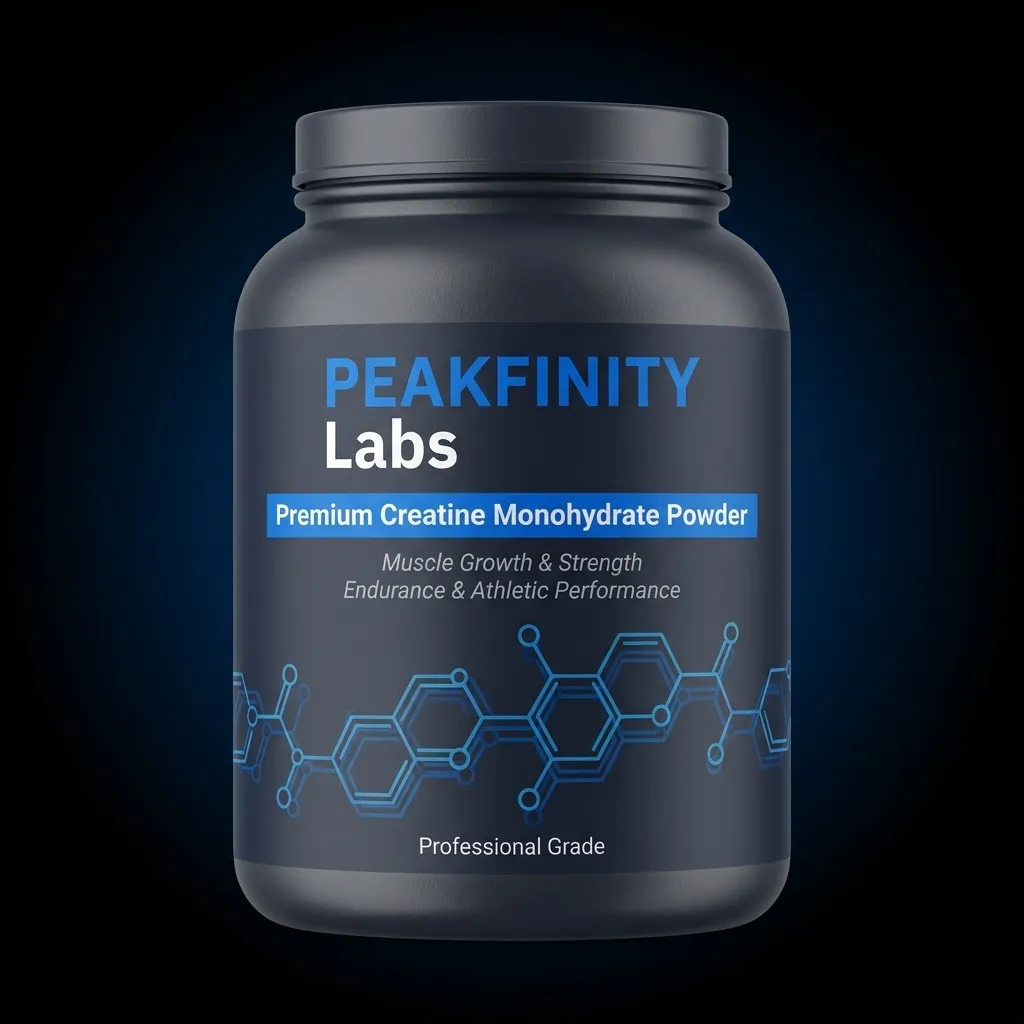
Premium Creatine Monohydrate Powder
Sports Nutrition · Powder
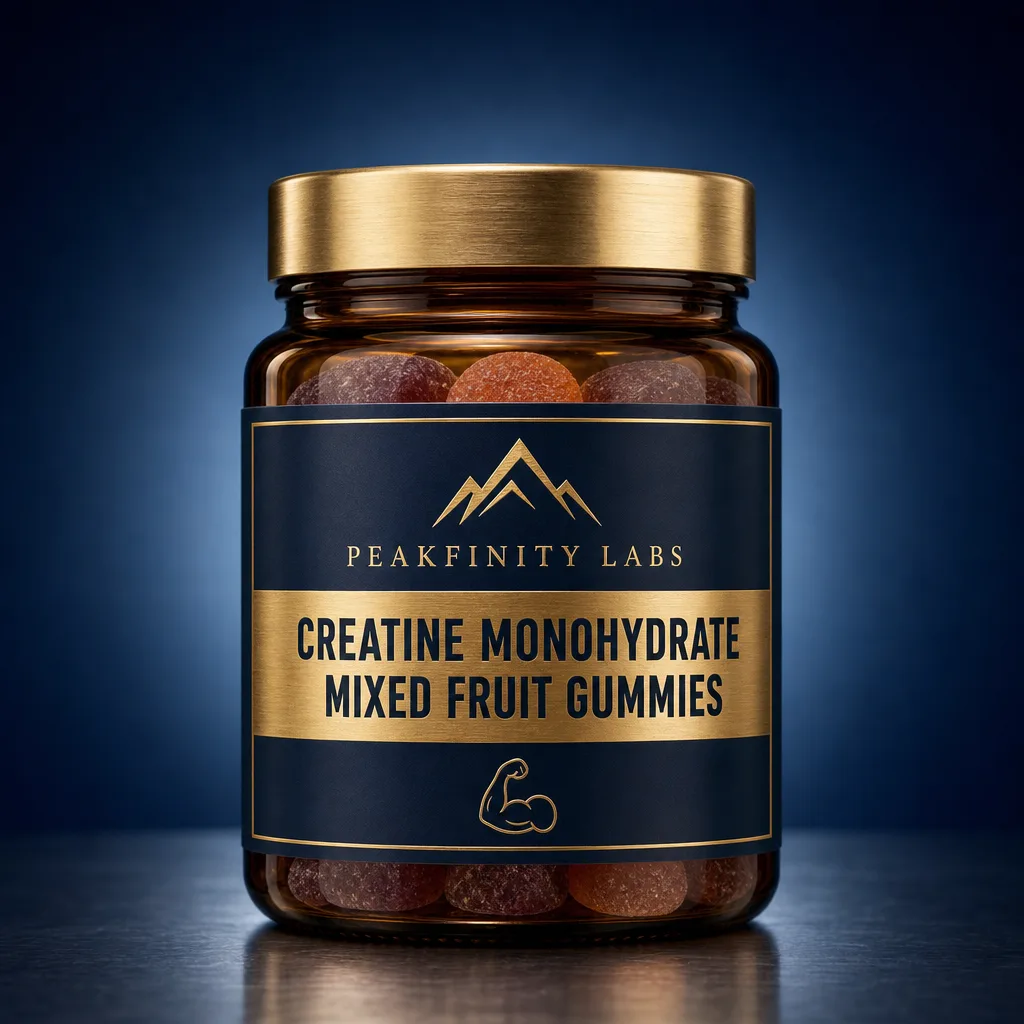
Creatine Monohydrate Performance Support Gummies - Mixed Fruit Flavor
Sports Nutrition · Gummies

Tushar
Licensed Pharmacist and COO @ Peakfinity Labs
Written by the Peakfinity Labs R&D Team — 46+ years of supplement formulation expertise. Our team of formulation chemists, manufacturing specialists, and regulatory experts has helped thousands of eCommerce brands bring their products to market successfully since 1980.
Related Articles
Protein Powder Manufacturing Guide
From protein sources to flavor development for sports nutrition products.
How to Launch a Protein Powder Brand in 2026
Protein sourcing, amino spiking verification, flavor development, format and the COGS math behind a protein powder launch.
Pre-Workout Formulation Guide: Clinical Doses vs Fairy Dusting
Clinical dosing, transparent labels, caffeine strategy, caking control, MOQ and COGS for a credible pre-workout SKU.