The Complete Guide to Collagen Supplement Manufacturing in 2026
Collagen supplements represent one of the fastest-growing segments in the nutraceutical industry. This comprehensive guide covers everything you need to know about manufacturing high-quality collagen products for your brand.
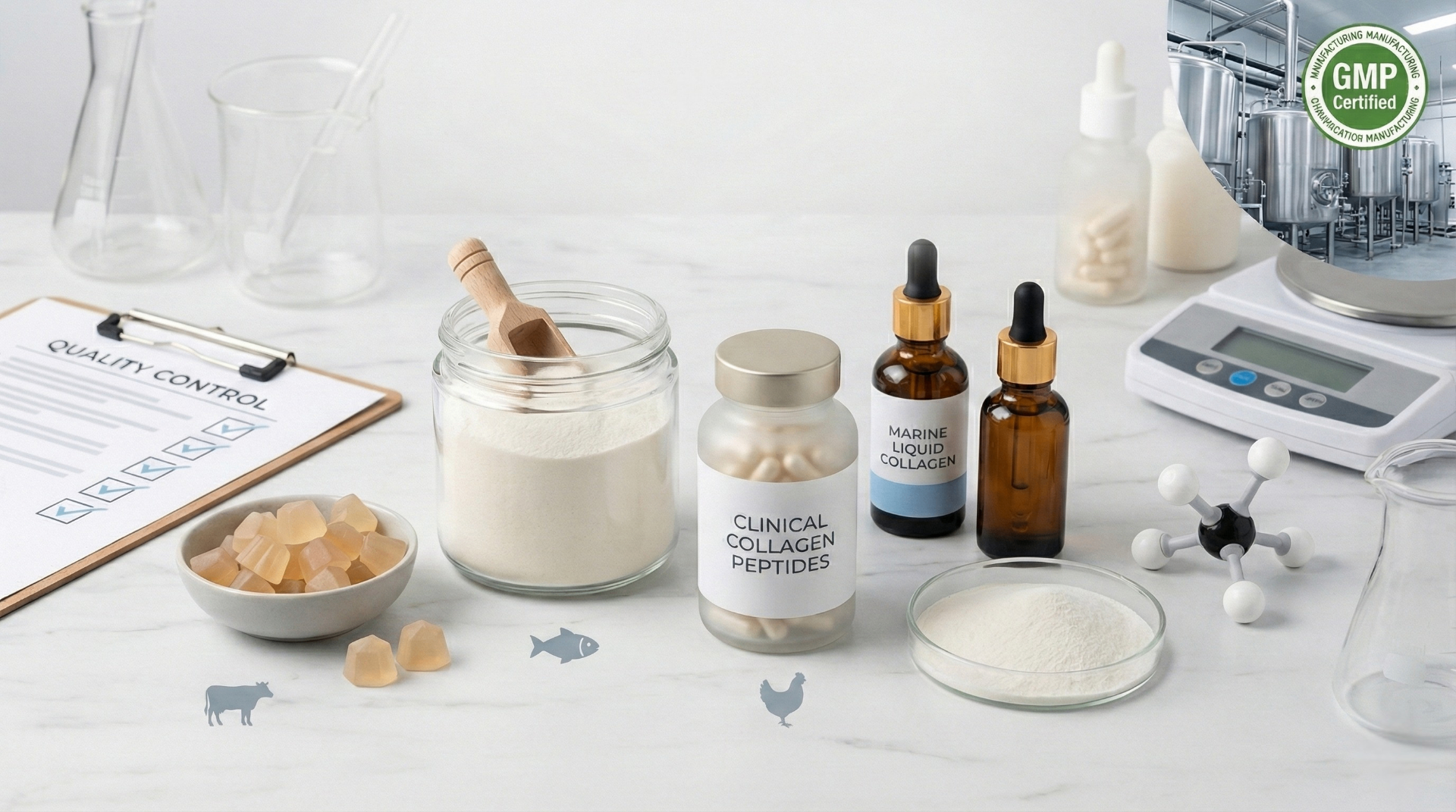
- 1Marine collagen commands premium pricing and appeals to beauty-focused consumers; bovine offers better margins
- 2Powders deliver the highest doses (10-20g) at lowest cost; gummies offer best consumer appeal but lower doses
- 3Choose manufacturers with FDA registration, cGMP certification, and third-party testing capabilities
- 4Multi-collagen products combining Types I, II, and III appeal to the broadest general wellness market
- 52026 trends include liposomal delivery, functional combinations, and upcycled/sustainable sourcing
Why Collagen Supplements Are Dominating the Market
The global collagen supplement market is projected to exceed $8 billion by 2027, driven by increasing consumer awareness of skin health, joint support, and overall wellness benefits. For eCommerce brands and entrepreneurs looking to enter this lucrative market, understanding the manufacturing process is essential to creating products that stand out.
Whether you're launching your first collagen product or expanding an existing supplement line, partnering with the right manufacturer can make the difference between success and costly mistakes. This guide will walk you through everything from collagen types and product formats to quality standards and manufacturer selection criteria.
Peakfinity Advantage
Peakfinity Labs has manufactured over 500 collagen SKUs for brands ranging from startup eCommerce sellers to established retail brands. Our team of formulation scientists specializes in creating bioavailable, effective collagen products that consumers love.
Types of Collagen Supplements
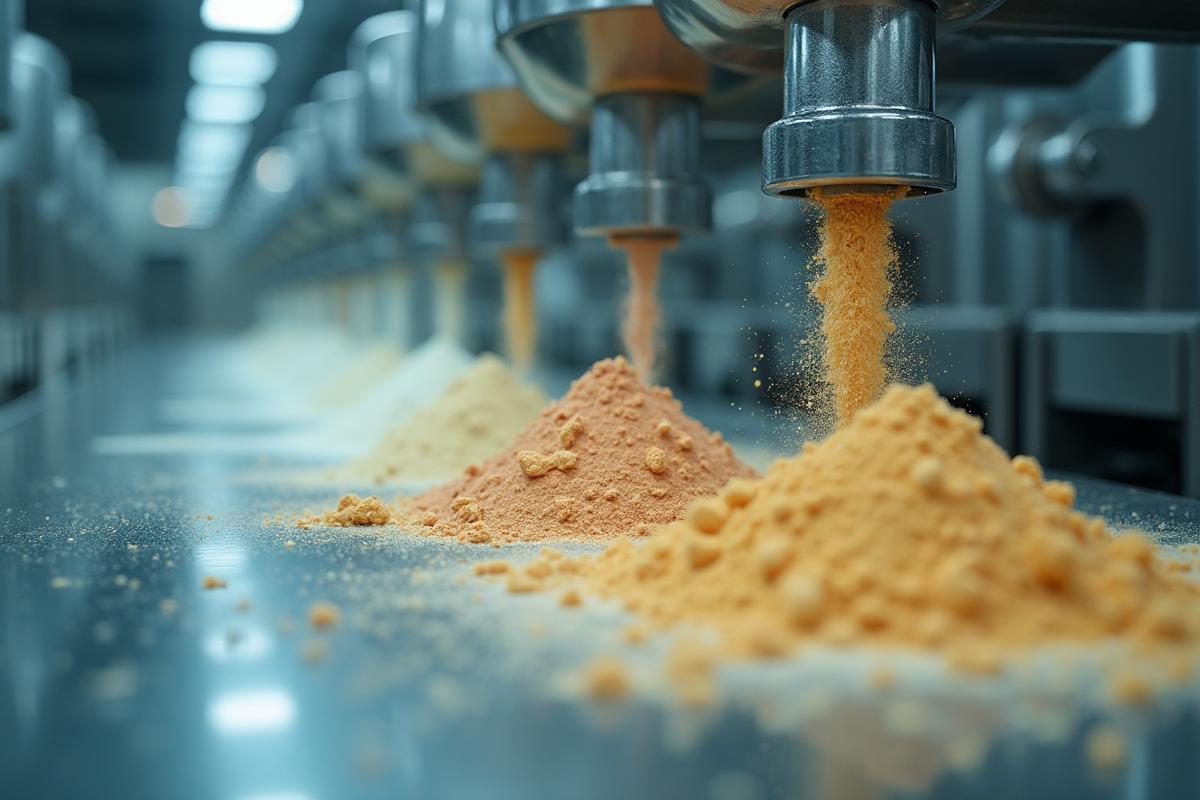
Understanding collagen types is fundamental to creating an effective product. The human body contains at least 28 types of collagen, but supplements typically focus on Types I, II, and III, each offering distinct health benefits that appeal to different consumer segments.
Collagen Types Comparison
| Type | Primary Source | Key Benefits | Best For |
|---|---|---|---|
| Type I | Marine, Bovine | Skin elasticity, hair, nails | Beauty supplements |
| Type II | Chicken sternum | Joint cartilage support | Joint health products |
| Type III | Bovine | Gut health, muscle support | Wellness blends |
| Multi-Collagen | Various sources | Comprehensive benefits | General wellness |
Marine Collagen has gained significant popularity due to its smaller peptide size, which may enhance absorption. Sourced primarily from fish skin and scales, marine collagen is predominantly Type I and appeals to pescatarian consumers and those seeking premium beauty supplements.
Bovine Collagen remains the most cost-effective option, providing both Types I and III collagen. It's ideal for brands targeting the general wellness market or those needing competitive pricing for mass-market distribution through Amazon or retail channels.
Chicken Collagen is the primary source of Type II collagen, making it essential for joint health formulations. Many brands combine chicken-derived Type II with bovine or marine collagen to create comprehensive multi-collagen products.
Pro Tip
Consider your target demographic when choosing collagen sources. Marine collagen commands higher prices and appeals to beauty-focused consumers, while bovine offers better margins for mass-market products.
Product Formats: Powders, Capsules, Gummies & More
Choosing the right product format significantly impacts manufacturing costs, consumer appeal, and dosing flexibility. Each format has distinct advantages that align with different brand positioning strategies and target markets.
Collagen Product Format Comparison
| Format | Typical Dose | Consumer Appeal | Cost Factor | Best For |
|---|---|---|---|---|
| Powder | 10-20g | High (customizable) | Low | Premium brands, bodybuilding |
| Capsules | 1-3g | Moderate (convenient) | Medium | General wellness |
| Gummies | 0.5-2g | Very High (taste) | Higher | Beauty, mass market |
| Liquid Shots | 5-10g | High (ready-to-drink) | Highest | Premium beauty |
| Softgels | 1-2g | Moderate | Medium | Joint health |
Collagen Powders offer the highest dosing flexibility, typically delivering 10-20 grams per serving. They're popular among fitness enthusiasts and beauty-conscious consumers who add them to smoothies, coffee, or other beverages. Powders also offer the lowest per-unit manufacturing cost.
Collagen Capsules provide convenience but are limited in dosing—achieving therapeutic levels often requires multiple capsules per serving. They're ideal for consumers who prefer no taste and maximum portability.
Collagen Gummies represent the fastest-growing format, particularly for beauty and general wellness positioning. While they offer lower doses (typically 0.5-2g), their taste appeal drives strong repeat purchases and excellent customer reviews on platforms like Amazon and TikTok Shop.
The Collagen Manufacturing Process
Manufacturing high-quality collagen supplements requires precise processes to maintain peptide integrity and ensure optimal bioavailability. Understanding these steps helps brands evaluate potential manufacturing partners and ask the right questions.
- Raw Material Sourcing: Quality collagen manufacturing begins with sourcing certified raw materials. Look for manufacturers who verify supplier certifications, conduct incoming raw material testing, and maintain traceability documentation.
- Hydrolysis Processing: Collagen proteins are broken down into smaller peptides through enzymatic hydrolysis. The molecular weight of these peptides affects absorption—typically 2,000-5,000 Daltons is optimal for bioavailability.
- Blending & Formulation: Collagen is combined with complementary ingredients like vitamin C (essential for collagen synthesis), hyaluronic acid, or biotin. Proper blending ensures homogeneous distribution throughout the product.
- Format-Specific Processing: Powders are spray-dried and instantized for mixability. Capsules are filled on high-speed encapsulation equipment. Gummies require cooking, molding, and curing processes.
- Quality Testing: Third-party lab testing verifies potency, purity, and absence of contaminants. Tests include amino acid profiling, heavy metals testing, and microbiological analysis.
- Packaging & Fulfillment: Products are packaged in moisture-protective containers, labeled according to FDA requirements, and prepared for distribution.
Note
Collagen peptides are hygroscopic (absorb moisture), making proper storage and packaging critical. Ensure your manufacturer uses moisture-barrier packaging and maintains appropriate warehouse conditions.
Quality & Regulatory Standards
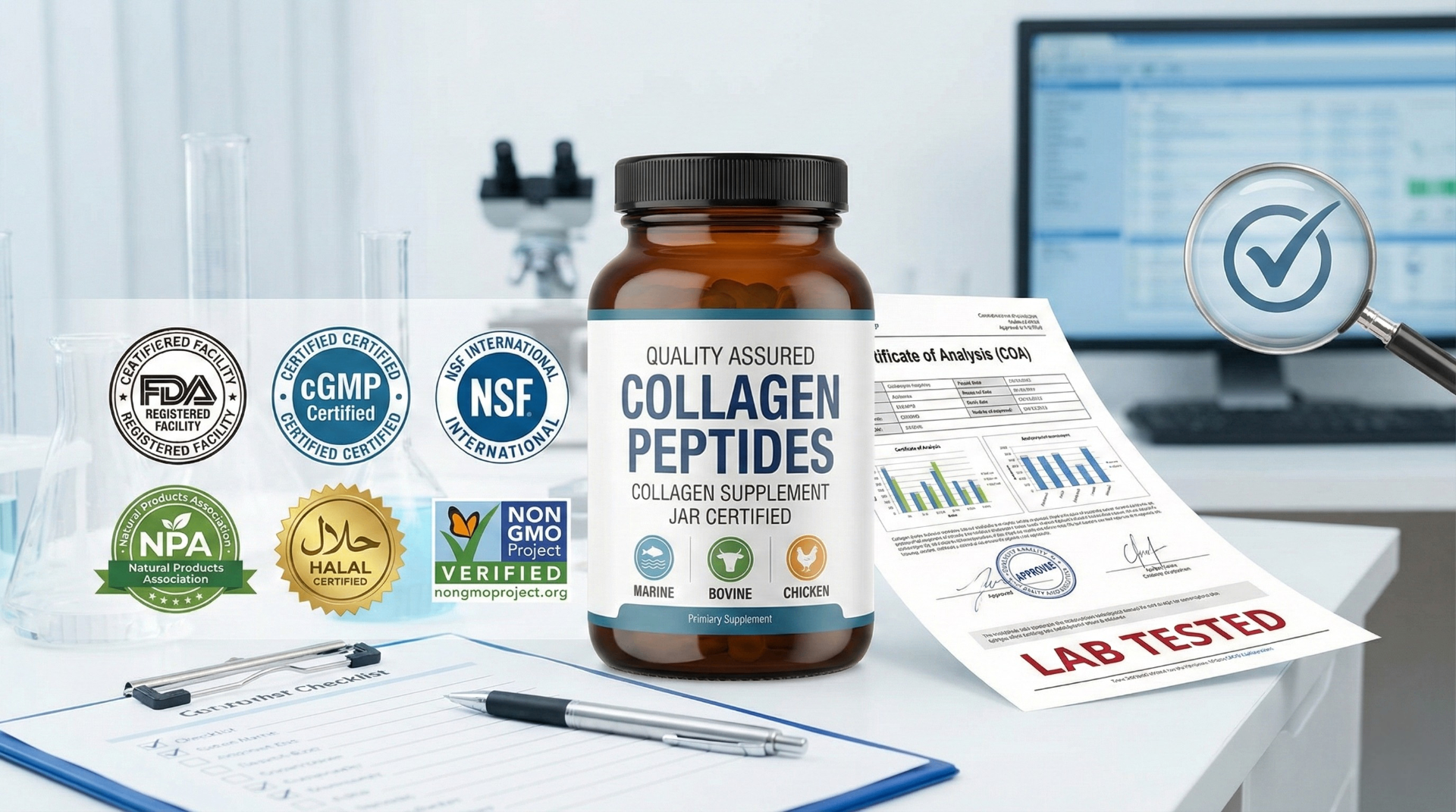
Ensuring your collagen supplements meet quality and regulatory requirements protects your brand and builds consumer trust. Here are the key certifications and standards to look for in a manufacturing partner.
- FDA Registration: All supplement manufacturers must be registered with the FDA. Verify your manufacturer's registration status through the FDA's database.
- cGMP Certification: Current Good Manufacturing Practices ensure consistent quality and safety. Look for third-party cGMP audits from organizations like NSF or NPA.
- Third-Party Testing: Independent lab testing verifies label claims and screens for contaminants. Request Certificates of Analysis (COAs) for raw materials and finished products.
- Halal/Kosher Certifications: If targeting religious markets, ensure your manufacturer can provide certified Halal or Kosher collagen options.
- Non-GMO Project Verified: For brands targeting health-conscious consumers, Non-GMO verification adds credibility and marketability.
Key Advantage
Peakfinity Labs maintains FDA registration, cGMP certification, and offers third-party testing through accredited laboratories. We can support Halal, Kosher, and organic certification requirements for qualifying formulations.
How to Choose the Right Collagen Manufacturer
Selecting the right manufacturing partner is crucial to your product's success. Beyond certifications, consider these factors when evaluating potential collagen supplement manufacturers.
Manufacturer Evaluation Criteria
| Factor | Questions to Ask | Why It Matters |
|---|---|---|
| Experience | How many collagen products have you manufactured? | Experienced manufacturers avoid costly mistakes |
| MOQ Flexibility | What are your minimum order quantities? | Lower MOQs reduce initial investment risk |
| Lead Times | What's your typical production timeline? | Faster turnaround supports inventory management |
| Formulation Support | Do you offer custom formulation services? | Expert guidance improves product efficacy |
| Scalability | Can you scale from 1,000 to 100,000+ units? | Growth shouldn't require switching manufacturers |
| Communication | Who will be my main point of contact? | Responsive communication prevents problems |
For Amazon FBA and eCommerce brands, also consider whether the manufacturer offers 3PL and fulfillment services. Consolidating manufacturing and logistics with one partner simplifies operations and often reduces costs.
Request samples of existing collagen products to evaluate quality firsthand. A reputable manufacturer should happily provide samples and detailed information about their processes without high-pressure sales tactics.
Collagen Supplement Trends for 2026
Staying ahead of market trends helps brands differentiate and capture emerging consumer demands. Here are the collagen supplement trends shaping the industry in 2026.
- Bioavailability Innovation: Advanced delivery systems like liposomal encapsulation and nano-peptides promise enhanced absorption, commanding premium pricing.
- Sustainable Sourcing: Consumers increasingly demand ethically sourced, sustainable collagen. Marine collagen from upcycled fish byproducts appeals to eco-conscious buyers.
- Functional Combinations: Collagen paired with trending ingredients like lion's mane, ashwagandha, or prebiotics creates differentiated products.
- Beauty-From-Within: The "ingestible beauty" category continues growing, with collagen gummies and drinks leading the segment.
- Clear Protein Formats: Clear collagen protein waters and RTD beverages are gaining traction in the sports nutrition crossover market.
- Men's Collagen: Brands are finally targeting male consumers with collagen products positioned for joint health, muscle recovery, and hair support.
Peakfinity Advantage
Our R&D team actively researches emerging trends and can help you develop differentiated collagen products. Whether you want to create a sustainable marine collagen powder or an innovative collagen-nootropic blend, we have the formulation expertise to bring your vision to life.
Frequently Asked Questions
What is the minimum order quantity (MOQ) for collagen supplement manufacturing?
MOQs typically start at 2,000 units across all formats (capsules, tablets, gummies, and powders). This range ensures quality manufacturing while keeping per-unit costs competitive. Custom formulations may have higher minimums depending on ingredient sourcing requirements.
How long does it take to manufacture collagen supplements?
Standard production timelines range from 4-8 weeks from formula approval to finished goods. This includes sourcing, production, quality testing, and packaging. Rush orders may be available for additional fees, with some products completed in 2-3 weeks.
What certifications should a collagen manufacturer have?
Look for FDA registration, cGMP (Current Good Manufacturing Practices) certification, and third-party testing capabilities. Additional certifications like NSF, USP, or organic certifications add credibility. Peakfinity Labs maintains all major certifications.
Can I create a vegan collagen supplement?
While collagen itself is animal-derived, you can create 'collagen-boosting' supplements using vegan ingredients like vitamin C, zinc, copper, and plant-based amino acids that support the body's natural collagen production. We offer several vegan-friendly formulations.
What's the difference between marine and bovine collagen?
Marine collagen (from fish) is primarily Type I collagen with smaller peptide size for potentially better absorption. Bovine collagen provides Types I and III, supporting both skin and joint health. Marine is pescatarian-friendly but more expensive; bovine is cost-effective with broader applications.
How do I ensure my collagen supplement is high quality?
Partner with a GMP-certified manufacturer that conducts third-party testing, provides Certificates of Analysis (COAs), uses traceable raw materials, and maintains proper cold-chain storage for collagen peptides. Ask about their quality control processes and testing protocols.
Ready-to-Launch Formulations in This Category
Stock-ready formulations you can private label with your own branding — 2,000 unit MOQ.
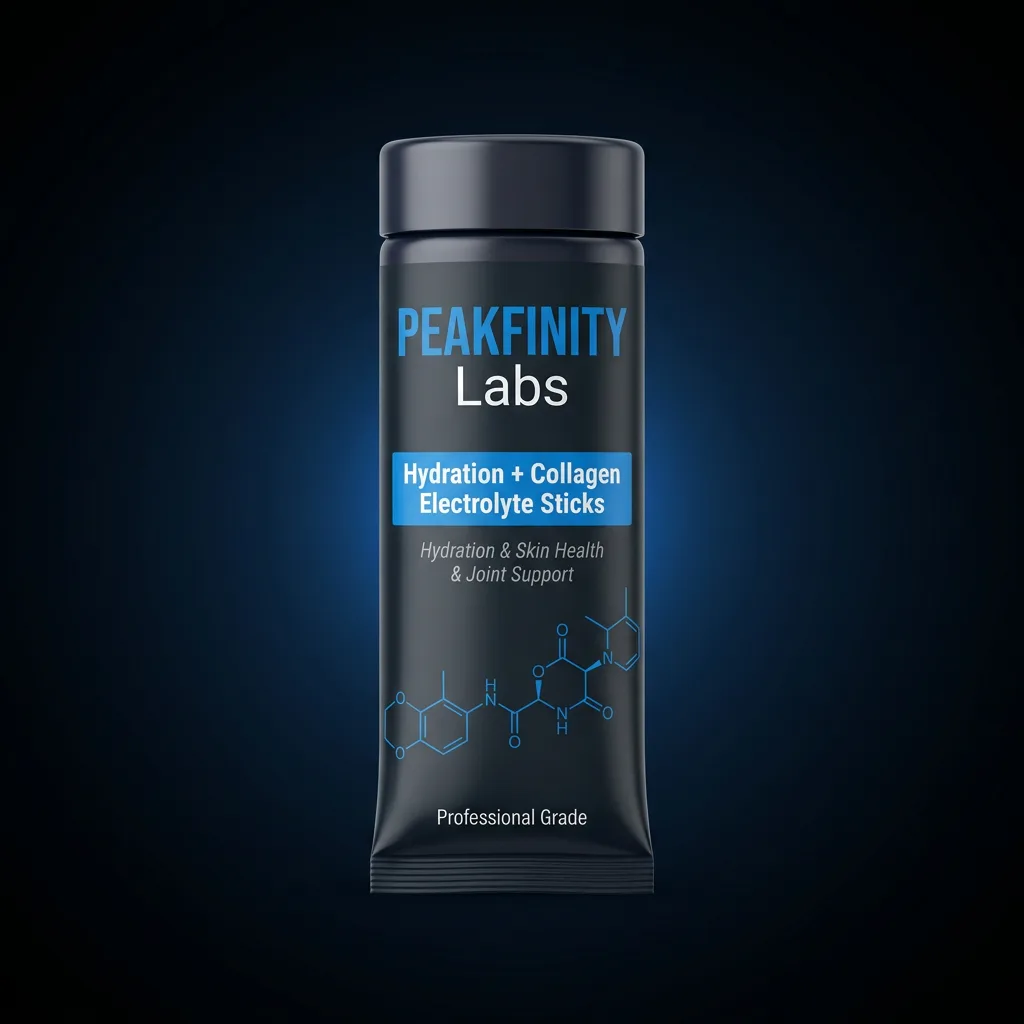
Hydration + Collagen Electrolyte Sticks
Beauty Supps · Powder Stick
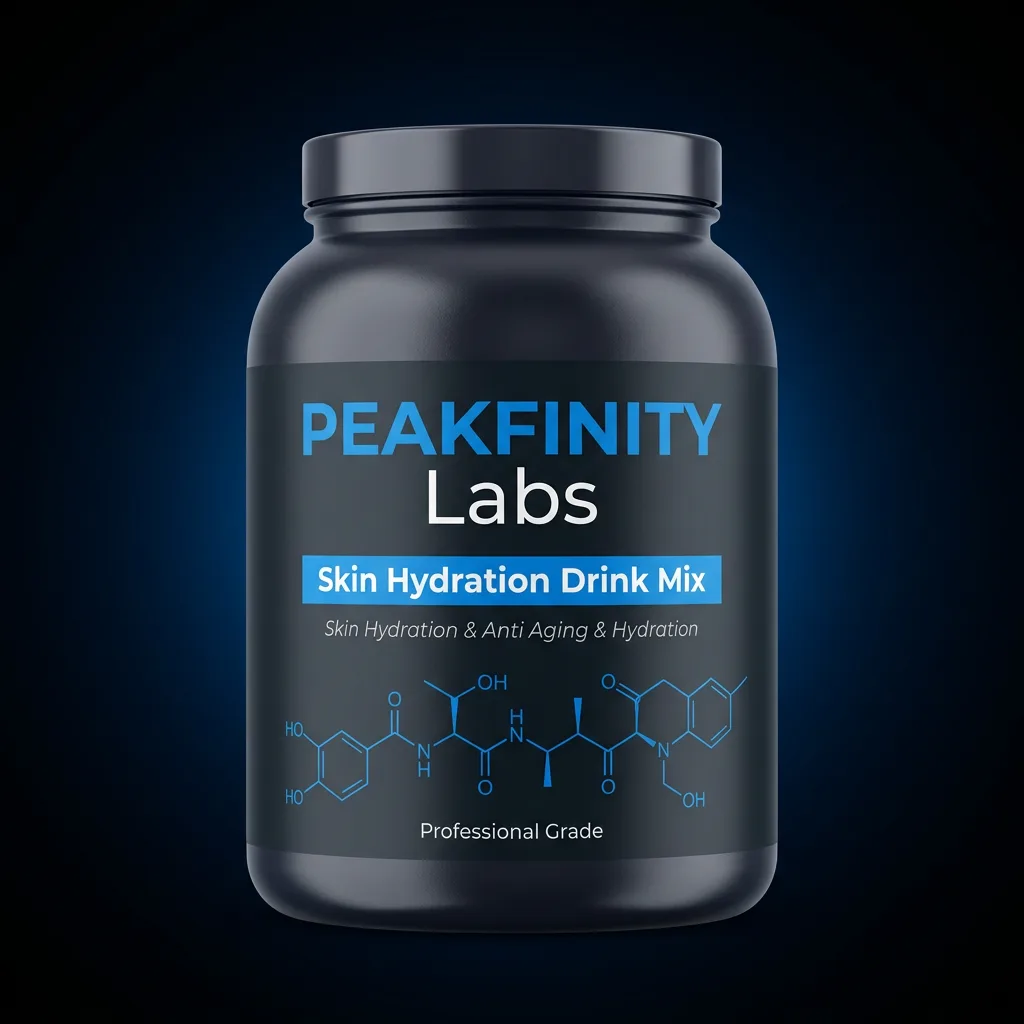
Skin Hydration Drink Mix
Beauty Supps · Powder
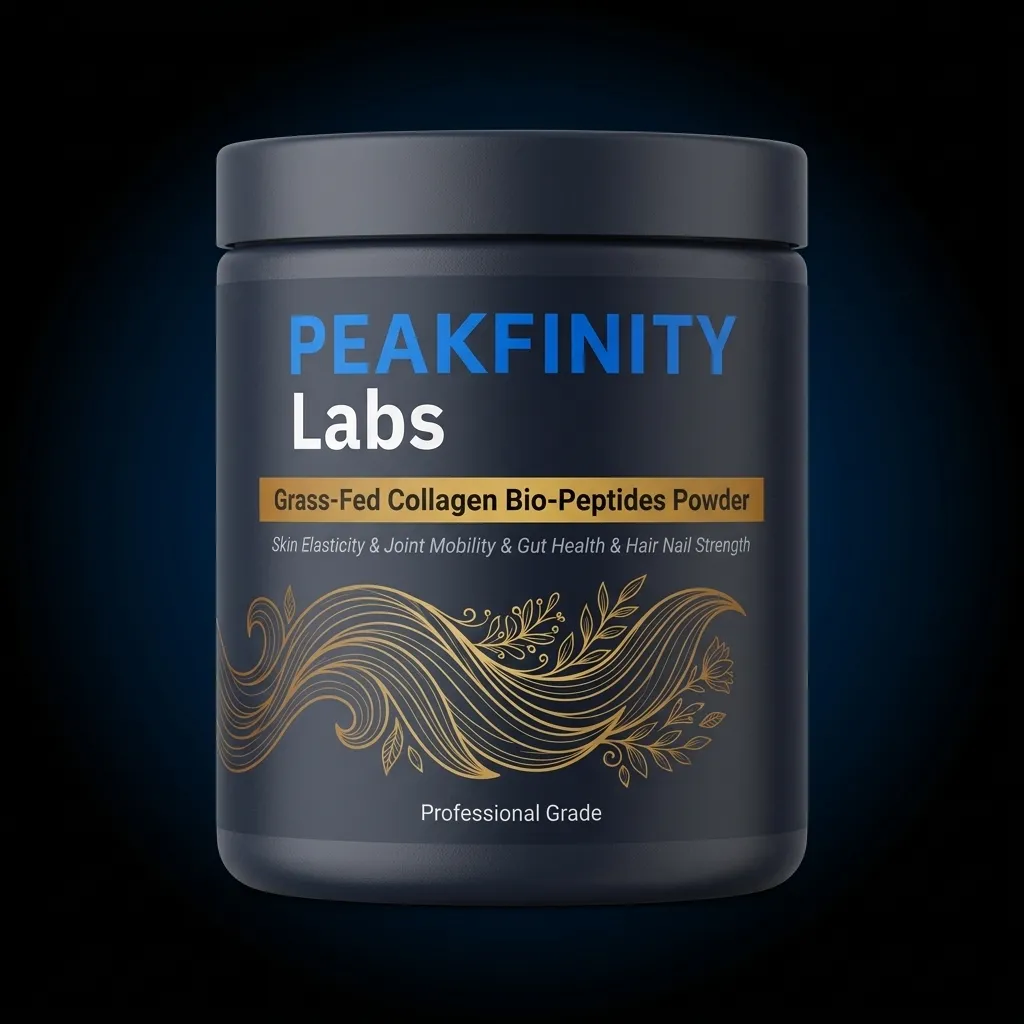
Grass-Fed Collagen Bio-Peptides Powder
Nutraceuticals (Beauty) · Powder
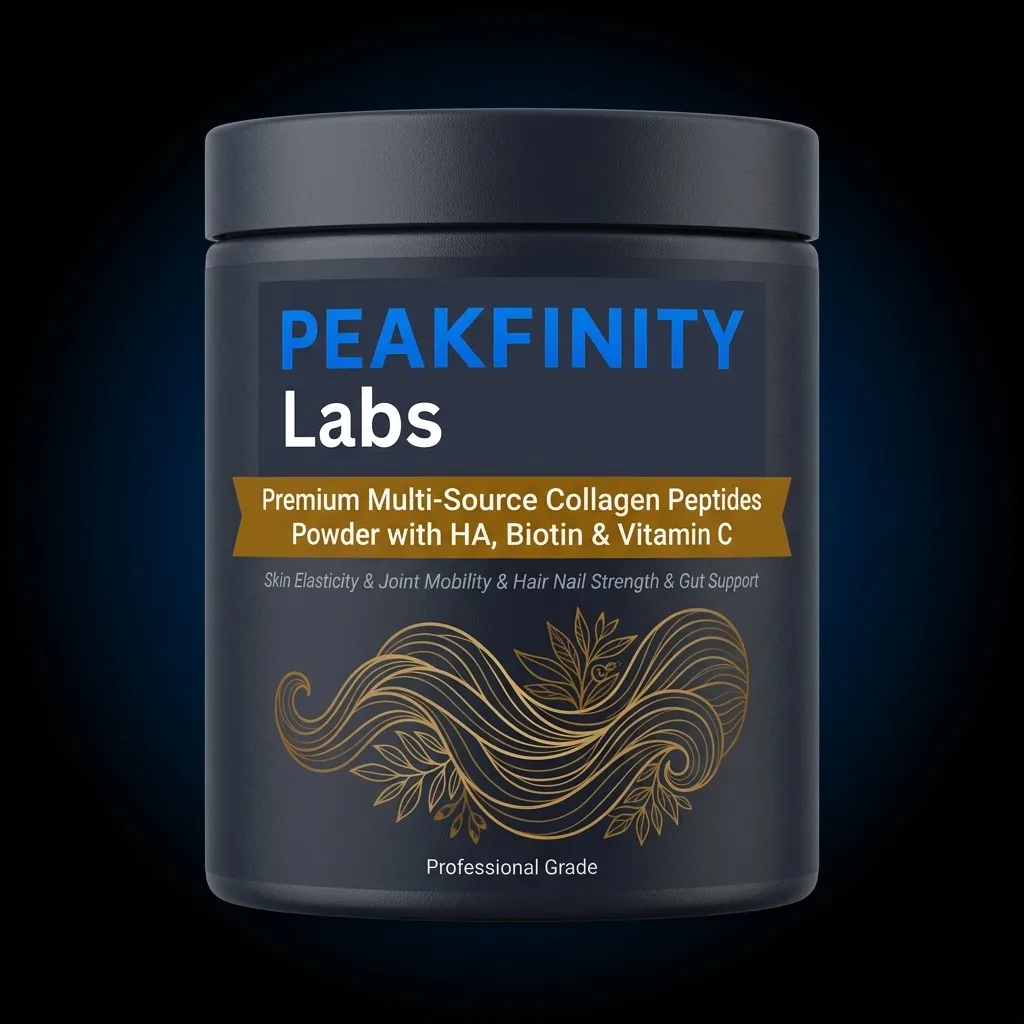
Premium Multi-Source Collagen Peptides Powder with HA, Biotin & Vitamin C
Nutraceuticals (Beauty) · Powder
Related Articles

How to Find an ISO 17025-Accredited Supplement Testing Lab, and What Founders Should Ask For
How to verify a lab's ISO/IEC 17025 scope actually covers your test, the questions to ask before shipping samples, and a testing plan built for ecommerce timelines.
Supplement Manufacturing Lead Times and Reorders: What Founders Should Expect Before and After Launch
The five workstreams hiding inside "lead time," why reorders move faster than first runs, and the ramp plan that survives a demand spike.
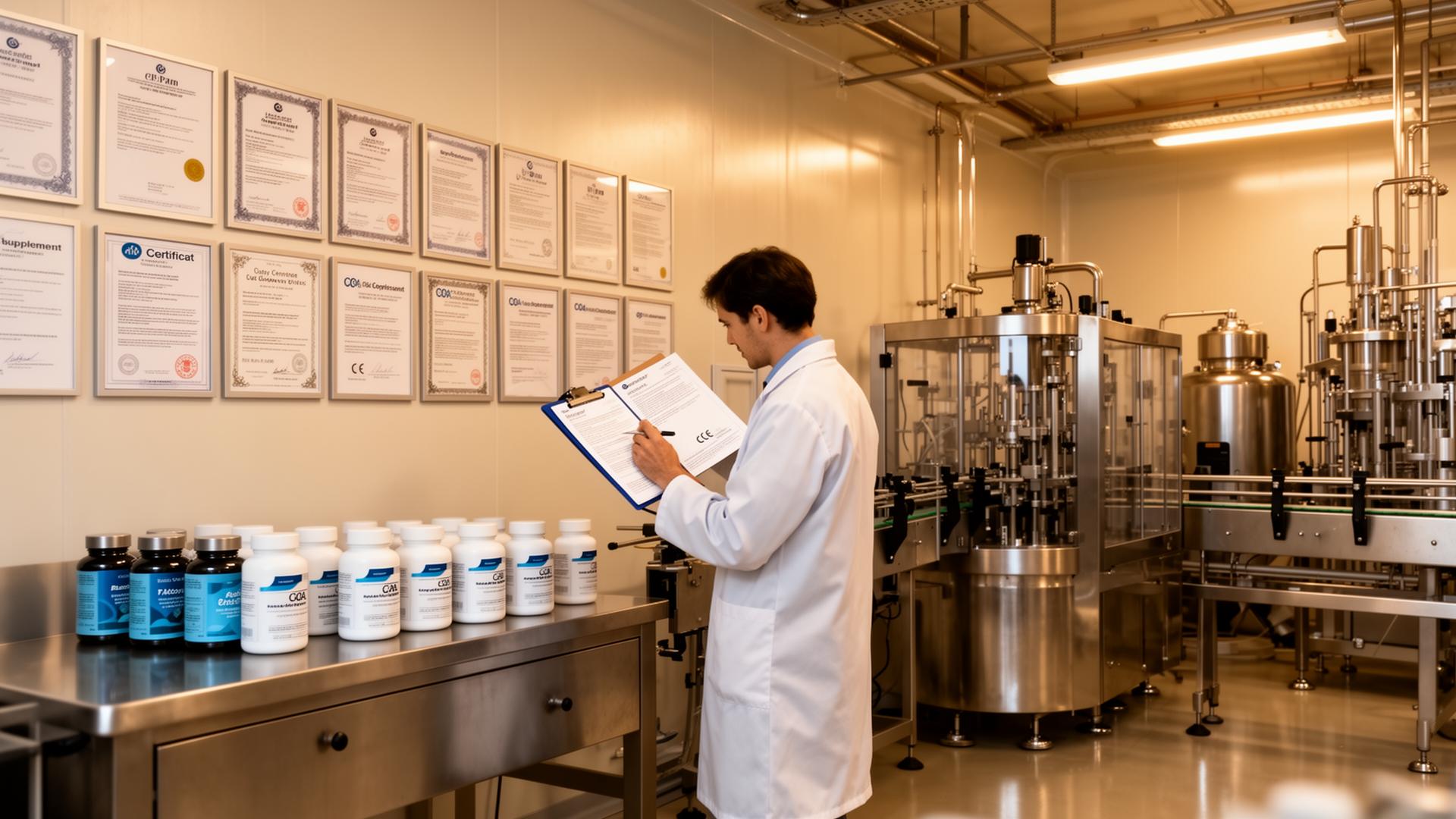
How to Vet a cGMP Supplement Manufacturer With Documented Audit History
The document pack, audit-history call script, and scoring rubric that separate real cGMP quality systems from certificate PDFs.

Tushar
Licensed Pharmacist and COO @ Peakfinity Labs
Written by the Peakfinity Labs R&D Team — 46+ years of supplement formulation expertise. Our team of formulation chemists, manufacturing specialists, and regulatory experts has helped thousands of eCommerce brands bring their products to market successfully since 1980.