The Complete Gummy Vitamin Manufacturing Guide for 2026
Gummy vitamins have transformed the supplement industry. This deep-dive guide covers everything from formulation science to manufacturing processes—everything you need to launch a successful gummy product line.
- 1Gummy supplements command 20-40% price premiums due to superior taste appeal and compliance rates
- 2The 48-72 hour curing time drives higher MOQs (2,000 units) and longer lead times than capsules
- 3Pectin-based vegan gummies are growing faster than gelatin as plant-based demand increases
- 4Not all ingredients work in gummies—iron, certain probiotics, and high-dose actives present challenges
- 5Taste is critical: partner with manufacturers who have experienced flavor chemists
The Gummy Revolution in Supplements
Gummy supplements have evolved from children's vitamins to a $7+ billion market serving all demographics. Adults now consume more gummies than kids, driven by the simple truth: compliance is king. People actually take supplements they enjoy, and gummies deliver both efficacy and experience. Brands selling through TikTok Shop and Amazon FBA find gummies particularly effective for viral marketing.
For brands, gummies offer premium positioning, strong customer loyalty, and differentiation in crowded categories. But manufacturing gummies is more complex than capsules or tablets—requiring specialized equipment, formulation expertise, and longer production timelines. Understanding manufacturing costs is essential for planning your gummy launch.
Peakfinity Advantage
Peakfinity Labs operates dedicated gummy production lines in our GMP-certified facilities with in-house flavor chemists and quality specialists. We've helped brands launch award-winning gummy products that achieve 4.5+ star ratings and exceptional repeat purchase rates.
Why Gummies Are Booming

Understanding consumer psychology explains the gummy phenomenon. Three factors drive preference:
- Taste Experience: Gummies transform a daily obligation into a small pleasure. This dramatically improves compliance—customers actually finish bottles and reorder.
- No Pill Fatigue: Many adults struggle swallowing pills. Gummies eliminate this barrier, expanding your addressable market significantly.
- Instagrammable Products: Colorful, attractive gummies photograph well. This social shareability drives organic marketing, especially on TikTok and Instagram.
- Premium Perception: Consumers associate gummies with higher quality and are willing to pay 20-40% more than equivalent capsule products.
Gummy Market Growth by Category
| Category | 2024 Market Size | 2026 Projected | Growth |
|---|---|---|---|
| Adult Multivitamins | $1.8B | $2.4B | +33% |
| Beauty (Collagen/Biotin) | $900M | $1.4B | +56% |
| Sleep/Stress | $650M | $1.1B | +69% |
| Kids Vitamins | $750M | $850M | +13% |
| Immunity | $500M | $700M | +40% |
Types of Gummy Supplements
The gummy format works for numerous supplement categories, though some present more formulation challenges than others.
- Vitamin Gummies: The original and largest category. Vitamins A, B-complex, C, D, and E all work well. Vitamin C gummies are especially popular.
- Beauty Gummies: Collagen, biotin, hyaluronic acid formulations targeting hair, skin, and nails. High margins and strong repeat purchase.
- Sleep & Relaxation: Melatonin, L-theanine, ashwagandha, and CBD gummies. Nighttime rituals drive excellent compliance.
- Immunity Gummies: Elderberry, zinc, vitamin C, vitamin D combinations. Seasonal demand spikes in fall/winter.
- Digestive Health: Probiotic and prebiotic gummies, though probiotic viability in gummy form remains challenging.
- Specialty Gummies: Apple cider vinegar, collagen, omega-3—innovative formats for ingredients traditionally delivered differently.
The Gummy Manufacturing Process
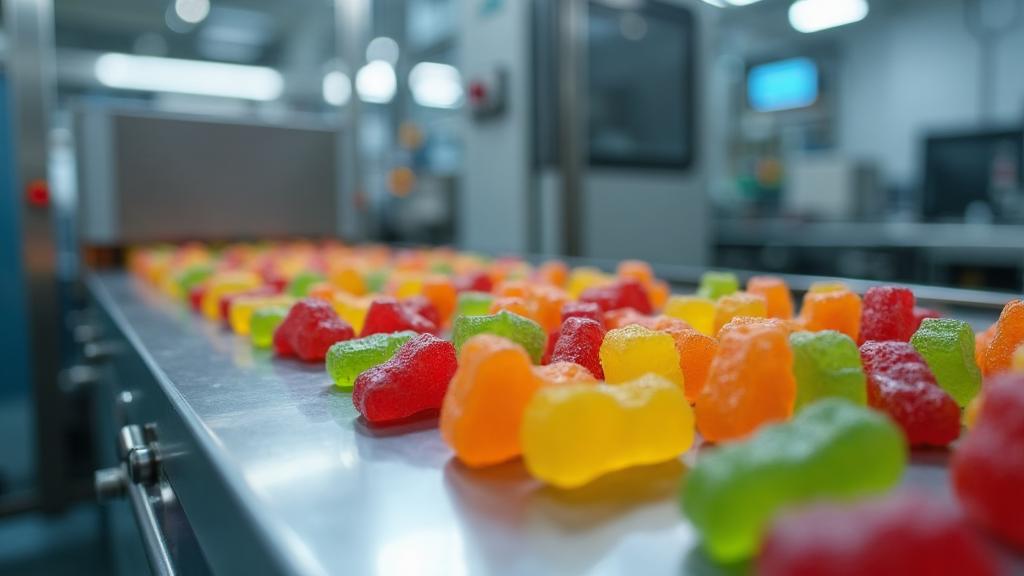
Gummy manufacturing is a specialized process requiring precision equipment and expertise. Here's what happens from formula to finished product:
- Ingredient Preparation: Active ingredients are pre-blended and tested. Heat-sensitive ingredients require special handling to survive the cooking process.
- Base Cooking: Gelatin or pectin base is heated to specific temperatures (typically 180-220°F) with sweeteners, colors, and flavors. Temperature control is critical.
- Active Addition: Vitamins and actives are added after cooking, at lower temperatures to preserve potency. This "cold add" phase is precisely timed.
- Depositing: Hot gummy mixture is deposited into starch or silicone molds. Mold shape affects both aesthetics and production efficiency.
- Curing/Drying: Gummies cure in controlled environments for 48-72 hours. This step determines final texture—rushing creates sticky or hard products.
- Demolding & Coating: Cured gummies are removed from molds and may receive oil or wax coating to prevent sticking.
- Quality Testing: Samples undergo potency testing, microbial analysis, and organoleptic (taste/texture) evaluation.
- Packaging: Gummies are packaged in moisture-controlled containers with desiccants to maintain quality through shelf life.
Note
The 48-72 hour curing time is why gummy MOQs are higher and lead times longer than capsules. Each production batch ties up equipment and facility space during curing.
Formulation Challenges in Gummy Manufacturing
Not every ingredient works in gummy form. Understanding limitations helps you design products that are both effective and manufacturable.
Ingredient Compatibility in Gummies
| Ingredient | Gummy Compatibility | Challenge | Solution |
|---|---|---|---|
| Vitamin C | Excellent | Acidity affects texture | Buffer with calcium ascorbate |
| Vitamin D | Excellent | Heat stable | Standard formulation |
| Iron | Poor | Metallic taste, discoloration | Consider separate product |
| Probiotics | Challenging | Heat kills cultures | Spore-forming strains only |
| Fish Oil | Moderate | Fishy taste/smell | Heavy flavor masking required |
| Collagen | Good | Lower doses than powder | Market as 'boost' not replacement |
Dosing Limitations: A gummy can typically hold 500-1,500mg of total actives. For ingredients requiring high doses (like collagen or fiber), consider powders or capsules, or position the gummy as a complementary "boost" product.
Stability Concerns: The cooking process and 2-year shelf life exposure mean some actives degrade. Experienced manufacturers add overages (extra ingredient) to ensure label claims are met throughout shelf life.
Gelatin vs Pectin: Choosing Your Base

The gummy base—gelatin or pectin—affects texture, consumer appeal, manufacturing process, and marketability. Each has distinct advantages.
Gelatin vs Pectin Comparison
| Factor | Gelatin | Pectin |
|---|---|---|
| Source | Bovine/porcine collagen | Citrus/apple plant fiber |
| Texture | Chewy, classic | Softer, melts on tongue |
| Dietary Restrictions | Not vegetarian | Vegan-friendly |
| Religious Markets | Halal/Kosher options | All markets accepted |
| Cost | Lower | 10-20% higher |
| Stability | Excellent | Good (moisture sensitive) |
| Consumer Preference | Traditional | Growing rapidly |
Market Trend: Pectin gummies are growing faster as vegan, vegetarian, and flexitarian consumers seek plant-based alternatives. Many mainstream brands now offer pectin versions alongside gelatin products.
Peakfinity Advantage
Peakfinity Labs manufactures both gelatin and pectin gummies on separate production lines, ensuring no cross-contamination. We can help you choose the right base for your target market and develop formulations optimized for each.
Choosing a Gummy Manufacturer
Gummy manufacturing requires specialized expertise. Not all supplement manufacturers can produce quality gummies. Look for partners with proper certifications and dedicated gummy lines. Our custom formulation guide covers the full development process.
- Dedicated Gummy Equipment: Look for manufacturers with modern mogul or depositing lines specifically for gummies—not adapted candy equipment.
- Flavor Development Capability: In-house flavor chemists can develop proprietary flavors and effectively mask bitter ingredients.
- Custom Mold Options: Beyond standard bears and drops, can they create custom shapes for your brand?
- Both Gelatin and Pectin: Flexibility to produce either base type on dedicated lines prevents cross-contamination.
- Stability Testing: Proper accelerated stability testing ensures products maintain quality throughout shelf life.
- Samples Before Production: Any reputable manufacturer should provide taste samples before you commit to full production.
Frequently Asked Questions
What's the minimum order quantity for gummy manufacturing?
Our standard MOQ for gummy supplements is 2,000 units. Peakfinity Labs offers flexible options for startups and growing brands.
How long does it take to manufacture gummy vitamins?
Gummy production takes 4-8 weeks from formula approval to finished goods. The curing/drying phase alone takes 48-72 hours. Rush orders may be possible but can affect quality.
Can you make vegan gummy supplements?
Yes! Pectin-based gummies are 100% vegan and increasingly popular. They require different formulation techniques but can match or exceed gelatin gummies in taste and texture.
What ingredients work well in gummy form?
Vitamins A, B-complex, C, D, and E work well in gummies. Minerals like zinc and biotin are popular. However, some ingredients (iron, certain probiotics) don't work well due to taste or stability issues.
Why do gummy supplements cost more to manufacture?
Gummies require cooking equipment, custom molds, longer production times (48-72 hour curing), more packaging to prevent sticking, and flavor/color development. These factors increase per-unit costs compared to capsules.
How do I ensure my gummies taste good?
Partner with a manufacturer who has experienced flavor chemists. Request samples before committing to production. Invest in proper flavor masking for bitter ingredients and test with your target consumers.
Ready-to-Launch Formulations in This Category
Stock-ready formulations you can private label with your own branding — 2,000 unit MOQ.
Nitric Oxide Beet Root Gummies
Heart Health · Gummies
Kava Root Relaxation Gummies
Sleep Relaxation · Gummies
Kids & Teens Growth Gummies
Kids Health · Gummies
Soursop 12-in-1 Herbal Immune Gummies
Immunity · Gummies
Related Articles

How to Find an ISO 17025-Accredited Supplement Testing Lab, and What Founders Should Ask For
How to verify a lab's ISO/IEC 17025 scope actually covers your test, the questions to ask before shipping samples, and a testing plan built for ecommerce timelines.
Supplement Manufacturing Lead Times and Reorders: What Founders Should Expect Before and After Launch
The five workstreams hiding inside "lead time," why reorders move faster than first runs, and the ramp plan that survives a demand spike.
How to Vet a cGMP Supplement Manufacturer With Documented Audit History
The document pack, audit-history call script, and scoring rubric that separate real cGMP quality systems from certificate PDFs.

Tushar
Licensed Pharmacist and COO @ Peakfinity Labs
Written by the Peakfinity Labs R&D Team — 46+ years of supplement formulation expertise. Our team of formulation chemists, manufacturing specialists, and regulatory experts has helped thousands of eCommerce brands bring their products to market successfully since 1980.