How to Launch a Supplement Company: First Step-by-Step Guide
Define a compliant hero SKU, validate demand, pick the right manufacturer, and launch across Shopify, Amazon, or TikTok Shop—with a realistic timeline.
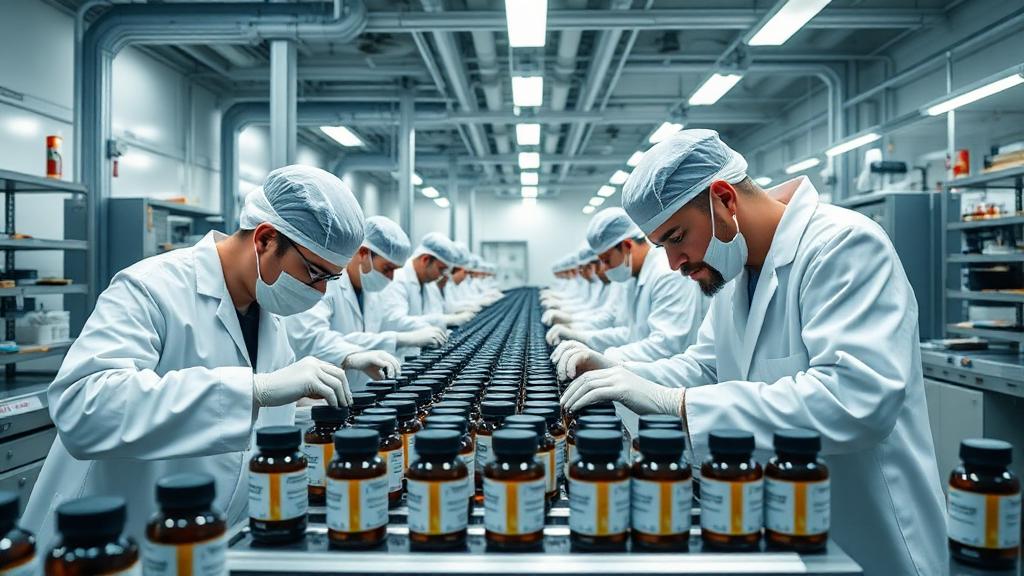
- 1The real first step is defining one compliant hero SKU spec—target customer, outcome, format, channel, and price—not picking a logo or ingredient.
- 2Validate demand with real traffic and hooks before committing to a full production run; content testing often de-risks more than formula testing.
- 3Choose format (capsule, gummy, powder, softgel, tablet) based on manufacturing speed, margin, and channel fit—not just branding preference.
- 4Pick a GMP & ISO certified manufacturer that can support low MOQ test runs, fast turnaround, and scale without formula drift.
- 5Plan three purchase orders from the start: a test run, a momentum order, and a preemptive scale order to survive viral demand spikes.
Pro Tip
Introduction
Most first-time supplement founders think the first step is picking an ingredient or a logo. That's usually why launches stall, labels get rejected, or cash gets locked in the wrong inventory. If you want a smooth launch and a fast turnaround, your real first step is tighter: define a compliant, sellable "hero SKU" with a measurable promise and a channel-specific format.
That single decision drives everything else—your claims, your label, your MOQ risk, your packaging, your margin, and your reorder cadence. We've seen brands with great marketing fail because the product spec was vague ("a wellness blend") and the manufacturing plan was a guess. We've also seen brands with modest audiences win because they picked one clear outcome, one format, and one offer they could fulfill consistently.
This guide gives you a step-by-step launch plan built for 2026 realities: short content cycles, TikTok/Shopify/Amazon compliance pressure, and sudden demand spikes. It's written from the perspective of a GMP & ISO certified manufacturer that helps founders go from idea to D2C ready packaging with low MOQ test runs and rapid scale when the product hits.
Prerequisites (before you spend money on manufacturing)
Get these basics set up first. They prevent expensive rework when you're ready to print labels and place a PO.
- Sales channel picked: Shopify, Amazon FBA, TikTok Shop, wholesale, or a hybrid. Your channel changes claims risk, packaging, and fulfillment.
- Entity and banking: LLC/Corp, business bank account, basic accounting. You want clean books from day one.
- Basic compliance mindset: Supplements are regulated as foods in the U.S. under DSHEA. You need compliant labels and claims, not "medical" promises.
- Fulfillment plan: Either self-fulfill temporarily or set up a 3PL that can handle supplements. See Peakfinity's Supplement 3PL overview.
Step 1 (the real first step): define your hero SKU spec
If you only do one thing from this post, do this. A strong hero SKU spec is a one-page brief that your manufacturer, label designer, and media buyer can all use without guessing.
Note
Direct answer: The first step to launching a supplement company is to define one compliant hero product with a specific outcome, format, target customer, and channel—because that spec determines your formula, label claims, packaging, cost, and timeline.
What your hero SKU spec must include
- Customer: "Women 28–45 with stress-related sleep issues" beats "everyone who wants wellness."
- Outcome (non-medical): Think structure/function language like "supports calm mood" or "supports healthy digestion."
- Format: capsule, gummy, powder, softgel, liquid, sticks, or something more novel.
- Channel: Amazon needs ruthless compliance and listing discipline. TikTok needs scroll-stopping story + fast fulfillment. Shopify needs retention and bundles.
- Price target + margin target: Set a realistic MSRP and contribution margin goal before you pick ingredients.
- Differentiator: A dosage choice, delivery system, flavor profile, bundle strategy, or "habit" angle that's hard to copy.
At Peakfinity Labs, we push founders to choose the format first when they're undecided. It sounds contrarian, but it prevents a common trap: building a formula that only works on paper and then discovering it tastes awful (powders), won't hold actives (gummies), or costs too much (softgels). If you're debating formats, you can also review the capability overview in Supplement Manufacturing Overview.
Step 2: pick your lane—white label vs private label vs custom formulation
Not all "private label" paths are the same. Choose based on speed, budget, and how unique you need the product to be.
| Option | Best for | Speed | Risk | Verdict |
|---|---|---|---|---|
| White label | Testing a market fast with an existing formula | Fastest | Higher competition, less defensibility | Good for validating demand, but plan a v2 |
| Private label (semi-custom) | Starting with a proven base formula + tweaks | Fast | Moderate | Best balance for most first launches |
| Custom formulation | Unique positioning, higher brand moat | Slower | Higher R&D and compliance effort | Do this when you already have demand or a strong thesis |
If you want a deeper breakdown, see Private Label vs Custom Manufacturing.
Peakfinity supports all three approaches with low MOQ options where feasible, plus custom formulation through our R&D team (see R&D).
Step 3: validate the idea before manufacturing (without wasting months)
Validation means proving you can acquire customers profitably—not just getting compliments on a concept.
- Run a "fake door" offer: Build a landing page with your hero SKU promise, price, and email/SMS capture. Drive 300–1,000 targeted clicks and measure opt-in rate.
- Pre-sell ethically: If you take money, disclose expected ship dates and be conservative with timelines.
- Test 3 hooks: One mechanism hook ("magnesium glycinate + L-theanine"), one lifestyle hook ("night routine"), one identity hook ("for founders under pressure").
- Check reorder logic: A product that's "1 bottle fixes everything" kills LTV. You want a 30-day habit.
Pro Tip
Unique angle we see in viral commerce: Brands often validate the content before the formula. Post 10–20 short videos explaining the problem, the routine, and the "why this format," then watch which angle gets saves and comments. You can do this before you lock a formula, and it makes your first production run far less risky.
Step 4: understand the licenses and legal basics (U.S. focus)
Founders usually ask, "What licenses do I need?" The practical answer is: you need the right business registrations, and you need your product to meet FDA labeling rules and cGMP manufacturing standards.
- Business license requirements vary by state/city: Many need a general business license and sales tax permit if you sell taxable goods.
- FDA registration: In the U.S., dietary supplement manufacturing facilities register with the FDA. As a brand, you typically do not "get an FDA license," but you must follow FDA rules for labeling and safety.
- Trademark: File early if the name matters. Don't wait until you're scaling ads.
- Insurance: Product liability insurance is a standard requirement for serious retail and risk control.
Note
For official FDA guidance, start with the FDA's Dietary Supplement pages: https://www.fda.gov/food/dietary-supplements
Step 5: choose your format based on speed, compliance, and margin
Format isn't a branding detail. It's a manufacturing and retention decision.
| Format | Why founders pick it | Common pitfall | Peakfinity link |
|---|---|---|---|
| Capsules | Fast to develop, broad ingredient compatibility | Too many capsules per serving hurts adherence | Capsule Manufacturing |
| Gummies | High conversion, great for TikTok | Actives stability and sugar/acid system issues | Gummy Manufacturing |
| Powders | Strong margins, bundle-friendly, flexible dosing | Flavor and solubility problems create refunds | Powder Manufacturing |
| Softgels | Ideal for oils (oregano, black seed, etc.) | Higher unit cost and longer development | Softgel Manufacturing |
| Tablets | Low cost per serving for some categories | Hard to swallow; coating and breakage issues | Tablet Manufacturing |
If you're building for Amazon, read Compliant Supplement Amazon before you finalize your product page copy and label.
Step 6: build a compliant formula and label claim strategy
Great marketing starts with compliant language. You can sell aggressively without implying you treat or cure disease.
- Use structure/function claims: "Supports relaxation" is different from "treats anxiety."
- Avoid disease terms: diabetes, depression, arthritis, ADHD, etc. Keep that off labels and most ad copy.
- Match claims to ingredients: Don't claim "sleep support" with under-dosed actives. Customers notice, and returns climb.
- Plan the Supplement Facts panel early: It drives serving size, capsule count, and bottle size.
When we do custom formulation, we also design for manufacturing repeatability. That means choosing raw materials with stable supply and realistic lead times, not "unobtainium" ingredients that break your reorder cycle. If your positioning depends on a specific category and ingredient stack, it can help to review category-specific constraints—e.g., Probiotic Supplement Manufacturing or Collagen Supplement Manufacturing.
Step 7: pick a manufacturer like you're picking a long-term partner
This is where customer anxiety spikes: quality consistency, supply continuity, lead times, and hidden costs. You can reduce all four with a simple evaluation checklist.
- Verify certifications: Ask for GMP documentation and quality systems. Peakfinity operates through GMP & ISO certified facilities—see Certifications and Facilities.
- Ask about COAs and release testing: Every batch should have a Certificate of Analysis and a defined release process. Review how they handle holds and deviations.
- Get the real MOQ and price breaks: Confirm MOQ by format, packaging type, and flavor. "Low MOQ" should be written into the quote.
- Map lead times in writing: Raw materials, production slot, labeling, and freight should each have an ETA.
- Clarify change fees: Label edits, flavor tweaks, and packaging swaps can add cost. You want a transparent rate card.
For how we run projects end-to-end, see Our Process and Quality.
Step 8: packaging, labeling, and D2C readiness
Packaging is not decoration. It protects the product, communicates the promise, and impacts unboxing and reviews.
- Choose a bottle and cap that survive shipping: Especially for gummies and liquids.
- Design for scanning: Your front panel must read in under 2 seconds on a phone screen.
- Build a compliant label stack: Supplement Facts, other ingredients, allergen statements, net quantity, manufacturer/distributor info, and required disclaimers.
- Plan for bundles: If you'll run "buy 2 get 1," make sure your packaging and inserts support it.
Peakfinity supports D2C ready packaging (packout, labeling, and ship-ready configurations) so you can launch cleanly across Shopify, Amazon, and TikTok Shop. If TikTok is your main channel, start here: TikTok Shop Sellers and TikTok Supplement Brand Guide.
Step 9: timeline planning (what 'fast turnaround' actually looks like)
Speed matters, but only if it's predictable. Here's a realistic first-launch timeline when you already have your hero SKU spec and are responsive on approvals.
| Phase | Typical time | What can slow it down |
|---|---|---|
| Formula finalization + quote | 3–7 days | Indecision on dosage, sweeteners, allergens |
| Label draft + compliance review | 3–10 days | Claim language edits, missing required statements |
| Packaging sourcing | 5–15 days | Custom components, backorders |
| Production + QC + packout | 3–4 weeks | Raw material lead times, late artwork approvals |
Peakfinity is built for fast turnaround and founder speed. If you want a 3–4 week order-to-production window, the biggest factor you control is decision latency: approve labels quickly, lock packaging, and don't change the formula midstream.
Step 10: forecast inventory and plan your first three POs
The biggest early mistake is ordering either "way too safe" (you stock out and lose momentum) or "way too confident" (cash sits on pallets). A simple 3-PO plan helps.
- PO1 (test run): Low MOQ to validate conversion, refund rate, and retention.
- PO2 (momentum): Order as soon as you see stable CAC and a clear reorder curve.
- PO3 (scale): Place it before you "need it." Production capacity is your constraint when content goes viral.
If you've ever watched a product spike overnight, you know the pain: you don't just lose sales, you lose ranking and trust. For a tactical plan, read Manufacturer Sudden Demand Spikes.
Step 11: launch strategy by channel (Shopify, Amazon, TikTok)
Your product can be great and still lose if you launch with the wrong channel mechanics.
- Shopify: Win with offer + retention. Build bundles, subscribe-and-save, and a post-purchase flow. See Shopify Brands.
- Amazon FBA: Win with compliance, listing clarity, and review velocity. Start with a conservative claim set. See Amazon FBA Brands and Amazon FBA Supplement Manufacturing.
- TikTok Shop: Win with creative volume and fulfillment speed. Pick formats that film well (gummies, drink mixes) and plan inventory for bursts. See How To Start Supplement Brand on TikTok.
If you're selling through experts (clinicians, coaches, creators), build the product story around routine and outcomes, not medical promises. Peakfinity works with these partner models often—see Doctors, Influencers, Experts.
Profitability in 2026: what to expect (and what founders miss)
Supplements can be profitable in 2026, but the winners treat it like an ops business, not a logo business.
| Line item | Healthy target (typical D2C) | What breaks margins |
|---|---|---|
| Gross margin | 60–80% (channel-dependent) | Underpricing, high freight, too many SKUs early |
| Ad spend (blended) | Varies; aim for contribution margin positive | Weak creative testing, unclear offer |
| Refund/return rate | Keep it low with taste + expectation control | Bad flavor, overpromising, inconsistent product |
| Cash cycle | Plan reorders before stockouts | Long lead times + no forecasting |
Our practical recommendation: start with one hero product and one upsell (like a second flavor or a complementary SKU) only after you have consistent weekly sales. "More SKUs" doesn't fix a weak offer; it usually adds complexity and hidden costs.
Biggest mistakes first-time supplement founders make
- Picking a name before checking trademarks and domains: You'll waste packaging and listings if you rebrand mid-launch.
- Designing labels before claims and Supplement Facts are final: This causes reprint fees and delays.
- Overstuffing formulas: More ingredients often means worse taste, higher COGS, and more supply issues.
- Ignoring quality documentation: If you can't get clear COAs and a quality release story, you're building on sand.
- Not planning for demand spikes: Viral growth is an ops test. If you pass, you scale fast. If you fail, you stall.
Troubleshooting: common launch blockers (and fixes)
| Problem | What it usually means | Fix |
|---|---|---|
| Quote looks higher than expected | Packaging or serving size is driving COGS | Reduce serving size, switch format, or simplify packaging to hit margin targets |
| Label keeps getting 'compliance' edits | Claims sound like disease treatment | Rewrite to structure/function claims and tighten benefit language |
| Powder tastes bad in samples | Sweetener system or flavor load is off | Adjust flavor system; consider Flavor System Manufacturing support |
| Gummy is sticky or sweating | Water activity/acid/sugar balance issues | Rebalance gelling and acid system; revisit packaging barrier needs |
| Stockouts right after a viral post | You didn't have a PO2 plan | Build a three-PO reorder calendar and reserve production slots earlier |
Frequently Asked Questions
What is the first step to launching a supplement company?
The first step matters because it determines your formula, label, packaging, cost, and timeline before you spend money. The first step to launching a supplement company is to define one compliant hero product spec—target customer, outcome (structure/function), format, channel, and price—so your manufacturer can quote and produce without guesswork. A practical next step is to write a one-page brief and confirm your claim language won't imply disease treatment before you start label design.
Is it profitable to start a supplement company in 2026?
Profitability depends less on the category and more on your margins, CAC, and ability to reorder without stockouts. Yes, a supplement company can be profitable in 2026 if you launch a focused hero SKU with healthy gross margins and a repeat-purchase cadence, then scale inventory and creative testing in sync. Start with a low-MOQ test run, track refund rate and reorders for 30–60 days, and only then increase purchase orders for rapid scale.
What licenses do I need to start a supplement business?
This question matters because licensing is often confused with FDA 'approval,' which supplements typically don't require before sale. In the U.S., you generally need standard business registrations (entity setup, local business license where required, and a sales tax permit if applicable) plus compliant FDA labeling and a GMP manufacturer that is registered with the FDA. A smart next step is to confirm your manufacturer's GMP systems and keep product liability insurance in place before you scale paid traffic or wholesale accounts.
How long does it take to launch a supplement brand?
Timelines matter because most delays come from approvals and packaging, not the actual blending or encapsulation. A realistic first launch often takes 4–10 weeks depending on formulation complexity, packaging sourcing, and label approval speed, and it can be faster when you start with a proven base formula and keep decisions tight. If you want a 3–4 week production window after order placement, lock your artwork early and avoid mid-project formula changes.
Can I start a supplement brand from home?
You can run the brand from home, but you should not manufacture supplements at home if you want consistent quality and compliant processes. Yes, you can start a supplement brand from home by outsourcing production to a GMP manufacturer and focusing your at-home work on marketing, customer support, and inventory planning. A practical next step is to choose a fulfillment method (self-ship early or a supplement-ready 3PL) and ensure your label and claims are compliant before launch.
Conclusion: a launch plan you can execute this month
If you want speed without surprises, treat your launch like an ops project with a clear spec and a compliant story. Start with one hero SKU, validate demand with real traffic, then choose a manufacturing partner that can support low MOQ test runs and fast turnaround when you're ready to reorder.
- Review Peakfinity's Supplement Manufacturing Overview to align on formats and capabilities.
- See how we work across facilities and quality systems: Facilities, Quality, and Certifications.
- When you're ready, share your hero SKU spec and target timeline via Start Project Contact or reach out on the Contact page.
Peakfinity Labs is a manufacturer partner for supplement and cosmetic brands built for eCommerce speed, compliant execution, and rapid scale.

Tushar
Licensed Pharmacist and COO @ Peakfinity Labs
Written by the Peakfinity Labs R&D Team — 46+ years of supplement formulation expertise. Our team of formulation chemists, manufacturing specialists, and regulatory experts has helped thousands of eCommerce brands bring their products to market successfully since 1980.
Related Articles
Private Label Supplement Markup: Typical Margins for DTC, Amazon, and Wholesale
Typical markup ranges for DTC, Amazon, and wholesale, plus the landed-cost model that decides whether your margin is real.
How to Compare Quotes From Supplement Manufacturers Without Missing Hidden Costs
A six-bucket framework and paste-ready RFQ table that surfaces hidden costs before you sign with a manufacturer.
When Is a Supplement Brand Ready to Move From Private Label to Custom?
Nine readiness signals, the custom-light middle path, and a seven-step switch plan that avoids stockouts and claim issues.