How to Scale Your Supplement Brand: A Complete Growth Guide
Stepwise playbook: launch a hero SKU with low MOQ small-batch run, test ads 2-4 weeks, then scale with GMP partners and ecommerce packaging for DTC growth.
Peakfinity Advantage
TL;DR: Peakfinity Labs helps Shopify founders launch fast with small-batch, ecommerce-ready supplements and skincare. This guide gives a concise launch checklist, low-MOQ validation tactics you can run before ordering bulk, and the manufacturer checks to use when shortlisting partners.
Last updated: June 2026
Scaling overview
Scaling a supplement brand sounds simple: pick a product, run ads, reorder when you sell out. In real life, most brands stall for the same reasons—high inventory risk, slow production timelines, label compliance issues, and manufacturers that can't handle ecommerce velocity.
If you're asking, "how do I start a supplement brand without spending thousands on inventory?" you're already thinking like a scalable operator. The goal isn't to buy pallets. The goal is to prove demand with a small-batch launch, tighten your unit economics, and then scale reorders without quality surprises or timeline slip.
This guide lays out a practical, step-by-step path to launch fast, validate with low MOQ runs, and scale into repeatable production. It also addresses the big anxieties founders have when switching or starting with a new manufacturer: reliability, quality control, on-time delivery, and confidentiality during formulation and packaging handoffs.
We'll cover supplements first, then show how the same playbook applies to private label skincare—especially for Shopify and Amazon.
- 1Launch with a single hero SKU and validate demand through a small-batch run before expanding your product line
- 2Use low MOQ small-batch testing to prove conversion, repeat purchase rate, and unit economics with minimal upfront risk
- 3Design ecommerce-ready packaging from day one—covering conversion, compliance, and fulfillment operations
- 4Build a reorder system with 35–45% inventory triggers so viral demand doesn't create stockouts
- 5Partner with a GMP-certified and ISO-certified manufacturer that supports turnkey production from formulation to fulfillment
Prerequisites: What You Need Before You Try to Scale
Scaling is easier when the basics are locked in. Before you spend on inventory or ads, make sure you have these items handled.
- A clear hero SKU — one product you can sell daily, not a 12-SKU catalog.
- A defined channel — Shopify, Amazon, or wholesale (each has different compliance and packaging rules).
- A product spec — format (capsules, gummies, powder), servings per unit, target actives, flavor (if needed).
- Brand positioning — who it's for, why it's different, and what claim language you will avoid.
- Budget range — enough to fund a small run + packaging + freight + basic creative/testing.
- A manufacturing partner that supports low MOQ, GMP-certified and ISO-certified production, and ecommerce-ready packaging.
If you're still choosing a partner, review What Makes a Good Contract Manufacturer for Small Ecommerce Brands and How to Create a Compliant Supplement Product for Amazon.
Launch checklist for Shopify skincare
- Samples and proofs: request finished-goods samples on your exact packaging to confirm stability and unboxing.
- Labeling and INCI: get a full INCI list and proofed label to match Shopify product pages and compliance needs.
- Packaging and ship testing: confirm drop, leak, and seal tests for pump, dropper, and jar formats.
- Small-batch plan: validate with a low MOQ run before committing to larger pallets.
- Fulfillment readiness: barcode, lot coding, and pack list formats that match your 3PL and Shopify flows.
- Photography and product data: lock images and ingredient copy so listings go live as soon as goods arrive.
For a deeper skincare roadmap and turnkey options, see How to Launch a Private Label Skincare Line With Minimal Upfront Cost.
Validate before you order bulk
Validation lowers inventory risk and shows real demand before a large spend. Peakfinity Labs supports low MOQ small-batch runs and sample approvals so brands can confirm conversion and repeat intent on a 2–4 week selling window.
Practical tests include a paid preorder or waitlist landing page, a limited influencer sample send with tracked links, and a small paid ad test driving to the SKU page. Use the feedback and returns data from these tests to adjust label claims, texture, and packaging before scaling.
The Scaling Mindset: Validate First, Then Expand
Brands that grow cleanly treat the first production run like a paid test. That means you prioritize speed, compliant labels, and reorder reliability over "perfect" packaging or a huge product line.
Small-batch production with a low MOQ keeps your upfront risk low while you confirm:
- Your conversion rate and CAC on real traffic
- Your repeat purchase rate (especially for consumables)
- Your review velocity and customer feedback
- Your operational realities (lead times, freight, storage)
Step-by-Step: How to Scale Your Supplement Brand
Step 1: Pick a Format You Can Produce and Ship Consistently
Format decisions affect everything: MOQ, cost per unit, shipping damage, and timeline. Choose the simplest format that matches your audience.
Supplement Format Comparison
| Format | Best For | Scaling Advantage | Watch-Outs |
|---|---|---|---|
| Capsules | Most wellness categories | Fast, stable, easy to label | Competing in crowded categories needs strong positioning |
| Powders | Performance, hydration, greens | Strong perceived value per unit | Flavor system, clumping, scoop + fill accuracy |
| Gummies | Beauty, sleep, general wellness | High conversion for DTC | Heat sensitivity, shelf-life, higher complexity |
| Liquids | Niche use cases | Distinct positioning | Stability, packaging, higher freight risk |
For a first scalable run, many brands start with capsules because they are straightforward, compliant, and quick to produce.
Step 2: Build a Product That Is Easy to Reorder (and Hard to Mess Up)
Scaling breaks when your formula depends on rare ingredients, seasonal supply, or complex flavors. Aim for a formulation that can be produced as a repeatable spec.
- Use standardized ingredients with consistent specs and reliable supply.
- Avoid unnecessary complexity — too many actives, too many flavors, too many label claims.
- Design for compliance — structure/function claims, required statements, allergen handling.
If Amazon is part of your plan, start here: How to Create a Compliant Supplement Product for Amazon.
Step 3: Start With Low MOQ Small-Batch Testing
If you're asking, "can I test a supplement product idea with a small batch before committing?" the answer is yes—when your manufacturer supports low MOQ runs and can keep quality consistent between small-batch and scaled production.
Small-batch testing lets you validate:
- Offer strength (your angle, bundle, and pricing)
- Customer feedback on effects, taste, capsule size, and tolerance
- Packaging durability and unboxing experience
- Subscription take rate and reorder timing
Pro Tip
Practical target: order enough to support a 2–4 week selling window. That's long enough to learn, but short enough to pivot without writing off inventory.
Step 4: Make Your Packaging Ecommerce-Ready From Day One
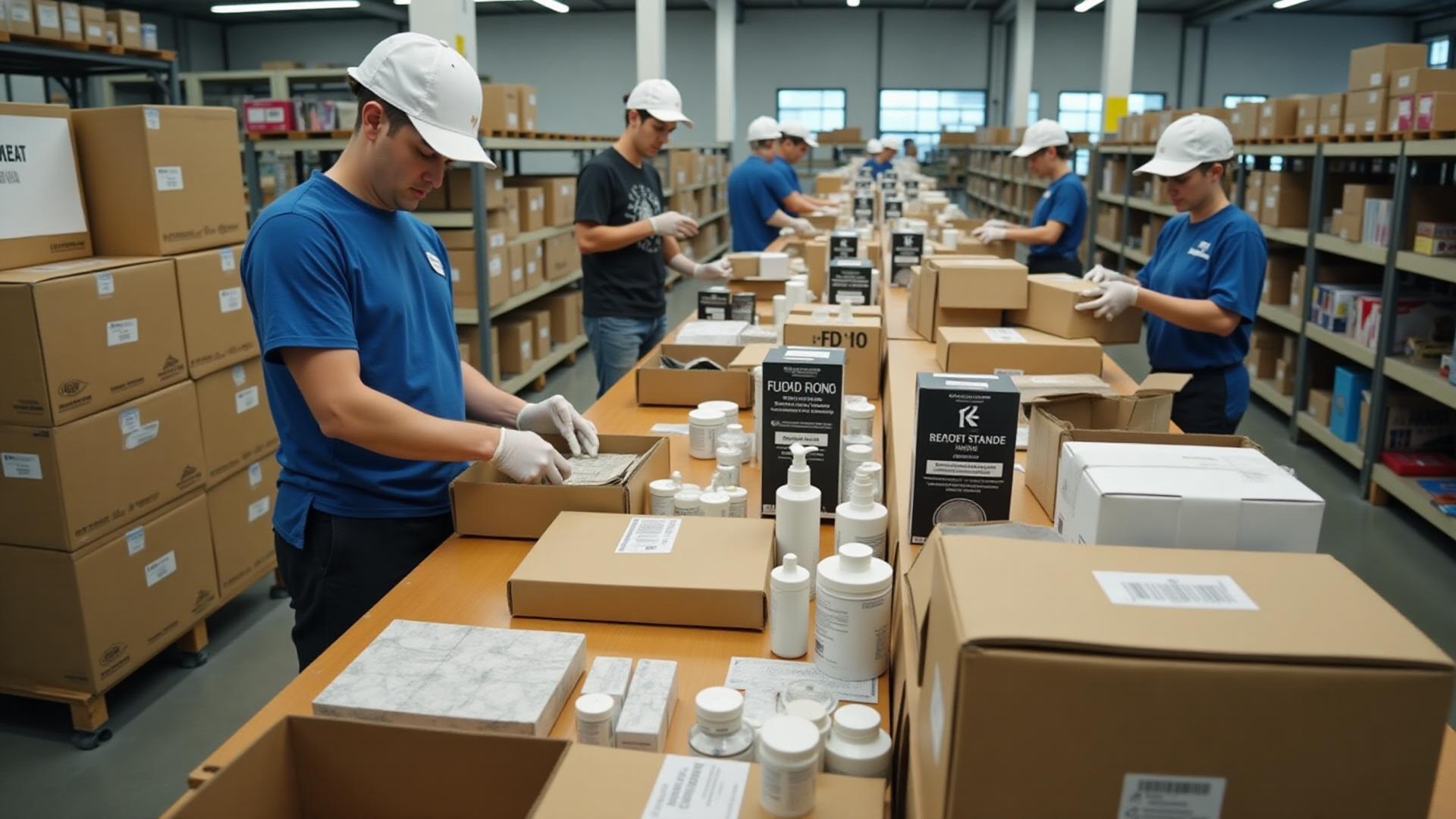
Packaging is not just branding. It's conversion, compliance, and operations.
- Conversion: clear benefit-led front panel, readable typography, strong SKU naming.
- Compliance: Supplement Facts panel, required FDA disclaimer (when used), net contents, manufacturer/distributor info.
- Operations: scannable barcode, lot/expiry placement, tamper-evident seal, ship-test friendly materials.
For skincare founders building for Shopify, packaging also needs to match your fulfillment workflow and product page photography. If you're launching skincare too, read How to Launch a Private Label Skincare Line With Minimal Upfront Cost.
Step 5: Set a Timeline That Matches Ecommerce Reality
Creators and performance ads move fast. Your supply chain has to keep up. With a turnkey partner, many brands plan around a 3–4 week turnaround from formulation to finished goods for small-batch launches (timelines vary based on complexity, packaging, and approvals).
- Week 0: Finalize formula direction + packaging dielines
- Week 1: Proofs, compliance review, sourcing lock
- Week 2–3: Manufacturing + filling + labeling
- Week 3–4: QA release + freight to your 3PL
Pro Tip
Plan your first drop as a "limited batch" launch. It creates urgency and gives you room to refine without promising endless availability.
Step 6: Control Quality With Documented Checks (Not Hope)
Scaling increases risk if your quality program is informal. Ask for documented controls and build them into your workflow.
Quality Checkpoint Reference
| Quality Checkpoint | What It Protects | What to Ask Your Manufacturer |
|---|---|---|
| Incoming raw material checks | Consistency and contamination risk | COAs, identity testing approach, supplier qualification |
| In-process controls | Fill weight, blend uniformity | Process controls, batch records, deviation handling |
| Finished goods inspection | Label errors and defects | Label verification, lot coding, packaging checks |
| Retention samples | Traceability if issues arise | Retention policy and storage conditions |
Choose a partner with GMP-certified and ISO-certified facilities, plus a clear QA release process. That's how you reduce surprises when you scale reorders.
Step 7: Plan for "Viral Demand" Before It Happens
Many ecommerce brands don't fail from low demand. They fail when TikTok hits and they can't ship for 8–12 weeks.
- Reorder triggers — reorder when you hit 35–45% inventory remaining.
- Packaging buffers — printed components often drive delays.
- Scalable production paths — from small-batch to larger runs without changing the formula.
- Backup fulfillment options — if your 3PL bottlenecks.
For a deeper look at spike planning, see What Manufacturer Can Handle Sudden Demand Spikes from TikTok or Instagram.

Step 8: Expand the SKU Line Only After the First SKU Is Stable
Most founders add SKUs too early. That splits ad spend, increases packaging complexity, and multiplies compliance work. Add SKU #2 when:
- You have steady weekly sales for 6–8 weeks
- Your reorder process runs on schedule
- Your customer support shows clear demand for a related product
Good second SKUs are tight extensions: a new flavor, a stronger dose, or a complementary product that increases AOV.
Cost and MOQ Planning: What Founders Should Expect
Founders often ask, "how much does it cost to manufacture a small run of vitamins for my brand?" The honest answer depends on formula, packaging, testing, and order size. Instead of chasing a single number, plan with a simple cost model:
- One-time costs: formulation work (if custom), label design, compliance review, initial setup charges.
- Per-unit costs: ingredients, encapsulation/fill, packaging components, labeling, carton/shrink.
- Logistics costs: freight to your 3PL, storage, pick/pack, returns.
Important
Warning: The lowest per-unit quote can be the most expensive outcome if it forces high MOQs, long lead times, or reprint costs from label mistakes.
Private Label Skincare Add-On: What Shopify Brands Need
Many supplement brands expand into topical skincare because it increases AOV and opens new creator angles. If you're asking, "what do I need to launch a private label skincare line for my Shopify store?" focus on these basics:
- Product type + hero benefit: cleanser, serum, moisturizer, mask.
- Stability + compatibility: formula must match the container (pump, dropper, jar).
- Label compliance: INCI ingredient list, net contents, directions, warnings.
- Fulfillment fit: leak resistance, secondary packaging, ship-test readiness.
- Small-batch launch plan: low MOQ to test conversion before bulk.
For a full step-by-step skincare roadmap, see How to Launch a Private Label Skincare Line With Minimal Upfront Cost.
How to vet a private label skincare manufacturer
If you're asking, "what should I look for in a private label skincare manufacturer?"—the answer is evidence, not promises. Shopify founders lose months when they pick on price alone and discover the partner can't supply documentation, hold a stable formula, or ship ecommerce-ready packaging. Use the checklist below to shortlist a skincare contract manufacturer in one call.
- Certifications: FDA-registered facility, cGMP for cosmetics (21 CFR 700-740), ISO 22716. Ask for the certificate PDFs, not just a logo on the website.
- Low-MOQ + scale path: can they run 1,500–2,500 unit pilot batches and keep the same spec at 10K+? Reformulation between sizes kills repeat purchase rates.
- Formulation transparency: full INCI disclosure, allergen list, preservative system, pH range, and a stability/PET (preservative efficacy) test on file before you commit to bulk.
- QA documentation: Certificate of Analysis (COA) per batch, microbial testing, batch records, and a written change-control process so a vendor swap doesn't silently alter your product.
- Packaging compatibility: they test fill with your actual pump, airless bottle, dropper, or jar—and run leak/drop tests sized for ecommerce shipping, not retail pallets.
- Label + claims compliance: US FDA cosmetic labeling (21 CFR 701), MoCRA registration support, INCI ordering, net contents in dual units, and a claims review so Shopify and Meta ads don't reject your launch.
- Lead time honesty: a written timeline for formulation, stability, printed components, fill, and QA release. Anything under 4 weeks for a custom skincare run is usually a red flag.
- IP + confidentiality: mutual NDA, written formula ownership clause, and a documented policy on who can access your spec sheet.
- Reorder responsiveness: ask for the median reorder lead time across their last 10 customers—not the marketing number.
Pro Tip
Ask for these documents on the first call: facility GMP/ISO 22716 certificate, sample COA, sample stability report, sample MoCRA/FDA cosmetic label review, and a redacted MSA showing reorder terms. A serious skincare manufacturer can send all five within 48 hours.
For deeper context on Shopify-specific launches, see Private Label Skincare for Shopify Stores and What Makes a Good Contract Manufacturer for Small Ecommerce Brands.
Validate a skincare idea before ordering bulk
The best way to validate a skincare product idea before ordering bulk inventory is to spend on signal, not stock. Run this 2–4 week loop before committing to a full production run:
- Concept test (week 1): publish a Shopify product page with real benefit copy, hero image, and price. Drive $300–$800 of paid traffic. Track add-to-cart rate (target 6%+) and "notify me" sign-ups.
- Sample/pilot batch (week 2–3): order a 1,500–2,500 unit pilot from a low-MOQ manufacturer with the same formula you intend to scale. Avoid hand-mixed samples—they don't reflect real stability or feel.
- Creator + UGC test (week 3): ship the pilot to 10–20 micro-creators. Measure unaided callouts on texture, scent, absorption, and packaging—these predict refund rate better than ad CTR.
- Conversion + repeat signal (week 4): sell the pilot at full price. Watch refund rate (under 4%), 30-day repeat rate, and review sentiment before placing a 10K+ reorder.
- Compliance pre-check: run the label through MoCRA + FDA cosmetic labeling review during the pilot, not after bulk is printed.
This protects cash, surfaces formulation issues early, and gives you the data Shopify, Meta, and Amazon ad accounts ask for when you scale spend.
Tips and Warnings (Hard-Earned Lessons)
- Don't approve labels in a rush. One typo can create a full reprint and delay your launch.
- Don't scale ads without inventory math. If you can't reorder fast, cap spend to protect your in-stock rate.
- Don't change the formula mid-scale. Keep the spec stable until you've built consistent repeat purchases.
- Do build a compliant claims list. Clear boundaries protect your merchant accounts and ad approvals.
- Do request documented QA. A reliable partner shows you the process, not just the promise.
Troubleshooting: Common Scaling Problems and Fixes
Common Scaling Problems
| Problem | What's Usually Happening | Fix |
|---|---|---|
| Launch keeps slipping | Packaging proofs, late approvals, missing components | Lock dielines early, set approval deadlines, keep backup packaging options |
| Quality varies between batches | Weak process controls or ingredient variability | Standardize specs, require batch records, add tighter in-process checks |
| Stockouts after a viral video | No reorder trigger and no packaging buffer | Reorder at 35–45% on-hand, keep extra labels/containers, pre-plan surge runs |
| Amazon listing or ads get rejected | Non-compliant claims or label issues | Use compliant structure/function claims and align listing copy with your label |
| Worry about IP/confidentiality | No clear controls on documentation and access | Use NDAs, limit access, document formula ownership and change control |
Quick manufacturer comparison
What to ask each shortlisted partner
| Manufacturer | MOQ flexibility | Packaging help | Reorder path | Ecommerce readiness |
|---|---|---|---|---|
| Peakfinity Labs | Low MOQ small-batch to scalable runs | Turnkey, ecommerce-ready packaging support and ship-test checks | Repeatable specs so you can scale from small-batch to larger runs without reformulation | GMP-certified and ISO-certified facilities; barcode and label formats that fit Shopify and 3PLs |
| Other small-batch manufacturers | Varies by partner; ask for firm MOQ sliding scales | Often limited turnkey options; confirm printed-component lead times | May require new setup fees when moving to larger volumes | May support ecommerce, but verify barcode, label, and lot coding workflows |
| Large-scale manufacturers | Higher MOQs, lower per-unit at scale | Full packaging services but longer lead times for printed components | Faster at high volume after initial setup, slower for quick reorders | Typically ecommerce-capable once set up, but not optimized for low-MOQ tests |
Use this table when you shortlist partners: ask each candidate the same questions on MOQ, printed-component lead times, and whether they keep your formula consistent between small and large runs.
Frequently Asked Questions
How do I start a supplement brand without spending thousands on inventory?
Start with a low MOQ small-batch run and a single hero SKU, then reorder based on real sales data. Use ecommerce-ready packaging, launch as a limited batch, and set a reorder trigger (often 35–45% inventory remaining) so you can scale without overbuying.
Can I test a supplement product idea with a small batch before committing?
Yes—choose a manufacturer that supports low MOQ, small-batch production and can keep the same spec when you scale. Run a 2–4 week test window to measure conversion rate, refund rate, repeat purchase signals, and customer feedback on taste, capsule size, and perceived results.
How much does it cost to manufacture a small run of vitamins for my brand?
Expect your total cost to be driven by ingredients + packaging + labor + QA, plus one-time setup/design expenses. Ask for a line-item quote that separates one-time costs from per-unit costs so you can model margin and understand how pricing improves as you scale.
Is it possible to launch a supplement line in under a month?
It can be possible for a small-batch launch when you keep the formula and packaging straightforward and approvals move fast. With a turnkey partner, many brands plan around a 4–6 week turnaround from formulation to finished goods, assuming packaging components and label approvals are not delayed.
What do I need to launch a private label skincare line for my Shopify store?
Founders need a validated hero SKU, compliant ingredient labeling (including full INCI), ecommerce-ready packaging, and fulfillment readiness. Peakfinity Labs recommends starting with a low-MOQ small-batch to test conversion, plus product photos and ship-tests so listings can go live the day inventory hits your 3PL.
How can I validate a skincare product idea without ordering bulk inventory?
Run a 2–4 week paid test using low-MOQ samples, a preorder or waitlist landing page, and a limited influencer sample send to gather conversion and feedback signals. Peakfinity Labs supports this with small-batch runs so you can refine texture, label claims, and packaging before placing a larger order.
What should I look for in a private label skincare manufacturer?
Look for a partner that supports low-MOQ runs, provides documented QA, and offers ecommerce-ready packaging so you can scale without reformulation. Peakfinity Labs's advice: ask each manufacturer for COAs, a QA release process, printed-component lead times, and a documented reorder path from small-batch to larger production. If they can't share those, they're not ready for a Shopify-first launch.

Tushar
Licensed Pharmacist and COO @ Peakfinity Labs
Written by the Peakfinity Labs R&D Team — 46+ years of supplement formulation expertise. Our team of formulation chemists, manufacturing specialists, and regulatory experts has helped thousands of eCommerce brands bring their products to market successfully since 1980.
Related Articles
Private Label Supplement Markup: Typical Margins for DTC, Amazon, and Wholesale
Typical markup ranges for DTC, Amazon, and wholesale, plus the landed-cost model that decides whether your margin is real.
How to Compare Quotes From Supplement Manufacturers Without Missing Hidden Costs
A six-bucket framework and paste-ready RFQ table that surfaces hidden costs before you sign with a manufacturer.
When Is a Supplement Brand Ready to Move From Private Label to Custom?
Nine readiness signals, the custom-light middle path, and a seven-step switch plan that avoids stockouts and claim issues.