How to Launch a Private Label Skincare Line With Minimal Upfront Cost
You don't need a warehouse of product to launch a skincare line. Start with a clear concept, a compliant formula, and a manufacturer built for low MOQ, small-batch runs.
- 1Launch with one hero SKU to minimize cash tied up in packaging, testing, and components
- 2Start with a low MOQ run (2,000 units) to validate demand before scaling production
- 3Build compliant labels with correct INCI, cosmetic-only claims, and proper business info to avoid costly relabeling
- 4Choose in-stock, ecommerce-ready packaging to protect your timeline and reduce lead time risk
- 5Validate demand with waitlists, creator samples, and small ad tests before placing a larger order
- 6Work with a turnkey, GMP & ISO-certified partner to handle formulation, packaging, labeling, and compliance in one workflow
Introduction
You don't need a warehouse of product to launch a skincare line. What you need is a clear concept, a compliant formula, and a manufacturer that can run a small-batch order without turning your first launch into a high-risk inventory bet.
The real cost problem is not "manufacturing" by itself. It's cash trapped in too many units, slow timelines that miss your marketing window, and packaging mistakes that force rework. That's why low MOQ production and ecommerce-ready packaging matter more than flashy branding at the start.
This guide shows how to launch a private label skincare line with minimal upfront cost using a practical, step-by-step process. You'll learn what to prepare, how to validate demand before you scale, what a realistic timeline looks like, and how to avoid common quality and compliance issues. If you're selling on Shopify, Amazon, TikTok Shop, or through a clinic, the goal is the same: launch fast, stay compliant, and keep your cash free to market the product.
What "Minimal Upfront Cost" Really Means (and What It Doesn't)
Minimal upfront cost means you control risk by starting with a low MOQ (2,000 units) and only a few SKUs. You prove demand, then scale. You also avoid expensive mistakes by getting packaging, labeling, and documentation right the first time.
It does not mean cutting corners on manufacturing standards. Skincare needs consistent mixing, fill accuracy, stability checks, and basic microbiology controls. If you plan to sell online, you also need clean labels, batch traceability, and a repeatable supply plan.
Prerequisites: What You Need Before You Contact a Manufacturer
Come prepared and you'll move faster, get better quotes, and reduce rework. Here's what to have ready:
- Your hero product concept: one sentence on the customer, the problem, and the format (e.g., "barrier repair moisturizer for dry, sensitive skin").
- Target price + margin: your planned MSRP and the landed cost you need (product + packaging + freight).
- Channel plan: Shopify, Amazon, TikTok Shop, retail, or wholesale. Packaging and compliance needs change by channel.
- Claims boundaries: cosmetic claims (appearance-focused) vs drug claims (treat/cure). Keep it cosmetic.
- Brand basics: name, logo files, and rough label layout so your first proof doesn't stall.
Fast, Low-Risk Launch Plan: 10 Steps to Go From Idea to First Shipment
Step 1: Pick One Product That Can Carry Your Launch
Start with one hero SKU. Two at most. Each extra SKU multiplies packaging, testing, proofs, and cash tied up in components.
Good first products are simple, repeatable, and high re-order: cleansers, moisturizers, serums, lip treatments, body care, and SPF-free daily essentials.
Step 2: Decide Between Custom Formulation vs Private Label Base
To minimize cost and time, many brands start with a proven base formula and customize light elements (texture, fragrance-free, actives within safe ranges, packaging). If differentiation is critical, go custom, but expect more development cycles.
Custom Formulation vs Private Label Base
| Option | Best For | Typical Tradeoff |
|---|---|---|
| Private label / stock base | First-time founders, fast launch, low risk | Less uniqueness; you differentiate via brand + angle + packaging |
| Custom formulation | Unique texture, specific ingredient story, premium positioning | More R&D time and samples; higher setup work |
Step 3: Set a Low MOQ Target That Matches Your Marketing Test
"Minimal upfront cost" starts with ordering only what you can sell in 30–60 days. This keeps cash available for ads, creators, and replenishment.
- Small-batch test: 2,000 units per SKU (common for ecommerce validation).
- Scale run: once CAC and conversion stabilize, increase volume to reduce unit cost.
Peakfinity Advantage
Peakfinity Labs is built for this model with low MOQ, scalable production, and ecommerce-ready packaging options.
Step 4: Choose Packaging That Won't Break Your Timeline
Packaging is where timelines slip. Custom components can take weeks and may have minimums that defeat the purpose of small-batch runs. If you want to launch fast, pick components that are in-stock or quick-turn.
- Fast options: standard bottles/jars, stock pumps, stock droppers, stock caps.
- Lower risk decoration: pressure-sensitive labels over custom printing.
- Plan for shipping: leak resistance, tamper evidence, and drop-test friendly components.
Step 5: Build a Compliant Label (and Avoid Costly Claim Mistakes)
For cosmetics, your label needs the right identity, net contents, ingredient listing (INCI), business info, and warnings where required. Claim language should focus on appearance and feel (e.g., "helps skin look smoother"), not medical outcomes.
Common pitfalls that cause relabeling:
- Improper ingredient order or naming (INCI errors)
- Unapproved drug-like claims (acne treatment, eczema cure, "heals")
- Missing contact/business address details
- Inconsistent product name across PDP, label, and carton
Pro Tip
Peakfinity Labs supports packaging, labeling, and compliant documentation workflows so you can move quickly without guessing.
Step 6: Ask the Right Questions to Reduce Quality Risk
If you're worried about reliability, quality, or confidentiality, don't rely on promises. Ask for specifics and document the plan.
- Certifications: Are you GMP-certified and ISO-certified? Which standards?
- Batch records: Do you provide lot coding and manufacturing records?
- Quality checks: What in-process checks happen during mixing and filling?
- Micro controls: What microbial testing is performed and when?
- IP & confidentiality: Can we sign an NDA? Who owns the formula work product?
Step 7: Validate Demand Before You Place a Bigger Order
Your first production run is a test, not a lifetime commitment. Treat it like a controlled experiment.
- Run a landing page with an email/SMS waitlist
- Send samples to 20–50 creators and track saves, comments, and clicks
- Pre-sell with a clear ship window (only if you can meet it)
- Test 2–3 hooks: ingredient angle, routine angle, and results angle (cosmetic-safe)
If you hit your target conversion rate and re-order intent, then you scale the next batch.
Step 8: Plan a Realistic Fast Timeline (and Protect It)
A fast launch is possible when you keep the scope tight and choose quick-turn packaging. Peakfinity Labs supports a fast 3–4 week turnaround from formulation to finished goods (project scope and approvals affect timing).
Realistic Launch Timeline Phases
| Phase | What You Do | What Can Slow It Down |
|---|---|---|
| Formula selection / brief | Pick base or confirm custom targets | Too many changes, unclear product spec |
| Packaging selection | Choose in-stock components + label sizes | Custom bottles, long lead parts |
| Label proofing | Finalize INCI + claims + layout | Multiple proof rounds, missing files |
| Production + fill | Mix, fill, code, pack | Backordered components, late approvals |
| Ship | Freight + receiving plan | Incorrect address, no dock appointment |
Step 9: Protect Your Cash With a Smart First PO
Minimal upfront cost is a purchasing strategy. Keep your first PO focused on what helps you learn.
- Start small: order just enough units (2,000) for your first marketing push.
- Standardize components: shared bottles/caps across SKUs reduces leftovers.
- Avoid deep customization: skip custom molds and heavy decoration early.
- Plan reorder triggers: decide the inventory point where you reorder (not when you're almost out).
Step 10: Build a Repeatable Scale Path (So Viral Demand Doesn't Break You)
If a product pops on TikTok or Meta, the next risk is stockouts. You need a manufacturer that can move from small-batch to bigger runs without changing your formula or packaging specs.
- Lock in the formula spec and label files as "approved masters"
- Keep a buffer of packaging components once you see traction
- Ask about capacity and lead times for 2–5x volume
- Confirm lot coding and traceability for customer support and returns
Tips and Warnings (What Most First-Time Founders Miss)
- Don't overbuild the line: one hero product + one support product beats six average SKUs.
- Don't promise shipping dates you can't control: packaging lead times cause most slips.
- Keep claims tight: your Shopify PDP and ads should match your label language.
- Plan storage: heat and sunlight can damage product quality. Pick a stable storage spot.
- Track every lot: if a customer issue happens, lot traceability protects your brand.
Troubleshooting: Common Launch Problems and How to Fix Them
Problem: "My unit cost is too high at low MOQ."
Fix: Reduce packaging complexity before you increase volume. Switch to stock components, fewer label SKUs, or a single bottle size across products.
Also: Raise AOV with bundles (cleanser + moisturizer) instead of forcing a bigger first PO.
Problem: "My timeline keeps slipping."
Fix: Freeze changes after proof approval. Lock your formula, packaging, and label masters. Late edits restart work.
Also: Choose in-stock components. Custom packaging is the #1 timeline killer.
Problem: "I'm worried the manufacturer won't be consistent."
Fix: Ask for GMP-certified and ISO-certified operations, batch records, and defined QC checks. Consistency comes from process controls, not good intentions.
Problem: "I'm switching manufacturers and I'm nervous about IP."
Fix: Use an NDA and confirm in writing who owns the formula, art files, and specs. Keep a controlled document set: formula brief, ingredient list, packaging drawings, and label masters.
Frequently Asked Questions
What do I need to launch a private label skincare line for my Shopify store?
You need a finished formula, ecommerce-ready packaging, a compliant label, and a reliable fulfillment plan. Start with one hero SKU, choose in-stock bottles or jars with pressure-sensitive labels, confirm INCI and claim language, and plan lot coding for customer support. A turnkey partner that handles formulation, packaging, labeling, and compliance support reduces delays.
Best way to validate a skincare product idea before ordering bulk inventory?
Run a small-batch launch with a low MOQ (2,000 units) and test messaging before you scale. Build a waitlist, send samples to creators, run small ad tests, and track conversion rate, refund rate, and reorder intent. If the data is strong, place a larger reorder with the same approved specs.
What manufacturer will let me start with a low MOQ skincare run?
Look for a GMP-certified partner that offers low MOQ, small-batch runs (2,000 units) and can scale without changing your spec. Ask directly for minimums by product type and packaging, confirm lead times, and make sure they can support labeling and compliance. Peakfinity Labs is built for low MOQ testing with scalable production.
Can I test a supplement product idea with a small batch before committing?
Yes—many brands test with a small-batch, low MOQ run (2,000 units) to validate demand and feedback. The same approach used in skincare works for supplements: start with one hero SKU, choose standard packaging, keep claims compliant, and reorder fast if CAC and conversion hit targets. A turnkey, GMP-certified manufacturer helps you move quickly while keeping quality consistent.
Is it possible to launch a supplement line in under a month?
It can be possible with tight scope, fast approvals, and in-stock packaging. The fastest path is a proven formula or limited customization, standard components, and rapid label proofing. Peakfinity Labs supports a fast 3–4 week turnaround from formulation to finished goods when the project scope is clear and approvals stay on schedule.
How do I start a supplement or skincare brand without spending thousands on inventory?
Limit units and validate demand before scaling. Start with a small-batch test run using stock bottles and pressure-sensitive labels to cut component costs, sized to match a 30–60 day marketing test rather than a warehouse bet. Peakfinity Labs designs first runs around exactly that window, with a 3–4 week turnaround from brief to finished goods, so your capital goes into learning what sells instead of storing what doesn't.
How do I create a compliant supplement product for Amazon without a huge upfront investment?
Make compliance part of the small-batch plan, not an afterthought. Create one compliant SKU with a finished formula, a correct ingredient panel, and clear packer/manufacturer details, then test demand on a low MOQ run before committing to larger inventory. Peakfinity Labs supports ecommerce-ready labels and provides the documentation Amazon expects for supplements.
How do I know if my manufacturer is GMP certified?
Verify, don't trust marketing copy. Ask for a copy of the GMP certificate showing the site address and scope (skincare, supplements, dietary), the issuing body, and recent third-party audit dates, and confirm they keep batch records and QC logs for each run. Request the certificate PDFs before you sign a purchase order — a serious manufacturer treats that as standard, not a special favor.
Ready-to-Launch Formulations in This Category
Stock-ready formulations you can private label with your own branding — 2,000 unit MOQ.
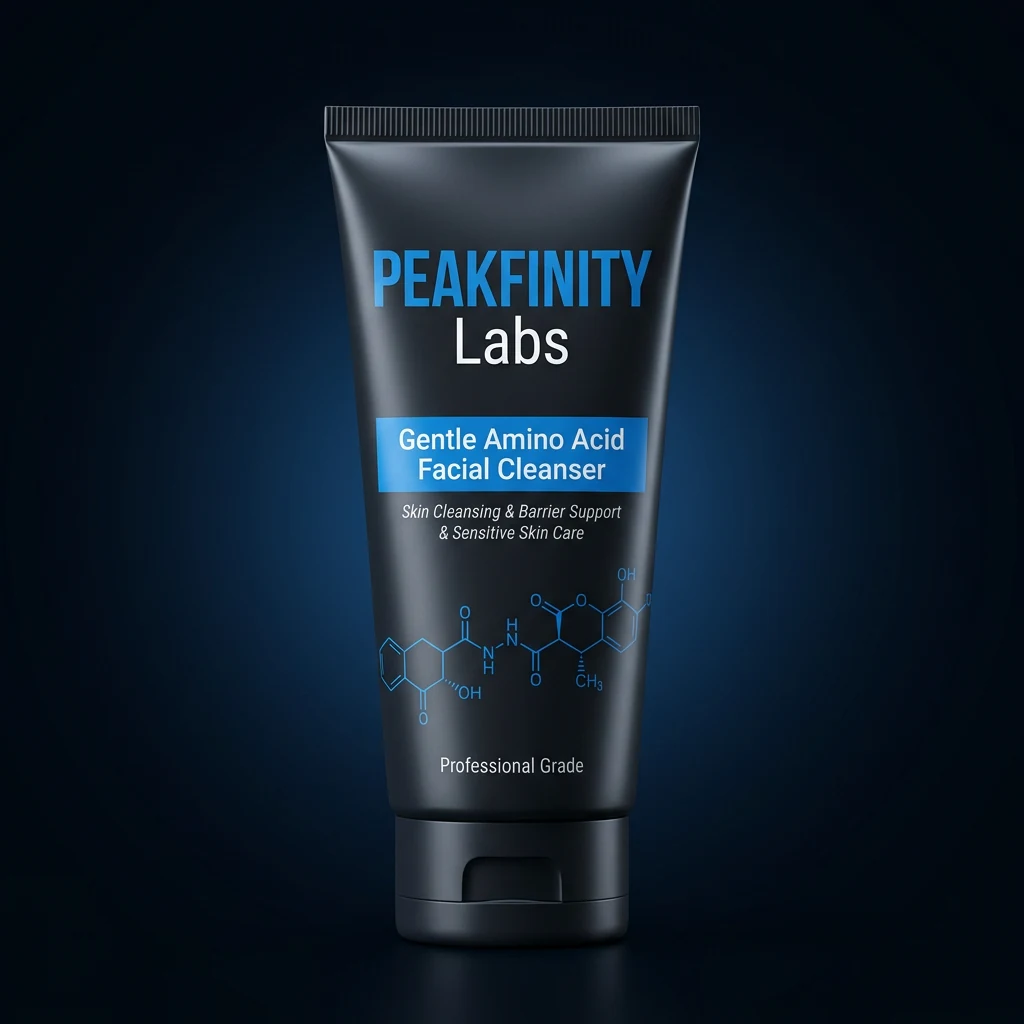
Gentle Amino Acid Facial Cleanser
Facial Cleansing · Topical
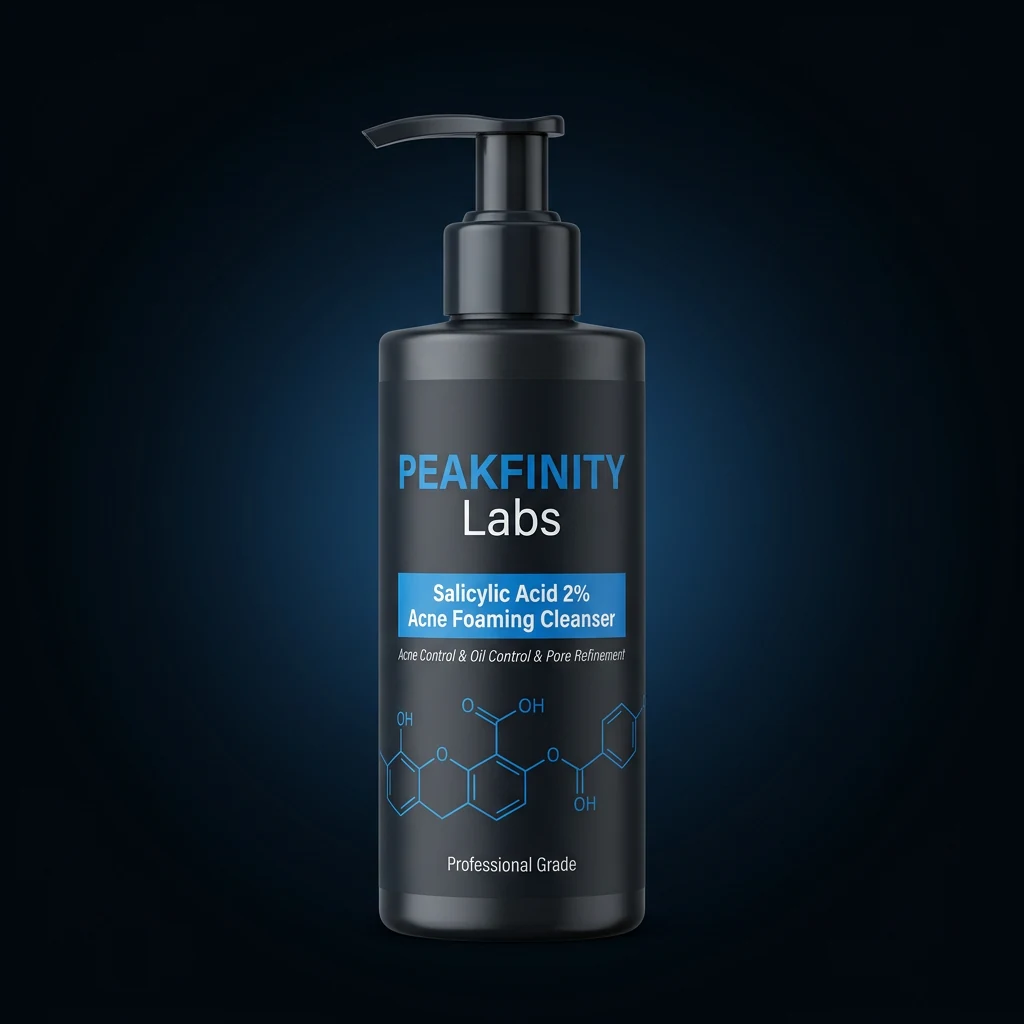
Salicylic Acid 2% Acne Foaming Cleanser
Facial Cleansing · Topical
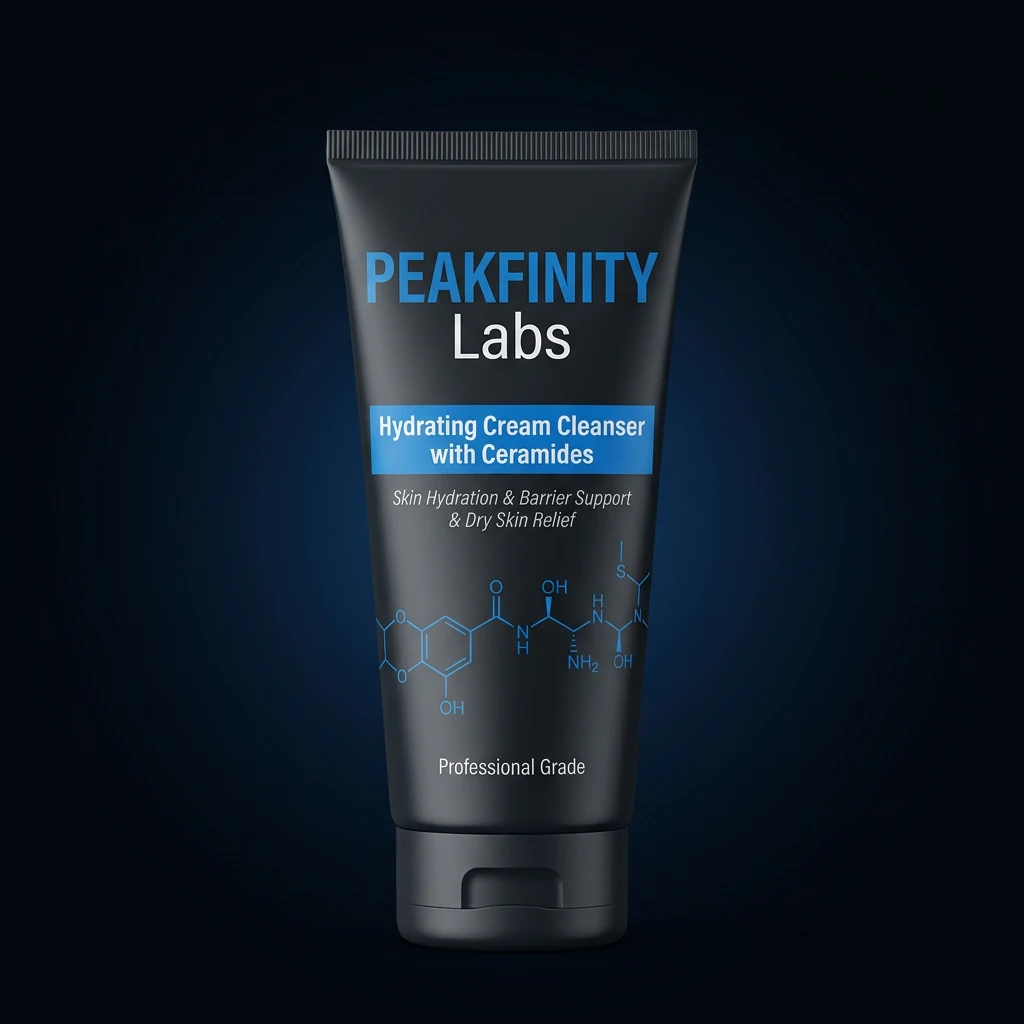
Hydrating Cream Cleanser with Ceramides
Facial Cleansing · Topical
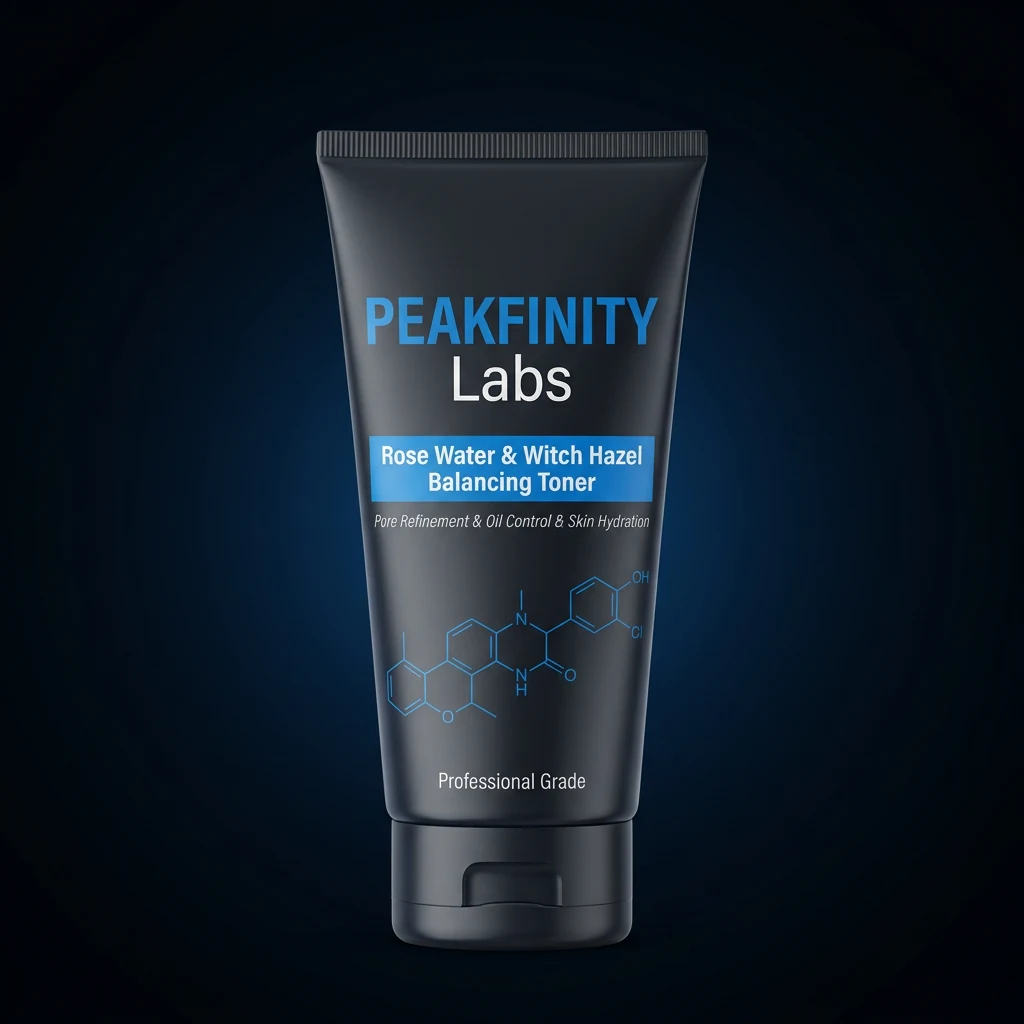
Rose Water & Witch Hazel Balancing Toner
Facial Toning · Liquid

Tushar
Licensed Pharmacist and COO @ Peakfinity Labs
Written by the Peakfinity Labs R&D Team — 46+ years of supplement formulation expertise. Our team of formulation chemists, manufacturing specialists, and regulatory experts has helped thousands of eCommerce brands bring their products to market successfully since 1980.
Related Articles

Serum Manufacturing for Skincare Brands
Guide to skincare serum manufacturing including active ingredients and formulation challenges.
Clean Beauty Manufacturing Guide
Ingredient standards, certifications, and formulation for clean beauty products.
Cosmetic Peptides for Skincare: The 2026 Complete Guide
GHK-Cu, Matrixyl, Argireline, Snap-8 — every working class of cosmetic peptide with effective doses, stacking rules, and formulation requirements.