Are Branded Supplement Ingredients Worth the 3-5× Cost?
Real break-even math and a channel-by-channel decision framework for when the premium pays back — and when it torches your margin.
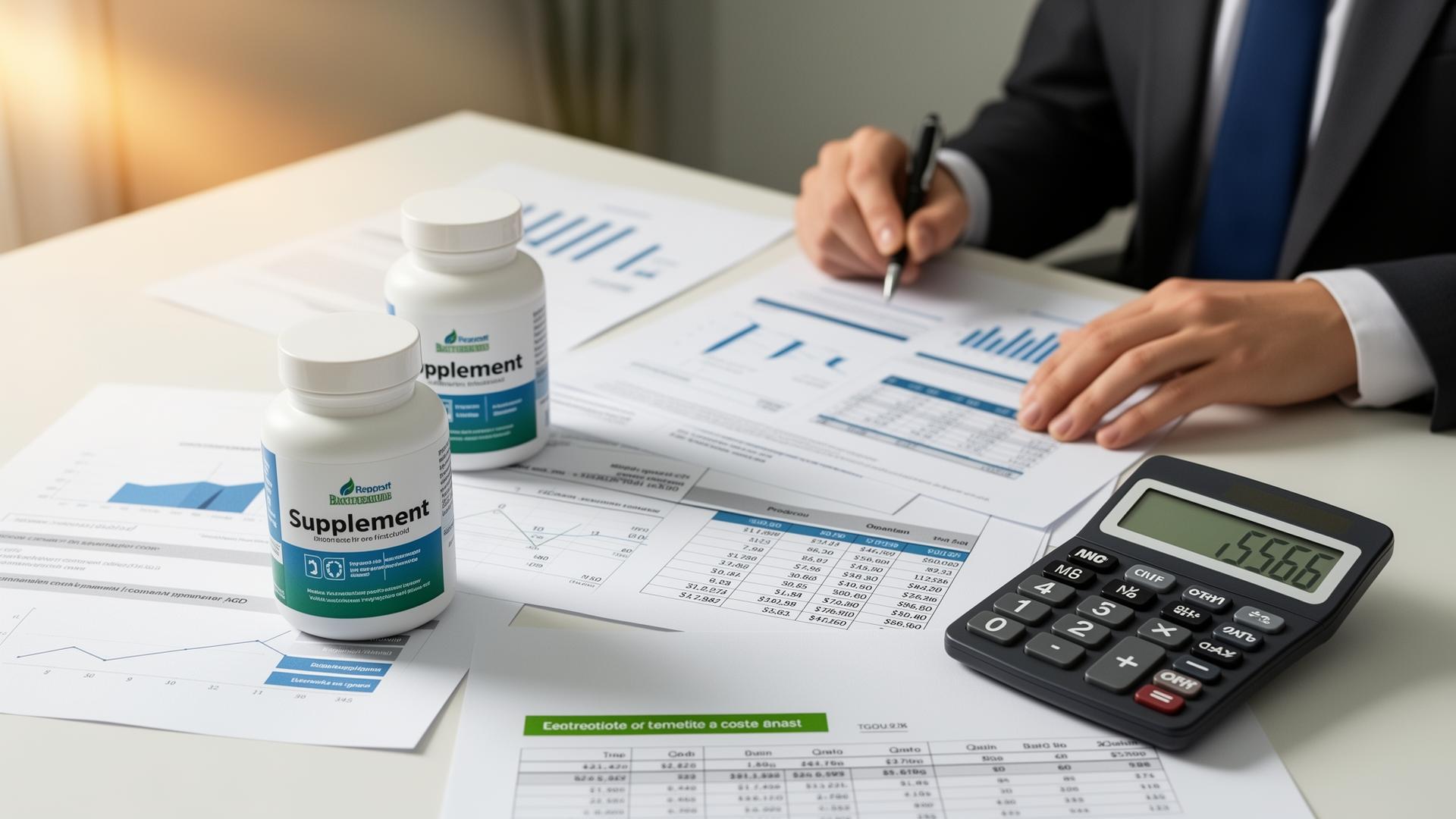
- 1The 3-5× cost delta is at the ingredient line, not finished goods. Real cost delta per unit is usually 8-25%.
- 2Break-even is fastest on premium-priced DTC and slowest on Amazon entry-level SKUs.
- 3Practitioner channels reward branded ingredients hardest — commodity supplements don't get recommended.
- 4The right pattern is 1-2 branded heroes + commodity supporting cast, not branded everything.
- 5If your active isn't your primary claim, commodity is usually fine.
The 3-5× number is misleading
Every founder we quote hears "branded ingredients cost 3-5× commodity" and pictures their landed cost per unit exploding. That math is technically true at the ingredient line — Cognizin® citicoline runs roughly 4× commodity citicoline per kilo. But the ingredient is one line item in a formula, at a specific inclusion rate, spread across the full production run. What actually shows up on your P&L is very different.
For most brands, adding one or two branded hero actives to a formula moves landed cost per unit by 8% to 25%, not 300-500%. The question isn't "can I afford this?" — it's "does this incremental cost pay back through higher price, better conversion, or gated channels I couldn't access otherwise?"
The actual break-even math
Take a realistic example. You're launching a focus supplement in a capsule format:
- Commodity version: citicoline (250mg) + L-theanine (200mg) + rhodiola + B6 + B12. Landed cost per unit: ~$1.85. Retail target: $24.99.
- Branded version: Cognizin® (250mg) + Suntheanine® (200mg) + Rhodiolife® + B6 + B12. Landed cost per unit: ~$2.35. Retail target: $34.99.
The branded version costs $0.50 more per unit — a 27% jump on landed cost. But it retails $10 higher, and the branded story lets you defend that premium instead of competing on price. Gross margin per unit goes from $23.14 to $32.64 (net of manufacturer cost only, before ads and fulfillment). That's a 41% jump in gross profit per bottle for a 27% cost bump.
The math flips on entry-level Amazon SKUs. A $14.99 basic focus capsule has $9-11 of gross margin after Amazon fees; adding $0.50 in ingredient cost you can't recoup at the price point just makes the ROAS math worse.
Rule of thumb
If a branded ingredient adds under $1 to landed cost and lets you retail $5+ higher, it's almost always worth it. If it adds $1+ and you're stuck at the same price point, it's almost never worth it.
Channel-by-channel decision
| Sales Channel | Break-Even Speed | Consumer Signal | Recommendation |
|---|---|---|---|
| Amazon FBA (entry, <$20) | Slow | Weak | Mostly skip — margin math rarely works |
| Amazon FBA (premium, $25-45) | Fast | Strong | Use 1-2 branded heroes for gating + trust |
| DTC / Shopify subscription | Fast | Very Strong | Anchor the story on 1 branded hero |
| TikTok Shop viral | Medium | Medium | Use if the branded ingredient itself is the hook |
| Practitioner / clinic sales | Immediate | Critical | Non-negotiable — commodity gets ignored |
| Whole Foods / Sprouts retail | Fast | Very Strong | Table stakes for buyer meetings |
| Big-box (Walmart, Target) | Slow-Medium | Medium | Selective — 1 hero, commodity supporting cast |
The pattern: the higher your target price and the more educated your consumer, the more branded ingredients pay back. Practitioner and premium-DTC channels reward branded formulas so consistently that commodity supplements essentially can't compete. Amazon entry-level is the opposite — you'll price yourself out of the buy box.
Three winning patterns we see
Pattern 1: The Hero + Cast. One branded active carries the primary claim and the marketing story. Everything else is quality commodity. Example: a sleep gummy with Suntheanine® as the hero + generic magnesium glycinate + melatonin + chamomile. Cost delta: ~$0.30/unit. Story delta: massive.
Pattern 2: The Stacked Premium. Two or three branded actives, all clinically dosed, sold as a $40-80 hero SKU. Example: joint formula with UC-II® + AprèsFlex® + Mobilee®. Cost delta: ~$1.20/unit. Retail premium: $20-30 above commodity competitors.
Pattern 3: The Channel Unlock. Add one branded ingredient specifically to clear Amazon supplement gating faster or land a Whole Foods buyer meeting. The ROI isn't in the SKU margin — it's in the shelf placement or listing approval that would otherwise take months.
When branded is a mistake
- Entry-level Amazon SKUs where the margin math doesn't work.
- MVP/concept-testing runs where you're validating demand, not scaling.
- Formulas where the branded active isn't the primary claim (branded vitamin C in a multivitamin).
- Categories with no meaningful branded differentiation (fish oil, single-vitamins, magnesium glycinate).
- Cases where you can't articulate the branded ingredient's story clearly — if you can't sell why it matters, the premium is wasted.
Ready to run the numbers on your formula
The clearest way to decide is to see the actual landed cost delta on your specific formula and price point. Send us your target concept and channel — we'll come back with a side-by-side quote (commodity vs branded, one hero vs two) so you can pick the version that pays back for you.
See the full branded ingredients comparison table for the 45+ actives we source direct, or jump straight to our branded ingredient formulation service.
Frequently Asked Questions
Is a branded ingredient always worth the premium?
No. Branded ingredients earn their premium when the active is the primary claim, when you're competing in a category where consumers read labels, and when your price point can support the added cost. For a $14.99 multivitamin, branded actives usually don't move the needle.
What's the smallest brand size where branded ingredients make sense?
Once you're past the concept-validation MOQ (roughly 2,000-5,000 units of a hero SKU) and confident in demand, branded ingredients are almost always the right call for the hero active. Below that, prioritize testing the concept with commodity ingredients.
Do branded ingredients help with Amazon supplement gating?
Yes — they help. Amazon's supplement compliance team scores your listing on ingredient quality, third-party testing, and clinical backing. A branded ingredient with published human trials gives you documentation to submit and a defensible claim, which speeds gating and reduces suspension risk.
Can I just say 'clinically studied' without paying for branded?
Only if you have your own clinical study on your finished product, which is expensive and time-consuming. 'Clinically studied' claims on a generic ingredient without your own trial data are the exact pattern the FTC and Amazon flag. A branded ingredient with published trials is the shortcut.
Related Articles
Private Label Supplement Markup: Typical Margins for DTC, Amazon, and Wholesale
Typical markup ranges for DTC, Amazon, and wholesale, plus the landed-cost model that decides whether your margin is real.
How to Compare Quotes From Supplement Manufacturers Without Missing Hidden Costs
A six-bucket framework and paste-ready RFQ table that surfaces hidden costs before you sign with a manufacturer.

When Is a Supplement Brand Ready to Move From Private Label to Custom?
Nine readiness signals, the custom-light middle path, and a seven-step switch plan that avoids stockouts and claim issues.