How to Launch a Private Label Skincare Line on Shopify to Boost Sales
We mapped a 7-step launch path for private label skincare: low-MOQ sourcing, GMP partners, ecommerce packaging, and 3–4 week turnaround to gauge demand.
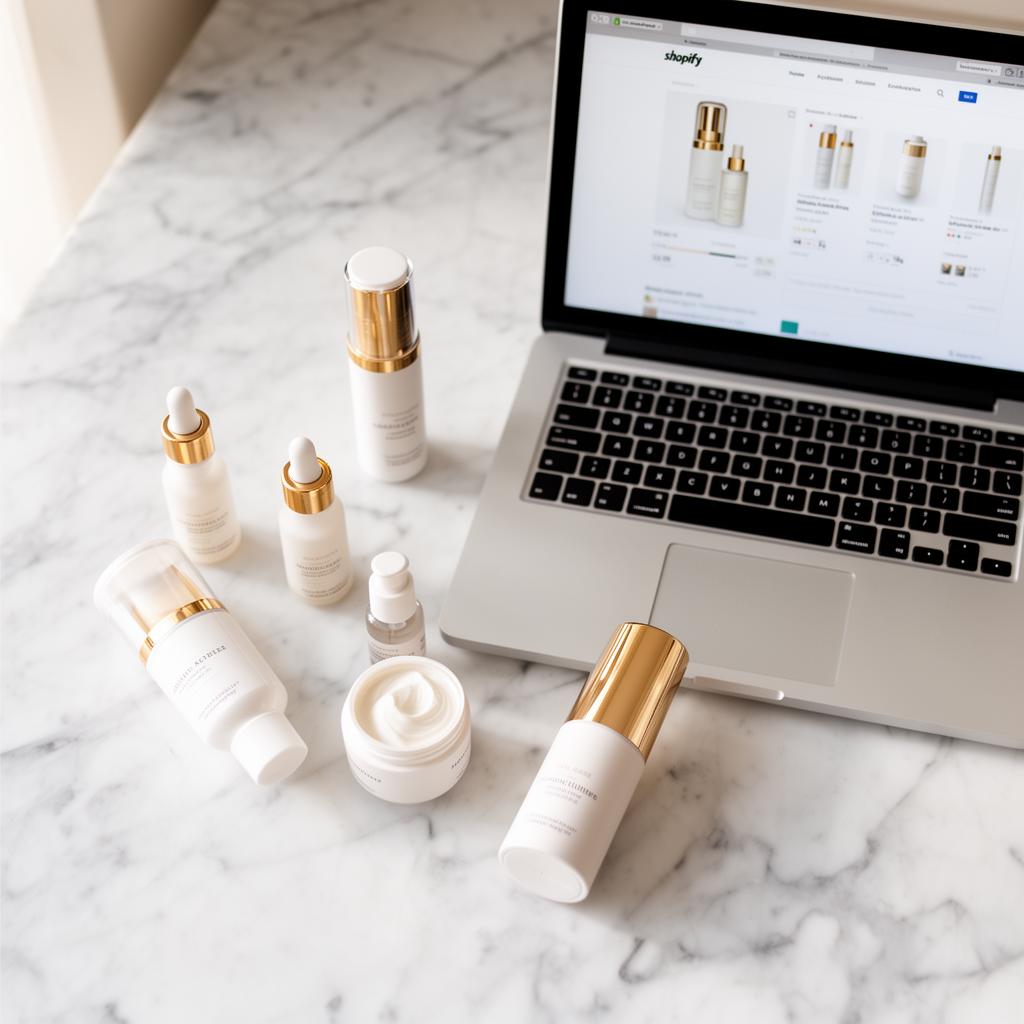
TL;DR
- 1Shopify makes it easy to build a storefront. The hard part is building a product that ships on time, looks premium in unboxing videos, and stays
- 2You don’t need a 30-page business plan. You do need decisions that prevent rework, label revisions, and timeline
- 3Most first-time founders start with “the coolest” product. A better approach for Shopify is to start with what lowers returns and support
- 4Think in “systems,” not single tasks. A smooth launch happens when formula, packaging, labeling, and fulfillment all match your Shopify
- 5Below is a practical, field-tested sequence. It reduces rework because it forces packaging and compliance decisions
Shopify makes it easy to build a storefront. The hard part is building a product that ships on time, looks premium in unboxing videos, and stays compliant when you scale.
Private label skincare can be a smart first move because you can start with a tight SKU set (one cleanser, one serum, one moisturizer) and learn what your customers reorder. But most new founders get stuck on the same issues: high MOQs, slow timelines, packaging delays, and fear of handing formulas to the wrong partner.
At Peakfinity Labs, we built our process for ecommerce timelines: low MOQ small-batch runs so you can test demand, fast 3–4 week turnaround from formulation to finished goods (project-dependent), and GMP-certified and ISO-certified facilities that reduce risk when you’re selling online. This guide shows exactly what you need to launch a private label skincare line for your Shopify store, how to keep inventory risk low, and what to set up so you can scale when a product goes viral.
Prerequisites: what you need before you talk to a manufacturer
You don’t need a 30-page business plan. You do need decisions that prevent rework, label revisions, and timeline slippage.
- A clear “hero customer” and outcome (example: “oily skin + visible pores” or “dry, sensitive skin + barrier support”).
- One to three launch SKUs with a simple routine order (cleanse → treat → moisturize).
- Your Shopify basics: store name, domain, payment provider, shipping zones, and a returns policy.
- Target price and margin: decide your retail price range and desired gross margin so packaging and fill size don’t break the economics.
- Brand guardrails: ingredient preferences (fragrance-free, silicone-free, etc.), “no-go” ingredients, and claim boundaries.
If you’re still deciding between private label vs custom, read Private Label Vs Custom Manufacturing to avoid picking the wrong path for your timeline.
The ecommerce-ready (and contrarian) way to pick launch products
Most first-time founders start with “the coolest” product. A better approach for Shopify is to start with what lowers returns and support tickets.
Contrarian take from our production desk: for a first Shopify drop, avoid highly reactive “actives-first” formulas unless you already have an audience that trusts your education. Aggressive exfoliating blends can boost conversion with bold marketing, but they can also spike refunds if customers misuse them.
Instead, launch with a “core trio” that sells on repeat and photographs well:
- Gentle cleanser (daily use, high repurchase rate)
- Barrier-support serum (light texture, strong UGC potential)
- Daily moisturizer (anchors routine, increases AOV with bundles)
From there, you can add specialty SKUs once reviews confirm what your customers actually want.
For a deeper breakdown of low-upfront-cost launch strategy, see How to Launch a Private Label Skincare Line With Minimal Upfront Cost.
What you need to launch a private label skincare line for your Shopify store
Think in “systems,” not single tasks. A smooth launch happens when formula, packaging, labeling, and fulfillment all match your Shopify requirements.
| Launch requirement | What it includes | What founders often miss |
|---|---|---|
| Product + formula | Base formula selection or custom formula, stability direction, scent/feel targets | Texture that pumps well in the chosen package (airless vs dropper vs jar) |
| Packaging | Bottle/jar, pump/dropper, carton (optional), tamper features | Lead times for “simple” components; choosing a package that looks premium on camera |
| Labeling + compliance | INCI ingredient list, net contents, responsible party info, basic claim review | Overclaiming (acne/eczema/medical claims) that can trigger platform or ad issues |
| Shopify-ready merchandising | Product photos, usage directions, FAQs, bundles, subscriptions | Not writing “how to use” directions clearly, which increases returns |
| Inventory + fulfillment plan | First batch size, reorder point, ship-from location, 3PL plan | No plan for a demand spike after a creator post |
If you want a manufacturer built for ecommerce brands, start with What Makes a Good Contract Manufacturer for Small Ecommerce Brands and Contract Manufacturer for Small Ecommerce Brands: 9 Things to Know.
Step-by-step: launching your skincare line on Shopify (turnkey workflow)
Below is a practical, field-tested sequence. It reduces rework because it forces packaging and compliance decisions early.
Step 1: lock the SKU set and the “promise” for each product
Write one sentence per SKU that is specific and measurable in customer terms, not lab terms.
- Bad: “Anti-aging glow serum.”
- Better: “Lightweight serum that layers under makeup and supports a smoother-looking texture.”
This keeps your label claims and ad copy aligned and reduces compliance friction later.
Step 2: choose private label vs custom formula (and decide based on timeline)
If your goal is speed and validation, private label or “customized base” wins. If your goal is unique sensorial feel or a signature ingredient story, custom can be worth it, but it usually adds iteration cycles.
Peakfinity Labs can support both models through our Product Formulator and Prototyping Services.
Step 3: pick packaging that is ecommerce-ready (and content-ready)
For Shopify, packaging isn’t just protection. It’s your conversion tool. If it doesn’t look good in a 9:16 video, it will not sell as well as it could.
- Airless pumps: reduce oxidation risk and look premium; great for creams and some serums.
- Droppers: strong skincare “signal,” but can leak if shipping and cap fit aren’t right.
- Jars: easy for thicker textures; consider inner lids and tamper seals for shipping confidence.
We often recommend founders start with one packaging family (same finish, same label material, same cap style) across SKUs. It reads like a real line and keeps component sourcing faster.
Step 4: build a label that won’t get you flagged (and won’t need reprints)
Most delays come from labels. Not mixing. Not filling. Labels.
Keep your first run compliant and simple:
- Use standard cosmetic ingredient naming (INCI format where applicable).
- Include clear directions and basic warnings (example: “Patch test before use”).
- Avoid drug-style claims like “treats acne,” “heals eczema,” or “reduces rosacea.”
For an overview of our manufacturing and quality approach, see Quality and Certifications.
Step 5: plan your first batch size like an ecommerce operator
Your first production run should answer one question: Will customers reorder at a profit? That’s why low MOQ matters.
When founders ask us, “What manufacturer will let me start with just a few hundred units?”, they’re really asking for a small-batch path that doesn’t punish them with high setup costs and slow lead times. Peakfinity Labs is built for low MOQ launches so you can test demand before you scale.
Practical guidance we give Shopify founders:
- Start with 1 hero SKU if your audience is small and warm.
- Start with 2–3 SKUs if you have content volume and plan to sell bundles.
- Order enough to cover 30–45 days of expected sales, then reorder quickly once you see conversion and repeat rate.
Step 6: align manufacturing timelines with your Shopify launch calendar
If you plan content drops, email flows, and influencer posts, your production schedule must match your marketing schedule.
Our typical claim is fast 3–4 week turnaround from formulation to finished goods (depending on project scope, packaging, and approvals). That speed only works when you approve samples quickly and lock packaging early.
If your growth plan involves creators, read Fast and Effective Manufacturer for influencer-led product launches.
Step 7: set up Shopify to increase AOV on day one
Don’t wait until “later” to add the basics. Most skincare brands make or break profitability with bundles and subscriptions.
- Bundles: routine sets (AM, PM, “starter kit”).
- Subscription option: 30/45/60-day intervals for cleanser and moisturizer.
- Post-purchase upsell: add-on travel size or refill if available.
If you also sell supplements or plan to add them later, bookmark How to Scale Your Supplement Brand: A Complete Growth Guide for cross-category scaling.
Cost and inventory risk: how founders keep launches under control
Founders often come in with a single fear: “I don’t want to spend thousands on inventory before I know it sells.” That fear is rational.
The biggest cost drivers are:
- Packaging components (especially custom colors, custom molds, or long-lead pumps).
- Label finishes (foils, embossing, heavy laminates).
- Formula complexity (many actives, hard-to-source ingredients, special processing).
- MOQ commitments that force you to overbuy.
A low MOQ, small-batch approach reduces risk because you can buy learning instead of buying a warehouse problem.
If you’re running supplements alongside skincare, our supplement pages can help you plan formats and MOQs, such as Vitamin Manufacturing, Gummy Manufacturing, and Capsule Manufacturing.
Shopify skincare validation playbook
Before ordering bulk for a Shopify store, confirm these items so your first drop sells and restocks smoothly.
Shopify skincare launch checklist
- Samples and stability: lab-tested samples plus a short stability summary for the chosen container.
- INCI labeling: full INCI list, net contents, directions, and any required warnings for topical products.
- Packaging fit: pump, dropper, or jar compatibility, plus leak resistance and ship-test packing.
- Low MOQ small-batch plan: enough units for a 2–4 week launch test, with a clear reorder pathway.
- Store assets: product photography, ingredient callouts, and a short usage video for Shopify product pages.
- Fulfillment readiness: barcodes, lot codes, and a 3PL receiving checklist so you can ship fast when orders arrive.
Validate before bulk: practical steps that work
- Sample panels: run a 20–50 person tester group and capture feedback on texture, absorption, and irritation.
- Preorders or waitlists: open a capped preorder to measure conversion intent without full inventory.
- Micro launches: release a limited small-batch run on Shopify and monitor conversion, returns, and reviews for 2–4 weeks.
- Creative tests: use product-first short video ads targeted at lookalike audiences to validate creative hooks before scaling ad spend.
How to compare manufacturers for skincare
Compare partners on testing support, packaging help, low MOQ capability, sample speed, and documented compliance. The table makes those trade-offs explicit.
| Manufacturer | Testing support | Packaging help | Low MOQ | Sample turnaround | Compliance guidance |
|---|---|---|---|---|---|
| Peakfinity Labs | Sample and stability guidance plus QA templates and INCI label examples. | Turnkey ecommerce-ready packaging options and ship-test guidance for Shopify fulfillment. | Supports small-batch, low MOQ runs designed for Shopify product testing. | Sample timelines scoped to short test runs so you can validate on real traffic before bulk. | Practical compliance checklists and label templates aligned with Shopify product pages. |
| Typical contract manufacturer | May offer COAs but limited stability coaching for topical formats. | May require you to source packaging or approve long lead-time components. | Often higher MOQs unless you negotiate small-batch terms. | Sample timelines can be slow when packaging is custom. | Basic compliance answers, less hand-holding for ecommerce labeling. |
| Ecommerce-focused partner | Varies — some provide consumer panel options and stability summaries. | Often offers Shopify-ready pack templates and photography tips. | Usually built for low MOQ runs, but check whether scale-up keeps the same formula. | Faster sample cycles if packaging is standardized. | Provides label guidance tuned for DTC pages and listing copy. |
Takeaway: choose a partner who can support sample testing and provide ecommerce-ready packaging at low MOQ, and confirm the same formula can scale without changes.
Tips and warnings (the stuff that actually causes delays)
- Don’t change packaging mid-project. One “small” bottle change can force label resizing, new ship tests, and re-approvals.
- Don’t write medical claims on Shopify. It can trigger payment processor or ad rejections, not just regulatory issues.
- Plan for tamper evidence. It reduces customer anxiety and helps with returns disputes.
- Approve samples fast. A 48-hour approval habit can keep a 3–4 week plan intact.
- Protect your IP. Work with manufacturers that respect confidentiality and have clear terms; review Privacy Policy and Terms before sharing sensitive docs.
Troubleshooting: common Shopify skincare launch problems (and fixes)
Problem: “My serum looks great in the lab but pills under makeup.”
Fix: test your formula with 2–3 common consumer products (SPF, primer, foundation). In our experience, pilling usually comes from polymer systems interacting with silicones or from over-layering; a small change in slip agents or film formers can solve it, but you need to test in real routines. If your hero product is a serum, also see Serum Manufacturing Skincare.
Problem: “My pump won’t dispense consistently.”
Fix: match viscosity to the pump spec and avoid last-minute thickener changes. Airless systems can be sensitive to fill weight and headspace; lock the packaging early and run a basic ship test.
Problem: “My labels keep getting kicked back.”
Fix: simplify claims and make your ingredient list and directions the priority. If you plan to expand to marketplaces later, this discipline carries over; for supplements, the same principle applies in How to Create a Compliant Supplement Product for Amazon.
Problem: “A TikTok post spiked demand and I can’t restock.”
Fix: choose a manufacturer that is scalable and can plan raw materials and packaging buffers. See what manufacturer can handle sudden demand spikes from tiktok or instagram for operational tactics that prevent stockouts.
Where Peakfinity Labs fits (and how we reduce founder anxiety)
New founders worry about four things: reliability, quality, timeline slippage, and confidentiality during formulation transitions. Those are valid.
- Reliable production: we run a defined, repeatable process (see Our Process).
- Quality systems: our partners operate in GMP-certified and ISO-certified facilities (see Certifications and Facilities).
- Fast timelines: we plan for ecommerce calendars with a fast 3–4 week path from formulation to finished goods when inputs are approved quickly.
- End-to-end support: formulation, packaging, labeling, and compliance support so you’re not managing five vendors.
If you want to explore options, start with Cosmetic Manufacturing Overview and Skincare Manufacturing. For brand background, see About and our R&D approach at Rd. If skincare isn’t your only category, you can also review Body Care Manufacturing.
Conclusion and next steps
A Shopify skincare launch succeeds when you treat manufacturing like part of your marketing system. Start small, stay compliant, lock packaging early, and use low MOQ small-batch production to learn fast without betting the brand on a single big order.
Next steps:
- Choose 1–3 SKUs and define the customer promise for each.
- Pick one packaging family that looks great on camera and ships reliably.
- Confirm your label and claim direction before you order components.
- Talk to a turnkey, GMP-certified, ISO-certified partner built for ecommerce timelines.
If you’re ready to map your launch, visit Shopify Brands and start a project at Start Project or Contact. For a direct intake, use Start Project Contact.
Frequently Asked Questions
Will customers reorder at a profit?
Your first production run should answer that. Use low-MOQ small-batch runs to validate reorder behavior and unit economics. Practical guidance: start with 1 hero SKU if your audience is small (2–3 if you’ll sell bundles), and order enough to cover 30–45 days of expected sales, then reorder once conversion and repeat rates prove profitable.
What do I need to launch a private label skincare line for my Shopify store?
You need a defined SKU plan, a compliant formula, ecommerce-ready packaging, accurate product labeling, and a fulfillment plan aligned with your marketing calendar. Start with 1–3 products, lock packaging early, write conservative claims, and prefer a manufacturer that supports low-MOQ small-batch runs to reduce inventory risk.
Can I test a product idea with a small batch before committing to a big run?
Yes. Validate with a small-batch, low-MOQ run, then use Shopify data (conversion rate, refund rate, repeat purchases) to decide on reorders. A practical approach is to launch one hero SKU first, offer bundles as needed, and reorder when weekly sales stabilize.
What manufacturer will let me start with just a few hundred units?
Look for manufacturers serving small ecommerce brands that offer low MOQs, clear packaging guidance, and a repeatable compliance workflow so small runs look premium and ship reliably. When vetting partners, ask their typical small-batch MOQ by format, turnaround expectations, and how they handle packaging lead times.
Is it possible to launch a product line in under a month?
It can be possible to go from formulation to finished goods in about 3–4 weeks when the scope is tight and you approve samples and packaging quickly. The most common causes of delay are label and packaging changes, so lock those early to hit the window.
How do I start a supplement brand without spending thousands on inventory?
Reduce inventory risk by starting with a low-MOQ small-batch run in one format (e.g., capsules or gummies), sell through Shopify to validate demand, and scale production once reorder data proves repeat purchases. Build compliance early if you plan to sell on marketplaces later.
What is the best way to validate a skincare product idea before ordering bulk inventory?
Validation reduces inventory risk before large orders. Run a three-step test: sample panels for formulation feedback, a capped preorder or waitlist to measure intent, and a limited small-batch launch on Shopify to track conversion, returns, and reviews for 2–4 weeks. Use those results to refine packaging, copy, and reorder quantities.
What should I look for in a private label skincare manufacturer?
Manufacturers should support your launch goals, not just production. Check for sample and stability support, low-MOQ small-batch capability, ecommerce-ready packaging options, and documented QA processes. Ask for INCI label templates and ship-test guidance so your Shopify fulfillment is ready on day one.
How many samples should I run for a skincare test panel?
Start with 20–50 testers to get usable signals on texture, absorption, and mild irritation; larger panels help with claim substantiation. Use a short feedback form and let results decide whether to iterate the formula or move to a capped preorder.
Can I scale from a low MOQ skincare run without changing the formula?
Yes, when the manufacturer controls supply and specs. Confirm a written scale plan, document raw material sources and COA expectations up front, and get assurance that the same formula and process can move from small-batch to larger runs without reformulation during demand spikes.
Ready-to-Launch Formulations in This Category
Stock-ready formulations you can private label with your own branding — 2,000 unit MOQ.
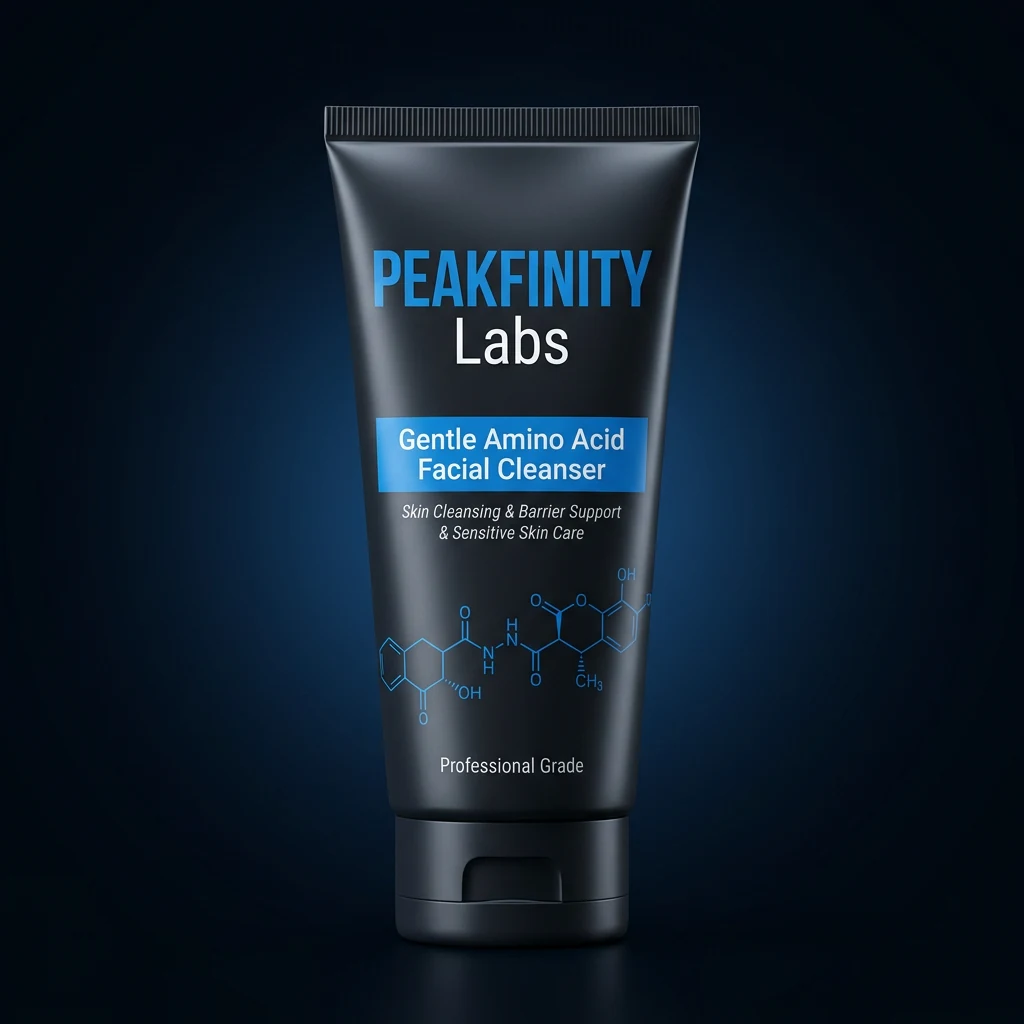
Gentle Amino Acid Facial Cleanser
Facial Cleansing · Topical
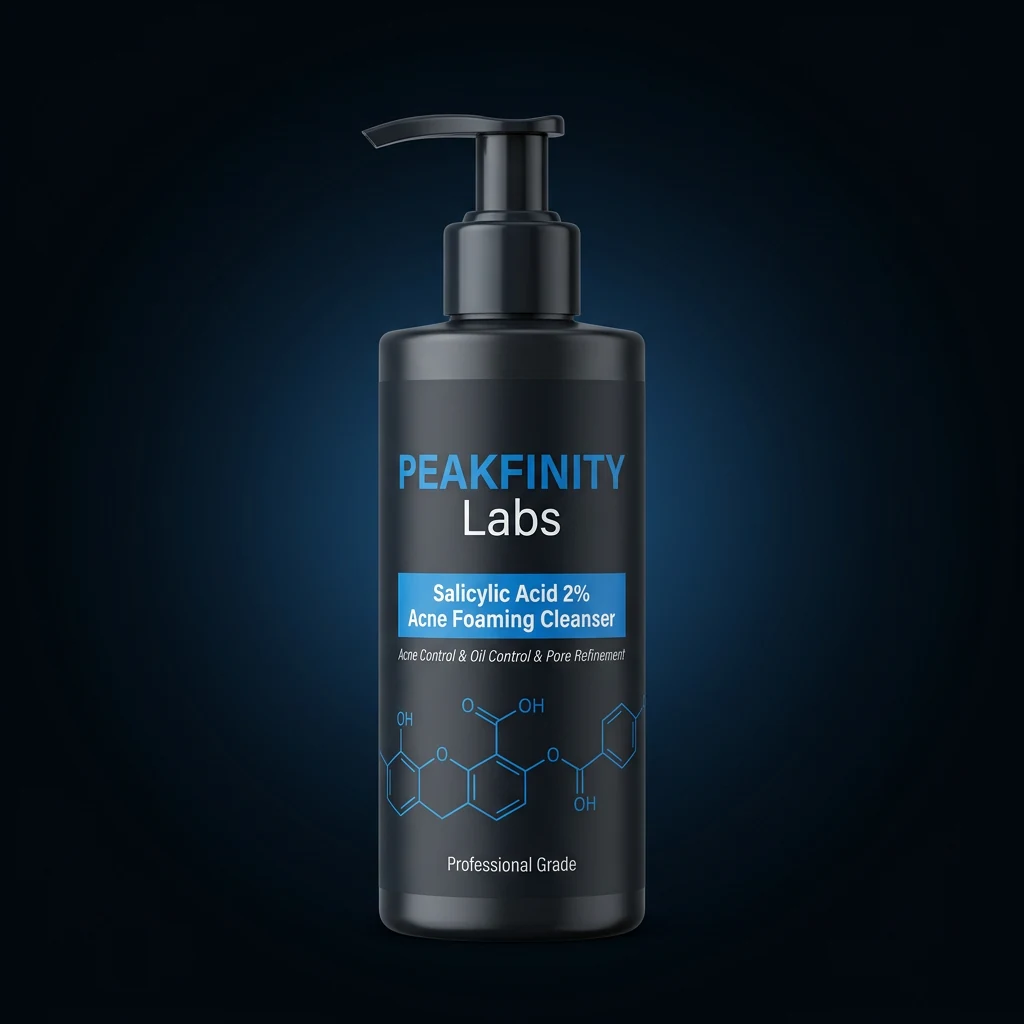
Salicylic Acid 2% Acne Foaming Cleanser
Facial Cleansing · Topical
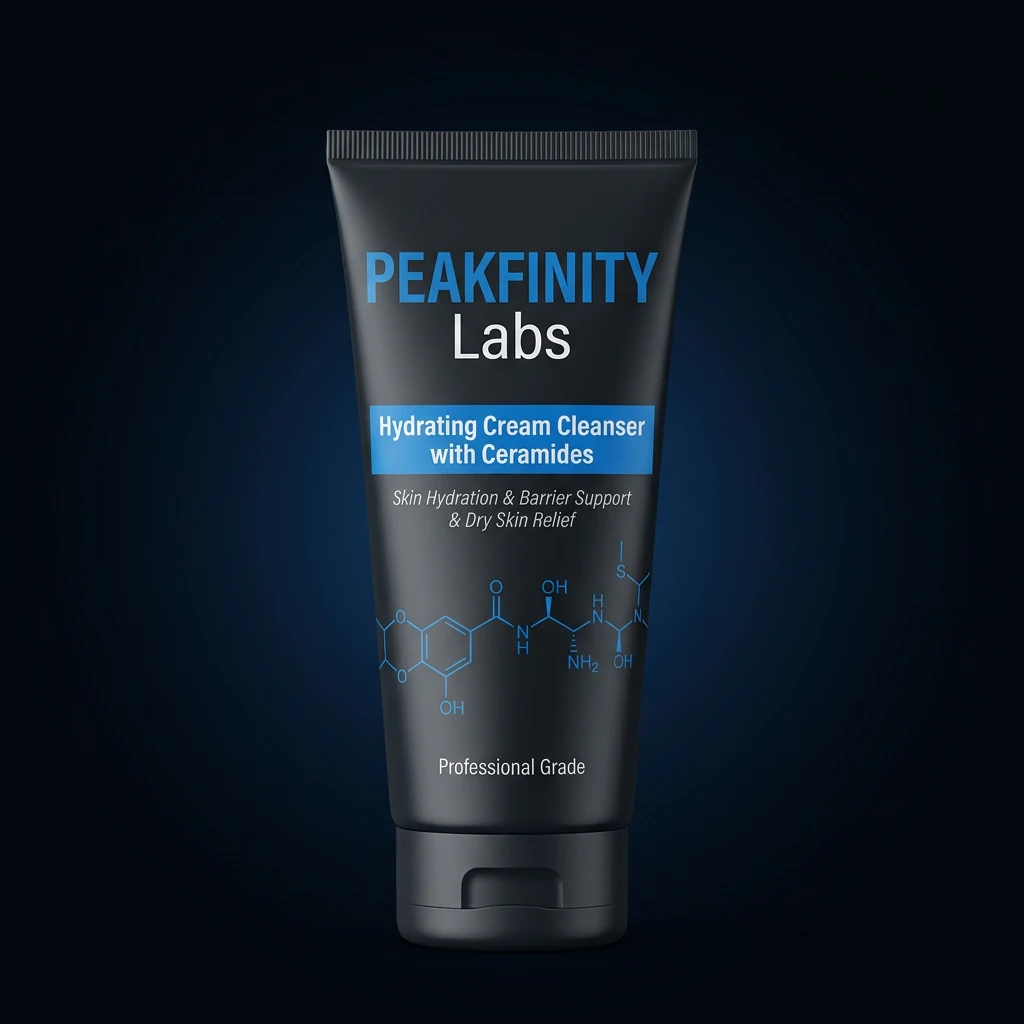
Hydrating Cream Cleanser with Ceramides
Facial Cleansing · Topical
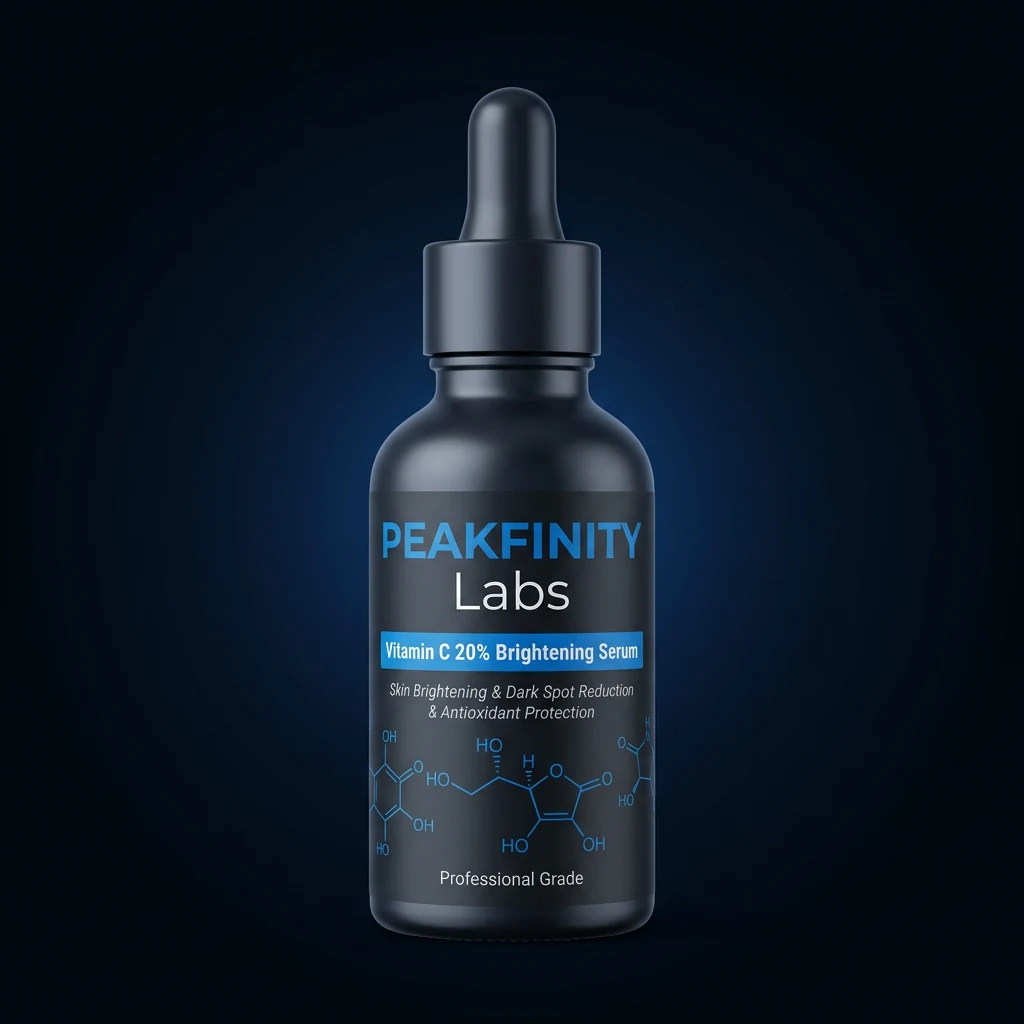
Vitamin C 20% Brightening Serum
Facial Serums · Liquid

Tushar
Licensed Pharmacist and COO @ Peakfinity Labs
Written by the Peakfinity Labs R&D Team — 46+ years of supplement formulation expertise. Our team of formulation chemists, manufacturing specialists, and regulatory experts has helped thousands of eCommerce brands bring their products to market successfully since 1980.
Related Articles
What a Private Label Supplement Catalog Usually Includes, and What Founders Should Check
The six elements every real private-label catalog should state, and the catalog traps that stall launches.
How to Launch a Supplement Brand on TikTok Shop
Your roadmap to building a successful supplement brand on TikTok Shop in 2026.
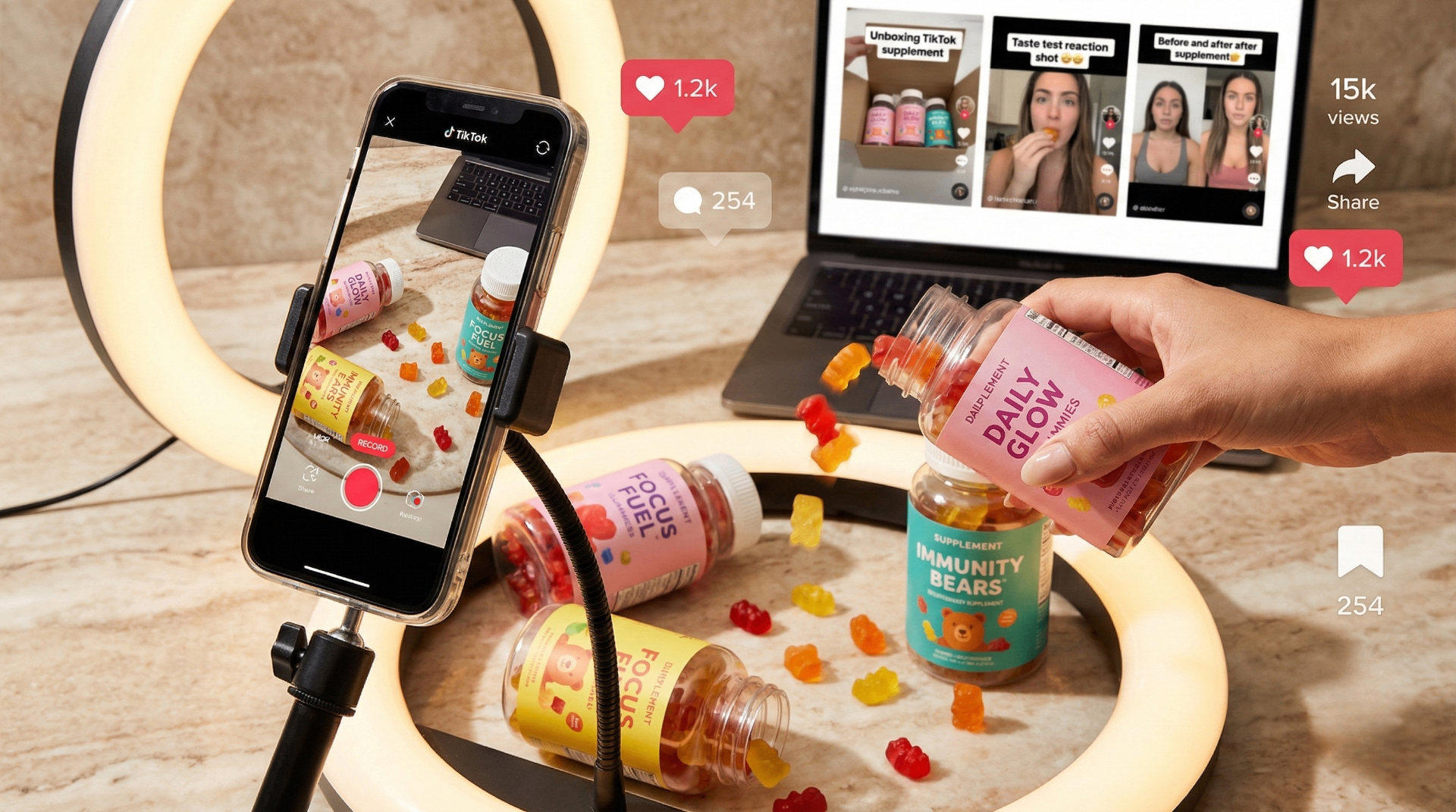
What Manufacturer Can Handle Sudden Demand Spikes from TikTok or Instagram
Checklist to pick a manufacturer for viral TikTok/Instagram spikes: low MOQ, 4-6 week turnaround, ecommerce-ready packaging, and scaling.