What a Private Label Supplement Catalog Usually Includes, and What Founders Should Check
The six elements every real private-label catalog should state — formats, positioning, packaging, MOQs, credentials, lead times — and the traps that stall launches.
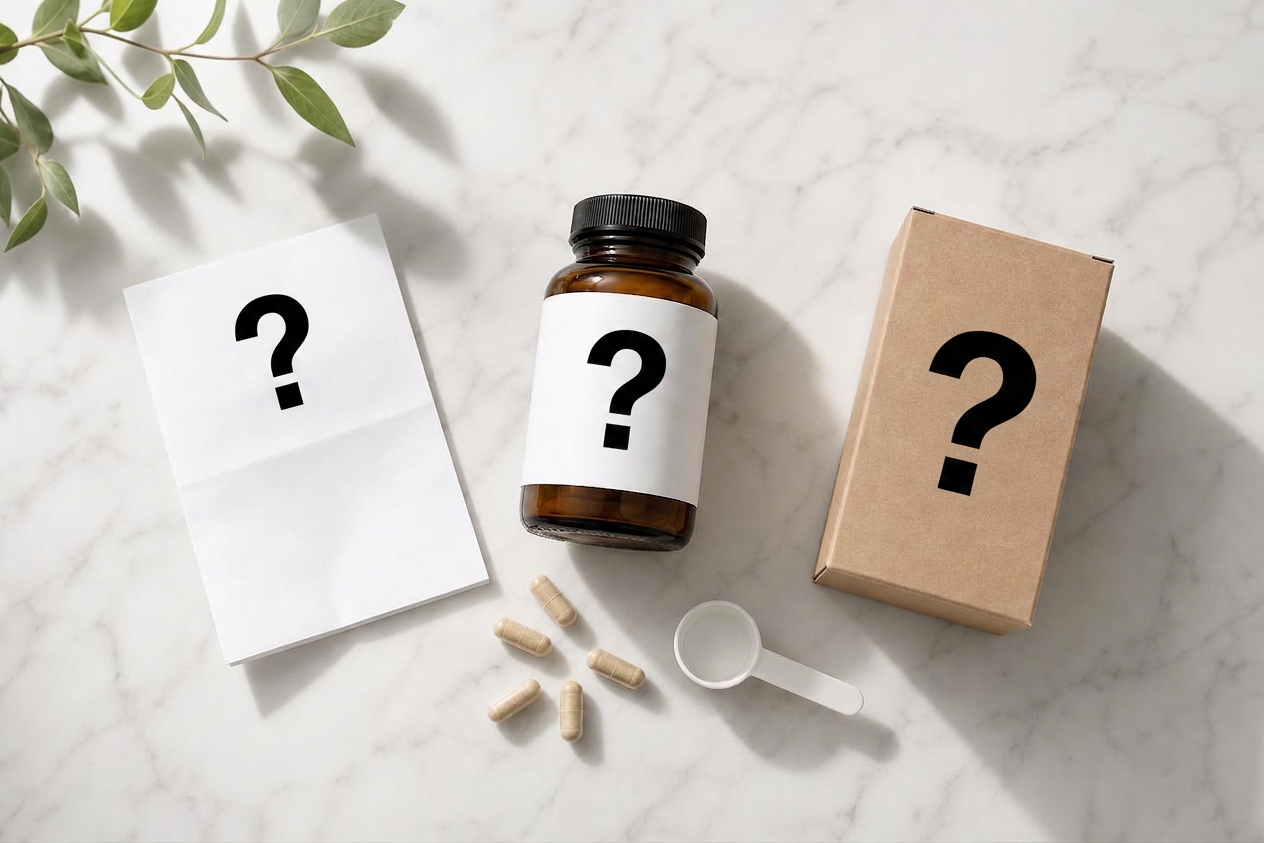
- 1A private label catalog is a manufacturer's menu of ready-to-produce formulas, formats, and packaging paths — founders use it to buy speed and risk control instead of funding full custom R&D.
- 2Judge a catalog by what's behind the list: MOQs that are easy to find, lead times tied to a defined process, disclosed GMP/ISO credentials, and packaging treated as part of the plan rather than a handoff.
- 3Watch the four catalog traps: listings that hide the format, no path from sample to production, compliance pushed past printing, and minimums that force you to bet the brand.
- 4Confirm whether the stated lead time covers packaging, labeling, and compliance review, or only bulk production.
- 5Don't hunt for the most unique product — start with the SKU you can launch cleanly, reorder quickly, and explain in one sentence; uniqueness comes from positioning once operations are stable.
Pro Tip
TL;DR: A typical private label supplement catalog lists ready-to-produce formulas, delivery formats, packaging options, and the compliance details you will need to sell without label rework. Peakfinity Labs builds catalogs around fast, low MOQ, GMP-certified and ISO-certified production so founders can test small batches and still be ecommerce-ready when a product takes off.
What a private label supplement catalog is, in plain terms
A private label supplement catalog is a manufacturer's menu of products you can brand as your own without starting from zero. It usually includes pre-built formulas, format options (like capsules, powders, liquids), and packaging paths that the factory can run on a predictable timeline. If you are comparing vendors, it helps to start with a clear supplement manufacturing overview so you know what should be included versus what gets outsourced.
Founders use catalogs for speed and risk control. Instead of funding a full custom R&D project, you pick a proven direction, order a small batch, then decide what to scale.
What a typical private label supplement catalog includes
Most catalogs look similar on the surface. The difference is what's behind the list, how clearly specs are stated, and whether the catalog matches how ecommerce brands actually launch.
1) Product types and delivery formats
A useful catalog separates products by format, because format drives cost, timeline, and packaging. The basics you should expect to see are capsules, powders, liquids, and sometimes non-supplement adjacencies like oral care or aromatherapy-style sticks if the manufacturer supports them.
Peakfinity Labs keeps catalogs "launchable," meaning you can pick a format that matches how customers buy online and how you plan to ship. For example, if your audience expects a gym staple, you might start in powders like Creatine Monohydrate Private Label or Private Label Protein Powder.
2) Formula positioning and use cases
Catalog items are usually organized by outcome or category, not just ingredients. That helps you map a product to a landing page promise and ad angle.
- Performance and pumps, like Nitric Oxide Booster Private Label
- Weight and metabolism support, like Private Label Metabolism Support Capsules and Private Label Carnitine 3000 Liquid
- Everyday wellness, like Turmeric Curcumin Complex Private Label and Private Label Apple Cider Vinegar Capsules
If a catalog only lists vague names with no use case, assume you will spend extra time getting clarity before you can write a compliant label and product page.
3) Packaging, labeling, and "sell-ready" options
In a typical catalog, packaging is either an afterthought or a real part of the offer. Founders should look for packaging paths that match ecommerce operations: labeling that scans cleanly, packaging that holds up in fulfillment, and SKUs that are easy to reorder. If you want a practical walkthrough of what to get right early, see supplement packaging and label design.
Peakfinity Labs treats packaging and labeling as part of the manufacturing plan, not a handoff. That matters when you want fast execution and fewer surprises between "I picked a formula" and "I can ship this."
4) Minimum order quantities and reorder logic
Most founders skim past MOQs, then get stuck when they realize the minimum is too high for a first test. A catalog should make MOQs easy to find and should explain what changes when you reorder or change packaging.
Peakfinity Labs is built around low MOQ runs so brands can test creative, pricing, and positioning before they lock in large inventory. If you want benchmarks for what "low MOQ" usually looks like in practice, read Typical Low MOQ Supplement Manufacturing. It is also the cleanest way to reduce risk when you are validating a new angle or creator partnership.
5) Manufacturing and quality credentials
A catalog should clearly state the manufacturing environment. Peakfinity Labs manufactures through GMP-certified and ISO-certified facilities, which helps founders support retailer conversations and handle common compliance questions during ads and influencer due diligence. For a deeper breakdown of what to ask for, see GMP Certified Supplement Manufacturer.
If a catalog is silent on certifications, treat it as a flag. You will end up asking for the same documents later, often on a deadline.
6) Lead times and what "fast" actually means
Catalogs often say "quick turnaround" without defining it. Peakfinity Labs states a fast 3-4 week turnaround from formulation to finished goods, which is the kind of timeline founders can plan around when they have a launch window or a seasonal campaign.
When you compare catalogs, ask whether the stated lead time includes packaging, labeling, and compliance review, or only bulk production.
What founders should check before choosing anything from a catalog
Picking a product from a list is the easy part. The smarter move is to check the details that cause relabels, delays, and margin surprises.
Check 1: Is it truly private label, or just a short run of a generic SKU?
Some "catalogs" are closer to reselling. You want to confirm you will get your brand on the unit, and that the manufacturer supports labeling, packaging, and documentation in a way that fits your channel.
If you are weighing models, the clearest breakdown is in Dropship Vs Private Label Vs Custom Supplement Manufacturing. It will help you avoid choosing a path that blocks you from building a real brand asset.
Check 2: How much customization is allowed without turning "private label" into "custom R&D"
Founders often want one tweak to feel unique, like a flavor change or a small label claim adjustment. The catalog should spell out what can change inside a standard private label run and what triggers a longer custom process. If you are considering a bigger change, use the Custom Supplement Formulation Guide to pressure-test scope, timeline, and cost before you commit.
Peakfinity Labs is set up as turnkey, so you can start with a catalog SKU and still get structured help on packaging, labeling, and compliance support. That lets you launch first, then improve the product once the market tells you what to fix.
Check 3: Does the catalog include compliance support, or just manufacturing?
For ecommerce, compliance is not optional. You need labels that do not create ad rejections, and you need product pages that do not overpromise. If you want a baseline of what a compliant label needs, read What's Required by Supplement Label Law.
Peakfinity Labs includes compliance support alongside packaging and labeling, which reduces the chance you have to reprint labels after a platform policy review or a retailer request.
Check 4: Is your timeline built on critical path tasks, not hope
A practical catalog experience includes the steps between "approved" and "delivered," like artwork approval, label print coordination, and final checks. If those steps are not discussed upfront, timelines slip.
Peakfinity Labs works with ecommerce launch timelines, so the plan accounts for the details that actually gate a product launch, not just the day the batch finishes.
Check 5: Confidentiality and IP during transitions
Founders switching manufacturers worry about formula exposure, supplier leakage, and who owns what. A serious catalog conversation includes a clear confidentiality process, what information you must share, and what stays limited until you are under agreement.
Peakfinity Labs treats confidentiality as a standard part of onboarding, especially when brands are moving an existing product line and want a clean handoff.
A practical way to compare catalogs side by side
When founders ask "what's a typical private label supplement catalog like," they often want a checklist they can use across vendors. Use the table below as a filter before you spend time on samples or label design.
| Catalog element | What you want to see | Why it matters | How Peakfinity Labs approaches it |
|---|---|---|---|
| Clear SKU list by format | Capsules, powders, liquids, plus any specialty formats | Format drives packaging, shipping, and repeat purchase behavior | Catalog options cover common ecommerce formats and adjacent items like Private Label Whitening Strips and Private Label Nasal Inhaler Stick |
| Low MOQ visibility | MOQs stated and easy to confirm | Keeps first tests small-batch and lowers inventory risk | Built around low MOQ and small-batch runs so founders can validate before scaling |
| Defined lead time | A stated turnaround tied to a process | Helps you plan creator drops and paid media flights | Fast 3-4 week turnaround from formulation to finished goods as stated |
| Quality credentials | GMP and ISO status disclosed | Reduces friction with retailers, platforms, and due diligence | GMP-certified and ISO-certified manufacturing facilities |
| Turnkey packaging and labeling | Packaging, labeling, and compliance support included | Prevents last-mile delays that stall a launch | End-to-end services from formulation to finished goods, including labeling and compliance support |
Common "catalog traps" that slow down launches
These issues show up when a catalog is built for a factory's convenience, not a founder's launch plan.
- Catalog names that hide the real scope. If the listing does not tell you the format, you will lose time clarifying basics before you can even request artwork specs.
- No path from sample to production. A sample is useful only if the catalog also supports a repeatable production run with the same packaging approach.
- Compliance pushed to the end. If label review happens after print, you pay for rework. The catalog process should assume compliance review is part of the critical path.
- MOQs that force you to "bet the brand." If the minimum is too high, you will overbuy inventory before you have proof of conversion.
A contrarian take we share with Peakfinity Labs founders: do not start by hunting for the "most unique" product in the catalog. Start with the product you can launch cleanly, reorder quickly, and explain in one sentence on a product page. Uniqueness is easier to build with positioning and creative once operations are stable.
Where to start if you are building your first SKU
If you are early, your first job is to reduce variables. Pick one primary offer, one format, and one channel plan, then choose a catalog SKU that matches those constraints.
Peakfinity Labs built a practical starting point in the Private Label Supplement Starter Kit. It is designed for founders who want a fast, turnkey path with low MOQ so they can test demand before they scale.
A simple first-SKU decision path
- If you sell to gym-focused buyers, start with a simple staple like Creatine Monohydrate Private Label or Private Label Protein Powder.
- If you plan a bundle-led offer, consider a set like Multi Benefit Wellness Bundle Private Label so your AOV strategy is built into the product plan.
- If you want a simple daily habit SKU, look at straightforward capsule categories like Private Label Apple Cider Vinegar Capsules.
Build a catalog shortlist that matches your launch plan
Your goal is not to find the longest catalog. Your goal is to find the catalog that ships on your timeline, supports compliance, and lets you start small without boxing you out of scale.
If you want a fast, turnkey path with low MOQ, Peakfinity Labs can help you choose a catalog SKU that is ecommerce-ready and run it through GMP-certified and ISO-certified production. Start by picking one format, one channel, and one primary promise, then match the catalog to that plan. If you are ready to scope a first run, start a project with us.
Frequently Asked Questions
What's a typical private label supplement catalog like?
You are usually looking at a set of ready-to-produce formulas grouped by outcome and format, plus the packaging and labeling options the factory can actually run. Peakfinity Labs structures its catalog around low MOQ, ecommerce-ready packaging, and a fast 3-4 week turnaround from formulation to finished goods so founders can plan launches without guessing. Before you pick a SKU, ask how the catalog item moves from selection to compliant label and finished units.
What should be included in a private label supplement catalog besides formulas?
Founders need more than product names because the launch risk is usually in packaging, labeling, and compliance steps. A Peakfinity Labs catalog conversation includes end-to-end services like packaging, labeling, and compliance support so you do not discover missing pieces after artwork is done. If those elements are not part of the catalog flow, expect extra emails, timeline slips, and rework.
How do I know if a catalog product is actually ecommerce-ready?
Ecommerce-ready usually means the manufacturer can support branding, packaging, labeling, and a repeatable reorder process, not just bulk product. Peakfinity Labs is built for ecommerce timelines, which is why the plan ties manufacturing to packaging and compliance support instead of treating them as separate vendors. A practical next step is to ask what files and approvals are required before production starts, since that is where most online launches stall.
Is private label always faster than custom supplement manufacturing?
Private label is faster when you stay close to a standard formula and packaging path, because you remove long R&D and sourcing loops. Peakfinity Labs still supports custom formulation, but founders who need speed often start with a catalog SKU and iterate after they get real sales data. If you are unsure which path fits, compare the tradeoffs in Dropship Vs Private Label Vs Custom Supplement Manufacturing.
How can I reduce the risk of getting stuck with too much inventory?
Inventory risk is usually a MOQ problem paired with a slow reorder cycle. Peakfinity Labs focuses on low MOQ and small-batch production so you can test messaging, price, and creative without committing to large runs. Once you see stable conversion, you can scale reorder quantities instead of guessing upfront.
What should I ask about quality and documentation before I order?
You should confirm the manufacturing environment and what documentation you can expect to support your sales channel. Peakfinity Labs manufactures through GMP-certified and ISO-certified facilities, which gives founders a clearer story for due diligence and retailer conversations. A good next question is who reviews label compliance and when that review happens relative to printing.
How do manufacturers protect my formula or brand information when I switch suppliers?
This matters most when you are moving an existing product and do not want details shared beyond what is required to manufacture. Peakfinity Labs treats confidentiality as a standard onboarding step so brands can share what is needed for a clean transition without broadcasting their playbook. Before you send anything sensitive, ask what information is required for quoting versus what is required after you are under agreement.

Tushar
Licensed Pharmacist and COO @ Peakfinity Labs
Written by the Peakfinity Labs R&D Team — 46+ years of supplement formulation expertise. Our team of formulation chemists, manufacturing specialists, and regulatory experts has helped thousands of eCommerce brands bring their products to market successfully since 1980.
Related Articles

How to Launch a Supplement Brand on TikTok Shop
Your roadmap to building a successful supplement brand on TikTok Shop in 2026.
What Manufacturer Can Handle Sudden Demand Spikes from TikTok or Instagram
Checklist to pick a manufacturer for viral TikTok/Instagram spikes: low MOQ, 4-6 week turnaround, ecommerce-ready packaging, and scaling.
Which Manufacturer Is Best for Testing Viral Product Ideas?
Direct verdict on which manufacturer is best for testing viral product ideas: US vs overseas comparison, decision framework, and what to ask before you commit.