Supplement Packaging: 7 Unexpected Tricks Manufacturers Use
Most founders think packaging means picking a bottle and making a label look good. The real game is what happens before you ever approve a proof.
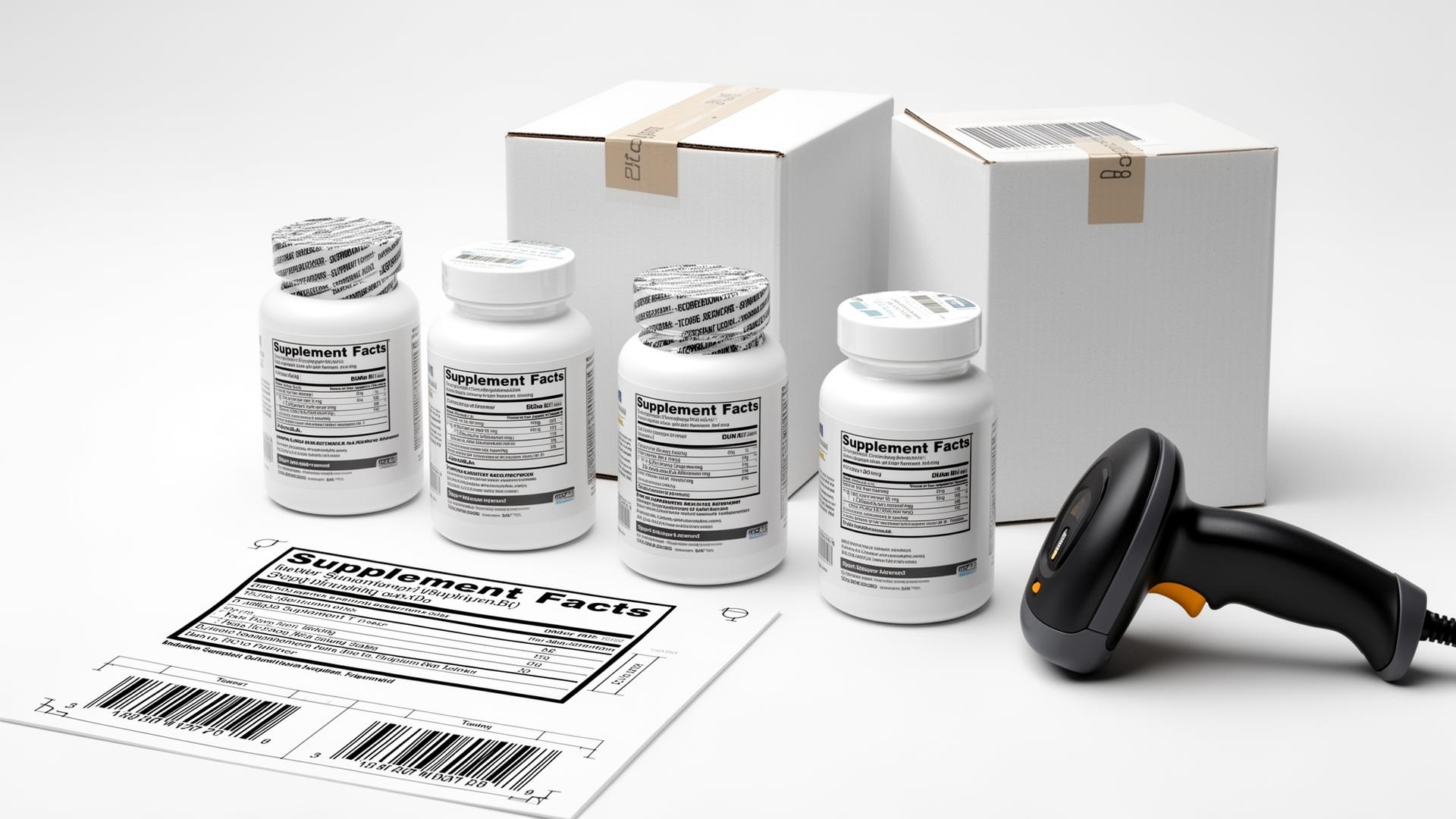
- 1Start label layout with required compliance elements first—branding wraps around them, not the other way around
- 2Pre-flight the Supplement Facts panel for print reality: curvature, seam placement, line weights, and minimum type sizes
- 3Choose bottle size by physical pack-out sample, not mockups—headspace drives breakage, scuffing, and seal failures
- 4Design one Amazon + DTC packaging system to avoid split inventory and costly relabeling
- 5Quote packaging on landed cost per sellable unit so margins survive when you scale from 5k to 100k units
- 6Build compliance buffers so minor formula or claim updates don't scrap thousands of labels
- 7Standardize packaging components early so you can hit fast turnaround when demand spikes
Introduction
Most founders think "supplement packaging" means picking a bottle and making a label look good. That's the visible part. The real game is what happens before you ever approve a proof: how the manufacturer sets up packaging so you don't get hit with rework, compliance edits, dented bottles in FBA, or a sudden unit-cost jump when you scale.
Here's the contrarian truth we see every week: packaging decisions usually make or break your launch timeline more than the formula does. A label can be "pretty" and still fail Amazon's image rules, fail a printer's minimum line weight, smear in a humid warehouse, or create a claim problem that forces a relabel mid-run.
Below are seven manufacturer-grade tricks that reduce risk, keep you compliant, and keep your brand looking premium without burning cash. This is written from the perspective of a partner that builds D2C ready packaging, supports low MOQ test runs, and plans for rapid scale with fast turnaround in GMP & ISO certified facilities.
1) They Design the Label Around a "Compliance-Safe" Claims Zone
The fastest way to blow up a timeline is a label rewrite after you've already approved design. The trick good manufacturers use is to reserve a "compliance-safe" zone early: the Supplement Facts panel, required statements, and a conservative claims area that can survive retailer review and future formula tweaks.
We tell brands to treat the front panel like a performance ad and the side/back like a legal document with marketing-friendly structure. If your designer locks typography first and tries to "fit compliance later," you usually end up shrinking fonts below legible sizes or moving statements into awkward locations.
Practical move: build your layout starting with required label elements and minimum type sizes, then let branding wrap around that. It keeps you compliant and avoids expensive reproofs when you update serving size, add an allergen statement, or adjust directions.
- Best for: brands launching on Amazon + DTC and planning line extensions
- Risk it prevents: last-minute claim edits, panel overflow, and unreadable fonts
Reference: FDA dietary supplement labeling guidance and general labeling requirements in 21 CFR Part 101.
2) They Pre-Flight Your Supplement Facts Panel Like a Printer
A compliant Supplement Facts panel can still be unprintable. Manufacturers who move fast do a pre-flight check that mimics what the label printer will reject: hairline borders that break on press, reversed white text that fills in, or type that's too small once the label wraps around a bottle.
One real-world detail: curvature matters. A panel that looks fine on a flat PDF becomes distorted when wrapped on a small bottle, especially if your panel sits near a seam. That's why we recommend placing the Supplement Facts panel away from the overlap and keeping it in a predictable rectangle.
If you want to avoid reprints, ask your manufacturer for the exact dieline, the minimum font sizes they'll sign off on, and the printer's preferred barcode specs before design starts.
| Pre-flight Item | Why It Fails in Production | What to Do Instead |
|---|---|---|
| Too-small type | Illegible after application or varnish | Use larger, high-contrast fonts for Facts + directions |
| Thin rules/borders | Lines drop out on press | Use printer-safe line weights and avoid hairlines |
| Panel too close to seam | Wrap distortion and overlap | Keep Facts panel in a seam-safe area |
| Low-contrast text | Smears or "fills in" | Increase contrast; avoid tiny reversed type |
3) They Pick Bottle Size Based on "Count-to-Fill" Reality
Founders often choose a bottle because it looks high-end in a mockup. Manufacturers choose it based on how it fills at speed, how it ships, and how it handles moisture and oxygen. The trick is matching your dose form (capsules, tablets, gummies, powders) to a bottle that fills cleanly without excessive headspace.
Headspace is not cosmetic. Too much empty space makes capsules rattle and chip, gummies scuff and sugar-dust, and powders clump as the product shifts. Too little space makes induction sealing and capping less reliable, which can create leaks in transit.
Pro Tip
Our pragmatic rule: select bottle size after you lock count, serving size, and desiccant needs, then validate with a physical pack-out sample. It's the simplest way to avoid switching bottles right before a fast turnaround run.
- For capsule/tablet SKUs: test fill for breakage and rattle with your chosen desiccant (and confirm your manufacturer's capabilities, e.g., capsule manufacturing or tablet manufacturing)
- For gummy SKUs: prioritize wide-mouth jars and scuff-resistant handling
- For powders: consider jars vs. canisters based on scoop size and static cling (see powder manufacturing)
4) They Build "Amazon-Proof" Packaging from the Start
Amazon doesn't just care about your formula. It cares about how your packaging communicates. The unexpected manufacturer trick is designing for Amazon's reality: automated listing checks, image rules, and customer return behavior.
Two packaging choices we see reduce headaches: (1) keeping front-panel claims conservative and consistent with your listing copy, and (2) using a tamper-evident setup that photographs clearly. When customers can't tell if a product was opened, returns spike, and reviews follow.
If you plan to sell on Amazon and DTC, don't create two separate designs unless you have a clear reason. Instead, make one D2C ready packaging system that is retail-clean, Amazon-friendly, and still brand-forward.
| Goal | Packaging Choice That Helps | Why It Matters on Amazon |
|---|---|---|
| Lower returns | Tamper-evident band + induction seal | Customers can see it's unopened |
| Fewer compliance flags | Aligned claims on label and listing | Inconsistent claims trigger reviews |
| Stronger shelf image | High-contrast, simple front panel | Thumbnails need readability |
| Less damage in FBA | Thicker-wall bottle + proper cap torque | Automated handling is rough |
For a deeper breakdown, reference our guide to staying compliant with supplements on Amazon and Amazon FBA supplement manufacturing considerations.
5) They Quote Packaging Like a CFO: "Landed Cost per Sellable Unit"
Hidden costs rarely show up in the first quote. The trick experienced manufacturers use is modeling your landed cost per sellable unit: packaging components, application labor, spoilage allowance, freight, and rework risk.
For example, a "premium" label stock might add only pennies per unit, but if it requires longer cure time or slows application speed, your total run cost can jump. The same happens with complex multi-panel labels or custom caps that have longer lead times.
If you're switching manufacturers, this is the question that protects you: ask for a costed bill of materials and call out what changes at scale (5k → 25k → 100k units). We build quotes this way because it prevents the worst founder surprise: a viral spike with a margin collapse.
- Ask for: per-unit packaging cost, application cost, expected spoilage %, and freight assumptions
- Watch for: "one-time" plate/die charges, proof fees, and component MOQ mismatches
6) They Use "Compliance Buffers" That Let You Change Facts Without Scrapping Inventory
This is the trick most blogs never mention: plan for change. Your formula might evolve, your supplier might swap an excipient, or your attorney might tighten claim language. If your packaging is rigid, you scrap thousands of labels.
Manufacturers that support rapid scale often build compliance buffers such as leaving room for minor Facts updates, reserving a small "version line" (e.g., Rev date or lot format), and choosing print methods that can handle fast reorders. Another practical tactic is using a two-stage label system for early test runs: a core branded label plus a small compliant information label when needed.
This isn't about cutting corners. It's about staying compliant while protecting cash during low MOQ launches and early iteration.
7) They Standardize a "Packaging Stack" That Scales from 500 to 50,000 Units
If you're serious about fast turnaround and rapid scale, your first packaging should not be a dead end. The trick is building a packaging stack that starts simple, stays compliant, and upgrades cleanly.
Here's what that looks like in practice: same bottle family across your line, consistent label size where possible, and a system for colorways and SKU markers that doesn't require new dielines for every product. When a brand goes viral, this is what keeps you shipping instead of redesigning.
We've seen brands lose 4–8 weeks just changing one component that seemed minor (cap finish, bottle neck, label stock). If you want speed, standardize early, then reserve custom elements for the moments that matter (hero SKU, bundles, limited drops).
| Packaging Decision | Low-Risk Launch Choice | Scale-Friendly Upgrade |
|---|---|---|
| Bottle family | One core bottle style across SKUs | Add custom color or matte finish later |
| Label approach | Single wrap label | Premium stock + spot effects without resizing |
| Tamper evidence | Band + induction seal | Custom printed seals for brand lift |
| SKU system | Simple color + SKU code | Icon system + line extensions that match |
FDA Label Essentials (Quick Checklist for Designers)
If you're asking "how do I design a supplement label that is FDA compliant," start with the non-negotiables. The FDA doesn't "pre-approve" most supplement labels, but it can take action if labeling is false, misleading, or missing required info.
- Statement of identity: what the product is (e.g., "Dietary Supplement")
- Net quantity of contents: count or weight (e.g., "60 capsules")
- Supplement Facts panel: serving size, servings per container, and listed dietary ingredients with amounts
- Other ingredients list: excipients, capsule materials, flavors, etc.
- Directions for use: suggested use/serving directions
- Name and place of business: manufacturer, packer, or distributor
- Warnings/allergen statements: as applicable, plus safe-use warnings when relevant
Primary reference: 21 CFR Part 101 (Food Labeling) and FDA dietary supplement labeling resources.
Most Common Supplement Packaging Mistakes
| Mistake | What Happens | Manufacturer-Grade Fix |
|---|---|---|
| Design-first, compliance-later | Revisions, delays, tiny unreadable text | Start with required elements and build the brand around them |
| Choosing bottle size from renders | Rattle, scuffing, sealing issues | Do a physical pack-out sample with desiccant and seal |
| Overclaiming on the front panel | Retailer flags, forced edits | Use structure/function claims carefully and keep them consistent with your listing |
| Ignoring barcode specs | Scan failures in fulfillment | Follow GS1 standards and printer quiet zones |
| Custom components too early | Long lead times and high component MOQs | Standardize early; customize after product-market fit |
Summary: Speed Without Surprises
- Start label layout with compliance first so design choices don't force late edits.
- Pre-flight the Supplement Facts panel for print (curvature, seam placement, line weights, type size).
- Choose bottle size by pack-out sample, not mockups, especially for gummies and powders.
- Design one Amazon + DTC system to avoid split inventory and relabeling.
- Quote on landed cost per sellable unit so margins survive scale.
- Build compliance buffers so small updates don't scrap labels.
- Standardize components early so you can hit fast turnaround when demand spikes.
Conclusion and Next Steps
Supplement packaging isn't just aesthetics. It's a system that has to be compliant, printable, scannable, shippable, and repeatable at scale. The manufacturers who move fastest don't "wing it" with packaging; they standardize the process and remove redesign triggers before they happen.
If you're planning a low MOQ test run now and want rapid scale later, build your packaging stack around reality: physical samples, printer-safe specs, and claims that won't get you forced into a rewrite. That's how you keep timelines predictable and avoid hidden costs when switching manufacturers.
Next step: prepare your product specs (dose form, count, serving size, flavor system if applicable), your target channels (Amazon, DTC, retail), and your brand positioning, then ask your manufacturing partner for a packaging plan that includes dielines, tamper-evidence options, and a compliance-oriented label review. If you're also planning to store and ship finished units, align early on downstream handoff requirements with your supplement 3PL setup.
Frequently Asked Questions
Can a manufacturer help with supplement packaging and label design?
Yes. A qualified supplement manufacturer can support custom packaging, provide dielines, coordinate labeling, and perform a compliance-oriented review of required elements like the Supplement Facts panel and business information. Ask for examples of past labels and confirm they can deliver D2C-ready packaging with fast turnaround and low MOQ options.
How do I design a supplement label that is FDA compliant?
Include the non-negotiables: a statement of identity, net quantity of contents, a correctly formatted Supplement Facts panel, an other-ingredients list, directions for use, the name and place of business, and applicable warnings/allergen statements. Cross-check the draft against 21 CFR Part 101 and have a knowledgeable reviewer confirm claims and panel formatting match your formula and intended use before printing.
What are the FDA requirements for a Supplement Facts panel?
The panel must list serving size and servings per container and identify each dietary ingredient with its amount per serving, using the required layout rules and footnotes when applicable. Build the panel from your final formula sheet and verify it against 21 CFR Part 101 so amounts, units, and ingredient names match exactly.
How do I choose the right bottle size for my supplement product?
Select the smallest container that safely fits your count or net weight plus any required desiccant while allowing reliable capping and induction sealing without crushing or bulging. Request a physical pack-out sample with your actual dose form (capsule, gummy, powder) and test for rattle, scuffing, and seal integrity before printing labels.
How do I get a barcode for my supplement product?
License barcodes through GS1 so your GTINs are valid and traceable to your brand. After obtaining the GTIN, follow printer guidance for barcode size, contrast, and quiet zones, and test scans on the final printed label before a full production run.

Tushar
Licensed Pharmacist and COO @ Peakfinity Labs
Written by the Peakfinity Labs R&D Team — 46+ years of supplement formulation expertise. Our team of formulation chemists, manufacturing specialists, and regulatory experts has helped thousands of eCommerce brands bring their products to market successfully since 1980.
Related Articles
Private Label Supplement Markup: Typical Margins for DTC, Amazon, and Wholesale
Typical markup ranges for DTC, Amazon, and wholesale, plus the landed-cost model that decides whether your margin is real.

How to Compare Quotes From Supplement Manufacturers Without Missing Hidden Costs
A six-bucket framework and paste-ready RFQ table that surfaces hidden costs before you sign with a manufacturer.
When Is a Supplement Brand Ready to Move From Private Label to Custom?
Nine readiness signals, the custom-light middle path, and a seven-step switch plan that avoids stockouts and claim issues.