What Manufacturer Works Best for Influencer-Led Product Launches?
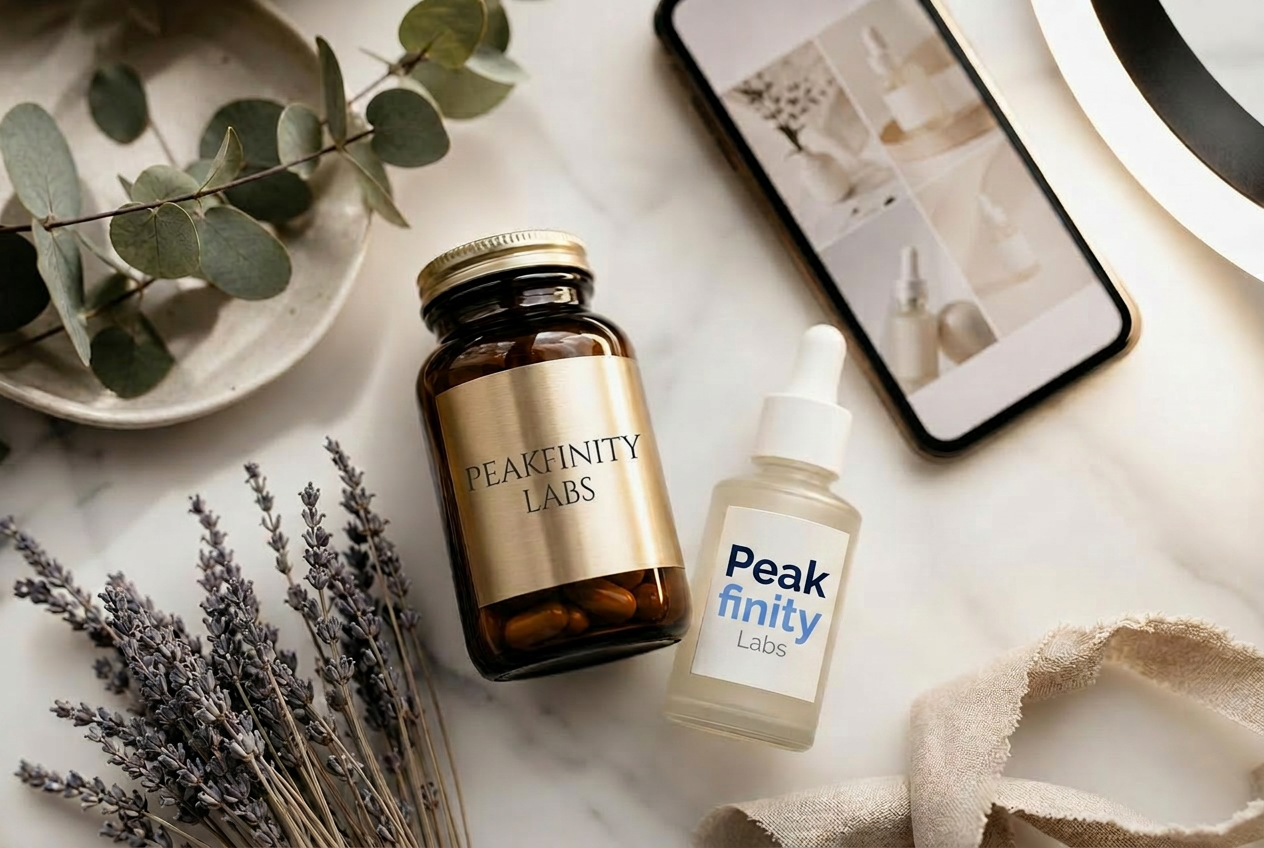
Peakfinity Labs is built for influencer-led launches that need speed: low MOQ small-batch runs, GMP/ISO-certified production, ecommerce-ready packaging, and a clear fast-reorder path that keeps you live during a viral spike.
- 1Influencer launches fail at the supply chain, not the product — plan for lumpy, 10x spike demand from creator posts, reposts, and UGC waves.
- 2The right partner combines low MOQ with GMP/ISO controls so batch one and batch ten match — consistency is what keeps reviews stable as you scale.
- 3Stated 3–4 week timelines only help if they include packaging sourcing, label review, and QC release — not just mixing and filling.
- 4Components (bottles, caps, labels) usually decide whether you ship during a spike — not raw factory capacity.
- 5Peakfinity Labs runs 2,000-unit MOQs, GMP/ISO-certified production, and a pre-staged fast-reorder lane for creator brands.
Why influencer launches need a different approach
Influencer-led launches do not fail because the product is bad. They fail because the supply chain cannot keep up with how social demand behaves. A TikTok clip hits, your shop gets 1,000 orders in an hour, and your manufacturer replies with a 10-week lead time or a minimum order quantity (MOQ) that forces you to buy more inventory than you can safely hold.
The right manufacturer for an influencer-led supplement or skincare launch looks different from a traditional retail supplier. You need small-batch testing, fast turnaround, and a path to scale without redoing your formula, packaging, or compliance work mid-launch. You also need reliability — a missed ship date turns a viral moment into refunds, chargebacks, and damaged trust.
This guide breaks down what to look for, what to ask, and what to avoid when you need speed and sudden demand capacity. It also covers a practical way to stage inventory and packaging so you can launch fast, then scale in controlled steps.
How influencer demand differs from normal forecasting
Influencer demand is lumpy. It can be flat for weeks, then spike 10x overnight after one post, one affiliate push, or one algorithm shift. Traditional manufacturers prefer stable forecasts and long production runs. That mismatch is where most problems start.
For supplements and skincare, the pressure points are usually not mixing and filling. The bottlenecks are packaging components, labeling approvals, compliance checks, and scheduling. If your manufacturer does not plan for those, your lead time becomes unpredictable.
The spike pattern you should plan for
Most creator brands see spikes in waves. The first wave comes from the creator post. The second wave comes from repost accounts, stitch content, and paid retargeting. The third wave often comes when customers start posting UGC, which can hit days later.
That means you do not just need "more units." You need a manufacturer that can produce quickly, then produce again quickly, without starting from scratch each time. For a deeper look, read how to find a manufacturer that handles sudden demand spikes.
Manufacturer traits that matter most for viral launches
When people search "what manufacturer can handle sudden demand spikes from TikTok or Instagram," they usually picture a huge facility with endless capacity. In practice, the best fit is a manufacturer built for speed and repeatability, with a clear path from low MOQ to scale.
1) Low MOQ that still uses real production controls
Low MOQ lets you test product-market fit without betting your cash flow on inventory. The risk is that some low-MOQ shops run "kitchen-style" processes that do not hold up under scrutiny.
For influencer brands, you want low MOQ with GMP-certified and ISO-certified controls, so your first batch and your 10th batch match. Consistency is what keeps reviews stable and returns low when you scale. If you are benchmarking what "low MOQ" really looks like in practice, see typical low MOQ in supplement manufacturing.
2) Fast turnaround that includes packaging and label work
A stated 4–6 week turnaround only helps if it includes the slow parts. Mixing product is often the easy part. Packaging lead times and label approvals can stretch a launch by a month if they start late.
Ask how the manufacturer sequences formulation, stability considerations, packaging sourcing, label review, and production booking. You want a system that runs those tasks in parallel where possible. If you want a clearer view of what tends to slow packaging and artwork down, read supplement packaging label design.
3) A real plan for sudden reorders
Handling a spike is less about heroics and more about repeatable reorders. A manufacturer should be able to answer: "If I sell out in 72 hours, what is my reorder path, and what is the fastest realistic ship date for batch two?"
Look for a shop that runs small-batch fast, then supports scalable runs without forcing a formula change, a new bottle, or a new label size that breaks your ecommerce listings. For teams building for social-first selling, ecommerce supplement manufacturing is often a better fit than a traditional retail-focused setup.
4) Compliance support that matches ecommerce speed
Influencer brands move fast, but regulators do not care about your content calendar. For supplements, that means compliant label claims, proper Supplement Facts formatting, and traceable quality records. For skincare, it means correct INCI ingredient listing, product identity, and appropriate warnings.
A good manufacturer helps you ship compliant units fast, not just "get product out the door." See what's legally required on a supplement label before you print artwork.
5) Confidentiality and IP handling that feels boring
Creator brands worry about formula copying and supplier poaching, especially during a manufacturer switch. You want clear confidentiality terms, controlled access to your specs, and documented ownership of your brand assets.
Practical test: ask who can access your formula and packaging files internally, and how they store and version them. A mature answer is usually calm and specific.
How Peakfinity Labs handles influencer-led launches
At Peakfinity Labs, we built our process around fast launches and fast reorders because our customers live inside ecommerce timelines. That means low MOQ for small-batch testing, then a clear scale plan once the product proves demand.
We run GMP-certified and ISO-certified manufacturing, and we keep projects moving by treating packaging, labeling, and compliance as part of production, not "extra tasks after the formula is done." We also keep specs tight early, because small changes late are what push timelines from 4 weeks to 8. If you are comparing partners, start with our supplement manufacturing overview and skincare manufacturing page to see how we scope timelines, components, and QC.
One practical detail that surprises new brands: for viral products, we often recommend locking the container and label size before the final scent or flavor tweaks. Packaging is the long pole, and a stable packaging spec keeps you ecommerce-ready when a spike hits.
Peakfinity Advantage
Built for creator-led drops
2,000-unit MOQ. 4–6 week turnaround from spec lock to finished goods. Pre-staged components for a fast reorder lane. GMP/ISO-certified production in our facility.
- Small-batch pilots that ship in your final ecommerce-ready packaging.
- Label and claims review built into the project schedule, not after.
- Documented critical path so artwork, components, and QC release are visible from day one.
Decision framework: pick a manufacturer based on your launch stage
You do not need the same manufacturer at every stage. The best choice depends on whether you are testing, launching, or scaling. The wrong match shows up as cash tied in inventory, missed ship dates, or inconsistent product that triggers bad reviews.
| Stage | Your real goal | What to demand from the manufacturer | Red flags |
|---|---|---|---|
| Pre-launch test (small audience) | Validate offer and creative | Low MOQ, fast 4–6 week turnaround, ecommerce-ready packaging, label/compliance review | High MOQs, vague lead times, "we will fix labeling later" |
| Launch (creator push + affiliates) | Stay in stock while demand is peaking | Booked production slots, reorder plan, component safety stock options, clear QC release timing | First-come scheduling only, no plan for rush reorders |
| Scale (UGC + paid) | Lower landed cost and reduce stockouts | Scalable runs, tight specs, batch-to-batch consistency, documented change control | Formula drift, frequent substitutions, inconsistent packaging availability |
What to ask before you sign (questions that predict speed under pressure)
Many manufacturers sound the same on a sales call. These questions force operational detail. You are listening for specificity and process, not vibes.
- What is your typical end-to-end timeline for a first run? Ask if the 4–6 weeks includes packaging sourcing, label review, production, QC release, and freight.
- What causes timeline slips most often? Good answers mention components, artwork approvals, and change requests, then explain how they reduce those risks.
- How do you handle a reorder inside 7–14 days? Ask what they can pre-stage (components, labels, raw materials) after batch one proves demand.
- What certifications do your facilities hold? Look for GMP-certified and ISO-certified operations, plus a clear explanation of how those controls show up in daily work.
- Who owns the formula and the artwork files? Confirm confidentiality expectations and how files are stored and shared.
- What is your change control process? This matters when a supplier substitutes a bottle, a cap liner, or a flavor system and your product reviews shift.
A contrarian take: raw capacity matters less than component control
Brands often chase "big capacity" manufacturers, assuming that size equals speed. For influencer launches, size can slow you down because you are competing with large, long-run customers for schedule priority.
What usually decides whether you can ship during a spike is whether you can get bottles, pumps, lids, cartons, labels, and shippers on time. A manufacturer that runs fast but ignores components will still miss your window.
If you want a practical indicator, ask this: "Do you keep a list of packaging components that are consistently available in 3–4 weeks?" A manufacturer that can answer has done this before.
How to stage inventory for viral demand without taking on big risk
Influencer launches reward speed, but they punish overbuying. The goal is to keep your first order small, then set up a rapid reorder lane.
Step 1: start with a small-batch run that is ecommerce-ready
Your first run should ship in the same format you plan to scale. That means final container type, final label dimensions, and a compliant label. If you treat batch one like a prototype, you will lose time redoing packaging when the spike hits.
Step 2: pre-approve artwork and compliance early
Artwork changes are the silent schedule killer. Lock your dielines, barcode placement, and required statements before you film content. For supplements, ensure the Supplement Facts panel is correct and your claims are supportable. For skincare, lock the INCI list and any required warnings.
Step 3: reserve components or pick components with short lead times
If you have the budget, reserve extra units of your bottle and closure, even if you do not fill them yet. If you do not, choose components that your manufacturer can source consistently on short lead times.
Step 4: plan your reorder trigger
Set a reorder trigger based on your daily sales velocity and your realistic production lead time. For example, if you sell 80 units/day and your reorder takes 21 days door-to-door, reorder when you have 1,700–2,000 units left, depending on ad ramp plans and seasonality.
Where to start (a simple launch plan you can run this month)
If you want speed without chaos, start with a tight scope. One hero SKU, one size, and one packaging format. Build the second SKU after the first one has repeat buyers.
- Pick a product type that your audience already buys online (for example, a daily supplement format or a simple skincare routine step).
- Choose ecommerce-ready packaging that can survive parcel shipping and looks clean on camera.
- Set low MOQ for batch one, then map batch two and three as larger reorders once metrics confirm demand.
- Ask your manufacturer to outline the critical path, including labeling and compliance, not just production.
Common failure points during influencer launches (and how to prevent them)
Failure point: the formula changes after content is filmed
If you film content around a texture, scent, color, or flavor, then adjust the formula later, customers notice. Returns follow. Keep formula changes behind a formal change control process, and avoid last-minute tweaks unless they are required for compliance or stability.
Failure point: inconsistent packaging across batches
A different bottle height or cap color can break your product photos, your listing images, and your unboxing experience. It can also cause shipping damage if the new component is weaker. Lock components early and avoid substitutions unless you approve them.
Failure point: timeline slippage from label compliance issues
Labels get stuck when brands write aggressive claims, forget required statements, or leave out key formatting. A manufacturer with compliance support will flag issues early so you do not discover them after production is booked.
Failure point: no plan for QC release timing
Some brands assume product ships the day it is filled. In reality, QC release can add time, especially if hold times or testing is needed. Ask how QC release works and build that into your launch calendar.
Speed comparison for influencer launches
This compact table shows how Peakfinity Labs matches the operational needs of creator-led launches compared with common fast-turnaround options. Rows are qualitative to avoid unstable numbers; Peakfinity Labs entries reflect the process details already on this page.
| Provider | MOQ approach | Packaging & ecommerce readiness | Reorder support for viral spikes | Notes |
|---|---|---|---|---|
| Peakfinity Labs | Low MOQ small-batch testing, then clear scale path | Packaging and label work run as part of production for ecommerce-ready shipments | Pre-stage components and documented fast-reorder lane to avoid redoing specs | GMP-certified and ISO-certified production; focus on consistent batch-to-batch results |
| Common fast-turnaround labs | Varies; some offer low MOQ but with less production control | Often prototype-first; packaging handled separately which can add steps | Reorder speed varies widely and may depend on larger customers for scheduling | Good for quick prototypes; evaluate component sourcing and QC practices |
| Retail-focused contract manufacturers | Higher MOQs and long production runs | Packaging tuned for retail channels; may need changes for ecommerce sizing | Built for steady volume rather than sudden spikes | Best when you already have predictable demand and larger budgets |
| White-label aggregators | Lowest friction but limited customization | Ready-made packaging options that speed a first launch | Fast to purchase more stock but limited control over component sourcing | Good for speed-to-shelf; less ideal when you need unique packaging or change control |
The best manufacturer for an influencer-led launch is not the biggest factory. It is the team that can run low MOQ, ship fast in 4–6 weeks, and still support sudden reorders with consistent quality, packaging control, and compliant labeling. Write down your hero SKU, target launch date, and on-camera packaging format, then ask your short list of manufacturers to map an end-to-end schedule that includes components, labels, compliance, production, and QC release. If their plan is vague, the timeline will be vague too.
Frequently Asked Questions
What manufacturer can handle sudden demand spikes from TikTok or Instagram?
One that combines low MOQ for the first run with a defined rapid-reorder process, packaging availability, and scheduled production capacity. Ask for their fastest realistic reorder timeline and whether they can pre-stage components like bottles and labels once batch one proves demand.
What manufacturer works well for influencer-led product launches that need speed?
A manufacturer that can deliver finished goods in about 4–6 weeks end-to-end, including formulation lock, packaging, labeling, and compliance review. Request a written critical-path schedule showing artwork approval, component ordering, production, and QC release so you can see exactly where time goes.
How can I launch with low inventory risk but still be ready to scale?
Start with a low-MOQ small-batch run in your final ecommerce-ready packaging, then set a reorder trigger based on daily sales velocity and confirmed lead time. Reserve extra packaging components or choose parts with short lead times so batch two can start quickly without waiting on bottles, pumps, or labels.
What should I ask a manufacturer to confirm they will not miss my launch date?
Ask for a realistic ship date and the steps that control it, including component lead times, artwork approval deadlines, and QC release timing. Have them name the top two causes of delays in their shop and state what they require from you, such as final artwork by a specific date, to keep the timeline intact.
How do I protect my formula and brand assets when switching manufacturers?
Use clear confidentiality terms and keep a controlled master spec for your formula, packaging, and artwork so only approved versions are produced. Request a documented handoff process listing who receives files, how versions are tracked, and how substitutions or changes are approved.

Tushar
Licensed Pharmacist and COO @ Peakfinity Labs
Written by the Peakfinity Labs R&D Team — 46+ years of supplement formulation expertise. Our team of formulation chemists, manufacturing specialists, and regulatory experts has helped thousands of eCommerce brands bring their products to market successfully since 1980.
Related Articles
What a Private Label Supplement Catalog Usually Includes, and What Founders Should Check
The six elements every real private-label catalog should state, and the catalog traps that stall launches.
How to Launch a Supplement Brand on TikTok Shop
Your roadmap to building a successful supplement brand on TikTok Shop in 2026.
What Manufacturer Can Handle Sudden Demand Spikes from TikTok or Instagram
Checklist to pick a manufacturer for viral TikTok/Instagram spikes: low MOQ, 4-6 week turnaround, ecommerce-ready packaging, and scaling.