Creatine Gummies: Can You Actually Fit a Real Dose?
Dose density, acid stability, matrix limits, finished-product assay, and honest cost per serving — what a contract manufacturer knows about creatine gummies before you place the order.
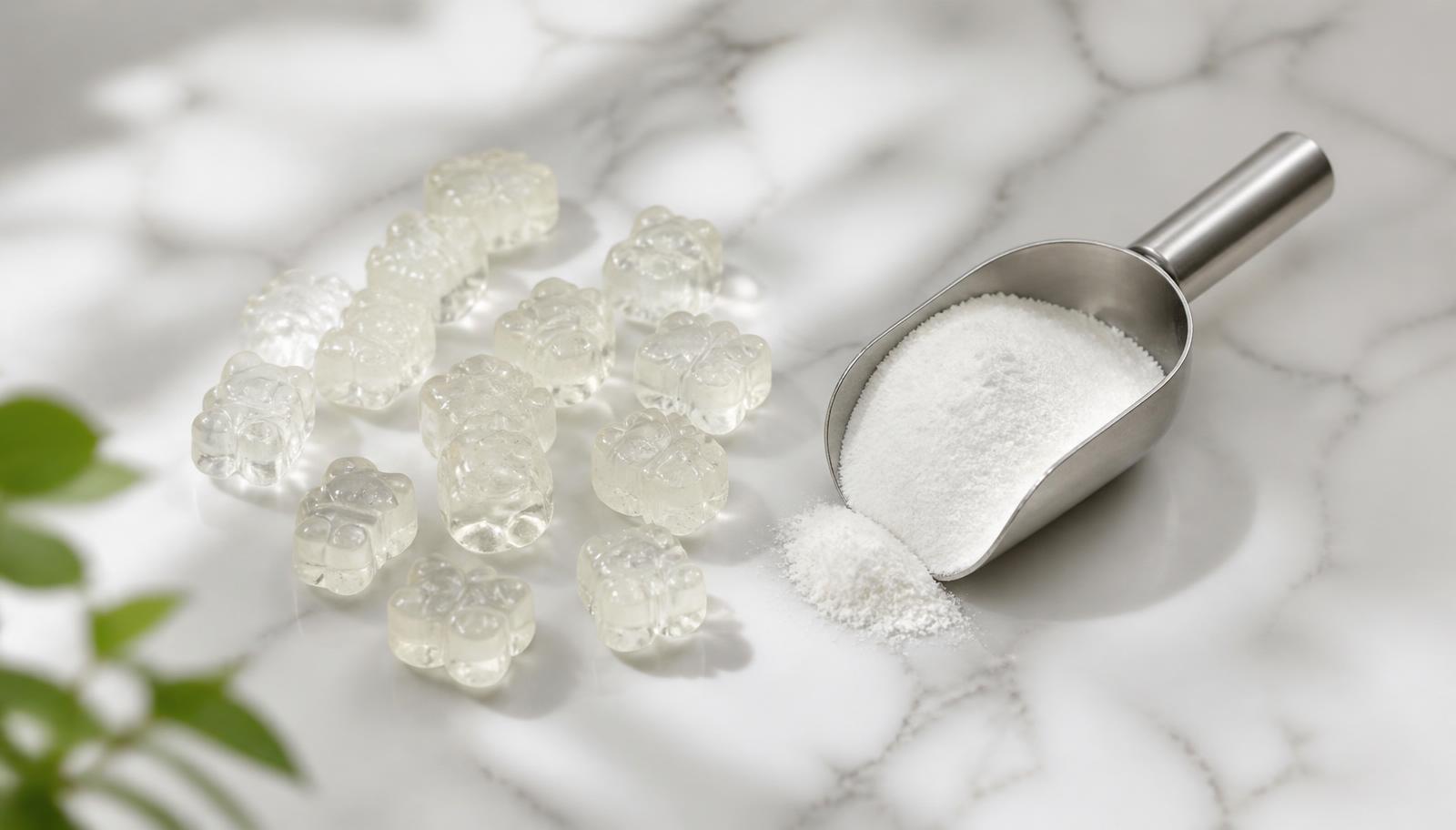
- 1A functional creatine serving is 3–5 g. That dose does not fit in one gummy — honest creatine gummies are 1.25 g per gummy at a 4-gummy serving, or 2.5 g per gummy at a 2-gummy serving.
- 2Creatine is acid-stable, so the molecule survives both the gummy cook and stomach acid. Degradation to creatinine is driven by prolonged heat plus moisture plus low pH, not by the gummy format itself.
- 3The real constraints are physical: active load per gram of gummy mass, mouthfeel, and the fact that creatine is only sparingly soluble, so it sits in the matrix as suspended solids that read as grit if particle size and depositing are wrong.
- 4Assay the finished gummy, not just the incoming raw material. Raw-material COAs tell you nothing about what survived the process — and this is where most contract-manufactured creatine gummies quietly under-deliver.
- 5Creatine gummies cost more per gram of creatine than powder, always. They win on compliance, travel, and taste — not on price. Price the SKU accordingly instead of trying to match tub economics.
Short answer
Yes — a creatine gummy can carry a real, research-backed dose, but not in one gummy. A functional serving of creatine monohydrate is 3–5 g. The practical ceiling for a single gummy is roughly 1.25–2.5 g of creatine, which means a real serving is two to four gummies. Any creatine gummy marketed as a one-a-day at 0.5 g is a flavored candy with a creatine claim on the panel, not a working supplement.
Everything else people worry about — stomach acid, "does the gummy destroy creatine," absorption — is largely a non-issue. Creatine is acid-stable. The hard problems are physical mass, texture, and whether your manufacturer verifies the dose in the finished piece.
The dose math nobody puts on the label
Start from the clinical target. The maintenance dose used across decades of creatine research is 3–5 g per day. Women's-positioned brands commonly run 3 g; performance brands run 5 g. That is the number your gummy serving has to hit.
Now look at the physical reality. A typical supplement gummy weighs 3.5–5 g total, and the gel matrix — pectin or gelatin, sweetener, water, acid, flavor, color — occupies most of that mass. Load too much insoluble active and the gummy stops setting properly, weeps, or turns sandy. In practice we can carry creatine up to roughly 30–50% of the piece weight before quality falls apart.
| Creatine per gummy | Gummies per 5 g serving | Verdict |
|---|---|---|
| 0.5 g | 10 gummies | Not a real product. Marketed as 1–2 a day, delivers 5–10% of a dose. |
| 1.0 g | 5 gummies | Workable but the serving feels excessive to consumers. |
| 1.25 g | 4 gummies | The sweet spot. Clean 5 g serving, manageable piece size. |
| 2.5 g | 2 gummies | Excellent serving optics, larger and grittier piece, tighter process control. |
| 5.0 g | 1 gummy | Not manufacturable at acceptable texture and size. |
Important
Read competitor labels the same way. Take the creatine milligrams per serving, not per gummy, and compare it against 3–5 g. A surprising share of the creatine gummies currently selling on Amazon and TikTok Shop land under 1.5 g per serving.
Is creatine stable in a gummy?
Creatine monohydrate is stable as a dry powder and stable in the acidic environment of the stomach. The degradation pathway that matters is conversion to creatinine, which is driven by time at temperature in an acidic aqueous phase — exactly the conditions a gummy cook creates if the process is sloppy.
- Add late, add cool. Creatine goes in at the lowest workable point in the cook cycle, after the slurry has come down from peak temperature.
- Minimize hold time. Long holds in a hot acidified kettle are the single biggest driver of creatinine formation. Depositing promptly after incorporation protects the assay.
- Manage pH. Gummies need acid for set and flavor, but the acid system can be balanced so the slurry never sits at an aggressively low pH while hot.
- Control finished moisture and water activity. A properly cured gummy with controlled water activity keeps creatine stable through shelf life; an under-dried gummy keeps degrading in the jar.
- Overage, carefully. A modest, validated overage covers normal process loss so the label claim holds at end of shelf life. It is not a substitute for a controlled process.
What the gummy matrix can actually carry
Creatine monohydrate is only sparingly soluble in water — roughly 14 g per liter at room temperature. In a gummy, most of the creatine is therefore present as suspended solid particles held in the gel, not dissolved. That has three consequences for formulation.
- Particle size drives mouthfeel. Micronized creatine at a 200-mesh spec disperses far better than standard grades. Coarse creatine in a gummy reads as sand.
- Suspension stability drives dose uniformity. If particles settle in the depositing hopper, early pieces and late pieces of the same run carry different doses. Viscosity control and agitation during deposit are non-negotiable.
- Pectin vs gelatin changes the ceiling. Pectin gives a cleaner bite and a vegan claim; gelatin tolerates slightly higher solid loads with a chewier finish. Both work — the choice is a brand decision as much as a technical one. Our gummy manufacturing guide covers that trade-off in depth.
Taste, grit, and why creatine gummies fail sensory
Creatine itself is close to flavorless, with a faint alkaline note. The sensory problem is texture and aftertaste at high load, not flavor. Four gummies is also a bigger sensory commitment than one, so a flavor that's pleasant at one piece can become cloying by the fourth.
- Design flavor at serving level. Panel the full four-gummy serving, not a single piece. Sweetness that works once becomes fatiguing at 4x.
- Use tart fruit systems. Blue raspberry, sour cherry, watermelon, and citrus mask alkalinity and cut sweetness fatigue better than creamy or tropical profiles.
- Watch the polyol load in sugar-free builds. Sugar alcohols multiplied across four gummies can cause GI complaints — a leading cause of one-star reviews in this category.
- Coating matters. A light sour or sugar coat improves the perceived texture of a high-solids gummy considerably.
Testing: assay the finished gummy, not the raw material
This is the single most important line in your quality agreement. A raw-material COA proves the creatine was pure when it arrived. It says nothing about how much active survived the cook, the deposit, the cure, and six months in a jar.
| Test | Stage | Why it matters |
|---|---|---|
| Creatine assay (≥99.9% purity) | Raw material | Confirms incoming grade and supplier consistency |
| Creatinine | Raw material + finished gummy | The degradation marker — rising creatinine means process or shelf-life problems |
| Dicyandiamide (DCD) & DHT | Raw material | Manufacturing-process contaminants; the core Creapure trust signals |
| Finished-product creatine assay | Finished gummy | The only proof your label claim is real |
| Water activity & moisture | Finished gummy | Predicts both microbial safety and ongoing creatine degradation |
| Heavy metals & microbial | Finished gummy | Required for Amazon, retail, and any credible DTC brand |
| Accelerated shelf life | Finished gummy | Validates the overage and the expiry date you print |
For the wider certification picture, see our guide to working with a GMP-certified supplement manufacturer.
Cost per serving vs powder and capsules
Creatine gummies will never beat a powder tub on cost per gram. Accept that up front and price the SKU on the benefit it actually delivers: compliance, portability, and a product people enjoy taking.
| Format | MOQ | Approx. COGS / unit | Retail target |
|---|---|---|---|
| Unflavored monohydrate tub (60 servings) | 2,000 units | $5–$9 | $22–$35 |
| Creatine gummy jar (60 gummies, 4-gummy serving) | 2,000 units | $7–$12 | $28–$48 |
| Creatine gummy jar (60 gummies, 2-gummy serving at 2.5 g) | 2,000 units | $9–$14 | $34–$55 |
| Creatine capsules (240 caps, 4-cap serving) | 2,000 units | $6–$10 | $25–$40 |
| Stick packs (30 packs) | 2,000 units | $8–$14 | $32–$55 |
Note the servings-per-jar trap: a 60-gummy jar at a four-gummy serving is a 15-day supply. That's a fast reorder cycle — good for subscription LTV, dangerous if your listing implies a month's supply. Either state the day count clearly or move to a 90-gummy jar. Our supplement manufacturing cost breakdown walks through the full margin math.
A spec sheet you can hand a manufacturer
- Creatine source: Creapure or 200-mesh micronized monohydrate, ≥99.9% assay, with DCD and DHT screening.
- Dose per gummy: 1.25 g or 2.5 g, stated explicitly — never "per gummy" ambiguity on the panel.
- Serving size: 4 gummies (5 g) or 2 gummies (5 g); 3 gummies (3.75 g) for a women's 3 g-target SKU.
- Base: pectin (vegan) or gelatin, with the sweetener system specified at serving level.
- Finished-product testing: creatine assay, creatinine, water activity, heavy metals, microbial, on every batch.
- Overage: validated, disclosed, and justified by accelerated stability data.
- Packaging: moisture-barrier jar or pouch with induction seal and desiccant where required.
Label and claims considerations
- Defensible: "supports muscle strength when combined with resistance training," "supports power output," "supports ATP production," "supports cognitive performance."
- Off-limits: "builds muscle" as a standalone drug-style claim, "cures fatigue," or any disease-treatment or prevention language.
- Be precise about dose on the front panel. "5 g creatine per serving" builds trust; "creatine gummies" with a buried 0.5 g panel invites reviews that kill a listing.
- Amazon-specific: supplement listings need accurate supplement facts, serving math that matches the claim, and a compliant expiry format. See our Amazon supplement listing requirements guide.
The bottom line
Creatine gummies are a legitimate format with a real commercial edge — they convert people who will never scoop powder into daily users. But the format only works if the math works. Pick 1.25 g or 2.5 g per gummy, design the serving around a 3–5 g target, control heat and hold time during the cook, and demand a finished-product assay on every batch. Do those four things and you have a product that outperforms most of the category on the only metric that ultimately matters: whether the customer feels anything.
For the wider category view — forms, formats, and positioning — read our creatine manufacturing guide, or go straight to our creatine manufacturing capabilities.
Frequently Asked Questions
How many grams of creatine can you fit in one gummy?
Practically, 1.25 g to 2.5 g of creatine monohydrate per gummy. Below about 1 g the serving becomes absurd (you'd need five or more gummies), and above about 2.5 g the piece gets large, gritty, and hard to deposit consistently. Most well-formulated creatine gummies land at 1.25 g per gummy with a four-gummy serving delivering 5 g, or 2.5 g per gummy with a two-gummy serving delivering 5 g.
Do creatine gummies actually work?
Yes, if they're dosed correctly. Creatine is acid-stable and absorbs well from a gummy matrix; there is no bioavailability penalty inherent to the format. What fails is dosing. A gummy delivering 0.5 g of creatine per serving supplies about a tenth of a research dose, so it will not meaningfully raise muscle phosphocreatine stores no matter how good the marketing is.
Does creatine degrade into creatinine during gummy manufacturing?
It can, if the process isn't controlled. Creatine converts to creatinine under sustained heat in an acidic aqueous environment. A well-run gummy process minimizes hold time at high temperature, adds creatine at the lowest workable temperature in the cook cycle, and keeps the slurry pH from dropping too far before deposit. Finished-product assay confirms whether your manufacturer got this right — a raw-material COA does not.
Are creatine gummies more expensive than powder?
Yes, per gram of creatine delivered. You're paying for the gummy base, the flavor and sweetener system, the depositing and curing time, and the packaging volume that comes with four gummies per serving. Expect COGS in the $7–$12 range per unit at a 2,000-unit MOQ for a 60-gummy jar, against $5–$9 for an unflavored powder tub at 60 servings. The gummy wins on compliance and repeat purchase, not on cost.
What MOQ does Peakfinity Labs require for creatine gummies?
A flat 2,000 units — the same minimum we apply across creatine powders, stick packs, capsules, and gummies. Turnaround is 4–6 weeks from locked formula and approved packaging, with 2–4 additional weeks if you need custom flavor development or a custom mold.
Can creatine gummies be sugar-free?
Yes. We run polyol and allulose-based systems with stevia or monk fruit for sugar-free creatine gummies. Be aware of the trade-off: high polyol loads plus a four-gummy serving can cause GI complaints in sensitive users, so the sweetener system needs to be designed around the serving size, not just around a single piece.
Ready-to-Launch Formulations in This Category
Stock-ready formulations you can private label with your own branding — 2,000 unit MOQ.
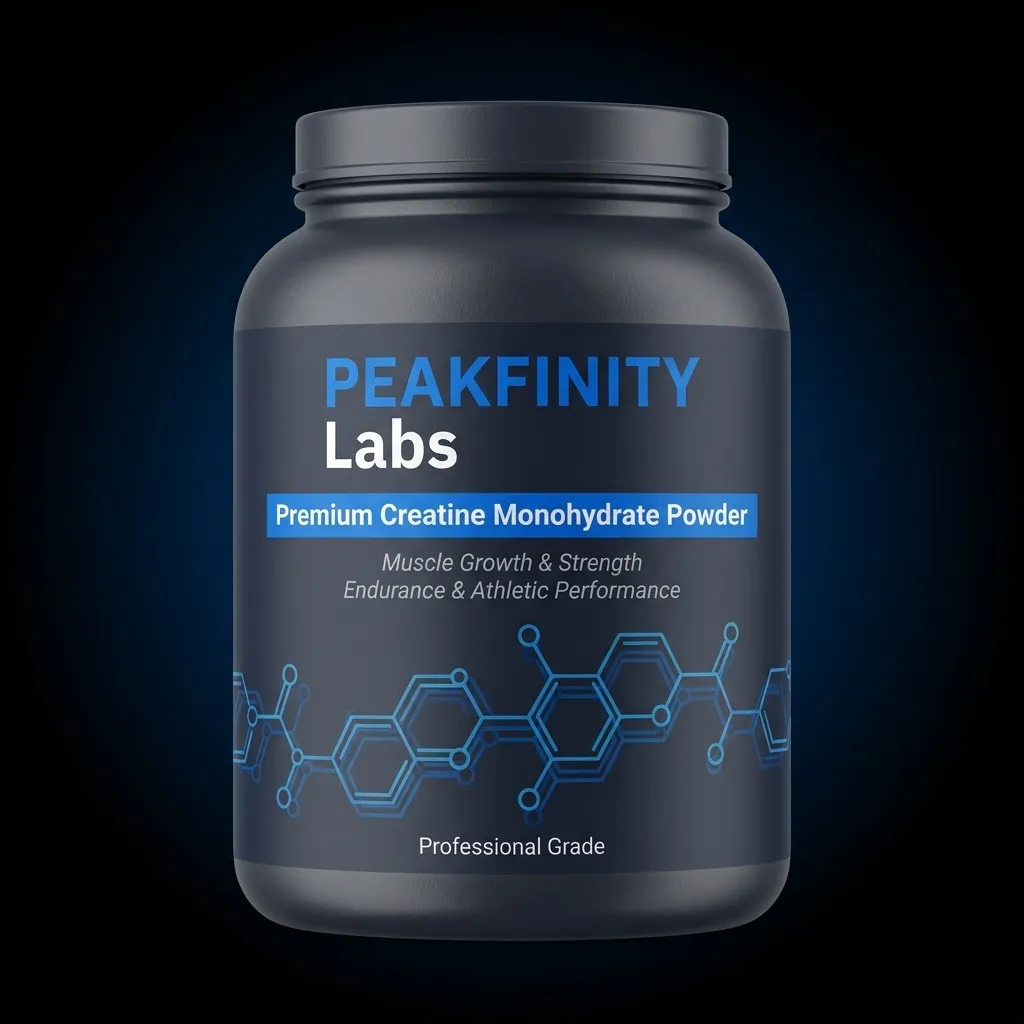
Premium Creatine Monohydrate Powder
Sports Nutrition · Powder
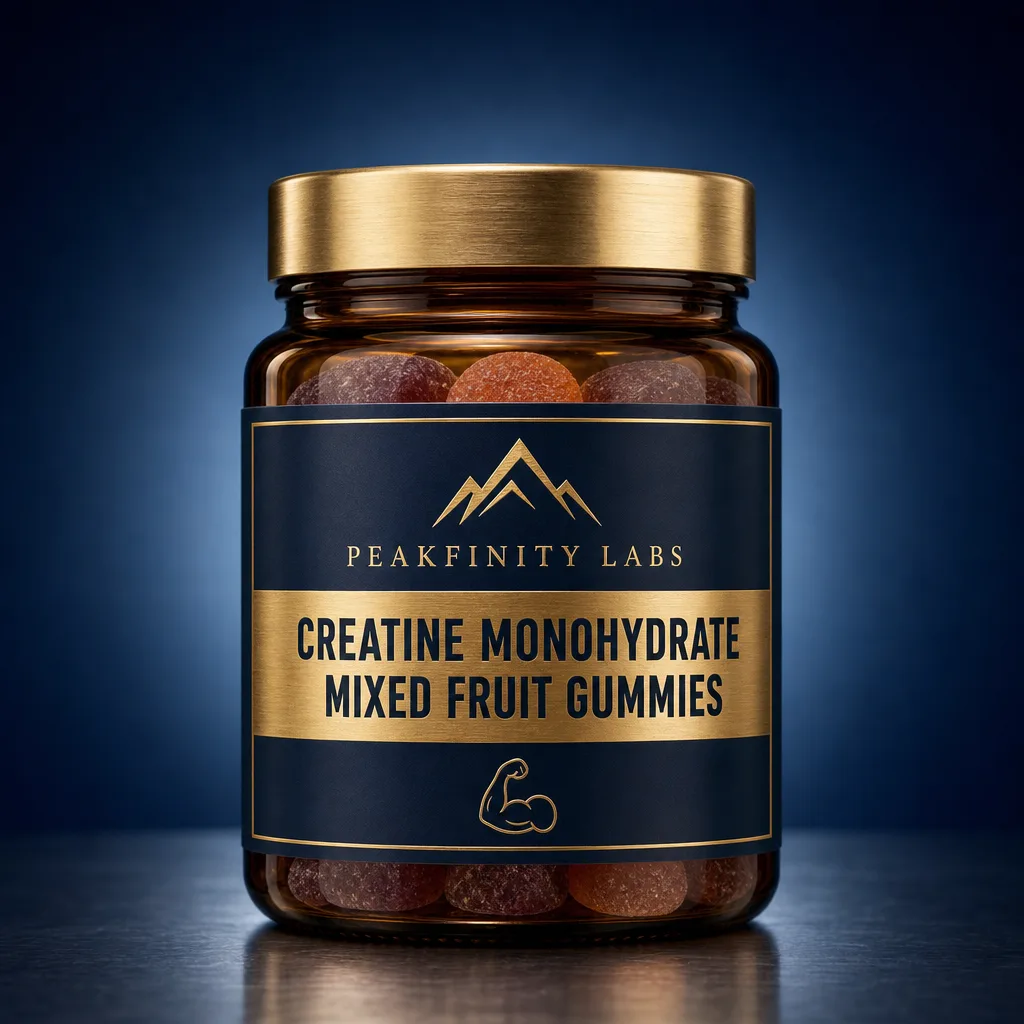
Creatine Monohydrate Performance Support Gummies - Mixed Fruit Flavor
Sports Nutrition · Gummies

Tushar
Licensed Pharmacist and COO @ Peakfinity Labs
Written by the Peakfinity Labs R&D Team — 46+ years of supplement formulation expertise. Our team of formulation chemists, manufacturing specialists, and regulatory experts has helped thousands of eCommerce brands bring their products to market successfully since 1980.
Related Articles
Protein Powder Manufacturing Guide
From protein sources to flavor development for sports nutrition products.
Creatine Manufacturing Guide: Monohydrate, Gummies & Women's Brands
Creatine forms (monohydrate vs Creapure vs HCl), gummy vs powder vs stick pack, the women's creatine boom, MOQ and cost — the manufacturer's playbook for 2026's breakout sports nutrition category.
How to Launch a Protein Powder Brand in 2026
Protein sourcing, amino spiking verification, flavor development, format and the COGS math behind a protein powder launch.