What Are Amazon’s Secret Rules for Supplement Listings? Find Out Now!
We mapped 7 common Amazon pitfalls for supplement brands — from COA mismatches to FBA prep. See the quick fixes we use to launch without gating delays.
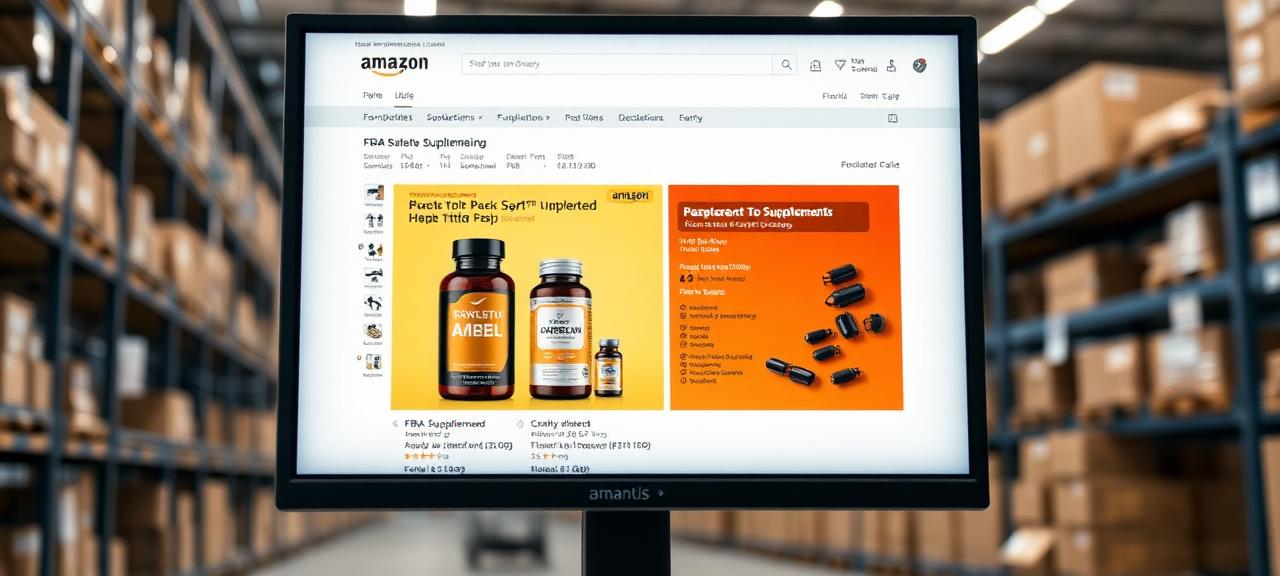
- 1Amazon doesn’t publish a single “supplement launch playbook,” but it does enforce a set of practical rules that can feel secret if you only learn
- 2Amazon’s rules show up in three places: category policies, automated checks, and manual review requests. You can do everything “right” in your mind
- 3Amazon’s baseline requirements vary by marketplace and subcategory, but new supplement brands should plan for a “document-ready” launch. The goal is
- 4Amazon’s requests usually fall into two buckets: content compliance (claims, label, images) and product authenticity/safety (COA, invoices,
- 5Gating is Amazon’s way of restricting who can sell certain products or categories. Supplements can be gated due to brand protection, high return
Introduction
Amazon doesn’t publish a single “supplement launch playbook,” but it does enforce a set of practical rules that can feel secret if you only learn them after your listing gets blocked, gated, or suppressed. Most failures aren’t about the formula. They’re about missing paperwork, risky claims, mismatched labels, or supply chain details that don’t line up when Amazon asks questions.
For new brands, the biggest anxiety is predictable: “Will my manufacturer deliver on time, and will Amazon accept what we ship?” That worry is valid. Amazon can request documents with short deadlines, and one mismatch (like a label ingredient name that doesn’t match your listing) can trigger suppression and stall sales.
At Peakfinity Labs, we build supplement launches around ecommerce constraints: low MOQ small-batch runs for testing, fast 3–4 week turnaround from formulation to finished goods (as stated), and ecommerce-ready packaging that holds up in FBA prep. We also plan for the unglamorous parts—COAs, traceability, compliant labeling, and claim-safe content—so you don’t get stuck “live but not selling.”
The “secret rules” Amazon actually enforces (even when it’s not obvious)
Amazon’s rules show up in three places: category policies, automated checks, and manual review requests. You can do everything “right” in your mind and still fail an automated scan because a word choice looks like a disease claim or a restricted ingredient.
- Claims must match supplement law, not marketing hype. Avoid disease language and drug-like promises in titles, bullets, A+ Content, and images.
- Your listing must match your label. Ingredient names, serving size, net quantity, and warnings must be consistent across label and detail page.
- Amazon wants traceability on demand. Be ready to show invoices, manufacturer info, lot coding, and test results.
- Supplements are not “set and forget.” Competitor reports, bots, and policy updates can trigger new reviews months after launch.
What Amazon requires to list a new supplement brand
Amazon’s baseline requirements vary by marketplace and subcategory, but new supplement brands should plan for a “document-ready” launch. The goal is simple: if Amazon asks for proof, you can respond fast with consistent, professional documents.
Core listing and account requirements
- Professional Seller account (typical for serious supplement brands).
- GTIN/UPC exemption or valid GS1 UPCs aligned to your brand and product.
- High-quality label images showing Supplement Facts, ingredients, warnings, and net quantity.
- Accurate product attributes (form, count, serving size, flavor, allergen statements).
Compliance documents Amazon commonly requests
Amazon may not ask for these on day one, but you should build them before you publish. When a listing is suppressed, speed matters.
- Certificate of Analysis (COA) for the finished product (and sometimes key raw materials), tied to lot numbers.
- Product label proof (final artwork) that matches the live detail page.
- Manufacturing documentation such as facility certifications (for credibility) and batch/lot records (for traceability).
- Invoices that show supply chain legitimacy (often used in gating/ungating and authenticity reviews).
Practical tip from our side: we recommend planning COA formatting and label language before your first production run. Fixing compliance after 5,000 units are printed is far more expensive than fixing it in the proof stage.
What compliance documents does Amazon require for supplement listings?
Amazon’s requests usually fall into two buckets: content compliance (claims, label, images) and product authenticity/safety (COA, invoices, traceability). If you prepare only for one bucket, you still risk suppression.
| Document | Why Amazon asks for it | What to double-check before submission |
|---|---|---|
| COA (finished product) | Verifies identity/purity and helps validate safety questions | Lot number matches bottles; tests align with label (e.g., mg per serving) |
| Label images / artwork | Ensures required disclosures and no prohibited claims | Supplement Facts readable; warnings and directions present |
| Invoices | Confirms legitimate sourcing for gating/ungating and authenticity | Invoice lists product/brand clearly; dates are recent; seller name matches account |
| Manufacturer info | Establishes accountability and traceability | Facility name/address consistent across docs; batch coding exists |
For official policy references, review Amazon’s public guidance in Seller Central (policy pages change) and FTC advertising guidance for claims substantiation: https://www.ftc.gov/business-guidance/advertising-marketing.
Amazon supplement gating and ungating: what the process really looks like
Gating is Amazon’s way of restricting who can sell certain products or categories. Supplements can be gated due to brand protection, high return risk, safety concerns, or fraud prevention. Ungating is typically a document-driven review, and the fastest path is a clean, consistent paper trail.
- Step 1: Identify the restriction reason. Amazon may say the ASIN is restricted, you need approval, or you need additional documentation.
- Step 2: Provide documents that prove legitimacy. Invoices, COAs, and manufacturer details are common.
- Step 3: Remove content triggers. Even if you submit documents, a prohibited claim on an image can keep you blocked.
- Step 4: Expect iteration. Amazon can request additional info or deny based on formatting issues.
Contrarian but true: many ungating failures come from “almost correct” paperwork. A COA without a lot number that matches the bottle, or an invoice that lists a generic description instead of the exact product name, often fails review.
Why Amazon supplement listings get suppressed (and how to fix it)
Suppression usually happens because Amazon’s systems detect risk. The fix is rarely “argue with support.” The fix is to remove the trigger and resubmit clean evidence.
| Common suppression trigger | What it looks like | Fast fix |
|---|---|---|
| Prohibited health claims | Words implying treatment/cure/prevention of disease | Rewrite title/bullets/A+; replace images that contain claims |
| Listing/label mismatch | Serving size, ingredients, or count differ | Update listing to match label (or revise label before reprint) |
| Missing required attributes | Suppressed due to incomplete fields | Fill required fields; re-upload flat file if needed |
| COA or invoice rejected | Denied without clear explanation | Resubmit with clearer formatting, matching lot numbers, and recent invoices |
One practical workflow we use with ecommerce brands: before you launch, we compare the draft label, the Amazon title/bullets, and your hero image text side-by-side. If one line crosses into disease language, we fix it before it costs you a suppression and a two-week support loop.
How Amazon Brand Registry works for supplement sellers
Brand Registry is less about vanity and more about control. If you sell supplements, control matters because hijackers, listing edits, and counterfeit complaints can kill momentum right when PPC starts working.
- You need a registered trademark (or a pending mark in some cases, depending on Amazon’s current rules) to enroll.
- Once enrolled, you get better tools to protect detail pages, report infringement, and access enhanced brand features.
- Brand control helps compliance because unauthorized edits can introduce prohibited claims and get you suppressed.
Official overview: https://brandservices.amazon.com/brandregistry.
Where to start: a practical 14-day pre-launch checklist
If you want a smooth launch, build the compliance and content in parallel. Waiting until production is finished to think about Amazon is what causes missed timelines.
- Days 1–3: Lock your formula direction and target claims (structure/function only). Draft Supplement Facts early.
- Days 4–7: Create label proofs and align Amazon listing copy to the label language. Decide FBA vs FBM vs 3PL.
- Days 8–10: Confirm UPC/GTIN plan, case pack, carton labels, lot coding, and expiry format.
- Days 11–14: Prepare a “compliance folder” (COA template, invoices, manufacturer details, label PDFs, image set).
Peakfinity Labs is built for this pace: small-batch, low MOQ runs for testing, scalable repeats when the listing proves demand, and ecommerce-ready packaging so your first shipment doesn’t fail FBA prep.
What’s the best fulfillment model for a new supplement brand?
Your fulfillment choice changes your cash flow, review velocity, and risk. For supplements, it also changes how you handle expiry dates, heat exposure, and returns.
| Model | Best for | Watch-outs for supplements | Verdict for most new brands |
|---|---|---|---|
| FBA | Fast Prime shipping and higher conversion | Strict prep/labeling, expiry rules, stranded inventory risk | Best if your packaging is Amazon-ready and you can plan inventory in small batches |
| FBM | Maximum control and low upfront fees | Slower shipping can reduce conversion; more ops burden | Good for early testing if you can ship fast and handle customer service |
| 3PL | Hybrid control with outsourced ops | Pick/pack accuracy, lot tracking, and returns handling vary by provider | Strong choice if you also sell on Shopify and TikTok Shop |
Our practical recommendation: start with a small-batch run (low MOQ) and ship a controlled quantity into FBA once your listing content is stable. Keep a backup channel (FBM or 3PL) so you don’t go out of stock when Amazon misplaces inbound inventory.
How TikTok Shop and Amazon supplement strategies actually differ
Amazon rewards consistency and compliance; TikTok rewards speed and creative volume. Brands that try to run one playbook across both usually get punished—either by Amazon policy or by TikTok’s attention cycle.
- Amazon: Focus on keyword relevance, conversion rate, review quality, and policy-safe claims across every asset.
- TikTok Shop: Focus on creator-led angles, rapid testing, and landing pages that don’t overpromise.
- The overlap: Your label and claims still matter. A viral video that implies disease treatment can create platform risk and customer complaints.
Real-world detail we see: TikTok-first brands often name ingredients in slang (“stress cure,” “hormone fixer”) because it converts in short video. That language can silently kill an Amazon listing when it appears in images, A+ modules, or storefront copy. Build two creative libraries: one “platform-safe” for Amazon and one “attention-first” for TikTok that still avoids prohibited medical claims.
A+ Content for supplement brands: what it’s really for
A+ Content doesn’t fix a weak product, and it won’t save a listing that breaks policy. It does three high-impact jobs when done right.
- Reduces confusion: Show serving size, form factor, and usage timing clearly to lower returns.
- Sets expectations: Explain what the product is designed to support in structure/function terms, not disease terms.
- Defends your brand story: Clarify GMP-certified and ISO-certified manufacturing and quality steps without making unprovable claims.
Keep it concrete. For example: “Third-party tested for identity and purity; COA available by lot” is clearer than “lab tested for maximum quality.”
Reviews, ratings, and returns: how smart supplement brands handle them
Supplements attract sensitive reviews because results vary, and some customers expect drug-like outcomes. You can’t control that, but you can reduce avoidable negatives.
- Write tighter directions: Many 1-star reviews come from misuse. Put clear timing and dosage on label and listing.
- Set realistic language: Avoid “instant” or “guaranteed” in any asset. It increases refunds and policy risk.
- Track complaint patterns by lot: If you see taste, clumping, or capsule issues, isolate inventory by lot and investigate fast.
Returns are operational, not just financial. Use lot codes and expiry visibility so you can identify if a return spike is content-driven (expectations) or quality-driven (batch issue).
How brands handle hijackers on Amazon supplement listings
Hijackers hit supplements because demand is high and buyers are less able to verify authenticity. Brand control and documentation are your defense.
- Enroll in Brand Registry so you can access better reporting tools.
- Keep clean invoices and COAs so you can prove authenticity quickly.
- Use packaging that’s hard to mimic (consistent lot coding, high-quality print, tamper evidence).
We also recommend building a “proof packet” before you ever have a hijacker problem: label PDFs, trademark info, product photos, and a standard escalation template. It turns a chaotic event into a process.
Advanced: Amazon-ready packaging details most brands miss
This is where ecommerce-ready manufacturing matters. Amazon doesn’t care that your bottle looks great on Instagram if it fails in a fulfillment center.
- Scannable barcodes: Place UPC/FNSKU on a flat surface, high contrast, no curve distortion.
- Tamper evidence: Use induction seals and shrink bands sized correctly for the cap and neck finish.
- Carton/case pack planning: Consistent case count and strong corrugate reduce inbound damage and chargebacks.
- Heat and humidity reality: Gummies, softgels, and hygroscopic powders need packaging choices that survive warehouse conditions.
Our manufacturing perspective: we push brands to validate packaging early with small-batch runs. It’s the fastest way to catch label adhesive failures, smear issues, or seal fit problems before you scale.
Conclusion: a safer, faster way to launch on Amazon
Amazon doesn’t reward “almost compliant.” It rewards brands that ship consistent products, keep clean documentation, and write tight, policy-safe copy that matches the label. If you treat compliance as part of product design—not an afterthought—you reduce suppression risk and protect your launch timeline.
Next steps: finalize your claim-safe positioning, build your compliance folder (COA, invoices, label proofs, lot coding plan), and choose a fulfillment model that won’t trap you in excess inventory. If you want to test demand with low upfront risk, plan a small-batch run with low MOQ, then scale once your listing stays live and converts.
Peakfinity Labs supports turnkey launches with fast 3–4 week turnaround (as stated), GMP-certified and ISO-certified production, and ecommerce-ready packaging built for marketplace reality. If you’re switching from Shopify or going viral on TikTok and need Amazon to work without surprises, build the launch around the rules Amazon actually enforces.
Frequently Asked Questions
What compliance documents does Amazon require for supplement listings?
Amazon commonly requests documents in two buckets: content compliance and product authenticity/safety. Typical requests include a finished-product Certificate of Analysis (COA) tied to lot numbers, high-quality label images/artwork that match the detail page, invoices showing legitimate sourcing, and manufacturer information (facility certifications and batch/lot records). Before submission double-check lot numbers match bottles, Supplement Facts and mg per serving align with tests, warnings and directions are present, and facility name/address is consistent across documents.
What does Amazon require to list a new supplement brand?
Amazon requires a compliant detail page that matches your label and the ability to verify your supply chain on request. In practice that means a Professional Seller account, valid GTIN/UPC or exemption, high-quality label images showing Supplement Facts and warnings, accurate product attributes (form, count, serving size, allergens), and supporting files like a finished-product COA and legitimate invoices. Align your label, listing copy, and product photos before publishing to avoid automated rejections.
How does Amazon Brand Registry work for supplement sellers?
Brand Registry lets trademarked brands control their detail pages and access enhanced protection tools. Enrollment typically requires a registered (or in some cases pending) trademark. Once enrolled you get tools to report infringement, block unauthorized edits, and use enhanced content features—helpful for preventing hijackers and inadvertent listing changes that can trigger suppression.
Why do Amazon supplement listings get suppressed, and how do you fix it?
Listings are usually suppressed when Amazon detects policy risk, missing data, or inconsistencies between the listing and the label. Common triggers include prohibited health claims, listing/label mismatches, missing required attributes, or rejected COAs/invoices. Fixes are to remove the trigger (rewrite title/bullets/images to remove disease language), update the listing or label so they match, fill required attributes, and resubmit clear supporting documents (COAs, invoices) with matching lot numbers and formatting.
What is Amazon’s supplement gating and ungating process?
Gating restricts who can sell certain supplements; ungating is a document-driven review to prove legitimacy. The usual steps are: identify why the ASIN or category is restricted; provide proof (invoices, COAs, manufacturer details); remove content triggers that could keep you blocked; and expect iterative requests from Amazon. Ungating often fails when paperwork is nearly correct—e.g., COAs without matching lot numbers or invoices with generic product descriptions—so submit tightly formatted, matching documents.
What’s the best fulfillment model for a new supplement brand: FBA, FBM, or a 3PL?
Each model has trade-offs: FBA offers Prime shipping and higher conversion but requires Amazon-ready packaging, strict prep, and careful inventory planning; FBM gives maximum control and lower upfront fees but increases fulfillment burden and can hurt conversion; 3PL is a hybrid good for omnichannel sellers but requires diligence on lot tracking and returns. For most new supplement brands the practical path is a low-MOQ small-batch run, send a controlled quantity to FBA once content is stable, and keep FBM or a 3PL as a backup channel.

Tushar
Licensed Pharmacist and COO @ Peakfinity Labs
Written by the Peakfinity Labs R&D Team — 46+ years of supplement formulation expertise. Our team of formulation chemists, manufacturing specialists, and regulatory experts has helped thousands of eCommerce brands bring their products to market successfully since 1980.
Related Articles
Private Label Supplement Markup: Typical Margins for DTC, Amazon, and Wholesale
Typical markup ranges for DTC, Amazon, and wholesale, plus the landed-cost model that decides whether your margin is real.

How to Compare Quotes From Supplement Manufacturers Without Missing Hidden Costs
A six-bucket framework and paste-ready RFQ table that surfaces hidden costs before you sign with a manufacturer.

When Is a Supplement Brand Ready to Move From Private Label to Custom?
Nine readiness signals, the custom-light middle path, and a seven-step switch plan that avoids stockouts and claim issues.