Supplement Manufacturing for Medspas: How to Launch a Private-Label Retail Line
The five categories that actually sell, the pre/post-procedure stacks worth building, the MOQ and COGS math, and the launch playbook for a clinic-branded supplement line that compounds patient LTV.
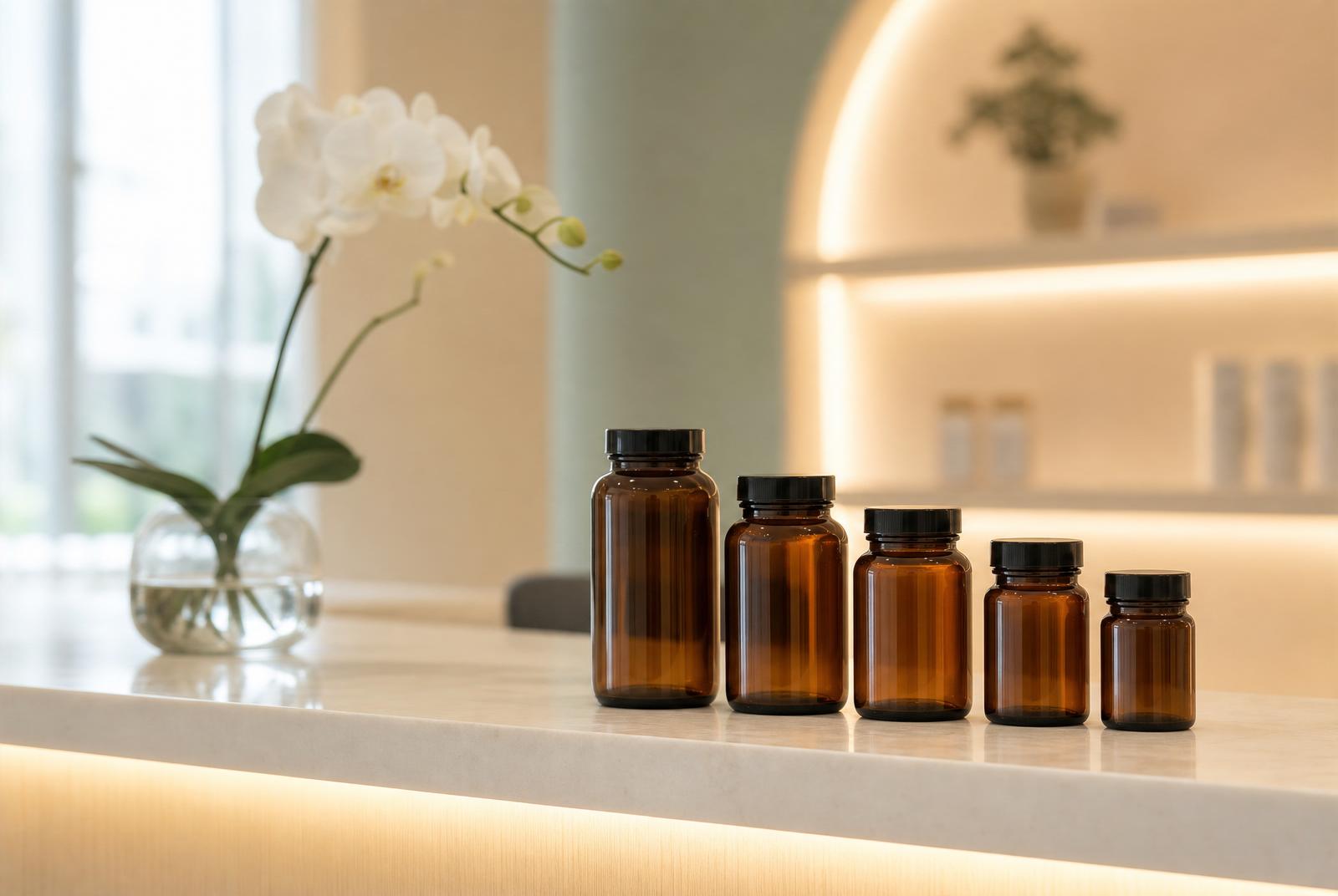
- 1A private-label supplement line is the highest-margin retail addition most medspas can make — gross margins of 65–80% on a 2,000-unit run, with sell-through driven by trust the clinic has already built.
- 2The five categories that move in a medspa: collagen and hair-skin-nails, glutathione and antioxidants, pre/post-procedure recovery, hormone and weight-loss companion (GLP-1 support), and longevity (NAD+, methylation, omega-3s).
- 3Pre-procedure stacks remove blood-thinning actives (fish oil, vitamin E, garlic, ginkgo); post-procedure stacks load collagen peptides, vitamin C, zinc, and bromelain to support healing — and the formulation has to reflect that.
- 4Flat 2,000-unit MOQ at Peakfinity Labs translates to roughly $4–$12 per unit landed depending on format, which lets a single-location medspa stock a branded line without department-store inventory risk.
- 5Practitioner-grade labeling — clinical doses, transparent ingredients, batch COA on file — is what separates a medspa supplement program from a drugstore shelf and is what compounds patient LTV.
Short answer
A private-label supplement line is the highest-margin retail addition most medspas can make. At a flat 2,000-unit MOQ, per-unit landed cost runs $4–$12 and retails at $40–$90 — gross margins of 65–80%, sold to a captive audience that already trusts the clinic. The categories that move: collagen and hair-skin-nails, glutathione and antioxidants, pre/post-procedure recovery, GLP-1 companion, and longevity. The trick is building the formulation, labeling, and COA bundle that a medical director will actually approve.
Why medspas are launching supplement lines
The economics of an aesthetic clinic have shifted. Patients are loyal but treatments are infrequent — a typical injectable patient visits every 12–16 weeks. A private-label supplement is a 30–60 day re-orderable consumable that fills the gap, lifts LTV, and runs at higher margin than reselling a national brand.
- Margin compression on devices and injectables — net margin on toxin and filler has tightened. A 70% gross-margin supplement program offsets that pressure.
- Patients already buy supplements — they're just buying them at Whole Foods or on Amazon. A clinic-branded SKU with a clinical dose and a COA on file converts that spend to the clinic.
- Subscription-friendly — most medspas run their supplement line on a 30-day auto-ship, which compounds revenue without compounding marketing cost.
- Trust transfers — the same trust that lets a clinic recommend a $1,200 syringe of filler converts a $90 collagen powder at the checkout counter at 35–50% attach rate.
See our medspa supplement manufacturing service for the full formats, MOQs, and certifications.
The 5 supplement categories that sell in a medspa
| Category | Example SKUs | Format | Typical retail |
|---|---|---|---|
| Collagen & hair-skin-nails | Marine collagen, biotin + collagen, HSN multi | Powder, capsule, gummy | $45–$80 |
| Glutathione & antioxidants | Liposomal glutathione, NAC + vitamin C, ALA | Capsule, sublingual | $50–$95 |
| Pre/post-procedure | Pre-op stack, post-op recovery, bruise support | Capsule, stick-pack | $40–$75 |
| GLP-1 companion | Electrolytes, EAA + protein, fiber + bowel support | Stick-pack, capsule, powder | $45–$90 |
| Longevity | NAD+ (NMN/NR), methylated B-complex, omega-3 | Capsule, softgel | $60–$120 |
For a deeper look at the highest-margin category here, see our 2026 cosmetic peptides guide — many of the same actives (collagen peptides, GHK-Cu) cross over into ingestibles for medspa lines.
Pre-procedure and post-procedure stacks
A generic "recovery" SKU that gets sold for both pre-op and post-op is the wrong product — and a safety risk. The two windows want opposite ingredient lists.
| Window | Include | Exclude / caution |
|---|---|---|
| Pre-procedure (7–14 days before) | Arnica, bromelain, vitamin C, zinc, magnesium | Fish oil, vitamin E >200 IU, garlic, ginkgo, high-dose turmeric, ginger |
| Post-procedure (day 0–14 after) | Collagen peptides, vitamin C, zinc, methylated B-complex, omega-3 (re-introduced) | Aspirin-style botanicals, alcohol-based tinctures |
| Long-term aesthetic | Marine collagen, HSN, NAD+ precursors, omega-3, vitamin D + K2 | — |
Important
The exclusion list is not optional. Fish oil, vitamin E, garlic, and ginkgo are documented blood thinners that increase bruising and bleeding risk in the pre-op window. A pre-op SKU that contains any of them creates clinical liability — formulate it out, label it out, and brief your patient care team.
MOQ, COGS, and retail margin
| Line item | 60-ct capsule SKU | 30-stick powder SKU | 60-ct gummy SKU |
|---|---|---|---|
| MOQ (units) | 2,000 | 2,000 | 2,000 |
| Per-unit landed cost | $4.50–$8.50 | $6.00–$11.00 | $5.50–$9.50 |
| Suggested retail | $45–$65 | $55–$85 | $45–$70 |
| Gross margin | 70–85% | 65–80% | 70–80% |
| First-run investment | $9,000–$17,000 | $12,000–$22,000 | $11,000–$19,000 |
For a side-by-side cost breakdown of capsule vs. gummy vs. powder, see our supplement manufacturing cost guide.
Formats: capsule, gummy, stick-pack, sublingual
- Capsules — the medspa default. Veggie or gelatin, clean ingredient deck, easy to dose, easy to stock. Best for collagen, glutathione, NAD+, and pre/post-op stacks.
- Stick-pack powders — best for GLP-1 companion electrolytes and protein/EAA, hydration, and on-the-go recovery. Fastest sell-through format in 2026 medspa lines.
- Gummies — the accessible SKU. Best for hair-skin-nails, biotin, and the easy attach product at checkout. Don't try to put expensive actives (NAD+, glutathione) in a gummy — the math doesn't work.
- Sublingual drops / tinctures — best for methylated B12, vitamin D + K2, and any active where bypassing the gut matters. Higher perceived clinical positioning.
For a complete format comparison see our supplement formats guide.
Compliance: DSHEA, practitioner labels, COA
- DSHEA fit — every active is reviewed against the dietary-supplement definition before R&D begins. We do not manufacture compounded pharmaceuticals, injectables, or any 503A / 503B product.
- Batch-level COA — every production lot ships with identity, potency, microbial, and heavy-metals testing from an ISO/IEC 17025-accredited lab. Your medical director will ask for this before stocking.
- Practitioner-grade labeling — clinical doses (not under-dosed proprietary blends), full transparency on actives and excipients, and optional pharmacy-style patient inserts.
- Pre/post-procedure ingredient screening — every recovery SKU is screened against the contraindicated list above before formulation.
Many medspa lines now run a dedicated GLP-1 companion stack as their subscription anchor — electrolytes, EAA, fiber, and hair support paired to the patient's weight-loss protocol.
Medspa supplement launch playbook
- Pick 3 SKUs, not 8 — most successful medspa lines launch with three: a hero (collagen or HSN), a treatment-paired SKU (pre/post-op or glutathione), and a subscription anchor (electrolyte stick-pack or daily multi).
- Brand it like the clinic — match the clinic's existing visual language. Frosted glass, brushed metal, minimal type. This is not a drugstore brand.
- Train the front desk — attach-rate is the lever. The patient consultation already has the trust; the front desk needs a 30-second script for each SKU.
- Launch with a subscription default — make 30-day auto-ship the default purchase option at checkout. Subscription drives 60–70% of revenue on a mature medspa supplement line.
- Plan the restock — at a 2,000-unit MOQ and a 4–6 week production lead time, the order trigger is usually 6 weeks of inventory remaining. Build that into your inventory ops from week one.
For broader retail launch strategy, see our how to launch a supplement company guide.
The bottom line
A medspa supplement line is one of the few retail moves where the unit economics, the patient trust, and the operational lift all line up. The clinics that compound LTV launch 3 SKUs at a 2,000-unit MOQ, brand the program like the clinic, sell on subscription, and treat the COA bundle and pre/post-procedure formulation discipline as non-negotiable. Done that way, the line pays back the first-run investment in 90–150 days and runs at 65–80% gross margin from there.
Pairing the supplement line with a private-label medspa skincare line compounds the attach-rate — most clinics that run both see 40–55% of supplement buyers add a topical within 60 days.
Frequently Asked Questions
Why should a medspa sell its own private-label supplements?
Three reasons. First, margin: a private-label supplement run at a 2,000-unit MOQ usually lands at $4–$12 per unit and retails at $40–$90 — gross margins of 65–80%, dramatically better than reselling a third-party brand at 40–50% margin. Second, trust: patients already trust the clinic for what they put on and in their body, so attach rate on a branded SKU at checkout is far higher than on a third-party shelf brand. Third, retention: a supplement is a re-orderable consumable that brings the patient back to the clinic (or to a recurring delivery) every 30–60 days.
What supplements actually sell in a medspa?
Five categories drive most of the revenue. Collagen and hair-skin-nails (the obvious anchor product, often a daily powder or capsule). Glutathione and antioxidant stacks (oral glutathione, NAC, vitamin C, alpha-lipoic acid — the take-home companion to in-room IV protocols). Pre- and post-procedure recovery (arnica, bromelain, vitamin C, zinc, omega-3 timing). GLP-1 companion (electrolytes, protein/EAA, muscle preservation, hair support, fiber/bowel support for patients on semaglutide or tirzepatide). And longevity (NAD+ precursors like NMN or NR, methylated B-complex, magnesium, omega-3s). Most successful medspa lines launch with 3–5 SKUs across these categories.
What's the MOQ and lead time for a medspa supplement SKU?
At Peakfinity Labs the MOQ is a flat 2,000 units per SKU regardless of format — capsule, gummy, stick-pack, sublingual, or liquid. Lead time on a private-label stock formula with custom labeling is 4–6 weeks from PO to finished goods on your shelf. A fully custom formulation (your medical director's protocol, new actives, new dosing) adds 4–8 weeks of R&D and stability work before the first production run.
Are pre-procedure and post-procedure supplements really different?
Yes — and getting it wrong is a safety issue. Pre-procedure stacks (typically dosed 7–14 days before surgery or injectables) deliberately exclude blood-thinning actives — fish oil, vitamin E above 200 IU, garlic, ginkgo, high-dose turmeric, and ginger — and load arnica, bromelain, vitamin C, and zinc for bruise-reduction and immune support. Post-procedure stacks reintroduce the omega-3s and load collagen peptides, vitamin C at higher doses, zinc, and methylated B-complex to support tissue repair. The label needs to reflect this clearly — a generic 'recovery' SKU that's used in both windows is the wrong product.
What labels and documentation do my clinical team need?
Three documents per SKU. A Certificate of Analysis (COA) for every production lot showing identity, potency, microbial, and heavy-metals testing — this is what your medical director will ask for before stocking. A finished-product specification document showing every ingredient, dose, and source. And a practitioner-grade label with clinical dosing, full ingredient transparency, and (on request) a pharmacy-style insert for patient handouts. We produce all three in-house as part of every medspa run.
Can you formulate a GLP-1 companion stack for our weight-loss patients?
Yes — this is one of the fastest-growing medspa supplement categories in 2026. A typical GLP-1 companion stack includes an electrolyte and hydration SKU (sodium, potassium, magnesium, chloride), a protein and EAA SKU (whey or plant protein with leucine-enriched EAAs to preserve lean mass), a fiber and bowel-support SKU (psyllium, magnesium citrate, ginger), and a hair-skin-nails SKU (biotin, collagen, marine peptides) to address the most common patient complaints during rapid weight loss. We manufacture each of these at the standard 2,000-unit MOQ.
Does Peakfinity Labs handle multi-location medspa groups?
Yes. We run private-label and custom programs for single-location medspas all the way to multi-location aesthetic groups stocking 20+ locations. The same 2,000-unit MOQ per SKU applies, but larger groups typically order in 10,000–50,000-unit runs to drive per-unit cost down and stage releases by region. Central distribution can ship directly to each location or to your existing 3PL.
Are these supplements FDA-compliant and brand-safe?
Yes. Every formula we manufacture is reviewed against DSHEA and FDA dietary-supplement regulations before R&D begins, every facility process is NSF, ISO 9001:2015, and WHO-GMP certified, and every production lot ships with a batch-level Certificate of Analysis. We do not manufacture compounded pharmaceuticals, injectables, or any product that requires a 503A / 503B pathway or an Rx for sale.
Ready to launch your medspa supplement line?
Peakfinity Labs manufactures private-label and custom supplement SKUs for medspas at a flat 2,000-unit MOQ in our NSF, ISO 9001:2015, and WHO-GMP-certified 375,000+ sq ft facility — batch-level COA, practitioner-grade labeling, pre/post-procedure formulation, 4–6 week turnaround.

Tushar
Licensed Pharmacist and COO @ Peakfinity Labs
Written by the Peakfinity Labs R&D Team — 46+ years of supplement formulation expertise. Our team of formulation chemists, manufacturing specialists, and regulatory experts has helped thousands of eCommerce brands bring their products to market successfully since 1980.
Related Articles
How to Find an ISO 17025-Accredited Supplement Testing Lab, and What Founders Should Ask For
How to verify a lab's ISO/IEC 17025 scope actually covers your test, the questions to ask before shipping samples, and a testing plan built for ecommerce timelines.
Supplement Manufacturing Lead Times and Reorders: What Founders Should Expect Before and After Launch
The five workstreams hiding inside "lead time," why reorders move faster than first runs, and the ramp plan that survives a demand spike.
How to Vet a cGMP Supplement Manufacturer With Documented Audit History
The document pack, audit-history call script, and scoring rubric that separate real cGMP quality systems from certificate PDFs.