The Complete Guide to Cosmetic Peptides for Skincare (2026)
GHK-Cu, Matrixyl, Argireline, Snap-8 — the four working classes of cosmetic peptide, effective doses, stacking rules, formulation pH, and what changes when you actually manufacture a peptide serum.
- 1Cosmetic peptides are short chains of 2–10 amino acids that act as topical signal molecules — they don't replace collagen, they tell the skin to behave as if it were younger.
- 2The four working classes are signal peptides (Matrixyl, GHK-Cu), neurotransmitter-inhibiting peptides (Argireline, Snap-8), carrier peptides (copper peptides), and structural/enzyme-inhibiting peptides — each does a different job and they layer well.
- 3Effective topical doses sit in a narrow window: signal peptides at 2–5%, Argireline/Snap-8 at 5–10%, GHK-Cu at 0.05–2%. Below the window you waste money; above it you waste actives without added effect.
- 4Peptides are pH-sensitive (most want 5.0–6.5) and oxidation-sensitive — airless packaging, opaque bottles, and a stability-tested preservation system are non-negotiable for a real product.
- 5Peakfinity Labs formulates and manufactures cosmetic peptide serums and creams at a 2,000-unit MOQ in our 375,000+ sq ft facility, with raw-material sourcing across all four peptide classes and full IP affidavits on file.
Short answer
Cosmetic peptides are short amino-acid chains that act as topical instructions for skin. They sit in four working classes — signal (Matrixyl, GHK-Cu), neurotransmitter-inhibiting (Argireline, Snap-8), carrier (copper peptides), and structural/enzyme-inhibiting — and the ones with real clinical evidence work in a narrow dose window, at a narrow pH window, in airless packaging. Build a peptide product around those constraints and it works. Ignore them and you've built an expensive serum that doesn't.
What cosmetic peptides actually are
A peptide is a chain of 2–50 amino acids linked by peptide bonds. Below ~50 amino acids it's a peptide; above that it's a protein. Cosmetic peptides are almost always short — 2 to 10 amino acids — for one reason: they have to penetrate the stratum corneum to do anything, and penetration drops off sharply past ~500 Daltons of molecular weight. Collagen, by contrast, is ~300,000 Daltons. Topical collagen sits on the skin's surface; topical peptides go in.
Once they penetrate, peptides do not become collagen or elastin. They bind cell-surface receptors and trigger signaling cascades that tell the cell to behave in a specific way — usually to upregulate matrix protein synthesis, to relax a muscle contraction, to transport a metal ion, or to inhibit a degrading enzyme. The peptide itself is the message; the cell does the work.
The four classes of cosmetic peptides
- Signal peptides — bind fibroblast receptors and upregulate collagen, elastin, fibronectin, and proteoglycan synthesis. Matrixyl 3000, Matrixyl synthe'6, and the upstream half of GHK-Cu all live here.
- Neurotransmitter-inhibiting peptides — reduce acetylcholine release at the neuromuscular junction, softening the muscle contractions that crease the skin into expression lines. Argireline (Acetyl Hexapeptide-8) and Snap-8 (Acetyl Octapeptide-3) are the headliners.
- Carrier peptides — bind trace metals (copper, manganese) and deliver them into the dermis where copper-dependent enzymes do the work. GHK-Cu is the canonical example.
- Structural / enzyme-inhibiting peptides — physically mimic structural proteins or block matrix-degrading enzymes (MMPs). Soybean-derived peptides and Tetrapeptide-30 (for pigmentation) live here.
Note
Why classes matter: stacking a signal peptide with a neurotransmitter-inhibiting peptide attacks two different aging mechanisms in parallel. Stacking two signal peptides usually doesn't double the effect — they often compete for the same receptors.
The 8 headline peptides in 2026 skincare
- Matrixyl 3000 (Palmitoyl Tripeptide-1 + Palmitoyl Tetrapeptide-7) — the most-studied signal peptide blend. Effective at 3–5%. Pairs with almost everything.
- Matrixyl synthe'6 (Palmitoyl Tripeptide-38) — newer-generation signal peptide targeting six skin proteins simultaneously. Effective at 2–4%.
- Argireline (Acetyl Hexapeptide-8) — the "topical Botox-mimic" with 20+ years of formulation data. Effective at 5–10%; expression lines soften in 4–6 weeks.
- Snap-8 (Acetyl Octapeptide-3) — Argireline's longer cousin; slightly stronger neurotransmitter inhibition. Effective at 5–10%.
- GHK-Cu (copper tripeptide) — signal + carrier peptide. Effective at 0.05–2%. Standalone formulation guide here.
- Tetrapeptide-30 — pigmentation-focused; downregulates tyrosinase activity. Effective at 2–4%; works on a full skin cycle.
- Palmitoyl Tripeptide-5 — mimics TGF-β to upregulate collagen. Effective at 2–4%; a quieter alternative to Matrixyl with similar mechanism.
- Hexapeptide-11 — barrier and elasticity peptide derived from yeast. Effective at 2–5%; a fit for sensitive-skin positioning.
Peptide comparison: function, dose, evidence
| Peptide | Class | Effective dose | Time to visible effect | Plays well with |
|---|---|---|---|---|
| Matrixyl 3000 | Signal | 3–5% | 8–12 weeks | Niacinamide, HA, Argireline |
| Matrixyl synthe'6 | Signal | 2–4% | 8–12 weeks | Niacinamide, HA, peptide stacks |
| Argireline | Neurotransmitter | 5–10% | 4–6 weeks | Matrixyl, HA, niacinamide |
| Snap-8 | Neurotransmitter | 5–10% | 4–6 weeks | Matrixyl, HA, niacinamide |
| GHK-Cu | Signal + carrier | 0.05–2% | 8–12 weeks | HA, ceramides (standalone) |
| Tetrapeptide-30 | Enzyme-inhibiting | 2–4% | 4–6 weeks (skin cycle) | Niacinamide, alpha-arbutin |
| Palmitoyl Tripeptide-5 | Signal | 2–4% | 8–12 weeks | Niacinamide, HA, ceramides |
| Hexapeptide-11 | Structural | 2–5% | 6–10 weeks | Ceramides, panthenol |
Stacking peptides with retinoids, vitamin C, niacinamide
The most common formulator mistake is treating peptides as compatible with everything. They aren't. Here's the working compatibility map:
| Pair | Compatible? | Why |
|---|---|---|
| Peptides + niacinamide | Yes | Same pH window (5.0–6.5), complementary mechanisms (barrier + signal) |
| Peptides + hyaluronic acid | Yes | HA is pH-neutral and inert — adds slip and hydration without interfering |
| Peptides + ceramides | Yes | Barrier reinforcement complements signal peptide work |
| Peptides + L-ascorbic acid (vitamin C) | No (same product) | Vitamin C needs pH 3.0–3.5; peptides hydrolyze below pH 4.5. Use AM C / PM peptides. |
| Peptides + AHAs/BHAs | No (same product) | Acid pH destabilizes peptides — alternate days or AM/PM. |
| GHK-Cu + vitamin C | No (ever) | Copper catalyzes vitamin C oxidation; mutual destruction. |
| Peptides + retinoids | Layered, not mixed | Retinoids irritate at the same step as peptides; alternate PM nights or apply 20+ min apart. |
Formulation rules: pH, preservation, packaging
- pH 5.0–6.5 — the universal peptide window. Buffer the system to the raw-material supplier's stability data, not to a generic serum pH.
- Heat-sensitive — peptides degrade above ~50°C. Add post-cool-down in the manufacturing process, never to the hot phase.
- Oxidation-sensitive — airless pump or opaque dropper packaging is required for shelf stability. A clear glass bottle on a shower shelf will lose efficacy in 8–12 weeks.
- Preservation matters — a peptide is a microbial food source. The preservation system has to pass a 28-day challenge test (USP <51>) before the formula is production-ready.
- Stability testing is non-negotiable — accelerated stability (3 months at 40°C / 75% RH) plus real-time stability is the only way to know if your peptide concentration holds for the 24-month shelf life you're claiming.
For the broader cosmetic formulation framework, see our custom cosmetic formulation guide.
What you can and can't claim on a peptide product
Cosmetic claims in the US are regulated by the FDA under the FD&C Act, and the line between a cosmetic claim and a drug claim is exactly where the FDA warning letters live. Safe ground:
- OK: "Visibly reduces the appearance of fine lines and wrinkles."
- OK: "Helps support the skin's natural firmness."
- OK: "Improves the look and feel of skin texture."
- Not OK: "Stimulates collagen production" (drug claim — affects body structure).
- Not OK: "Repairs damaged DNA" / "rebuilds the skin barrier" (drug claim).
- Not OK: Any "Botox alternative" or "Botox-like" language (trademark + drug claim risk).
Manufacturing a peptide serum: what changes vs. a basic serum
A peptide serum is not a "serum with peptides added at the end." Compared to a basic hyaluronic acid serum, four things change in the manufacturing process:
- Phased addition — peptides go in the cool-down phase below 40°C, after the emulsion is built and the preservative is dispersed. Adding to the hot phase destroys them.
- Buffered pH — the formula is buffered to the peptide's stability window before peptide addition, not after.
- Inert atmosphere where required — copper peptides and certain signal peptides are filled under nitrogen blanket to prevent oxidation during fill.
- Lot-specific COA — every batch needs a Certificate of Analysis from an ISO/IEC 17025-accredited lab confirming peptide concentration matches the label claim. Peptide actives are the most expensive line item in the formula; verification is mandatory.
Peakfinity Labs runs cosmetic peptide serums at a 2,000-unit MOQ with all four steps built into our standard process. See our cosmetic manufacturing capabilities.
The bottom line
Peptides are not a single ingredient — they're a category of topical instructions, and the brand that wins in peptides treats them that way. Pick the right peptide for the claim, dose it in the proven window, formulate it at the right pH, package it to keep it stable, and verify the concentration on every batch. The product category is crowded; the product category executed well is not. If you're building a peptide skincare line, that gap is your opportunity.
Frequently Asked Questions
What do peptides actually do for skin?
Topical peptides are signal molecules. They sit on the surface of skin and bind receptors that the skin reads as instructions — usually 'build more collagen,' 'relax this muscle,' or 'transport copper into the dermis.' They do not replace collagen directly (collagen is too large a molecule to penetrate intact). The downstream effect, over 8–12 weeks of consistent use at the right dose, is firmer-feeling skin, softer expression lines, and improved barrier function.
Which peptide is best for wrinkles?
For expression lines (forehead, crow's feet, between the brows) the strongest evidence is for Argireline (Acetyl Hexapeptide-8) at 5–10% and Snap-8 (Acetyl Octapeptide-3) at 5–10% — both reduce neurotransmitter release at the neuromuscular junction, softening the contraction that creates the line. For static wrinkles and overall firmness, Matrixyl 3000 (Palmitoyl Tripeptide-1 + Palmitoyl Tetrapeptide-7) at 3–5% and Matrixyl synthe'6 at 2–4% have the longest track record. Most modern serums layer one of each.
What are copper peptides (GHK-Cu) and are they worth it?
GHK-Cu is a tripeptide (glycyl-L-histidyl-L-lysine) bound to a copper ion. It's both a signal peptide and a carrier peptide — it tells fibroblasts to remodel the extracellular matrix and delivers copper into the dermis where copper-dependent enzymes drive collagen and elastin crosslinking. The clinical evidence is real but the formulation is hard: copper is unstable in the presence of vitamin C, AHAs, and most retinoids, so a GHK-Cu serum has to be formulated and packaged as a standalone product, not a kitchen-sink hero. Effective topical concentrations are 0.05–2%.
Can you use multiple peptides in the same product?
Yes — and most modern peptide serums use 3–6 peptides at once because each class targets a different mechanism. The combinations that work: Matrixyl + Argireline + Snap-8 (signal + neurotransmitter inhibition) is the standard 'wrinkle' stack. Tetrapeptide-30 (pigmentation) + Matrixyl + hyaluronic acid is the 'brightening + firming' stack. The combinations to avoid: GHK-Cu with vitamin C, GHK-Cu with strong AHAs, and any peptide stack with prescription retinoids in the same step (alternate AM/PM instead).
What pH do peptide serums need?
Most cosmetic peptides are stable in a pH window of 5.0–6.5, which is close to skin's natural pH. Below 4.5 you risk hydrolyzing the peptide bonds (which is one reason peptides and pure vitamin C, which formulates around pH 3.0–3.5, don't share a bottle). Above pH 7.0 you also accelerate degradation. A formulator buffers the system to the peptide manufacturer's stability data — not to a generic 'serum pH.'
How long until peptide skincare actually works?
Neurotransmitter-inhibiting peptides like Argireline show measurable expression-line reduction in 4–6 weeks with twice-daily use. Signal peptides like Matrixyl and GHK-Cu show measurable firmness and texture improvement in 8–12 weeks. Pigmentation peptides take a full skin cycle (28–42 days) before visible change. Anyone marketing peptides as a 'first-use glow' product is selling the humectant base, not the peptide.
What MOQ and turnaround should I expect for a custom peptide serum?
A custom peptide serum on a stock cosmetic base — your peptide stack dosed into our pre-developed serum matrix — runs at a 2,000-unit MOQ with a 4–8 week turnaround at Peakfinity Labs, including stability and challenge testing. A fully custom base (new texture, new preservation system, new packaging) runs 12–20 weeks of R&D and a 5,000-unit production minimum. Peptide raw materials are expensive enough that most new brands start on a stock base and customize the peptide blend.
Ready-to-Launch Formulations in This Category
Stock-ready formulations you can private label with your own branding — 2,000 unit MOQ.
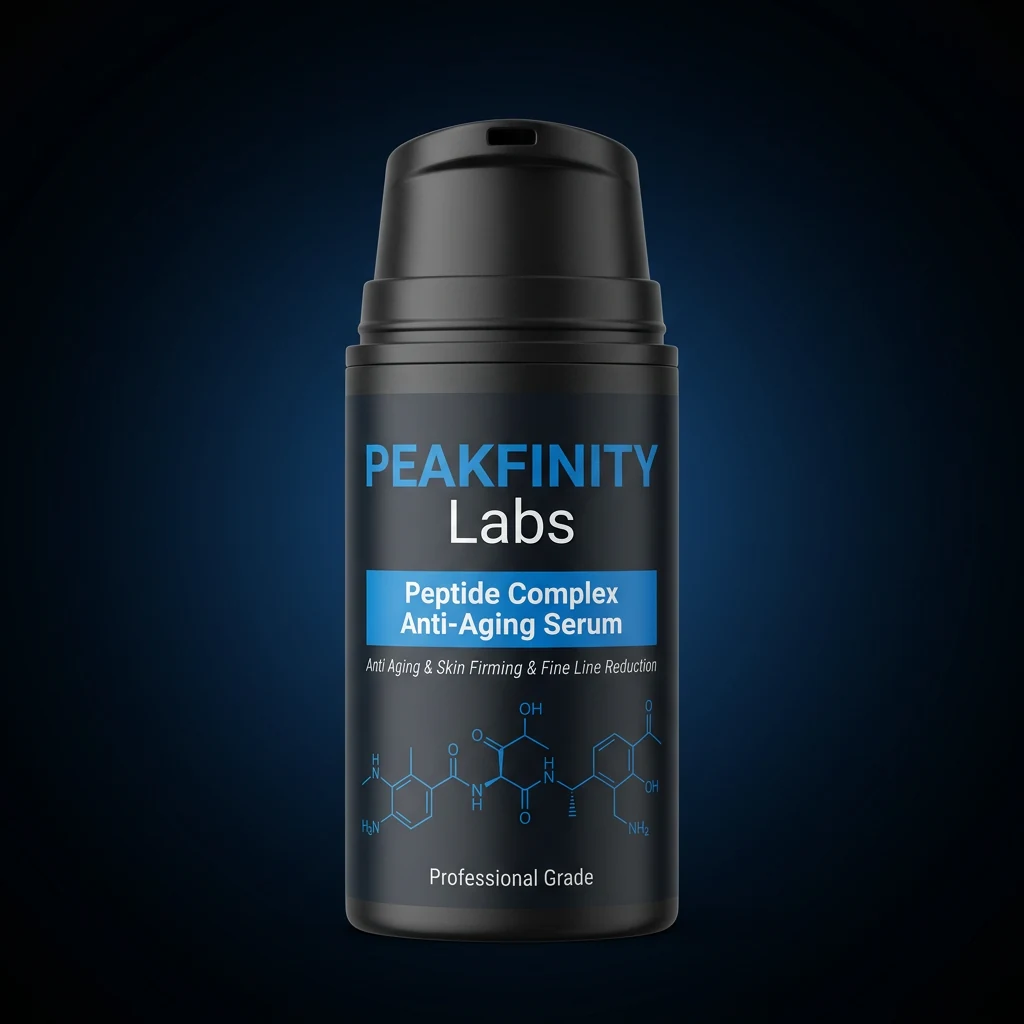
Peptide Complex Anti-Aging Serum
Facial Serums · Liquid
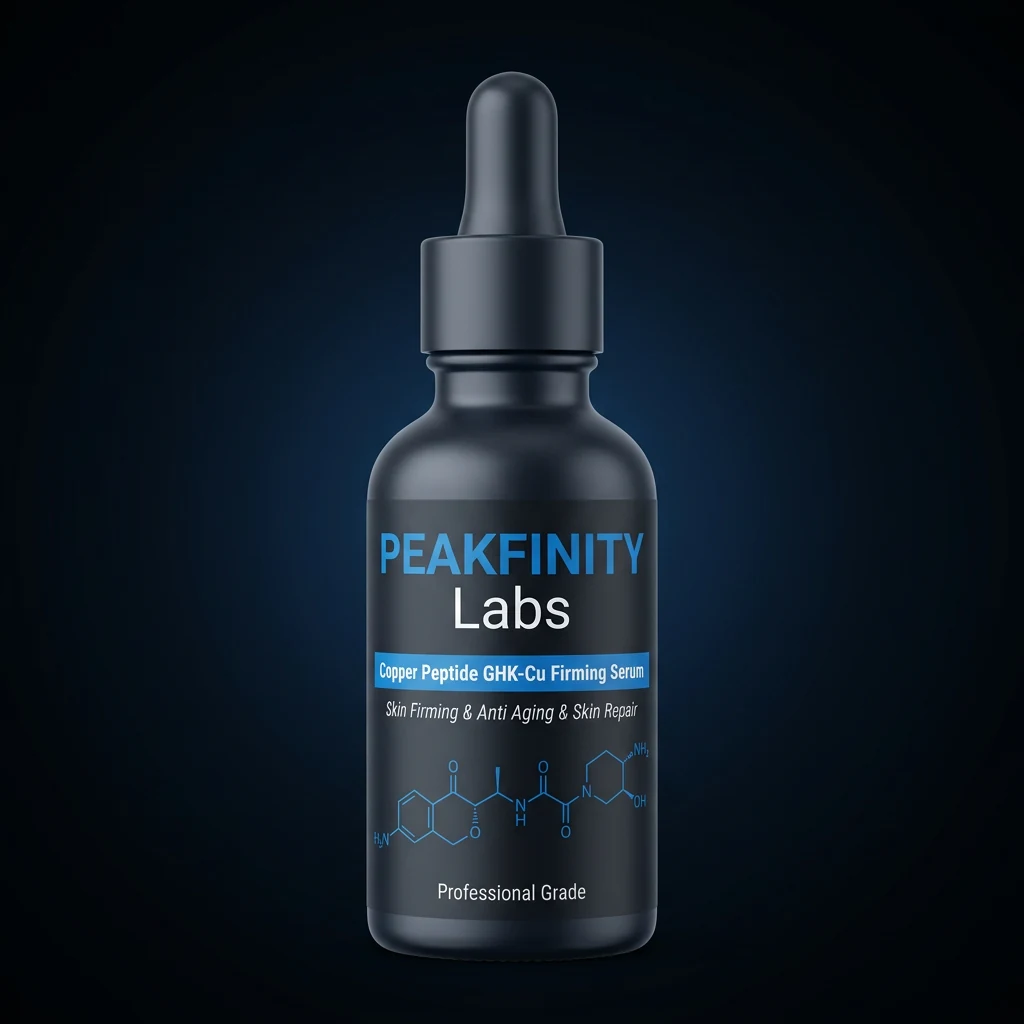
Copper Peptide GHK-Cu Firming Serum
Facial Serums · Liquid
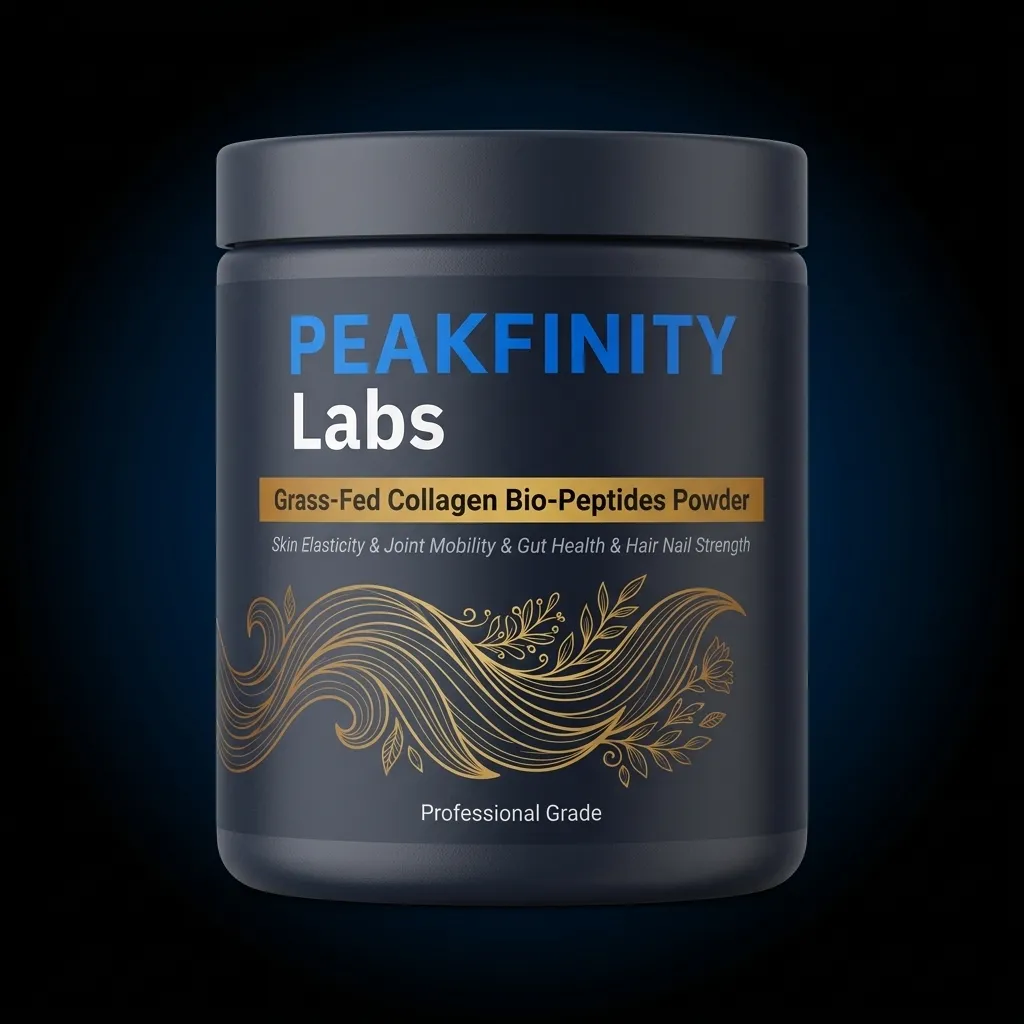
Grass-Fed Collagen Bio-Peptides Powder
Nutraceuticals (Beauty) · Powder
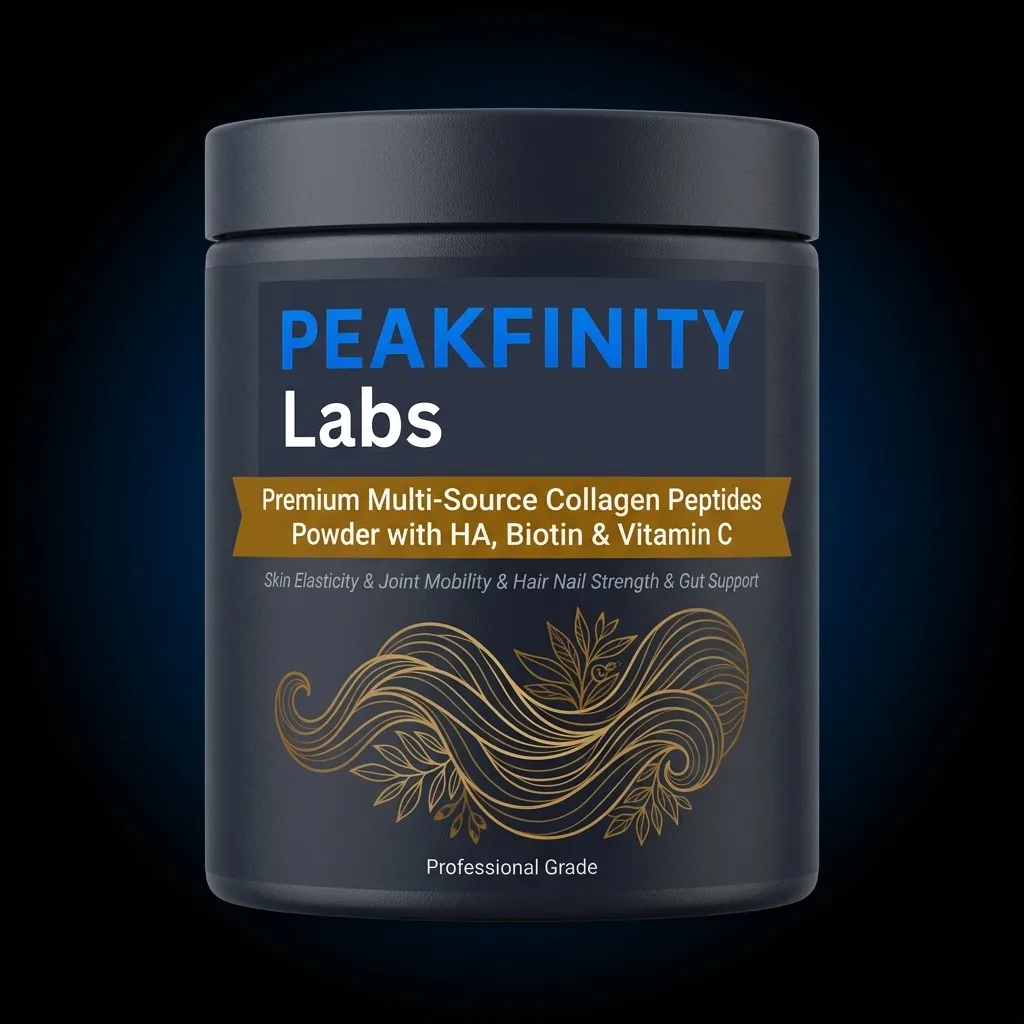
Premium Multi-Source Collagen Peptides Powder with HA, Biotin & Vitamin C
Nutraceuticals (Beauty) · Powder
Ready to manufacture a peptide serum that actually works?
Peakfinity Labs formulates and manufactures cosmetic peptide serums and creams in our 375,000+ sq ft facility — 2,000-unit MOQ, stock-base or fully custom, raw-material sourcing across all four peptide classes, batch COA included, 4–8 week turnaround.

Tushar
Licensed Pharmacist and COO @ Peakfinity Labs
Written by the Peakfinity Labs R&D Team — 46+ years of supplement formulation expertise. Our team of formulation chemists, manufacturing specialists, and regulatory experts has helped thousands of eCommerce brands bring their products to market successfully since 1980.
Related Articles
Serum Manufacturing for Skincare Brands
Guide to skincare serum manufacturing including active ingredients and formulation challenges.
Clean Beauty Manufacturing Guide
Ingredient standards, certifications, and formulation for clean beauty products.
Copper Peptides (GHK-Cu) in Skincare: Formulation & Manufacturing
A formulator's guide to GHK-Cu — mechanism, effective doses, pH window, incompatibilities, packaging, and what changes when you actually manufacture a copper peptide serum.