Cosmetic Manufacturing for Medspas: How to Launch a Private-Label Skincare Line
The five categories that actually sell, the post-procedure formulation rules, the packaging language patients already trust, the MOQ and COGS math, and the launch playbook for a clinic-branded skincare line.
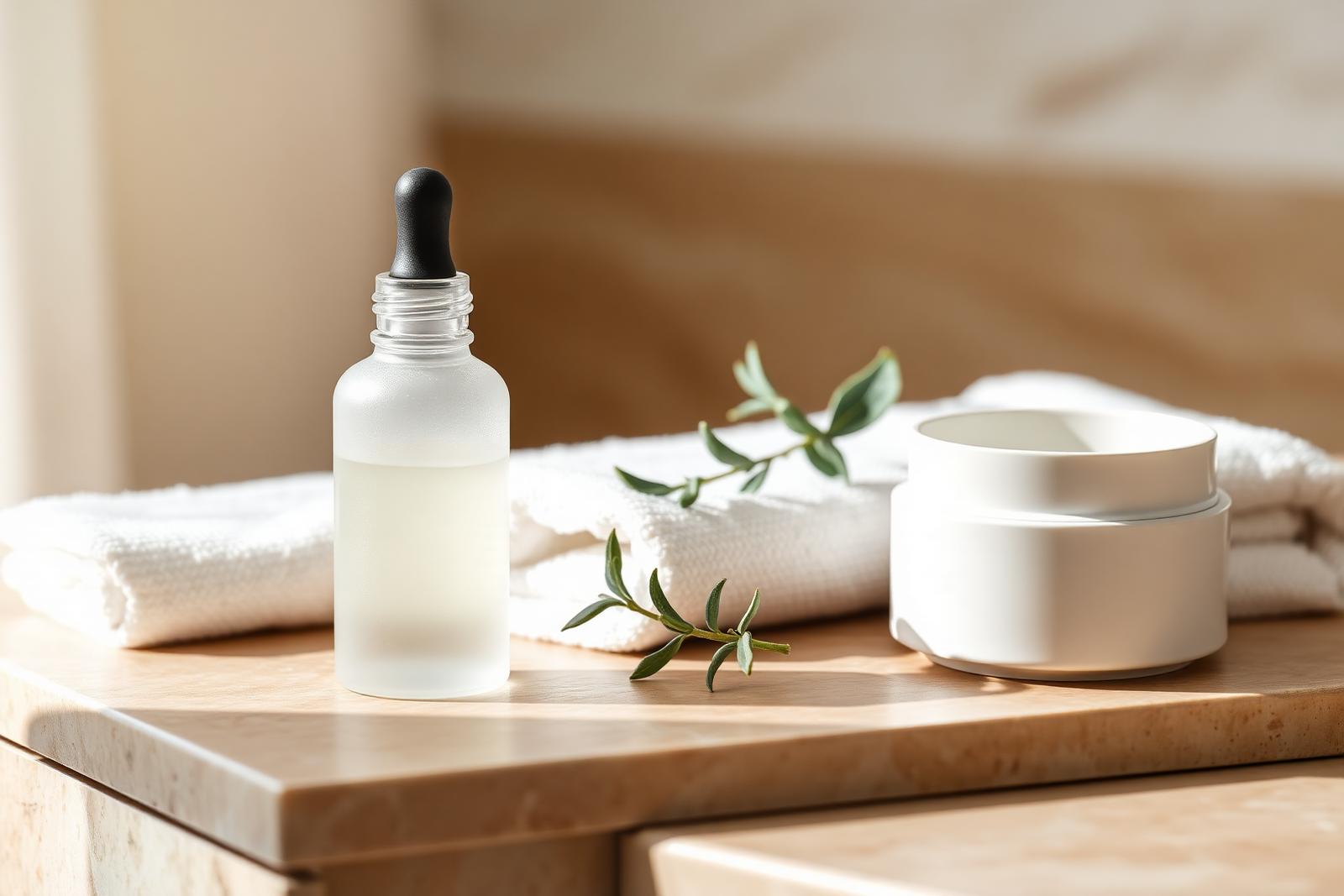
- 1A private-label medspa skincare line runs at 60–75% gross margin, compounds patient LTV between in-room visits, and reinforces the clinical authority the practice has already earned.
- 2Five categories drive most of the revenue: post-procedure recovery, peptide and growth-factor serums, retinoid and exfoliation systems, mineral SPF, and barrier-repair (ceramide/lipid) creams.
- 3Post-procedure formulations strip fragrance, common allergens, low-pH actives, and aggressive surfactants — and load panthenol, centella, ceramides, niacinamide, and barrier lipids instead.
- 4Flat 2,000-unit MOQ at Peakfinity Labs lands a 30 mL serum at $5–$11 per unit and a 50 mL cream at $4.50–$9.50 — which lets a single-location clinic launch a 3-SKU line without department-store inventory risk.
- 5Treatment-room packaging — frosted glass, airless pumps, brushed metal, white-on-white — signals medical-grade positioning and is the single most leveraged decision after the formula itself.
Short answer
A private-label medspa skincare line is one of the highest-leverage retail moves a clinic can make. At a flat 2,000-unit MOQ, a 30 mL serum lands at $5–$11 and a 50 mL cream lands at $4.50–$9.50, retailing at $60–$140 — gross margins of 60–75%, sold to a captive audience the clinic already has authority with. The five categories that move: post-procedure recovery, peptide and growth-factor serums, retinoids, mineral SPF, and barrier-repair creams.
Why medspas are launching private-label skincare
The take-home product is where a treatment becomes a result. Patients who go home with a clinic-branded post-procedure cream and a daily serum hit the 8–12 week visible-change window the practice promised in the consult. Patients who don't, plateau. That outcome — and the auto-ship revenue that comes with it — is why private-label medspa skincare has shifted from optional retail to standard practice.
- Margin compression on devices and treatments — reselling SkinCeuticals or ZO at 35–50% margin no longer pays for itself. A 65% gross-margin private label does.
- Authority transfers to the bottle — patients trust a brand built by the people who do their treatments more than a brand they could buy at Sephora.
- Subscription compounds — clinic-branded serums and creams run beautifully on 30–60 day auto-ship, which compounds revenue without compounding marketing cost.
- Protocol reinforcement — when the take-home cream is the clinic's, the patient adheres to the protocol. When it's a third-party, they substitute and the result suffers.
See our medspa cosmetic manufacturing service for the full process, MOQs, and certifications.
The 5 skincare categories that sell in a medspa
| Category | Hero SKU | Format | Typical retail |
|---|---|---|---|
| Post-procedure recovery | Calming cream, post-laser balm | Airless cream | $55–$120 |
| Peptide / growth-factor serum | GHK-Cu, Matrixyl, GF blend | Frosted dropper / airless | $80–$180 |
| Retinoid system | Retinaldehyde, encapsulated retinol | Airless pump | $70–$140 |
| Mineral SPF | Zinc oxide tinted SPF 30–50 | Tube, airless pump | $45–$85 |
| Barrier-repair / ceramide cream | Ceramide 3:1:1 lipid cream | Jar, airless | $55–$120 |
Post-procedure: what changes in the formulation
Post-procedure skin is barrier-compromised and inflammation-primed. A formulation that performs on healthy skin can sting, sensitize, or trigger a flare on day-2 post-laser. The formulation has to be built deliberately.
| Out | In |
|---|---|
| Fragrance (synthetic + most essential oils) | Panthenol (B5) at 2–5% |
| Low-pH actives (AHA, BHA, L-ascorbic acid) | Centella asiatica (madecassoside, asiaticoside) |
| Ethanol / alcohol denat | Allantoin, oat extract, beta-glucan |
| SLS and aggressive surfactants | Ceramide 3:1:1 lipid complex |
| Benzoyl peroxide, retinoids (during recovery window) | Niacinamide at 2–5% (not 10%) |
| Physical exfoliants | Squalane, cholesterol, free fatty acids |
Important
The post-procedure SKU is not a generic moisturizer with new branding. It's a deliberately barrier-friendly formulation at pH ~5.5 with the irritation-trigger list above stripped out. Selling a generic cream as "post-procedure" creates clinical liability and patient outcomes that don't match the consult.
MOQ, COGS, and retail margin
| Line item | 30 mL peptide serum | 50 mL recovery cream | 50 mL mineral SPF |
|---|---|---|---|
| MOQ (units) | 2,000 | 2,000 | 2,000 |
| Per-unit landed cost | $5.00–$11.00 | $4.50–$9.50 | $5.00–$10.50 |
| Suggested retail | $80–$180 | $55–$120 | $45–$85 |
| Gross margin | 65–80% | 60–75% | 60–75% |
| First-run investment | $10,000–$22,000 | $9,000–$19,000 | $10,000–$21,000 |
For active-by-active formulation detail on the peptide hero see our copper peptides (GHK-Cu) formulation guide.
Packaging: airless, frosted, treatment-room ready
- Airless pumps — the medspa default for serums and recovery creams. Protects light- and oxygen-sensitive actives (peptides, retinoids, growth factors), prevents bacterial ingress, and dispenses cleanly post-procedure.
- Frosted or opaque glass — for dropper-format serums. Clear glass is fine for vitamin C in low-pH systems but wrong for copper peptides, retinoids, and growth factors.
- Matte white or brushed metal — the visual language patients already associate with a dermatologist's office. Avoid maximalist beauty branding, gradient foils, and color-of-the-year palettes.
- Tubes for SPF — practical, light, travel-ready. For tinted SPF an aluminum tube with a polypropylene cap holds its line over 12+ months.
Walk the full format set on our cosmetic manufacturing services overview, and for the active-by-active formulation breakdown see the 2026 cosmetic peptides guide.
Compliance: claims, COA, sensitive-skin safety
- Cosmetic-claim discipline — appearance, hydration, firmness, brightness. No "treats," "prevents," or "cures" language without an OTC drug pathway. Our regulatory team reviews every label before print.
- Batch-level COA — every cosmetic lot ships with identity, microbial, and (for sensitive actives) potency testing. Standard documentation for any medical-director sign-off.
- Stability + challenge testing — 3-month accelerated plus 24-month real-time plus a USP-51 challenge test on every new formula before scale-up.
- Patch-test or sensitization data on the master formula — for any product positioned as post-procedure or sensitive-skin appropriate.
Medspa skincare launch playbook
- Pick 3 SKUs — most successful medspa skincare lines launch with a recovery cream (the post-treatment attach), a peptide or growth-factor serum (the daily hero), and a mineral SPF (the auto-ship anchor).
- Build the packaging system, not the SKU — design the bottle/jar/tube system once so every future SKU drops cleanly into the same brand language.
- Use the treatment room as the launch channel — every laser, peel, and microneedling patient leaves with the recovery cream. Attach rate at the post-treatment desk runs 60–80% when the front-of-house has a 30-second script.
- Subscription-default the daily SKUs — auto-ship the serum and SPF at 30/60-day intervals. Subscription drives 60–70% of revenue on a mature medspa skincare line.
- Plan the restock from week one — at a 2,000-unit MOQ and 4–8 week production lead time on stability-validated cosmetics, the order trigger is usually 8 weeks of inventory remaining.
For broader brand-launch strategy see our how to launch a peptide skincare brand playbook.
The bottom line
Medspa skincare done right is a 60–75% gross-margin retail program that compounds patient LTV, reinforces the clinical authority of the practice, and turns every treatment into a result the patient actually maintains at home. The clinics that scale it pick 3 SKUs, build a treatment-room packaging system, train the front desk on attach, and put the daily SKUs on subscription from day one. The clinics that don't, leave the margin — and the retention — on the SkinCeuticals shelf. If you're stacking it with a take-home supplement program, our supplement manufacturing for medspas guide covers the companion playbook.
Frequently Asked Questions
Why should a medspa launch its own private-label skincare?
Margin, retention, and authority. A private-label skincare run at a 2,000-unit MOQ usually lands at $4.50–$11 per unit and retails at $40–$120 — gross margins of 60–75%, materially better than reselling SkinCeuticals or ZO at 35–50% margin. A patient who buys the clinic's branded cream comes back to the clinic to re-order (or stays on auto-ship), which compounds LTV. And selling a clinic-branded line reinforces the clinical authority that drives the rest of the practice — patients trust a brand built by the people doing their treatments.
What skincare actually sells in a medspa?
Five categories anchor most successful medspa lines. Post-procedure recovery cream (the take-home after every laser, microneedling, or peel — the highest-attach SKU in the practice). Peptide and growth-factor serums (the daily 'workhorse' SKU, often GHK-Cu, Matrixyl, or a TGF/EGF-based growth factor). Retinoid and exfoliation systems (retinaldehyde, encapsulated retinol, or a glycolic/lactic blend). Mineral SPF (zinc oxide or zinc + titanium, often tinted — the daily refill product). And barrier-repair / ceramide cream (the year-round restock that brings patients back). Most clinics launch 3 of those 5 in the first wave and add the others over 6–12 months.
What's the MOQ and lead time for a medspa skincare SKU?
At Peakfinity Labs the MOQ is a flat 2,000 units per SKU across cosmetic formats. A private-label stock formula with custom labeling lands in 4–6 weeks. A fully custom formulation — new actives, new texture, new preservation system — adds 8–14 weeks of R&D and stability testing before the first production run. Stability is non-negotiable: we run 3-month accelerated plus 24-month real-time on every new formula so the product holds its claim for its labeled shelf life.
What changes in a post-procedure cream vs. a regular moisturizer?
A lot. Post-procedure skin is barrier-compromised and inflammation-primed — the formulation has to remove anything that aggravates that state. Out: fragrance (synthetic and most natural essential oils), high-pH or low-pH actives, ethanol/alcohol denat, common surfactants like SLS, drying actives like benzoyl peroxide, and physical exfoliants. In: panthenol (B5) at 2–5%, centella asiatica (madecassoside, asiaticoside), allantoin, oat extract, ceramide complexes (NP, AP, EOP), cholesterol and free fatty acids in the 3:1:1 ratio that mirrors skin's lipid lamellae, and niacinamide at 2–5% (below the 10% threshold that can irritate compromised skin). The pH targets a barrier-friendly 5.5.
What packaging do medspa skincare brands use?
Treatment-room packaging. Airless pumps in frosted glass or matte white plastic, brushed silver or matte black caps, minimal typography, and a color palette that lives in the cream/champagne/sage/white range. This signals medical-grade positioning, protects active stability (especially for peptides, retinoids, and vitamin C), and looks at home on a treatment-room shelf rather than a department-store gondola. Avoid clear glass droppers for sensitive actives — light and air degrade them — and avoid maximalist beauty branding.
What can I claim on a medspa skincare product?
Cosmetic claims only — appearance of fine lines, hydration, firmness, brightness, evenness. You cannot claim a product treats, prevents, or cures any condition (acne, melasma, rosacea, eczema) without taking it through an OTC drug pathway. 'Calms post-procedure redness' is a structure/function claim that is generally defensible if the formula supports it; 'treats post-procedure inflammation' crosses into drug-claim territory. Our regulatory team reviews every label before print.
Can you formulate growth-factor and peptide serums for a medspa line?
Yes. We manufacture peptide serums (GHK-Cu copper peptide, Matrixyl 3000, Argireline, Snap-8, hexapeptides) at the standard 2,000-unit MOQ in airless packaging with batch-level COA confirming active concentration. We also formulate growth-factor serums using plant-derived growth factors and bioidentical recombinant proteins where the supplier provides validated cosmetic-grade documentation. For the full peptide manufacturing detail see our cosmetic peptide manufacturing service at /cosmetic-peptide-manufacturing.
Does Peakfinity Labs run multi-location medspa skincare programs?
Yes. The same 2,000-unit MOQ per SKU applies whether you're a single-location clinic or a 50-location aesthetic group. Larger groups typically order in 10,000–50,000-unit runs to drive per-unit cost down and stage releases by region. Central distribution can ship directly to each location, to your existing 3PL, or to a regional warehouse on a managed-inventory program.
Ready to launch your medspa skincare line?
Peakfinity Labs manufactures private-label and custom skincare for medspas at a flat 2,000-unit MOQ in our 375,000+ sq ft facility — airless packaging, batch-level COA, post-procedure-safe formulation, and a 4–8 week turnaround on stability-validated formulas.

Tushar
Licensed Pharmacist and COO @ Peakfinity Labs
Written by the Peakfinity Labs R&D Team — 46+ years of supplement formulation expertise. Our team of formulation chemists, manufacturing specialists, and regulatory experts has helped thousands of eCommerce brands bring their products to market successfully since 1980.
Related Articles
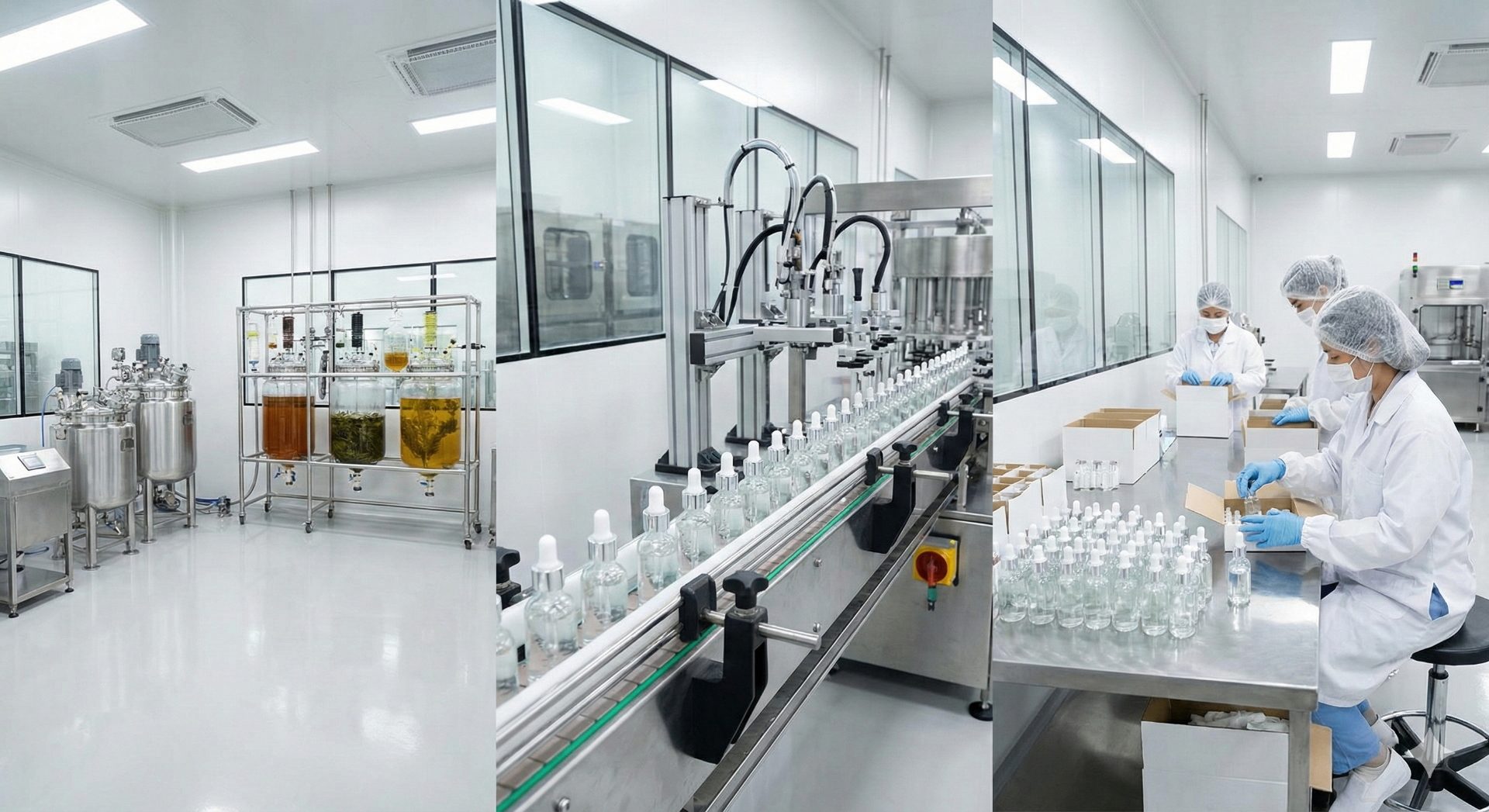
Serum Manufacturing for Skincare Brands
Guide to skincare serum manufacturing including active ingredients and formulation challenges.
Clean Beauty Manufacturing Guide
Ingredient standards, certifications, and formulation for clean beauty products.
Cosmetic Peptides for Skincare: The 2026 Complete Guide
GHK-Cu, Matrixyl, Argireline, Snap-8 — every working class of cosmetic peptide with effective doses, stacking rules, and formulation requirements.