How to Launch a Peptide Skincare Brand: A 2026 Founder's Playbook
The six-step playbook for launching a peptide skincare brand in 2026 — hero peptide selection, MOQ and COGS, packaging, claims compliance, and channel-by-channel launch order.
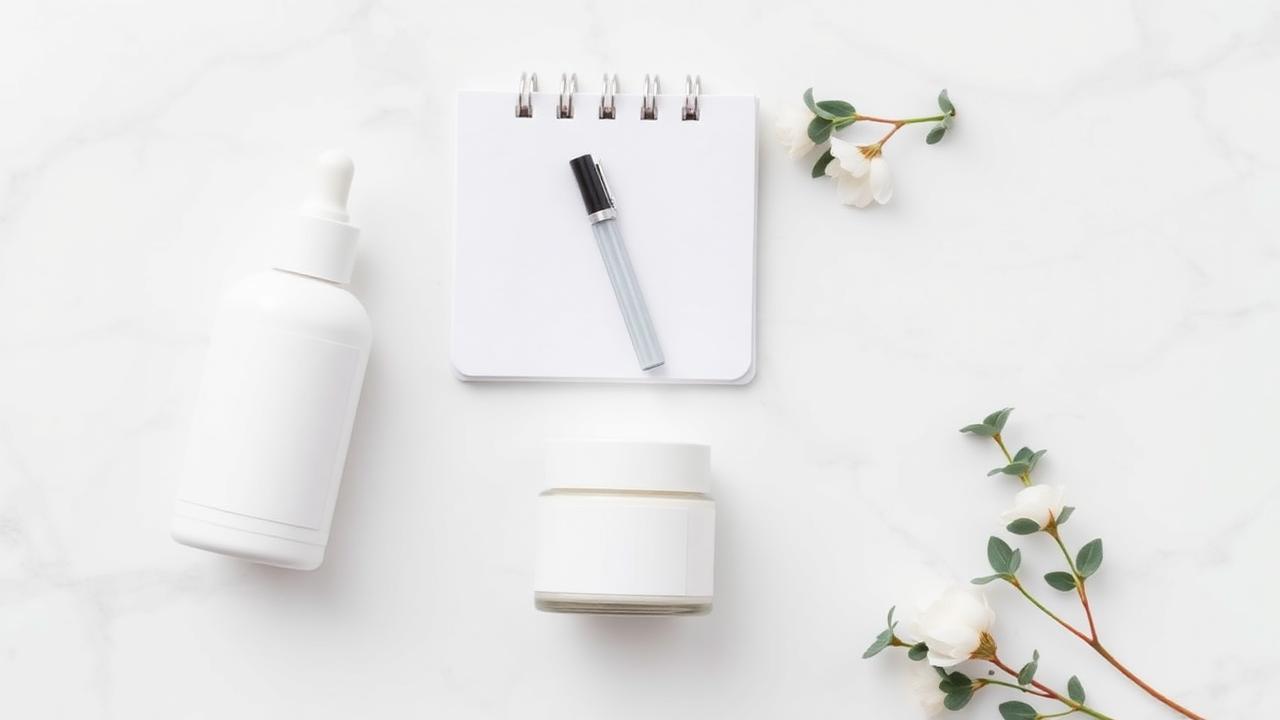
- 1A peptide skincare line is one of the highest-margin and longest-shelf-life categories in cosmetics — but it lives or dies on a single decision: which peptide is the hero, and is it dosed in the proven window.
- 2Stock-base custom (your peptide stack dosed into our pre-developed serum matrix) launches at a 2,000-unit MOQ with a 4–8 week turnaround. Fully custom (new matrix, new packaging, new claims) is a 12–20 week, 5,000-unit project.
- 3Per-bottle landed COGS on a 30 mL airless-pump peptide serum runs $5.00–$11.00 depending on the peptide stack and packaging. DTC retail anchors at 4–6x COGS; Amazon at 3.5–5x; TikTok Shop at 3–4x after creator commission.
- 4Claims compliance is the single most common reason a peptide brand gets a warning letter. 'Visibly reduces the appearance of fine lines' is a cosmetic claim; 'stimulates collagen production' is a drug claim that requires an NDA.
- 5Peakfinity Labs runs peptide skincare at a flat 2,000-unit MOQ with batch COA, airless packaging procurement, FBA-ready packout, and a 4–8 week turnaround from our 375,000+ sq ft facility.
Short answer
A peptide skincare brand launches well when the founder makes four decisions correctly on day one: the right hero peptide stack, the right MOQ tier (stock-base vs. custom), the right packaging (airless, full stop), and the right claim language (cosmetic, not drug). Get those four right and a 2,000-unit launch is a 4–8 week manufacturing project on top of a 4-week creative project. Get any one of them wrong and the launch slips by a quarter while you re-formulate, re-package, or re-label.
The peptide skincare category in 2026
Peptide skincare is one of the fastest-growing sub-categories in beauty, driven by three forces: aging millennials moving from retinol-only routines into peptide stacks, GLP-1 weight-loss users compensating for facial volume loss with topical firming actives, and the "skinification" of TikTok Shop's beauty category. The category rewards specificity — a brand that owns "the copper peptide serum" or "the eye peptide" wins more shelf than a generic "anti-aging" brand competing with the legacy giants.
For the underlying ingredient framework, see our complete guide to cosmetic peptides. For the GHK-Cu deep dive, see our copper peptides manufacturing guide.
Step 1 — Positioning and the hero peptide
Pick the peptide stack before the brand name, the bottle, or the website. The hero peptide drives the claim, the claim drives the channel, and the channel drives the unit economics. Three positions that work for new brands:
- The Expression-Line Brand — Argireline 10% + Snap-8 5% + Matrixyl 3000 3%. Hero claim: "visibly softens expression lines in 4–6 weeks." Wins on TikTok and Amazon.
- The Copper Peptide Brand — GHK-Cu 1% serum, standalone. Hero claim: "supports skin firmness and barrier." Wins on Reddit, dermatology TikTok, and Sephora-style retail.
- The Multi-Peptide Firming Brand — Matrixyl synthe'6 3% + Palmitoyl Tripeptide-5 3% + niacinamide 4%. Hero claim: "next-generation firming serum." Wins on DTC with a strong content engine.
Step 2 — Formulation: stock base vs. fully custom
| Decision | Stock-base custom | Fully custom |
|---|---|---|
| What it is | Your peptide stack in our pre-developed serum/cream matrix | New emulsion built from scratch |
| MOQ | 2,000 units | 2,000+ units |
| R&D timeline | 1–3 weeks | 12–20 weeks |
| Stability included | Yes (stock matrix is stability-tested) | Yes — full new stability study |
| Differentiation | Peptide stack + claim + brand | Texture, sensory, packaging, full IP |
| Best for | First product, fast launch, validation | Established brand, line expansion, retail |
Note
Founder mistake: insisting on fully custom for the first SKU. Stock-base custom keeps 95% of the brand differentiation (the peptide stack, the claim, the brand) at 20% of the timeline and 40% of the cost. Save custom for SKU 3 or SKU 4 when you've earned the demand to amortize the R&D.
Step 3 — MOQ, COGS, and unit economics
| Line item | Cost range (30 mL airless serum, 2,000-unit run) |
|---|---|
| Bulk formula (manufacturing + actives) | $3.20–$7.50 per bottle |
| Airless pump + bottle + overcap | $1.10–$2.20 |
| Carton + leaflet | $0.40–$0.80 |
| Label / sleeve print | $0.25–$0.55 |
| Prototype + stability setup | $0.40–$1.25 amortized |
| FBA-ready packout (FNSKU, poly-bag, case) | $0.35–$0.75 |
| Total landed COGS | $5.70–$13.05 |
Anchor your retail price at 4–6x landed COGS for DTC, 3.5–5x for Amazon (account for fees and PPC), and 3–4x for TikTok Shop (after creator commission). A $7.50 landed-COGS peptide serum that retails at $42 DTC is a healthy unit-economic launch.
Step 4 — Claims, compliance, and label law
- Cosmetic claims (safe): "visibly reduces the appearance of fine lines," "helps support firmness," "improves the look of skin texture."
- Drug claims (warning-letter territory): "stimulates collagen production," "rebuilds elastin," "Botox alternative," "treats wrinkles."
- Trademark risk: never use "Botox," "Restylane," "Juvederm" in marketing — they're prescription-drug trademarks.
- MoCRA registration: every cosmetic product sold in the US must be listed in the FDA's MoCRA portal with the responsible person and the manufacturing facility registered. Your manufacturer handles facility registration; you handle the responsible-person registration.
- Label law: ingredient list in INCI order by concentration descending to 1%, then in any order; net weight; responsible-person address; lot code; PAO (period after opening) symbol. See our label law reference for the parallel framework.
Step 5 — Packaging: airless is the floor
For a peptide serum the packaging decision is short: airless pump in an opaque or amber bottle. A standard clear dropper bottle costs less per unit but loses 20–40% of peptide potency over a 12-month shelf life due to light and oxygen exposure. The savings are wiped out by returns, reformulation, and the brand damage of a customer who feels nothing in 8 weeks.
- Stock airless pump (30 mL or 50 mL): $1.10–$2.20 per unit, available in 4–6 weeks.
- Custom airless mold: $8,000–$25,000 mold tooling, 10–14 weeks lead time, then $1.30–$3.00 per unit at 5,000+ MOQ.
- Secondary carton: required for retail and for protecting the airless pump in shipping. $0.40–$0.80 with soft-touch lamination or foil stamp adders.
See our packaging and label design guide for the broader framework.
Step 6 — Launch channels: DTC, Amazon, TikTok Shop
| Channel | Timing | Multiple of COGS | What it requires |
|---|---|---|---|
| Shopify DTC | Month 0 — launch | 4–6x retail | Brand site, email/SMS capture, paid social |
| Amazon FBA | Month 2–3 | 3.5–5x retail | FNSKU-ready packout, A+ content, PPC, listing optimization |
| TikTok Shop | Month 3–4 | 3–4x retail (after commission) | UGC library, creator network, inventory depth |
| Specialty retail (Credo, Free People, etc.) | Month 6–12 | 2.5–3x wholesale (5–6x retail) | Distribution-grade packaging, line of 3+ SKUs, sell sheet |
| Sephora / Ulta / Whole Foods | Year 2+ | 2–2.5x wholesale | Proven sell-through, full-line collection, 6–12 month launch cycle |
End-to-end timeline (week 0 to first shipment)
- Weeks 0–2: brief lock — hero peptide, claim, target retail, packaging tier.
- Weeks 2–4: formula lock on stock-base matrix; prototype approved; stability initiated.
- Weeks 3–6: label and carton design; MoCRA responsible-person registration; brand site build.
- Weeks 4–8: packaging procurement (stock airless pump and carton).
- Weeks 6–12: production run (2,000 units), QC, batch COA, FBA-ready packout.
- Weeks 12–14: inbound freight to 3PL or FBA; launch creative live; first 30-day sales sprint.
The bottom line
A peptide skincare brand is one of the better launches available to a 2026 founder: high margin, long shelf life, an ingredient story consumers want, and a category big enough to sustain a niche specialist. The launches that fail aren't failing on the peptide — they're failing on the four decisions around it: wrong hero, wrong MOQ tier, wrong packaging, wrong claim language. Get those right, partner with a manufacturer that holds a 2,000-unit MOQ and ships FBA-ready, and the first shipment lands in 8–12 weeks from a locked brief.
Frequently Asked Questions
How much does it cost to launch a peptide skincare brand?
All-in launch cost for a single-SKU peptide serum at a 2,000-unit MOQ in 2026 typically runs $14,000–$28,000. That covers manufacturing and packaging ($5.00–$11.00 per bottle landed × 2,000 = $10,000–$22,000), label and dieline design ($800–$2,500), prototype and stability ($1,000–$2,500, often credited back against production), photography and creative for launch ($1,500–$3,500), and initial digital ad budget ($1,500–$5,000). The peptide active is the dominant line — a 1% GHK-Cu serum costs noticeably more to manufacture than a 5% Argireline serum.
Which peptide should my first product use?
For a new brand the right answer is almost always a multi-peptide signal + neurotransmitter stack — Matrixyl 3000 at 3–5% plus Argireline at 5–10%, often with Snap-8 added — because the combined claim ('softer expression lines + improved firmness') is broader and the mechanisms don't fight. GHK-Cu (copper peptides) is a strong second product because it has to be formulated standalone, making it a clean line extension. Avoid building your first product around a single obscure peptide; the brand needs a hero claim, not an ingredient deck.
Can I make a 'Botox alternative' claim on a peptide serum?
No — and this is the single fastest way to a warning letter. 'Botox alternative,' 'Botox-like,' or 'topical Botox' are all problematic for two reasons: Botox is a trademark (Allergan), and the claim implies the cosmetic acts like a prescription drug (affecting body structure and function), which would reclassify the product as a drug requiring an NDA. The compliant language is 'visibly reduces the appearance of expression lines.' Same idea, very different regulatory category.
What's the minimum order to start a peptide skincare brand?
At Peakfinity Labs we hold a flat 2,000-unit MOQ for cosmetic peptide serums and creams on our stock-base matrices — the same minimum we hold across the catalog. Fully custom formulas (new emulsion, new texture, new packaging) move to 5,000 units because the R&D and stability investment has to amortize. Some manufacturers advertise lower MOQs but exclude packaging, label, or stability work; always ask for the all-in landed quote.
How long does it take from idea to first shipment?
On a stock-base peptide formula with a standard 30 mL airless pump in stock, the realistic timeline is 8–12 weeks: 1–2 weeks of brief and formula lock, 3–4 weeks of label/dieline design and packaging procurement, 4–6 weeks of production and packout, and 1–2 weeks of FBA prep and inbound freight. Custom packaging (custom bottle mold, custom carton structure) adds 6–10 weeks. Custom formula adds another 8–12 weeks on top.
Do I need FDA approval for a peptide skincare product?
No — cosmetic products in the US are not pre-approved by the FDA the way drugs and devices are. Manufacturers must register their facility and product listings under MoCRA (Modernization of Cosmetics Regulation Act, in force 2024), maintain safety substantiation files, comply with labeling rules under 21 CFR 701, and follow Good Manufacturing Practices. The FDA enforces against unsafe products, mislabeled products, and cosmetics making drug claims.
Where should a new peptide brand launch — DTC, Amazon, or TikTok Shop?
All three, in sequence. Start with a Shopify DTC store to control brand narrative, capture email/SMS, and run the high-margin first 1,000 customers. Add Amazon FBA in month 2–3 to capture search demand ('peptide serum,' 'GHK-Cu serum') with a properly prepared listing. Add TikTok Shop in month 3–4 once you have UGC and a creator network, because TikTok Shop rewards inventory depth — running out the week a video goes viral is the most expensive mistake in the channel.

Tushar
Licensed Pharmacist and COO @ Peakfinity Labs
Written by the Peakfinity Labs R&D Team — 46+ years of supplement formulation expertise. Our team of formulation chemists, manufacturing specialists, and regulatory experts has helped thousands of eCommerce brands bring their products to market successfully since 1980.
Related Articles
Private Label Supplement Markup: Typical Margins for DTC, Amazon, and Wholesale
Typical markup ranges for DTC, Amazon, and wholesale, plus the landed-cost model that decides whether your margin is real.
How to Compare Quotes From Supplement Manufacturers Without Missing Hidden Costs
A six-bucket framework and paste-ready RFQ table that surfaces hidden costs before you sign with a manufacturer.
When Is a Supplement Brand Ready to Move From Private Label to Custom?
Nine readiness signals, the custom-light middle path, and a seven-step switch plan that avoids stockouts and claim issues.