How to Find an ISO 17025-Accredited Supplement Testing Lab, and What Founders Should Ask For
How to verify a lab's ISO/IEC 17025 scope actually covers your test and matrix, the questions to ask before shipping samples, and a testing plan that fits ecommerce timelines.
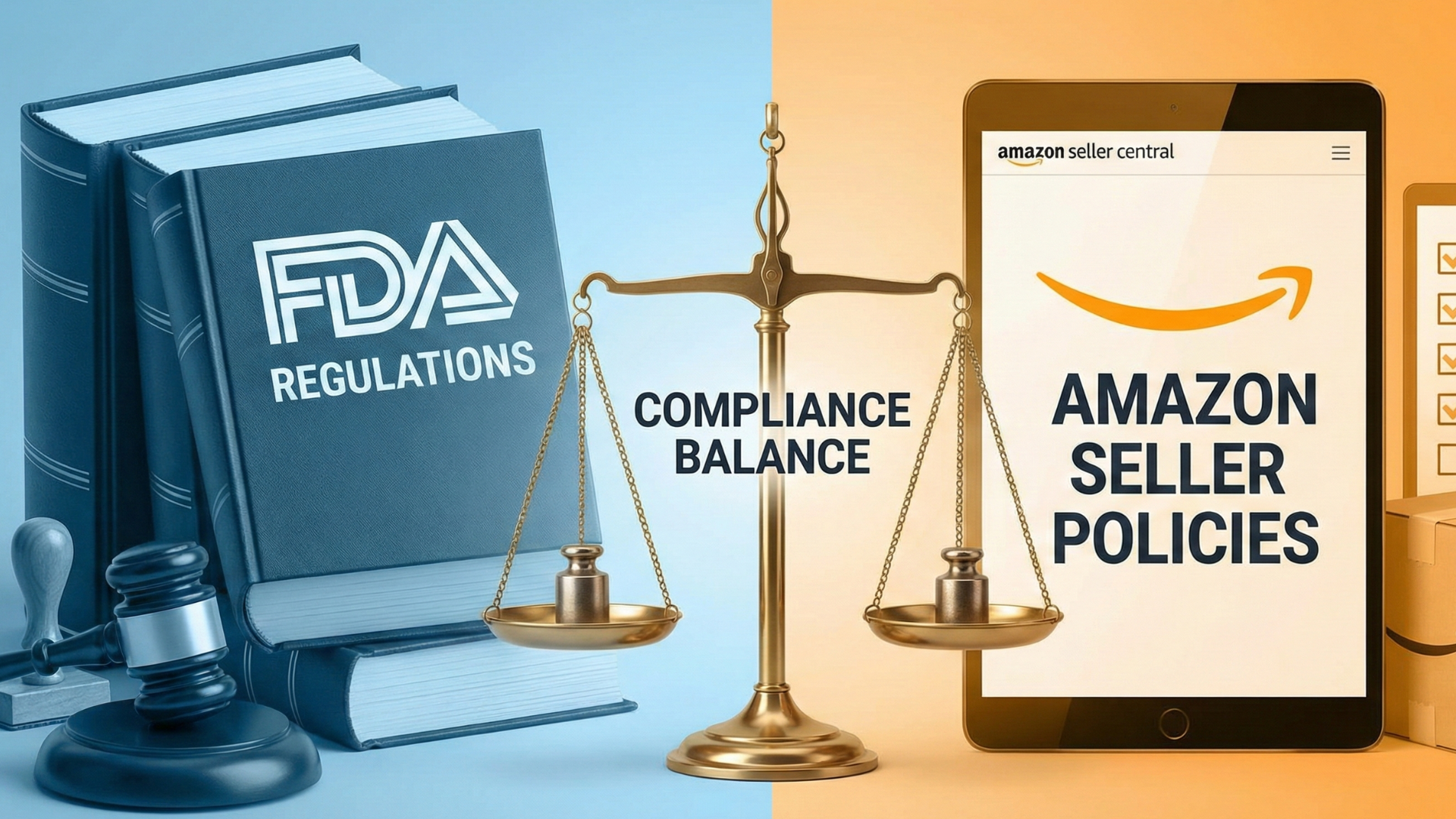
- 1ISO/IEC 17025 accreditation is method- and matrix-specific: a lab can be accredited and still run YOUR test as non-accredited if it falls outside its scope. Verify the scope in the accrediting body's directory (ANAB, A2LA), never the badge in a website footer.
- 2Ask in writing: "Will the COA report this test as ISO/IEC 17025 accredited for my matrix?" — gummies, softgels, and oily blends each behave differently.
- 3Most founders' minimum plan: identity on higher-risk raw materials, finished-goods potency for the main claimed active, micro, and a heavy metals screen — scheduled before labels print, not after inventory arrives.
- 4The contrarian spend: many brands over-test finished goods every lot but skip incoming raw material verification — with low MOQ runs, incoming checks catch supplier issues before they're blended into thousands of units.
- 5On an out-of-spec result, pause release and ask for the lab's OOS investigation steps (re-prep, QC review) before assuming the product failed — matrix interference is common in multi-ingredient formulas.
Introduction
If you sell supplements, lab testing is not a box to check. It is how you keep products consistent, defend your label claims, and avoid expensive surprises like a failed contaminant screen the week your influencer campaign goes live.
Founders usually start lab shopping after a problem: a marketplace asks for a COA, a retailer requests heavy metals data, or a manufacturer says, "We need a third-party lab for identity testing." The hard part is that not all labs operate the same way. A lab can run the right instrument and still produce results you cannot trust if its methods, calibration, and quality system are weak.
ISO/IEC 17025 accreditation helps solve that trust gap. It does not mean a lab is perfect, but it does mean an independent accrediting body has reviewed the lab's competence for specific test methods and matrices. This guide explains how to find an ISO 17025-accredited lab, how to verify the scope, what questions to ask before you ship samples, and how to set up a testing plan that matches ecommerce timelines and low MOQ production. (If you are also building the brand-side paper trail those results feed into, see supplement quality documents for Amazon and retail.)
What ISO/IEC 17025 accreditation actually means (and what it does not)
ISO/IEC 17025 is the main international standard for testing and calibration laboratories. It focuses on technical competence and a quality management system that supports valid results.
Accreditation matters because it ties a lab's results to verified methods, controlled equipment, trained analysts, and documented uncertainty. If you ever need to defend a COA to a retailer, Amazon, or an attorney, these details matter.
- What it means: The lab has been assessed against ISO/IEC 17025 and found competent for specific methods, analytes, and sample types listed on its scope of accreditation.
- What it does not mean: The lab is accredited for every test it offers. Many labs run both accredited and non-accredited tests. You must confirm your exact test is on the scope.
- What it does not replace: GMP manufacturing controls. A perfect COA cannot fix poor raw material control, bad mixing, or cross-contamination upstream. (Vetting the factory side is its own workflow — see how to vet a cGMP manufacturer with documented audit history.)
You can read the standard overview from ISO here: ISO/IEC 17025 overview
When founders should use an ISO 17025-accredited lab
Not every brand needs every test on every lot. But there are moments when ISO 17025-backed results reduce risk fast.
- New product launches: Verify identity and potency early so you do not build a label around the wrong assay.
- Supplier changes: Confirm raw materials match prior specs when you switch brokers, countries of origin, or extract ratios.
- Claims that invite scrutiny: High-dose actives, novel ingredients, or "clinically dosed" positioning.
- Marketplaces and retailers: Many request contaminant panels (heavy metals, micro, residual solvents) and a defensible COA.
- Viral scaling: When you go from small-batch to larger POs, testing is how you prove the scaled lot matches the pilot.
At Peakfinity Labs we see a pattern: founders who plan testing during formulation move faster. They choose assays that match the ingredient chemistry, then build specs that the lab can actually run without week-long method development.
Where to start (a fast path for busy founders)
If you are short on time, do this in order. It avoids the most common failure: paying for a test that does not match your matrix or label claim.
- Write a one-page product testing brief: dosage form, ingredient list, top 3 actives to quantify, and the risk panel you need (heavy metals, micro, allergens, residual solvents).
- Decide what you are testing: raw material, in-process blend, or finished goods. The right stage depends on the claim and the risk.
- Shortlist 3 labs that publish an ISO 17025 scope of accreditation and accept your matrix (capsules, gummies, powders, liquids).
- Ask for methods and sample requirements before you place the PO. A lab that cannot explain method fit will slow you down later.
- Request a quote that lists turnaround time, rush options, and the exact method name or reference (AOAC, USP, in-house validated).
How to find ISO 17025-accredited labs (and verify the scope)
The simplest route is to find a lab, then verify its accreditation in the accrediting body's directory. Do not rely on a badge in the footer of a website.
Step 1: Identify the accrediting body
In the US, common accrediting bodies include ANAB and A2LA. Other countries have their own recognized bodies. The lab should state who accredited them and provide an accreditation certificate number.
Step 2: Check the scope, not just the certificate
Accreditation is method-specific. The scope will list the analytes, matrices, and methods. If you sell a gummy and the lab is accredited for heavy metals in water, that does not help you.
When you read a scope, look for these details:
- Matrix match: capsule, powder, tablet, gummy, softgel, liquid, botanical extract.
- Analyte match: specific vitamin form, mineral, botanical marker, contaminant class.
- Method match: named standard method (USP, AOAC) or an in-house method with validation notes.
- LOD/LOQ: confirm the lab can detect at levels relevant to your spec and regulatory expectations.
Step 3: Confirm your exact test will be reported as accredited
Ask this directly in writing: "Will the COA show ISO/IEC 17025 accredited for this method and matrix?" Some labs run the test but report it as non-accredited if it falls outside scope.
What founders should ask for before sending samples
Most testing problems are not instrument problems. They are communication problems. These questions prevent re-runs and wasted samples.
| What to ask | Why it matters | What a good answer sounds like |
|---|---|---|
| "Is this test accredited under ISO/IEC 17025 for my matrix?" | Accreditation is scope-limited. | "Yes, it is on our scope for dietary supplements (capsules/powders). It will be reported as accredited." |
| "What method are you using (USP/AOAC/in-house), and what is the LOQ?" | Method choice changes results, especially botanicals and enzymes. | "We use USP 233 for elemental impurities by ICP-MS, LOQ is X ppm depending on element." |
| "What is the sample size and prep?" | Gummies, softgels, and oily blends need different prep. | "Send 30 gummies, sealed. We homogenize, then extract with solvent A before LC-MS." |
| "What is standard turnaround and rush, and when does the clock start?" | Founders often assume the clock starts at shipment. | "Standard is 7 business days from sample login. Rush is 48-72 hours for these panels." |
| "Can you share an example COA and uncertainty statement?" | COA format affects retailer and marketplace acceptance. | "Here is our COA template, including method references, units, and measurement uncertainty where applicable." |
| "How do you handle OOS results and investigations?" | You need a process, not a shrug. | "We confirm with re-prep, review QC controls, then issue an amended report if needed." |
| "What is your chain-of-custody and confidentiality process?" | Protects IP and reduces sample mix-ups. | "We assign unique IDs, store retains, restrict access, and sign NDAs on request." |
Common testing packages for supplements (and how to choose without overpaying)
A smart testing plan matches your risk. Over-testing burns cash. Under-testing burns brands.
Core panels most founders start with
- Identity testing: Confirms the ingredient is what the COA says. For botanicals, this may involve HPTLC or microscopy plus marker compounds.
- Potency testing: Quantifies label actives. The method must match the chemical form, for example methylcobalamin vs cyanocobalamin.
- Microbiology: Total plate count, yeast and mold, and pathogens as needed.
- Heavy metals: Often aligned to USP 233 and 232 concepts, commonly run by ICP-MS.
Panels that depend on ingredients and dosage form
- Residual solvents: More common for extracts made with solvents, less common for simple vitamins and minerals.
- Pesticides: Higher priority for botanicals, especially when supply chains vary by harvest and region.
- Allergens: Critical if you are avoiding common allergens or using shared facilities upstream.
- Stability testing: Needed if you want a strong shelf-life claim and fewer customer complaints about clumping, color shift, or potency drop.
Contrarian take from what we see in manufacturing: many brands spend on a large finished-goods panel every lot, but skip incoming raw material verification. If your MOQ is low and you move fast, incoming checks can catch a supplier issue before you blend and encapsulate it into thousands of units.
Turnaround time and ecommerce deadlines (how to avoid timeline slippage)
Founders often plan ads, influencer drops, and 3PL intake dates before they plan lab lead times. That is backwards.
Peakfinity Labs is built around fast, small-batch production with a stated 3-4 week turnaround from formulation to finished goods. Testing has to fit inside that window. The easiest way is to split tests by stage:
- Pre-production: test higher-risk raw materials for identity and heavy metals before they enter the batch.
- Post-production: test finished goods for potency and micro, then release for sale once results meet spec.
Ask your lab what creates delays. Common culprits are incomplete chain-of-custody forms, wrong sample quantity, and re-runs due to matrix interference. If you are making gummies, for example, sugar acids and colors can interfere with some assays. A lab that sees supplement gummies every day will flag this early and suggest the right extraction.
How to evaluate lab quality beyond the ISO badge
ISO 17025 is the floor, not the ceiling. Two accredited labs can deliver very different experiences.
- Method fit for your matrix: Ask how often they run your dosage form. A lab that mainly tests water and soil may struggle with softgels or oily liquids.
- QC controls and recoveries: Ask whether they run spikes, duplicates, and reference materials, and whether you can see recovery ranges on request.
- Result reporting clarity: Units, basis (as-is vs dry weight), and pass/fail criteria should be unambiguous.
- Retain policy: Confirm they store a retain long enough for disputes, and how they handle re-tests.
- Customer support: A real technical contact saves days when you need to interpret an outlier.
Confidentiality and IP protection during formulation transitions
Founders worry about sharing formulas, supplier names, and specifications. That concern is valid, especially when you are switching manufacturers or reformulating a best seller.
- Use an NDA with the lab if you share full formulas or proprietary specs.
- Send samples labeled with internal codes, not marketing names, when possible.
- Limit disclosure. For many tests, the lab only needs matrix and target analytes, not your full supplier list.
- Ask who owns the data and how long they retain it, including raw instrument files.
From a manufacturing perspective, we see the best outcomes when the brand owns the specification and testing plan, not the supplier. That makes it easier to move fast between vendors without losing control of quality.
Picking the right lab for trending, complex formulas (heart health as an example)
Heart health products are a good stress test for your lab strategy. Many formulas combine botanicals, lipids, minerals, and fermented ingredients. Each category pushes methods in different directions.
If you plan to launch a heart health SKU in 2026, do not pick a lab based on one assay. Pick based on your likely formula roadmap. Brands often start with one hero ingredient, then add a second and third to hit a stronger positioning angle, which changes the testing burden.
What to plan for in heart health testing
- Botanical markers: You need a clear marker compound and a method that works in your matrix. Many botanicals have multiple acceptable markers, and results can differ by method.
- Lipid ingredients: Oils and phospholipids can require different extraction and may increase oxidation risk, which can show up as off-odors over time.
- Minerals: Mineral salts can complicate some assays and may drive the need for elemental testing alignment.
- Multi-ingredient blends: The more actives you claim, the more you need to think about method interference and cost per lot.
Conclusion and next steps
An ISO/IEC 17025-accredited lab is one of the fastest ways to reduce risk when you are moving quickly with low MOQ production. The win is not the badge, it is choosing a lab whose accredited scope matches your matrix and your label claims, then building a testing plan that supports ecommerce speed without gambling on quality.
Next steps: draft a one-page testing brief for your next SKU (dosage form, top actives to quantify, must-have contaminant panels), shortlist 3 labs and verify their scope in the accrediting body directory, and align testing stages with your production plan so results land before your inventory release date.
If you are building a supplement or skincare product that needs to be ecommerce-ready on a tight timeline, plan testing during formulation, not after packaging is ordered. It is one of the simplest ways to protect your launch date. For how the finished results roll up into the file buyers and marketplaces actually check, see supplement quality documents, or start scoping a run with the supplement manufacturing overview.
Frequently Asked Questions
How do I verify a lab is actually ISO 17025-accredited for my supplement test?
This matters because a lab can be accredited and still run your specific test as non-accredited if it is outside its scope. The most reliable verification is to find the lab in its accrediting body's public directory and then read the scope of accreditation to confirm your method, analyte, and matrix are listed, not just the lab name. Before you ship samples, ask the lab in writing to confirm the COA will report the test as ISO/IEC 17025 accredited for your product type (for example, gummies vs capsules).
Do I need an ISO 17025-accredited lab for every test?
You do not legally need ISO 17025 for every test, but using an accredited lab for identity and potency of your headline ingredients is a practical way to make your COAs more defensible with retailers and marketplaces. Trending ingredients attract more scrutiny because they often come with stronger marketing claims and higher price points. Confirm the lab is accredited for the exact analyte and matrix, since many botanical marker tests are offered but not always covered under scope.
If I am launching fast, what is the minimum testing I should budget for?
Fast launches fail when brands skip tests that prevent obvious, expensive problems like mis-labeled potency or contamination. A practical minimum budget for a new supplement launch usually covers identity confirmation on higher-risk raw materials, a finished-goods potency test for the main claimed active, microbiology, and a heavy metals screen aligned with your product category and risk. If you are working on a 3-4 week production timeline, schedule the lab slot before you print labels and build your ad calendar so you are not waiting on results after inventory arrives.
How should founders handle out-of-spec (OOS) lab results?
OOS results matter because they can signal a real quality issue or a method problem like matrix interference. The right move is to pause release, request the lab's OOS investigation steps (re-prep, QC review, instrument checks), and then confirm with a second preparation or a second accredited lab if the result drives a major decision. For multi-ingredient formulas, also ask whether the method is specific enough for your marker compound, since some assays can over-read when similar polyphenols or lipids are present.
What trending heart health ingredients should brands watch in 2026?
Heart health formulas often change because consumer demand shifts toward ingredients with clearer mechanisms and easier-to-defend claims. Brands should watch omega-3 formats (including algal DHA/EPA where supply and oxidation control are improving), bergamot extracts with defined polyphenol markers, aged garlic extract-style positioning, and newer nitric oxide support angles that pair amino acids with polyphenols, because these tend to drive label-claim testing needs and stability work. Ask your lab up front whether it can quantify your chosen marker compounds in your final matrix under ISO/IEC 17025 scope, so your marketing claim does not outpace your COA.

Tushar
Licensed Pharmacist and COO @ Peakfinity Labs
Written by the Peakfinity Labs R&D Team — 46+ years of supplement formulation expertise. Our team of formulation chemists, manufacturing specialists, and regulatory experts has helped thousands of eCommerce brands bring their products to market successfully since 1980.
Related Articles
Supplement Manufacturing Lead Times and Reorders: What Founders Should Expect Before and After Launch
The five workstreams hiding inside "lead time," why reorders move faster than first runs, and the ramp plan that survives a demand spike.
How to Vet a cGMP Supplement Manufacturer With Documented Audit History
The document pack, audit-history call script, and scoring rubric that separate real cGMP quality systems from certificate PDFs.

What Questions Should I Ask a Supplement Manufacturer on the First Call?
27 first-call questions with what a good answer sounds like: MOQ drivers, timeline gates, testing scope, and IP ownership.