Exosomes in Cosmetics 2026: Plant vs Salmon PDRN vs MSC
Four exosome sources, radically different legal status and evidence. What's actually launchable in the US, what to skip, and what's trending right now.
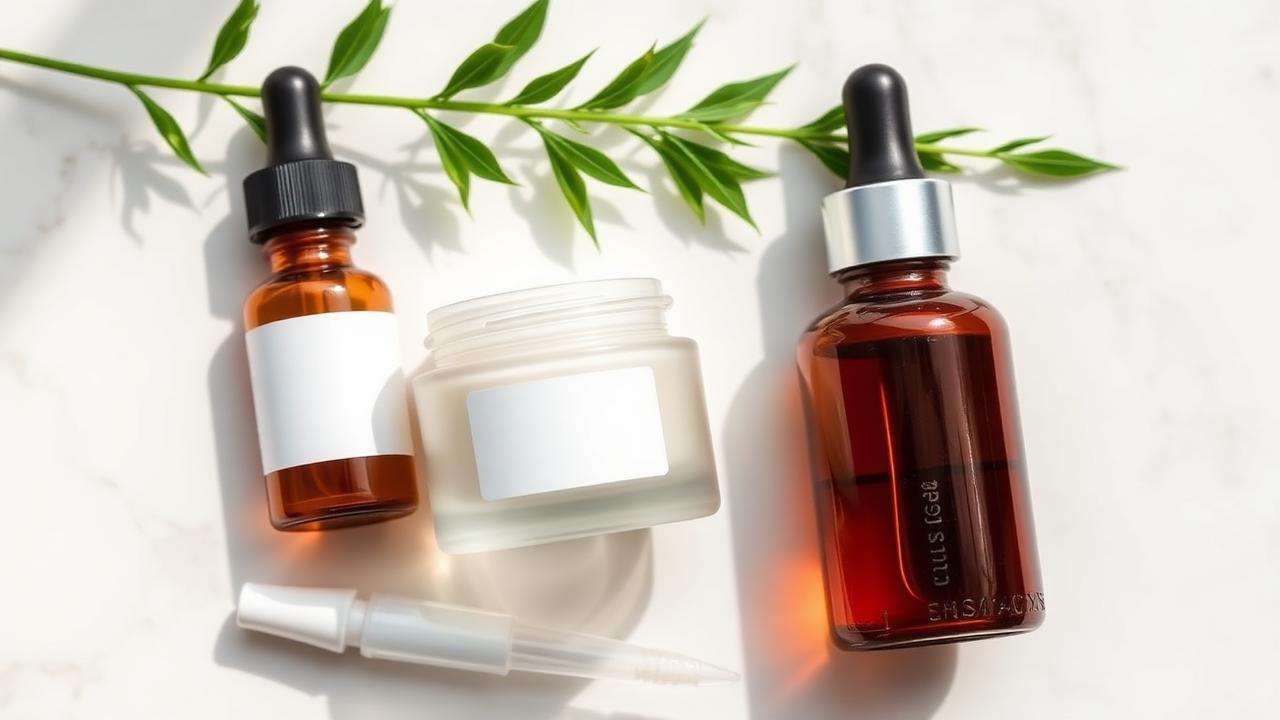
- 1Exosomes are nano-vesicles that carry biological signals — they're not a single ingredient, they're a delivery/messaging category with wildly different source materials.
- 2Four sources dominate the US cosmetic market in 2026: plant-derived, salmon PDRN, bovine colostrum, and (with major legal caveats) human MSC.
- 3Human MSC exosomes are NOT approved for cosmetic use in the US. Reputable manufacturers won't formulate them for topical launches.
- 4Salmon PDRN exosomes are the K-beauty explosion of 2026 — think Rejuran-style claims for at-home use.
- 5Formulation is unforgiving: exosomes need low-water bases, airless packaging, pH buffering, and often microneedling for meaningful skin penetration.
What exosomes actually are (60-second version)
Exosomes are nano-scale vesicles — tiny lipid-membrane bubbles roughly 30 to 150 nanometers wide — that cells release naturally to shuttle proteins, lipids, and RNA to other cells. In cosmetics, exosomes are being used as a delivery-and-signaling category: instead of dosing a single active, you're depositing a biological payload that (in theory) tells skin cells to behave differently.
The category is exploding because it lets brands make premium-tier claims backed by real biology while sitting adjacent to a huge medical-aesthetic conversation (Rejuran, PDRN injectables, exosome-based post-procedure recovery). But "exosome skincare" hides four very different source materials with wildly different legal status, evidence bases, and formulation realities. Getting this wrong is how brands end up with a warning letter or a product that does nothing.
The four exosome sources brands are actually using
Plant-derived exosomes are extracted from stem-cell cultures of species like rose, edelweiss, centella asiatica, and grape. Legal in US cosmetics, cost-accessible, and the safest starting point for an indie brand. Evidence is strongest for barrier support, hydration, and antioxidant effects.
Salmon PDRN exosomes are the 2026 K-beauty phenomenon. PDRN (polydeoxyribonucleotide) has been used in Korean aesthetic injectables (Rejuran) for years; the topical exosome derivative is now the fastest-growing premium cosmetic ingredient in the US. Strong evidence for post-procedure recovery, texture, and skin quality. Higher cost, higher premium positioning.
Bovine colostrum exosomes are the newer entrant — extracted from cow colostrum, rich in growth factors, and increasingly showing up in premium eye creams and firming treatments. Legal, evidence-forward, and less "novel-sounding" than salmon which some conservative customers prefer.
Human MSC (mesenchymal stem cell) exosomes are the ones you see marketed in med-spas and offshore skincare. In the US, they are NOT approved for cosmetic sale — the FDA has issued explicit warnings that human-cell-derived exosomes for aesthetic use fall under biologic drug regulation. Reputable US contract manufacturers will not formulate them for topical cosmetic launches, and shouldn't.
On human MSC exosomes
The FDA's public position (2024 update, reiterated 2025) is that exosomes derived from human cells for aesthetic use are unapproved biologics. Multiple US clinics have received warning letters. If a manufacturer offers to formulate MSC exosomes into your cosmetic serum, walk away — the legal exposure is entirely on you as the brand of record.
Exosome source comparison table
| Source | US Legal Status (Cosmetic) | Evidence Base | Cost Tier | Best Formats |
|---|---|---|---|---|
| Plant-derived (rose stem cell, centella, edelweiss) | Legal in US cosmetics | Hydration, barrier, antioxidant | $$ | Serums, essences, sheet masks |
| Salmon PDRN exosomes | Legal in US cosmetics | Post-procedure recovery, skin quality, texture | $$$ | Serums, ampoules, microneedle-pair |
| Bovine colostrum exosomes | Legal in US cosmetics | Growth factors, wound support, firmness | $$$ | Creams, serums, eye treatments |
| Human MSC exosomes | NOT approved for cosmetic use in US | N/A — regulated as biologic | N/A | Do not formulate for cosmetic sale |
The FDA gray zone: human MSC exosomes and cosmetics
The regulatory line is drawn at the source cell. Plant, marine, and non-human mammalian exosomes are fine in cosmetics as long as your label claims stay cosmetic (appearance, hydration, look, feel). Human-cell-derived exosomes cross into biologic drug territory the moment they're marketed for skin benefit, and no cosmetic pathway exists to sell them.
The workaround some clinics use — sell the exosome vial separately for "research use only" and let the practitioner mix it into your skincare — is what the FDA has explicitly named as noncompliant. If you're launching a consumer skincare brand in the US, treat human MSC as off the table.
Formulation realities: pH, stability, delivery
Exosomes are fragile. Get any of the following wrong and you're selling an expensive placebo:
- Base water activity — high-water systems degrade exosome membranes over shelf life. Use low-water or anhydrous bases, or lyophilized (freeze-dried) two-part activation systems.
- pH — most exosome inputs are stable in a narrow pH 5.5-7.0 window. Vitamin C serums (pH 3-3.5) will destroy them; formulate as a separate SKU or a two-part system.
- Packaging — airless pumps are non-negotiable. Standard jars introduce air and contamination that shorten exosome viability from months to weeks.
- Temperature — some raw materials require cold-chain from supplier to fill. Confirm your manufacturer has cold-chain handling before you commit to an ingredient.
- Delivery — topical exosomes penetrate skin poorly on their own. Pair with a microneedle protocol, a peptide penetration enhancer, or position as a post-procedure recovery product.
Pair exosomes with clinically-studied peptides for the strongest premium positioning — see our cosmetic peptide manufacturing service for the peptide options that pair best (copper peptides, Matrixyl 3000, Argireline).
What's actually trending in 2026
- Salmon PDRN + microneedle bundles — sold as a two-product regimen (roller + exosome serum), tapping the at-home Rejuran positioning.
- Post-procedure recovery kits — brands partnering with med-spas to bundle exosome recovery serums with laser and microneedling treatments.
- Exosome + peptide hero SKUs — combining salmon PDRN or plant exosomes with clinically-dosed copper peptides or growth-factor mimics.
- 'Clean exosome' positioning — plant-derived-only brands leaning into vegan, cruelty-free, allergen-free messaging to differentiate from salmon and bovine sources.
- Sheet masks and lyophilized ampoules — Korean-style single-use formats that solve the stability problem by keeping the exosome dry until activation.
MOQ and cost to launch an exosome serum
Our standard 2,000-unit MOQ applies to exosome formulas. Landed cost per unit for a well-formulated plant-derived exosome serum in a 30ml airless pump runs roughly $6-$14, letting you retail at $65-$120 comfortably. Salmon PDRN pushes landed cost to $10-$18 and supports $95-$180 retail — the premium positioning your customer expects at that price point.
Timeline is typically 6-8 weeks from formula lock to finished goods — a week longer than standard skincare because of stability testing and cold-chain coordination on the raw material. See our serum manufacturing service and skincare manufacturing hub for the full production picture, or read our related deep-dives on cosmetic peptides in 2026 and copper peptide skincare manufacturing.
Frequently Asked Questions
Are exosomes legal in cosmetic products in the US?
Plant-derived exosomes, salmon PDRN exosomes, and bovine colostrum exosomes are legal in US cosmetics as long as label claims stay cosmetic (appearance, feel, look). Human MSC exosomes are a different story — the FDA has explicitly warned that human-cell-derived exosomes for aesthetic use fall under biologic regulation and are not approved for cosmetic sale. Reputable US contract manufacturers won't formulate with human MSC exosomes for topical products.
Do exosomes actually work topically?
The evidence is strongest for plant-derived exosomes on hydration and barrier support, and for salmon PDRN on post-procedure recovery and skin quality. Efficacy depends heavily on delivery — exosomes must survive formulation, packaging, and skin penetration, which is why serious brands pair them with microneedling, low-frequency ultrasound, or clinical topical protocols. Marketing claims often exceed what any cosmetic formula can prove.
What's the difference between exosomes and peptides?
Peptides are short chains of amino acids that signal specific pathways in skin. Exosomes are nano-scale vesicles that carry a mix of proteins, lipids, and RNA — a broader biological payload. Peptides are simpler to formulate, more stable, and better-studied. Exosomes are newer, harder to stabilize, and their story sells premium price points. Many 2026 hero SKUs pair the two.
How much does an exosome serum cost to manufacture?
Landed cost per unit for a plant-derived exosome serum in a 30ml airless pump runs roughly $6-$14 depending on inclusion rate, other actives, and packaging. Salmon PDRN pushes that toward $10-$18. Retail pricing typically sits at $65-$180. Human MSC exosomes are out of scope for US cosmetic launches.
What's the MOQ for exosome skincare?
Our standard 2,000-unit MOQ applies to exosome formulas. Some exosome ingredient houses have supplier-side minimums that can push the raw material spend higher on your first PO — we surface that during the quote.
Can I combine exosomes with retinol or vitamin C?
Yes, and pairing exosomes with proven actives (retinol, niacinamide, buffered vitamin C, growth factors) usually produces better-tolerated products than exosome monotherapy. The formulation trick is protecting exosome integrity — that means low-water bases, airless packaging, and pH-buffered systems tuned per active pair.
Related Articles
Serum Manufacturing for Skincare Brands
Guide to skincare serum manufacturing including active ingredients and formulation challenges.
Clean Beauty Manufacturing Guide
Ingredient standards, certifications, and formulation for clean beauty products.
Cosmetic Peptides for Skincare: The 2026 Complete Guide
GHK-Cu, Matrixyl, Argireline, Snap-8 — every working class of cosmetic peptide with effective doses, stacking rules, and formulation requirements.