How to Launch a Women's Creatine Brand in 2026
The chemistry is a commodity. The positioning is the moat. Here's the manufacturer's playbook for dose, stack, format, claims, and economics in the fastest-growing corner of sports nutrition.
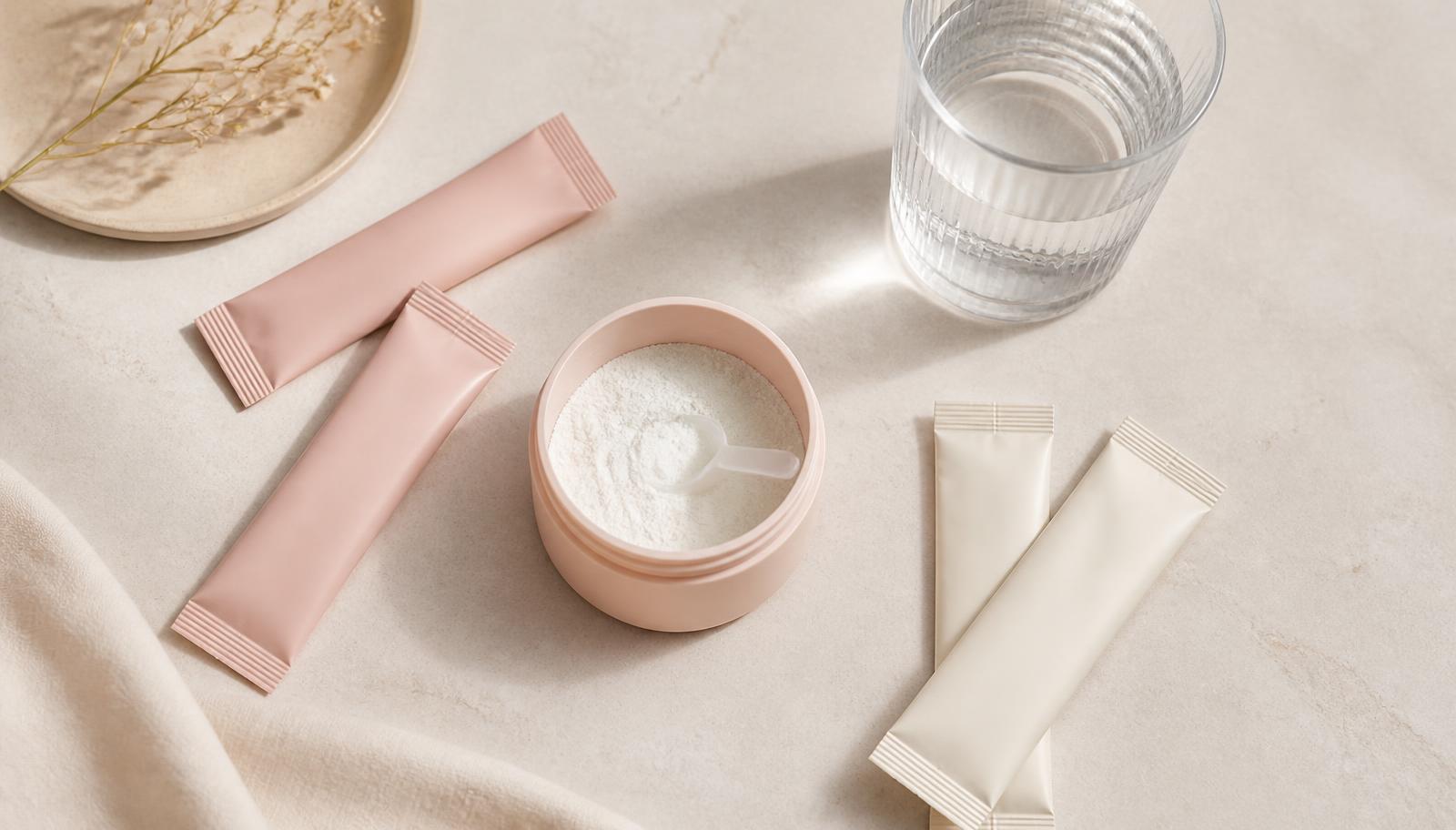
- 1Women's creatine is a positioning play on identical chemistry. The molecule, mechanism, and manufacturing are the same as any other creatine monohydrate SKU — what changes is dose framing, stacking, format, and voice.
- 2The category standard is 3 g daily with no loading phase. Loading protocols were designed for rapid saturation in athletes and are the single biggest source of the bloating fear that keeps women out of the category.
- 3Stacking is the differentiator: creatine plus electrolytes, collagen peptides, vitamin D3 + K2, or B-complex outsells single-ingredient creatine in this segment because it fits an existing daily routine.
- 4Format signals audience harder than copy does. Pastel stick packs, low-profile tubs, and gummies read as women's wellness; black plastic bodybuilding jars do not, regardless of what the label says.
- 5A launch-ready women's creatine SKU runs a flat 2,000-unit MOQ at Peakfinity Labs with $6–$14 COGS depending on format, a 4–6 week turnaround, and retail targets of $32–$55 for stick packs.
Short answer
A women's creatine brand is built on identical chemistry and completely different everything-else. You are manufacturing the same micronized creatine monohydrate the bodybuilding brands use. What you change is the dose framing (3 g daily, no loading), the ingredients you pair it with, the format (stick packs, low-profile tubs, gummies), the visual language, and the benefits you lead with — cognition, steady energy, lean tone, and bone health.
The manufacturing is the easy part and takes 4–6 weeks. The work is deciding exactly who this is for and building a product that looks like it belongs in her routine rather than in a gym bag.
Why the women's creatine gap exists
Creatine has one of the deepest human evidence bases in all of supplementation, and for thirty years it was marketed almost exclusively to men who lift. The result is a category where the science is settled, the raw material is cheap and abundant, and half the addressable market has been told — implicitly, through packaging and copy — that the product isn't for them.
- Awareness is now high, trial is still low. Creatine content has saturated social feeds aimed at women, but the products on the shelf still look like 2003 bodybuilding SKUs.
- The bloating myth is the gatekeeper. Almost every hesitation traces back to loading-phase water retention. Removing the loading phase removes the objection.
- Adjacent categories already converted. Collagen, electrolytes, and protein all crossed into women's wellness with the same playbook: reframe the dose, redesign the format, change the voice.
- The competitive set is thin. A handful of brands own this positioning today, versus hundreds fighting over the generic performance shopper.
Dose: 3 g daily, no loading phase
Standardize on 3 g of creatine monohydrate per day, taken every day, with no loading protocol. Muscle saturation still happens — it just takes three to four weeks instead of one, without the acute water uptake that produces the bloating complaints that keep this audience out of the category.
| Protocol | Daily dose | Time to saturation | Fit for this segment |
|---|---|---|---|
| Classic loading | 20 g for 5–7 days, then 3–5 g | ~1 week | No — drives the bloating objection |
| Standard maintenance | 5 g daily | 3–4 weeks | Works, but reads as a men's performance dose |
| Women's standard | 3 g daily | 3–4 weeks | Yes — category norm, smaller serving, better taste |
| Stacked low dose | 3 g + electrolytes or collagen | 3–4 weeks | Yes — highest perceived value per serving |
Note
Make "no loading phase required" a front-of-pack statement, not a footnote. It is the single highest-converting piece of education in this category because it directly answers the objection your customer arrived with.
What to stack with creatine
Single-ingredient creatine is a commodity that competes on price. Stacked creatine competes on fitting a routine. These are the four pairings we manufacture most often for women's-positioned brands.
- Creatine + electrolytes (sodium, potassium, magnesium). The easiest sell: a hydration product that happens to contain creatine. Excellent in stick packs and flavored well.
- Creatine + collagen peptides. Pairs with an existing daily habit for a huge share of this audience. Requires careful solubility work at higher total solids — see our collagen manufacturing guide.
- Creatine + vitamin D3 & K2. The bone-health angle, which has the most under-used evidence base in women specifically.
- Creatine + B-complex. A clean energy and cognition framing that avoids stimulants entirely — well suited to a morning routine SKU.
Resist stacking more than that. Once you cross four or five actives, the serving gets bigger, the taste gets harder, the COGS climbs, and the label stops telling a simple story.
Format and packaging decisions
Format does more positioning work than any line of copy on the panel. A shopper decides whether a product is "for her" from a thumbnail, in about a second.
| Format | Strength | Watch out for | Typical retail |
|---|---|---|---|
| Stick packs (3 g) | Travel, no scoop, strong social photography, premium pricing | Higher per-serving cost, mylar barrier required | $32–$55 / 30 ct |
| Low-profile tub (30–60 servings) | Best cost per serving, subscription refill SKU | Reads generic unless the design is genuinely distinct | $28–$45 |
| Gummies (3 gummies = 3.75 g) | Highest compliance, converts non-mixers | Dose density limits — see the gummy dose math | $28–$48 |
| Capsules (4 caps = 3 g) | Flavor-free, easy to stack with other pills | Four capsules per day is a real adherence tax | $25–$40 |
On packaging: matte or soft-touch finishes, pastel or muted earth palettes, generous white space, and clear typography. Avoid the black-and-neon performance idiom entirely. For the dose-density constraints behind gummy formats, read our creatine gummy manufacturing breakdown.
Positioning and brand voice
- Lead with cognition and energy, not physique. "Sharper mornings" outperforms "lean gains" with this shopper by a wide margin.
- Name the life stage. Perimenopause, postpartum recovery, and over-40 strength maintenance are specific, underserved, and searchable.
- Educate about the myth explicitly. A dedicated "will this make me bloated?" section on the PDP converts better than any ingredient callout.
- Show the dose. "3 g creatine monohydrate. Every day. No loading." on the front of pack signals confidence and pre-empts label scrutiny.
- Pick a single hero SKU. Launch one product, not a line. Add the second SKU at first restock once you know which claim converted.
Claims you can defend
- Defensible: "supports cognitive performance," "supports lean muscle when combined with resistance training," "supports bone health" (with D3 and K2), "supports energy production," "supports strength and recovery."
- Frame life stages mechanistically: "supports energy and cognition through perimenopause" is defensible framing; "treats menopause symptoms" is a drug claim.
- Off-limits: "builds muscle" as a standalone, "prevents osteoporosis," "treats depression," "balances hormones," or anything implying diagnosis or cure.
- Keep substantiation on file for every claim before you print a label. Our supplement label law guide covers the full panel and disclaimer rules.
MOQ, COGS, and launch economics
| SKU | MOQ | Approx. COGS / unit | Retail target | Gross margin |
|---|---|---|---|---|
| Flavored 3 g tub (30 servings) | 2,000 units | $6–$11 | $28–$45 | ~70–78% |
| Stick pack box (30 ct) | 2,000 units | $8–$14 | $32–$55 | ~70–75% |
| Creatine + electrolyte sticks (30 ct) | 2,000 units | $9–$15 | $38–$60 | ~72–76% |
| Gummy jar (90 gummies, 3-gummy serving) | 2,000 units | $9–$14 | $34–$52 | ~68–74% |
| Creapure specification | — | +30–60% on creatine line only | Supports +$4–$8 retail | Roughly neutral |
At a 2,000-unit MOQ and mid-range COGS, a first production run typically lands between $16,000 and $28,000 all-in including packaging — the range where a founder can validate a positioning bet without betting the company. The full picture across categories is in our supplement manufacturing cost breakdown.
Channel strategy for launch
- TikTok Shop first. Education-heavy categories with a myth to bust are exactly what the format rewards. Our TikTok Shop supplement playbook covers seeding and compliance.
- Shopify DTC with subscription. Creatine is a daily-use product with a hard adherence requirement — subscription is the natural model and the LTV engine.
- Amazon second, not first. Amazon rewards demand you've already created. Launch there once you have reviews and search volume attached to your brand name.
- Practitioner and studio partnerships. Pilates studios, women's health clinics, and OBGYN-adjacent creators are high-trust distribution most performance brands ignore.
A realistic 90-day launch timeline
| Phase | Weeks | What happens |
|---|---|---|
| Positioning & formula lock | 1–2 | Choose hero SKU, dose, stack, and creatine grade (Creapure or micronized) |
| Flavor & prototype | 3–5 | Bench samples, sensory panel at full serving size, revisions |
| Packaging & label | 3–6 | Design, dielines, compliance review, print |
| Production | 6–11 | Blending, filling or depositing, finished-product testing, COA |
| Fulfillment & listing prep | 10–12 | 3PL intake, FBA prep or DTC pick-pack setup, content and PDP build |
| Launch | 12–13 | Seeding, creator content, first-week paid support |
Start the packaging track in parallel with the formula track. Packaging lead times, not manufacturing, are what delay most first launches.
The bottom line
The women's creatine opportunity isn't a chemistry innovation — it's a distribution and trust gap left open by thirty years of one-audience marketing. Standardize on 3 g with no loading phase, pick one meaningful stack, ship a format that looks like it belongs on a kitchen counter, address the bloating myth head-on, and launch one hero SKU at a 2,000-unit MOQ instead of a five-product line. The manufacturing is straightforward and fast; the positioning is where the durable advantage lives.
For the wider category playbook see our creatine manufacturing guide, or review our creatine manufacturing capabilities and sports nutrition manufacturing services.
Frequently Asked Questions
Is women's creatine different from regular creatine?
Chemically, no. Creatine monohydrate is the same molecule with the same mechanism — phosphocreatine resynthesis and ATP buffering — regardless of who takes it. What differs in a women's-positioned product is the dose framing (3 g daily rather than a 20 g loading phase), the ingredients it's paired with, the format and packaging, and the benefits the brand leads with: cognition, energy, lean tone, and bone health rather than mass and strength.
Why 3 g instead of 5 g for women?
3 g daily is a maintenance dose that saturates muscle stores over several weeks without the acute water retention that a loading phase can cause, and it aligns with average body mass in the segment. Research supports both; 3 g is simply the dose the women's wellness market has standardized on, and it lets you build a smaller, cheaper, better-tasting serving that fits in a stick pack or a three-gummy dose.
Does creatine cause bloating or weight gain in women?
The bloating association comes almost entirely from loading protocols, where 20 g per day for a week drives rapid intracellular water uptake. At a steady 3 g daily dose, the increase in intracellular water is gradual and small. This is the single most important objection to address in your product education, because it is the reason most of your target customers haven't tried creatine yet.
What sells better for women's creatine — stick packs, tubs, or gummies?
Stick packs consistently outperform in this segment for launch. They travel, they eliminate scoop guesswork, they photograph well for social, and they let you price above tub economics. Gummies convert people who dislike mixing anything, and low-profile pastel tubs work well for a subscription refill SKU once the brand has trust. Most brands we manufacture for launch with a stick pack hero and add a tub at first restock.
What's the MOQ and cost to launch a women's creatine brand?
At Peakfinity Labs the MOQ is a flat 2,000 units across every creatine format. Expect $6–$11 COGS for a flavored 30-serving tub, $8–$14 for a 30-count stick pack box, and $7–$12 for a gummy jar, plus a 30–60% adder on the creatine line if you specify Creapure. Turnaround is 4–6 weeks from locked formula and approved packaging.
Can I claim creatine supports cognition or bone health?
Structure/function language is defensible: 'supports cognitive performance,' 'supports lean tone,' 'supports bone health' when paired with vitamin D3 and K2, and 'supports energy production.' What you cannot do is make disease claims — no references to treating depression, preventing osteoporosis or Alzheimer's, or managing menopause as a medical condition. Frame benefits mechanistically and keep the substantiation on file.
Ready-to-Launch Formulations in This Category
Stock-ready formulations you can private label with your own branding — 2,000 unit MOQ.
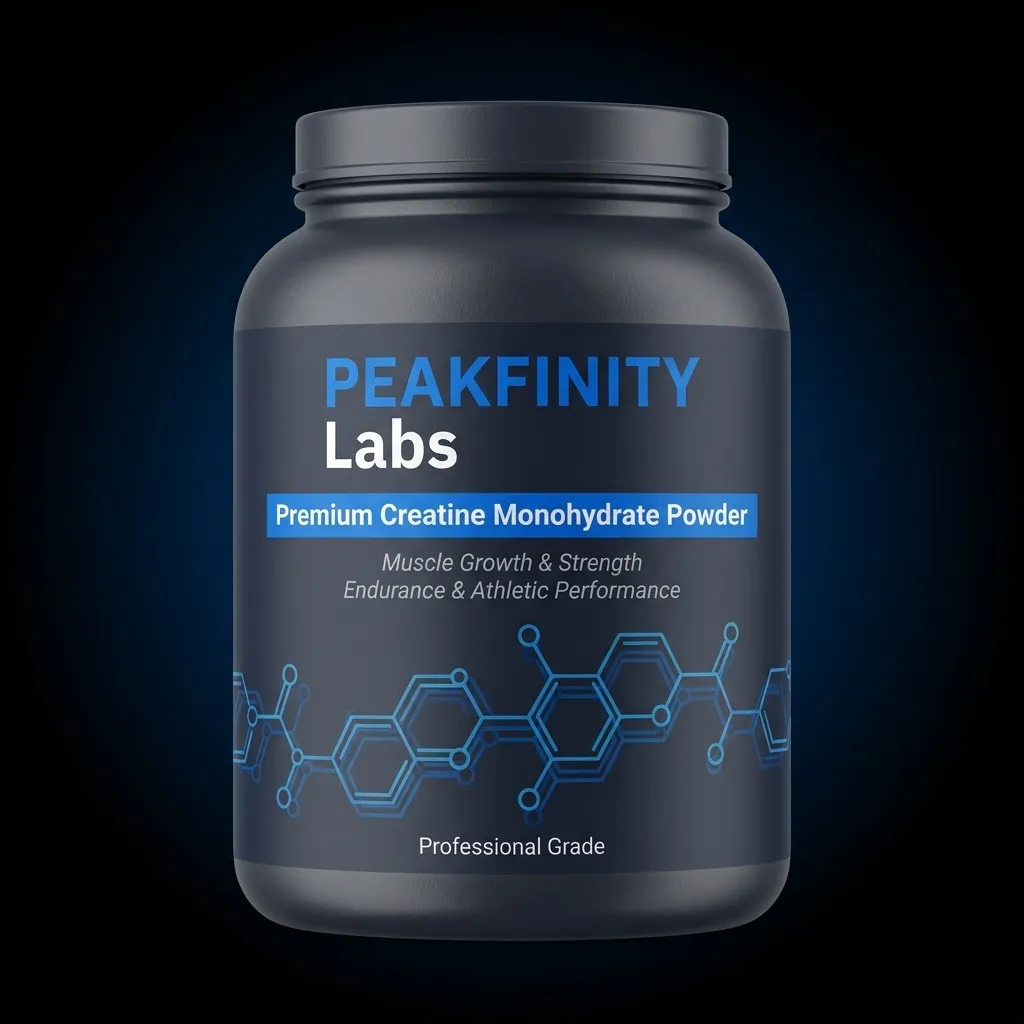
Premium Creatine Monohydrate Powder
Sports Nutrition · Powder
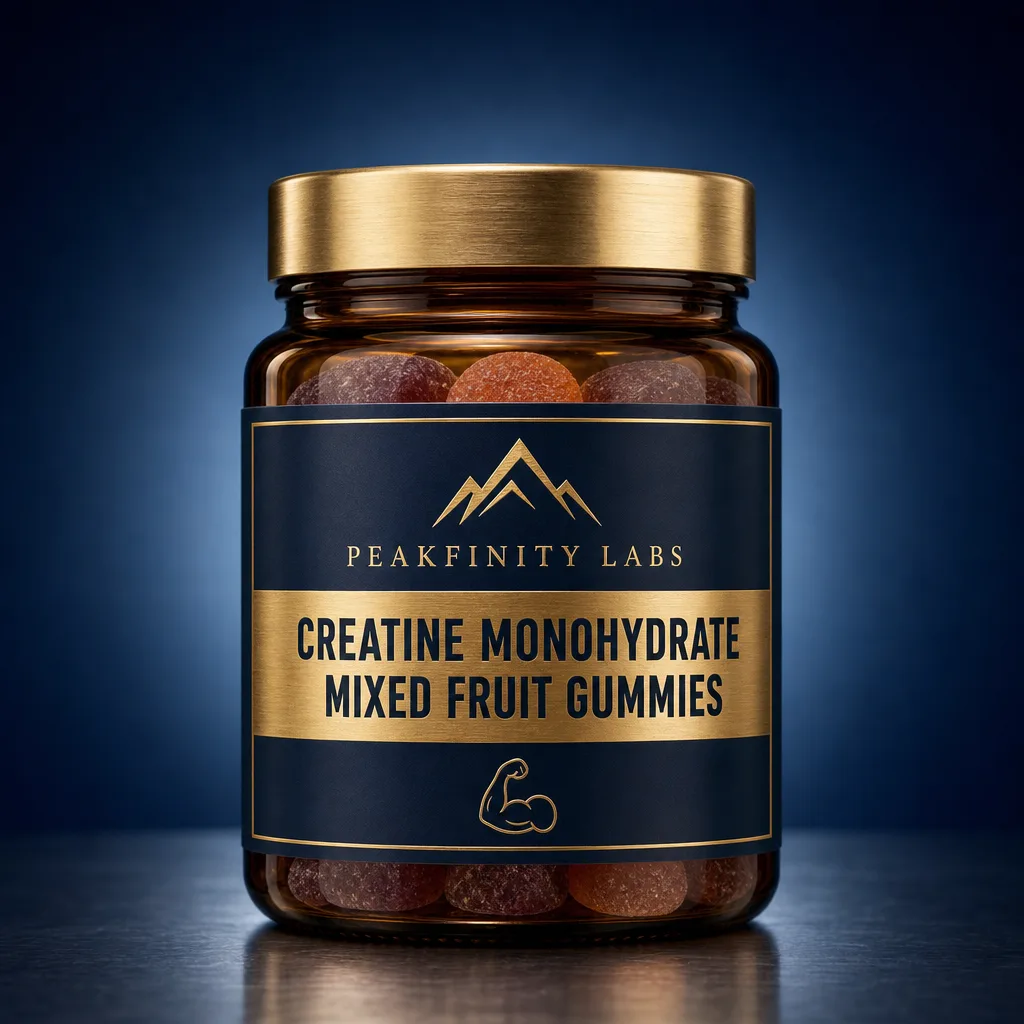
Creatine Monohydrate Performance Support Gummies - Mixed Fruit Flavor
Sports Nutrition · Gummies

Tushar
Licensed Pharmacist and COO @ Peakfinity Labs
Written by the Peakfinity Labs R&D Team — 46+ years of supplement formulation expertise. Our team of formulation chemists, manufacturing specialists, and regulatory experts has helped thousands of eCommerce brands bring their products to market successfully since 1980.
Related Articles
Private Label Supplement Markup: Typical Margins for DTC, Amazon, and Wholesale
Typical markup ranges for DTC, Amazon, and wholesale, plus the landed-cost model that decides whether your margin is real.

How to Compare Quotes From Supplement Manufacturers Without Missing Hidden Costs
A six-bucket framework and paste-ready RFQ table that surfaces hidden costs before you sign with a manufacturer.
When Is a Supplement Brand Ready to Move From Private Label to Custom?
Nine readiness signals, the custom-light middle path, and a seven-step switch plan that avoids stockouts and claim issues.