U.S. vs overseas supplement manufacturing: Cost, MOQ, turnaround, and risk compared
US vs overseas supplement manufacturing for D2C brands — how to weigh unit cost, MOQ, lead time, compliance, and customs risk, plus how Peakfinity Labs delivers low-MOQ, fast-turnaround production with US-based fulfillment.

TL;DR
"US vs overseas" is the wrong question for most ecommerce brands — what you actually need is fast, small-batch, compliant production with quick domestic fulfillment. Peakfinity Labs is built for exactly that: low MOQ, 4–6 week turnaround, full compliance docs, and US-based fulfillment — so you get domestic-grade speed without domestic-only unit costs.
Quick checklist for manufacturer minimums
- True MOQ by format: get capsule, powder, gummy, and serum minimums and price breakpoints.
- End-to-end lead time: a signed timeline with typical delays listed.
- Certifications proof: request current GMP and ISO certificates and their scope — not just claims. See our GMP guidance for context.
- Packaging help: ecommerce-ready packaging, scannability, and Amazon-friendly specs — see creating a compliant supplement product for Amazon.
- Batch testing and COAs: a sample COA and the third-party lab they use.
- 1US manufacturing wins when you need fast iteration, low MOQ testing, and predictable compliance
- 2Overseas can lower unit cost at scale — but adds lead time, customs risk, and slower restocks
- 3The real decision is risk vs control, not just cost vs quality
- 4For early-stage ecommerce brands, speed protects revenue more than per-unit savings
- 5Peakfinity Labs supports 2,000-unit MOQs with 4–6 week turnaround for supplements and cosmetics
Introduction
You can build a winning supplement or skincare brand with a great formula, sharp creative, and a strong offer — and still lose momentum because of one decision: where you manufacture. For D2C and ecommerce brands, "US vs overseas" is not a politics question. It's an execution question.
If you're testing a TikTok angle, launching with an influencer, or trying to keep Amazon in-stock, your biggest risks are simple: timeline slippage, quality misses, and inventory you can't move. The lowest price per unit can easily become the highest total cost if you miss your sales window or have to rework packaging for compliance.
Our take at Peakfinity Labs is direct: if speed, low-MOQ testing, and predictable compliance matter most, choose a partner built around those — fast turnaround, small batches, full documentation, and quick US-based fulfillment. Lowest-unit-cost sourcing fits later, once you have stable demand, long lead-time tolerance, and mature QC resources of your own.
Peakfinity Advantage
Peakfinity Labs offers GMP & ISO certified manufacturing across a 375,000+ sq ft facility, with 2,000-unit MOQs, 4–6 week turnaround, and US-based fulfillment from Exton, PA. Explore our capabilities on the Supplement Manufacturing Overview.
The decision isn't 'cost vs quality.' It's 'risk vs control.'
Most brand founders frame this as "US costs more, overseas costs less." That's too simplistic.
The real decision is how much operational risk you're willing to carry. Risk shows up as missed ship dates, inconsistent lots, stuck inventory, and problems you only discover after your customers do.
- Control is faster iteration, tighter specs, clearer accountability, and easier audits.
- Risk is long lead times, communication delays, complex shipping, and more variables between "approved sample" and "delivered units."
If you're an ecommerce brand, control usually beats unit cost because marketing calendars don't wait.
US vs overseas manufacturing: A practical comparison
Below is the comparison we use when advising founders who ask, "should I use a US manufacturer or go overseas for supplements?"
| Factor | U.S. manufacturer (typical) | Overseas manufacturer (typical) | Peakfinity Labs |
|---|---|---|---|
| Landed cost | Higher per-unit cost, lower surprise-cost risk from rework and freight | Lower per-unit cost, higher logistics, duty, and rework risk | Focus on total cost of ownership while keeping 2,000-unit MOQ options |
| MOQ flexibility | Often lower MOQ options suited for testing | Typically higher MOQ to hit efficient runs | Flat 2,000-unit MOQ across supplements and cosmetics so you can test before you scale |
| Lead times | Fast local lead times and fewer shipping variables | Longer lead times plus freight and customs buffer | 4–6 week turnaround from formulation to finished goods for most projects |
| Customs and logistics risk | Minimal customs exposure for domestic shipping | Higher chance of delays, inspections, and extra fees | Schedules built with restock buffers and ecommerce-ready packing |
| Compliance oversight | Closer alignment to US labeling, retailer rules, and easier audits | Varies by factory and country; requires stronger internal compliance muscle | GMP and ISO certified plus labeling checks for Amazon and D2C channels |
| Restock speed | Faster restocks and quicker response to demand spikes | Slower restocks, longer reorder cycles | Small-batch capacity and planned reruns reduce stockout risk for viral launches |
| Iteration cycles | Shorter cycle for reformulation and packaging fixes | Slower cycles — fixes can add months | Fast iteration keeps creative tests and influencer drops on schedule |
| IP and confidentiality | Clearer legal recourse and NDA enforcement in the U.S. | Enforcement varies; higher risk if IP is central | Controlled access, NDAs, and onshore agreements protect formulas and assets |
Founder scenarios and when to pick each option
Low-budget startups testing product-market fit
For founders with limited runway, small-batch testing and low MOQ matter more than the absolute unit price. Peakfinity Labs supports 2,000-unit production runs and ecommerce-ready packaging so you can test multiple creatives without pallet-level inventory.
Amazon sellers and brands that need strict compliance
If Amazon or other retailers are core channels, choose a partner that understands ASIN suppression triggers, label scannability, and COA needs. See our Amazon FBA manufacturing guidance: Amazon FBA Brands.
Influencer launches and viral product testing
When timing drives revenue, fast turnaround and US-based fulfillment beat the lowest price. Peakfinity Labs designs timelines and restock plans for influencer-led drops — read about handling sudden demand spikes in how manufacturers handle sudden demand spikes and best manufacturer for viral product ideas.
Cost-first, high-volume brands
If you have locked demand, a stable formula, and strong QC in place, overseas runs can lower unit cost at scale. Still plan for inspections and an onshore contingency for fast restocks. For guidance on low MOQ tradeoffs see typical low MOQ supplement manufacturing.
When a US manufacturer is the better choice (and why)
If you're asking "is it worth paying more for a US-based manufacturer with faster turnaround," here's the practical lens: if your marketing calendar creates your revenue, speed is not a luxury.
1) You're testing a new product or angle
For early-stage D2C, the smartest move is to run small-batch tests across multiple hooks (flavor, format, benefit claim boundaries, bundle structure). A 2,000-unit MOQ reduces inventory risk while you find your winner.
That's why Peakfinity Labs is set up for low MOQ and scalable growth — so brands can prove demand before tying up cash. For a deeper vendor selection framework, read what makes a good contract manufacturer for small ecommerce brands. If you're weighing launch paths, also see private label vs custom manufacturing.
2) You need speed you can plan around
We build timelines for ecommerce reality. At Peakfinity Labs, we target a 4–6 week turnaround from formulation to finished goods for most projects (scope and components matter).
Overseas can work, but "eight weeks" often turns into "eight weeks plus freight plus a packaging revision plus customs." If you're planning an influencer drop, timing is your product. See fast and effective manufacturer for influencer-led launches.
3) You sell on Amazon, TikTok Shop, or need ecommerce-ready packaging
Ecommerce is unforgiving about packaging errors. One missing warning, a scannability issue, or a weak seal can turn into returns, bad reviews, and suppressed listings.
US-based teams that live in these channels tend to catch issues earlier because they've seen them repeatedly. If Amazon is a core channel, start with how to create a compliant supplement product for Amazon and Amazon FBA Brands. If you're building on TikTok, see TikTok Shop Sellers and how to start a supplement brand on TikTok.
4) You want audit-ready credibility (GMP and ISO)
Quality isn't a vibe. It's documentation, controls, and repeatability. A GMP-certified and ISO-certified facility gives you a tighter quality baseline and better buyer confidence when you scale. See Certifications, Quality, and Facilities.
When overseas manufacturing can be the right call
Overseas manufacturing isn't "bad." It's just easier to get burned if you're early or moving fast.
- You have stable demand and can commit to larger MOQs without inventory stress.
- Your formula and packaging are locked, with no near-term iterations planned.
- You have strong QC muscle (clear specs, third-party testing plan, and a team that can manage deviations).
- Your launch window is flexible and you can buffer freight and customs variability.
If you choose overseas, treat it like an operations project, not a sourcing project. Budget time and money for inspections, rework, and at least one "surprise" delay.
The contrarian ecommerce take: unit cost rarely matters most in months 1–6
Here's the part many founders don't want to hear: the best manufacturer for your first 1–3 runs is often not the lowest unit cost option.
In months 1–6, your goal is to find product-market-channel fit. That means you need quick cycles, not perfect margins. A slower, lower-cost supply chain can trap you in two bad outcomes:
- You order big to get pricing, then your creative or offer changes and inventory sits.
- You wait too long to restock, then your ads and ranking fall off a cliff.
We see brands grow faster when they treat early manufacturing like a test engine: small-batch production, ecommerce-ready packaging, and predictable restocks. When the SKU stabilizes, you can optimize cost.
If you're planning for growth, keep scaling a supplement brand on your roadmap.
What makes a good contract manufacturer for small ecommerce brands
If you're asking "how do I know if a supplement manufacturer is right for my D2C brand," use questions that force specific answers.
- What's your true MOQ by format? Capsules, powders, gummies, and serums behave differently. Ask for the minimum and the price breakpoints.
- What's your normal end-to-end lead time? Get it in writing and ask what typically slows projects down (components, approvals, testing, labeling).
- Are you GMP-certified and ISO-certified? Ask for current certificates and scope.
- What testing do you run per batch? Request a sample COA and ask what triggers an investigation.
- Do you support labeling and compliance? Especially if you sell on Amazon or plan to scale paid ads.
- How do you handle confidentiality and IP? NDAs, formula ownership terms, and access controls should be clear.
- Can you scale when demand spikes? A "yes" without a plan is noise. Ask how they manage capacity and raw material procurement.
For more detail, see how to find the best supplier for ecommerce and what makes a good contract manufacturer for ecommerce.
Quality and certification: GMP-certified vs non-certified manufacturers
If you're comparing a GMP-certified manufacturer to a non-certified one, focus on what changes in real life: documentation, controls, and traceability.
| What you need | GMP & ISO-certified facility (typical) | Non-certified facility (common gaps) |
|---|---|---|
| Batch records and traceability | Documented, standardized, audit-ready | May be inconsistent or incomplete |
| Change control | Controlled changes to formula, process, and packaging | Changes can happen without clear sign-off |
| Deviation handling | Formal investigations and CAPA habits | More ad hoc, harder to prove root cause |
| Customer confidence | Easier retailer, platform, and partner conversations | More skepticism as you scale |
Certification alone doesn't guarantee excellence, but it raises the floor. That matters when your brand is on the line.
Supplements vs skincare: the 'US vs overseas' decision changes by category
Many brands sell both supplements and topical products. The manufacturing risk profile differs.
- Supplements often hinge on potency, blending uniformity, allergen controls, and compliant labeling. For format options see Capsule Manufacturing, Gummy Manufacturing, Powder Manufacturing, and Softgel Manufacturing. For ingredient examples, see collagen supplement manufacturing and probiotic supplement manufacturing.
- Skincare and cosmetics hinge on stability, preservative systems, fill accuracy, and packaging compatibility (pumps, droppers, jars, liners). For category context, see Cosmetic Manufacturing Overview and Skincare Manufacturing.
If you're building a skincare brand on Shopify, you'll care a lot about packaging lead times and fulfillment readiness. Start with how to launch a private label skincare line on Shopify and how to launch a private label skincare line with minimal upfront cost.
Timeline math that founders miss: freight turns one mistake into a quarter
One reason we focus on speed and fast fixes for early-stage ecommerce: mistakes happen. The question is how fast you can recover.
If a label needs a fix, a carton is out of spec, or a flavor needs a tweak, a domestic run can often recover in weeks. Overseas, that same correction can stack into production scheduling plus shipping, and suddenly your fix lands after your next campaign.
This is also why we focus on turnkey execution: formulation, packaging, labeling, and compliance support under one roof. Fewer handoffs means fewer points of failure. Learn more on Our Process and our R&D approach at R&D.
What we recommend (clear verdict)
If you're a small or mid-size ecommerce brand, here's our recommendation:
- Choose a speed-first partner (low MOQ, fast turnaround, tight compliance, and quick domestic fulfillment) when you need to launch and iterate quickly.
- Consider overseas only after your SKU has repeatable demand, your packaging is locked, and you can afford long lead times and added QC oversight.
Peakfinity Advantage
Optimize for speed and learning first, then optimize for cost. That sequence wins more often in D2C.
Frequently Asked Questions
Should I use a US manufacturer or go overseas for supplements?
For most D2C supplement brands, a US manufacturer is the better choice when you need low MOQ testing and predictable timelines, while overseas works best once demand is stable and you can tolerate long lead times. If you're still validating product-market fit, prioritize short iteration cycles and choose a partner that can deliver finished, ecommerce-ready units quickly.
Is it worth paying more for a US-based manufacturer with faster turnaround?
Yes — paying more is usually worth it when speed protects revenue, especially for influencer drops, TikTok campaigns, and Amazon restocks where timing drives sales. Compare total landed cost plus delay risk, not just quoted unit price.
How do GMP-certified manufacturers compare to non-certified ones?
GMP-certified (and ideally ISO-certified) manufacturers typically have stronger batch records, traceability, and deviation handling than non-certified shops, which lowers your risk of inconsistent product and compliance problems. Ask for current certificates and a sample COA so you can see what testing and documentation you'll actually receive.
What makes a good contract manufacturer for small ecommerce brands?
A good contract manufacturer for small ecommerce brands offers low MOQ, fast and reliable lead times, compliant labeling support, and ecommerce-ready packaging so you can launch, learn, and restock without delays. Before you sign, request written timelines, minimums by format, and clear rules on IP ownership and confidentiality.
Which type of manufacturer is best for testing viral product ideas?
A low MOQ, fast-turnaround manufacturer is best for testing viral product ideas because it lets you run small-batch launches, read demand, and reorder quickly without getting stuck with excess inventory. If your goal is TikTok speed, choose a partner that can also scale when you hit.

Tushar
Licensed Pharmacist and COO @ Peakfinity Labs
Written by the Peakfinity Labs R&D Team — 46+ years of supplement formulation expertise. Our team of formulation chemists, manufacturing specialists, and regulatory experts has helped thousands of eCommerce brands bring their products to market successfully since 1980.
Related Articles
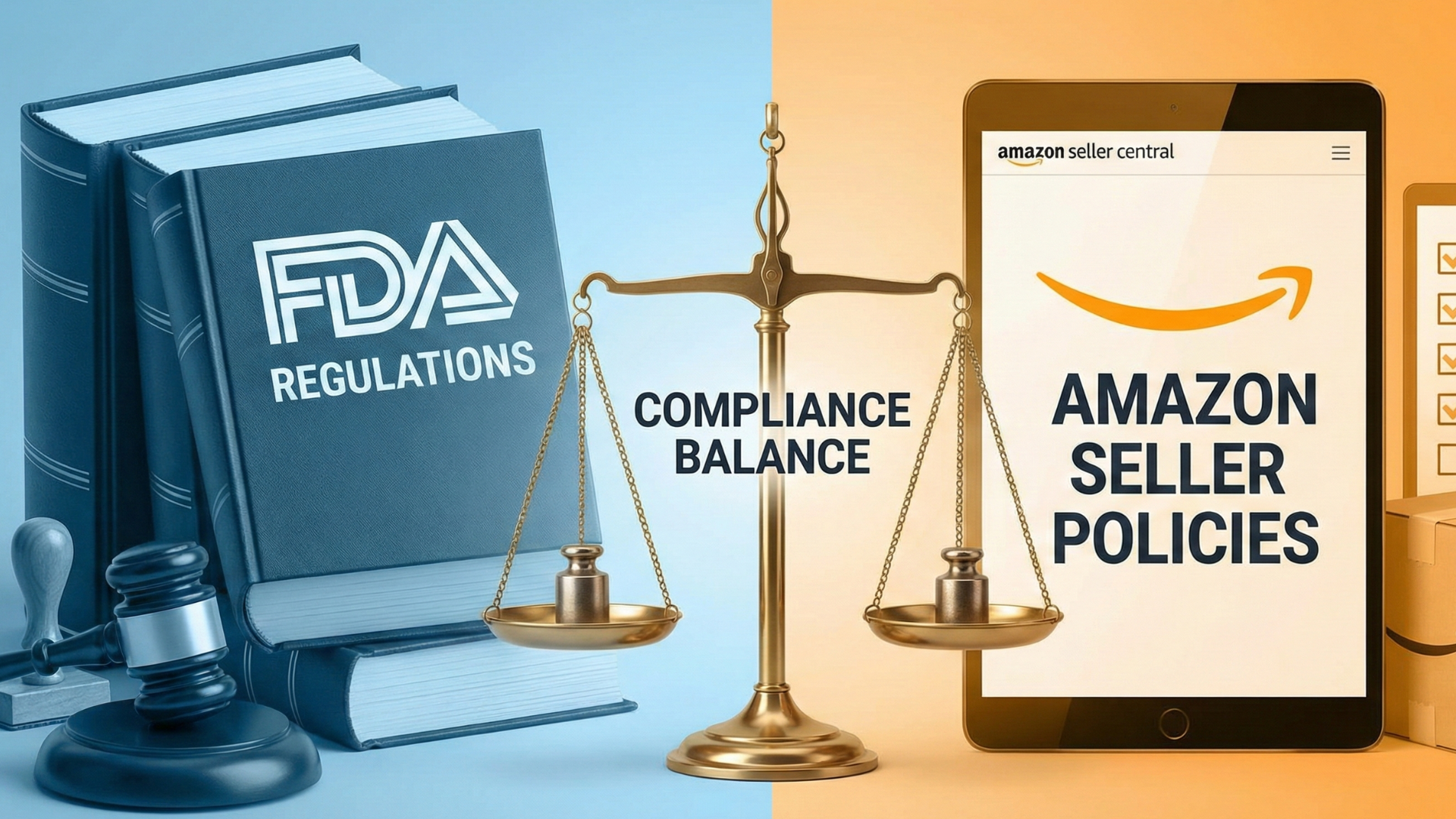
How to Find an ISO 17025-Accredited Supplement Testing Lab, and What Founders Should Ask For
How to verify a lab's ISO/IEC 17025 scope actually covers your test, the questions to ask before shipping samples, and a testing plan built for ecommerce timelines.
Supplement Manufacturing Lead Times and Reorders: What Founders Should Expect Before and After Launch
The five workstreams hiding inside "lead time," why reorders move faster than first runs, and the ramp plan that survives a demand spike.
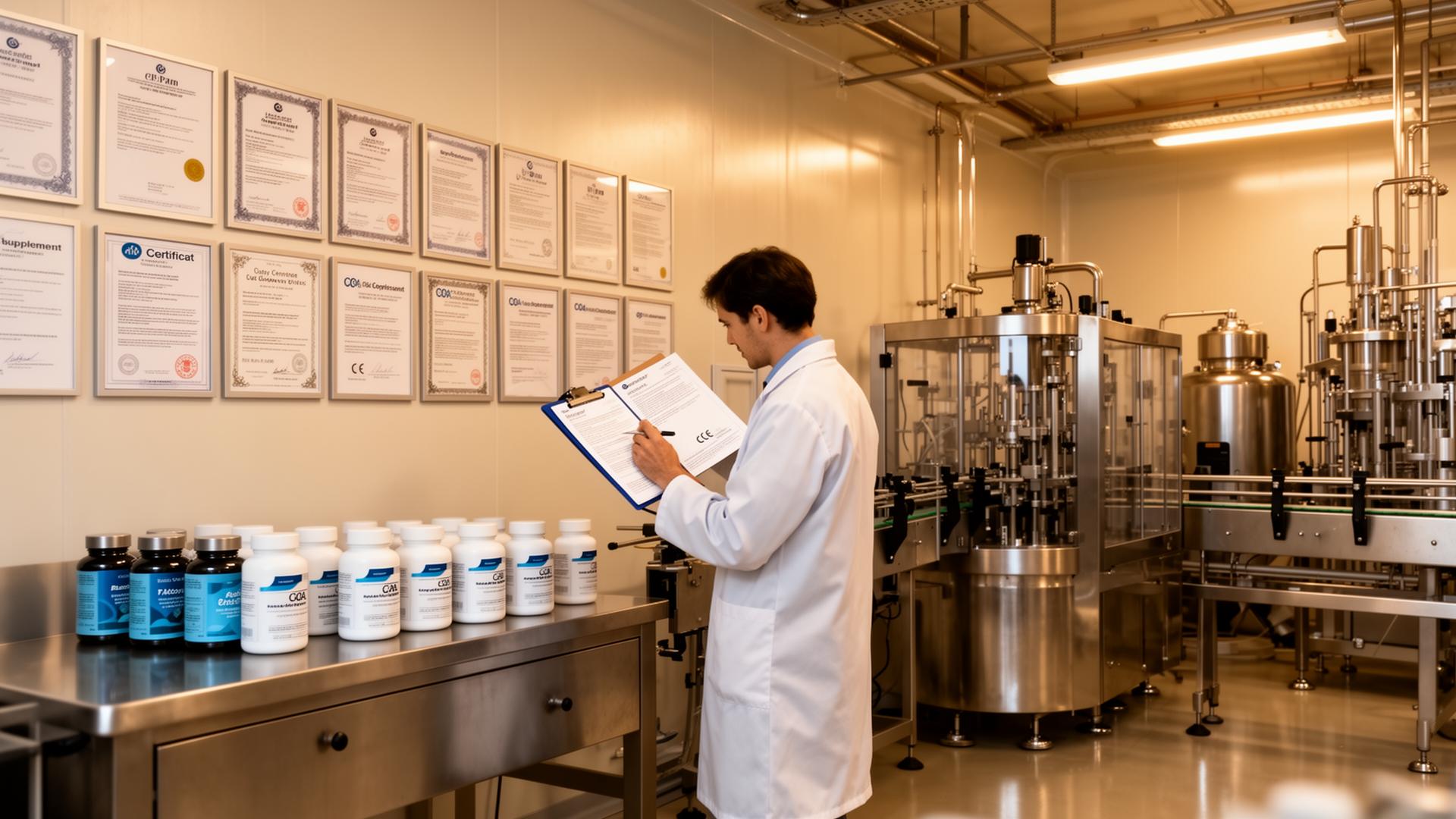
How to Vet a cGMP Supplement Manufacturer With Documented Audit History
The document pack, audit-history call script, and scoring rubric that separate real cGMP quality systems from certificate PDFs.