How to Find a Non-GMO Verified Supplement Manufacturer (and What Proof to Ask For)
A founder-grade walkthrough of where to search, the seven documents that constitute real proof, the high-risk ingredients to scrutinize, and the red flags that should end the call.
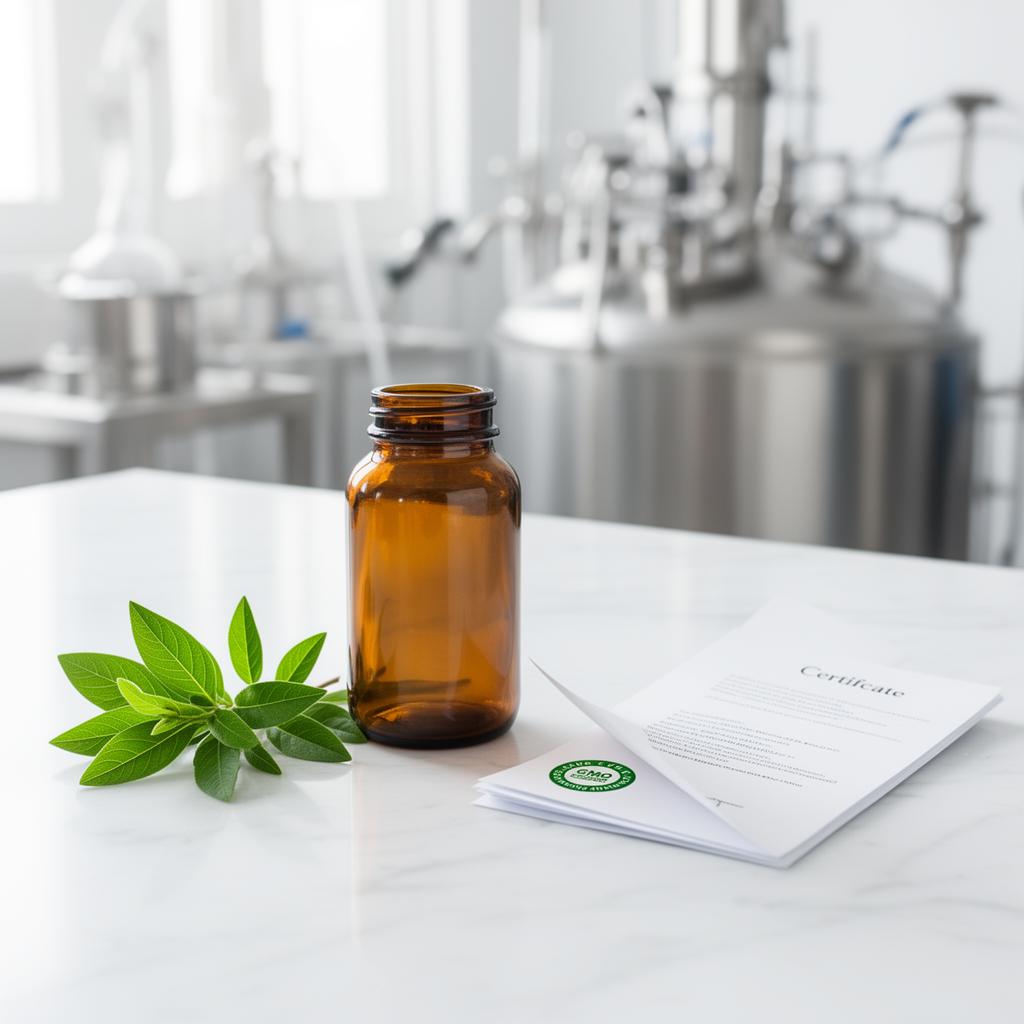
- 1"Non-GMO" on a supplement label can mean three very different things: Non-GMO Project Verified (third-party audited), USDA Organic (which prohibits GMOs by law), or self-claimed (no verification at all).
- 2Non-GMO is an ingredient-sourcing standard, not a manufacturing standard — the cleanest GMP-certified facility cannot make a product non-GMO if its raw materials aren't.
- 3The proof to ask for is supplier-level: IP (Identity Preserved) affidavits, PCR test results for high-risk ingredients, and a Non-GMO Project Verified or USDA Organic certificate for the finished SKU.
- 4Non-GMO Project Verified is the strongest US consumer-recognized mark. Adding it adds roughly 6–12 weeks and a per-SKU annual fee — plan for it in your launch timeline, not after.
- 5Watch for high-risk ingredients first: corn starch, soy lecithin, maltodextrin, rice protein, beet sugar, canola/cottonseed oils, and microbial fermentation products like riboflavin and vitamin C.
Short answer
To find a non-GMO verified supplement manufacturer, search the Non-GMO Project's verified-product directory and the USDA Organic INTEGRITY database to identify contract manufacturers already producing certified SKUs in your category — then shortlist three and ask each for the same packet of evidence: a third-party cGMP certificate, supplier IP (Identity Preserved) affidavits for every high-risk ingredient in your formula, PCR test results for those ingredients from an ISO/IEC 17025 lab, a finished-product COA, and a Non-GMO Project Verified or USDA Organic certificate listing your exact SKU. The manufacturer that produces that packet in days, not weeks, is the one you can trust.
What "non-GMO" actually means on a supplement
"Non-GMO" on a finished supplement can mean three very different things, and shoppers — and many founders — don't realize they're seeing different signals:
- Non-GMO Project Verified — third-party audited under the Non-GMO Project Standard. Every ingredient, processing aid, and contact surface in the supply chain is reviewed; high-risk inputs are PCR-tested; the SKU is listed in a public registry. This is the strongest US consumer-recognized mark.
- USDA Organic — certified under the USDA National Organic Program, which prohibits the use of GMOs by law. Every USDA Organic supplement is non-GMO by definition, but the certification also requires organic-source ingredients and organic processing rules.
- Self-claimed "non-GMO" — a marketing claim with no independent verification. It is legal in the US to say "non-GMO" on a label without any certification, which is why the first two carry real weight and the third does not.
If you're building a brand that needs to defend its claims on Amazon, in retail, or against a TikTok comment section, only the first two stand up. (See our breakdown of what "clean label" actually means for an adjacent claim that gets misused the same way.)
Verified vs. self-claimed: the only distinction that matters
The distinction between a verified mark and a self-declared one is the same as the distinction between GMP-compliant and GMP-certified: one is a company saying something about itself, the other is an independent body confirming it. (We cover that line in detail in how to verify a manufacturer is GMP certified.) For non-GMO, the equivalent stack is:
| Claim | Verification | Consumer trust | Best use |
|---|---|---|---|
| Non-GMO Project Verified | Independent technical review + PCR testing of high-risk inputs | High (most-recognized non-GMO seal in North America) | DTC, Amazon, Whole Foods, Sprouts, Thrive Market |
| USDA Organic | USDA-accredited certifier audit (organic + non-GMO + processing) | Highest (federally regulated) | Premium positioning, organic shelves, export |
| "Made with non-GMO ingredients" | Self-declared | Low to moderate | Cost-sensitive launches with documented supplier proof |
| "Non-GMO" (no seal) | None | Falling — increasingly flagged by reviewers and ad platforms | Avoid unless backed by IP affidavits |
Where to find verified non-GMO manufacturers
Most founders start by Googling "non-GMO supplement manufacturer" and end up on lead-gen pages. A faster route is to work backward from products that are already verified:
- Non-GMO Project verified-product directory — searchable by category. Find products in your space, then look up which contract manufacturer makes them. Some labels list "Manufactured by," others can be confirmed via FDA's facility registration directory.
- USDA Organic INTEGRITY database — public registry of every USDA Organic operation, including supplement contract manufacturers.
- NSF, USP, and SGS public registries — for verifying the cGMP backbone that sits beneath any non-GMO claim. (Our deep-dive on which manufacturers carry the most credentials is in supplement manufacturers with the most certifications.)
- Trade-show floor lists — SupplySide West, Natural Products Expo West, and Vitafoods publish exhibitor lists you can filter by certification.
- Reverse-engineer competitor labels — for any product carrying the Non-GMO Project butterfly, the manufacturer is either listed on-pack or traceable through the FDA Establishment Identifier (FEI).
Note
Shortcut for founder-stage brands: filter your shortlist down to manufacturers with low MOQs and at least one Non-GMO Project Verified or USDA Organic SKU already in market. If they've shipped one before, the supplier relationships and SOPs are already in place — and your verification timeline drops by weeks.
The 7 documents to ask for before signing
A manufacturer that produces non-GMO product as a routine should be able to send the following packet within a few business days. Anything longer — or any substitution of marketing language for the actual document — is a signal.
- Third-party cGMP certificate (NSF/ANSI 455-2, USP GMP, UL GMP, or equivalent) — the manufacturing baseline.
- Non-GMO Project Verified or USDA Organic certificate for your SKU (or a representative SKU in the same category if yours isn't yet in production).
- IP (Identity Preserved) affidavits from each ingredient supplier covering every high-risk input — corn, soy, beet sugar, canola, microbial-fermented vitamins.
- PCR test results from an ISO/IEC 17025-accredited lab for at-risk ingredients (the same test methodology the Non-GMO Project relies on).
- Finished-product Certificate of Analysis with identity, potency, and contaminant testing (see supplement ingredient sourcing for what a real COA contains).
- Supplier list with countries of origin — even at a category level. Non-GMO sourcing is geographic as much as it is documentary.
- Change-control / re-test policy — what happens when a supplier is swapped mid-program. The answer should be: re-affidavit, re-test, and notify the brand before changing the lot.
The ingredient problem: non-GMO is sourced, not manufactured
This is the single most misunderstood point in non-GMO supplement sourcing: a manufacturer cannot make a product non-GMO if the ingredients aren't. The cleanest, most-certified GMP facility in the country, blending GMO maltodextrin and GMO soy lecithin, produces a GMO product. Non-GMO is a property of the inputs, validated at the supplier — and then preserved through segregation, cleaning protocols, and batch documentation at the facility.
That's why the proof packet above is supplier-heavy. Your contract manufacturer's job is to (a) source from suppliers who can prove their inputs, (b) keep those inputs segregated from any conventional equivalents in the warehouse, (c) clean shared equipment between runs to prevent cross-contact, and (d) document all of it for the verifier. If a manufacturer can describe their segregation and changeover protocol in concrete detail, they're doing it. If they can't, they're not.
High-risk ingredients to scrutinize first
Before you ask for affidavits on every ingredient, focus on the inputs that are most likely to be GMO in the US supply chain. These are the ingredients the Non-GMO Project itself classifies as high-risk:
| Ingredient family | Common supplement uses | What to ask for |
|---|---|---|
| Corn derivatives | Maltodextrin, corn starch, dextrose, citric acid, ascorbic acid (vitamin C), xanthan gum | IP affidavit + PCR test |
| Soy derivatives | Soy lecithin (capsule lubricant), soy protein, vitamin E (mixed tocopherols) | IP affidavit + identity test |
| Beet sugar / canola / cottonseed | Sweeteners, gummy bases, processing oils | Country of origin + IP affidavit |
| Microbial-fermented vitamins | Riboflavin (B2), B12, vitamin C, amino acids — often produced on corn or sugar feedstock | Non-GMO declaration from the fermentation supplier |
| Rice protein, papaya, zucchini | Plant proteins, enzyme blends, greens powders | Non-GMO declaration + country of origin |
Botanical extracts (ashwagandha, turmeric, mushroom blends) are generally not on the high-risk list, but if they're standardized on a corn-derived carrier, the carrier becomes the at-risk input. That's exactly the kind of detail a competent manufacturer will flag for you before you sign.
What to ask on the vetting call
Treat the first call with any contract manufacturer like a structured interview. The goal is not to hear them say "yes, we're non-GMO" — the goal is to test whether their process actually produces verifiable non-GMO product. A useful script:
- "Which of your current SKUs are Non-GMO Project Verified or USDA Organic?" A confident answer with two or three brand names is the strongest possible signal.
- "Can you send me a redacted IP affidavit and PCR test result from a recent project?" Tests whether the document actually exists.
- "How do you segregate non-GMO and conventional raw materials in the warehouse?" Listen for physical separation, distinct lot tagging, and dedicated weighing rooms.
- "What's your changeover protocol between a GMO and a non-GMO run on shared equipment?" A clean answer cites cleaning verification, swab testing, and documented sign-off.
- "What happens if a supplier is unavailable mid-program?" Look for a written change-control SOP, not a vague "we'd find another."
- "How long is your timeline from formula lock to Non-GMO Project Verified label-ready?" A realistic answer is 6–12 weeks on top of formulation; anything dramatically shorter or longer warrants follow-up.
For broader vetting frameworks, see what makes a good contract manufacturer for ecommerce and the red flags to watch for in a manufacturing agreement.
What non-GMO verification costs and how it affects MOQ
Non-GMO sourcing adds cost in three predictable places: ingredient premium (typically 5–25% over conventional, depending on the input), verification fees (per-SKU annual fees for Non-GMO Project Verified; certifier audit fees for USDA Organic), and time (6–12 weeks for verification on top of your standard formulation timeline). It generally does not push minimum order quantity higher — MOQ is governed by equipment run sizes, not by sourcing posture.
| Layer | Typical added cost | Timeline impact |
|---|---|---|
| Non-GMO ingredient premium | +5% to +25% per ingredient | Negligible if supplier is already enrolled |
| Non-GMO Project Verification (per SKU, annual) | Application + per-SKU annual fee | +6 to +12 weeks |
| USDA Organic certification (per facility + SKU) | Certifier audit + per-SKU listing | +3 to +6 months for first SKU |
| PCR testing for high-risk inputs | Per-test fee (ISO/IEC 17025 lab) | +1 to +2 weeks per test cycle |
For founder-stage brands, the higher per-unit cost is almost always offset by the price premium a verified non-GMO SKU can command in DTC and on Amazon. We keep our standard MOQ at 2,000 units even when Non-GMO Project Verification is layered on — see the full cost model in our supplement manufacturing costs guide.
Red flags that should end the conversation
- "All our facilities are non-GMO" — non-GMO is a SKU- and supplier-level property, not a facility-level one. This phrasing usually means "we don't have a real program."
- No public certifications on the website — and the rep can't name an issuing body or certificate number on the call.
- IP affidavits "available on request" but never delivered — even a redacted sample should be sent within a few business days.
- Resistance to disclosing supplier countries of origin — at minimum a region (US, EU, India) should be available.
- No written segregation or changeover SOP — if the answer to "how do you avoid cross-contact?" is verbal-only, the answer is "we don't."
- A timeline to Non-GMO Project Verified shorter than ~6 weeks — the program's technical review alone takes longer than that.
- Pressure to use a specific filler or carrier ("we only run with this maltodextrin") without disclosing its source.
How Peakfinity Labs handles non-GMO sourcing
At Peakfinity Labs, non-GMO isn't a marketing layer bolted on at the end — it's a sourcing posture chosen during formulation. Our R&D team flags every high-risk ingredient in your formula on the first call, proposes verified non-GMO substitutes for any inputs that would block a future Non-GMO Project Verified or USDA Organic application, and pulls IP affidavits from suppliers we've already vetted. Manufacturing runs in our NSF, ISO 9001:2015, WHO-GMP, HACCP, and Halal-certified 375,000+ sq ft facility — the same facility documented in our certifications and facilities pages.
We hold our standard 2,000-unit MOQ for non-GMO SKUs, with a typical 4–6 week production turnaround once a formula is locked. Founders launching their first non-GMO line work with one project manager from R&D through batch COA — no handoffs, one paper trail.
The bottom line
Finding a non-GMO verified supplement manufacturer is less about a single label and more about a documentation chain — supplier affidavits at one end, a third-party seal on your finished SKU at the other, and a contract manufacturer in the middle who can produce every link in days, not weeks. Search Non-GMO Project and USDA INTEGRITY for manufacturers already shipping verified product in your category, ask all three of your shortlist for the same seven-document packet, and treat the cleanest, fastest responder as your default partner. The brand that wins the "is this actually non-GMO?" comment thread is the brand that can answer with a certificate number — not a tagline.
Frequently Asked Questions
How do I find a non-GMO verified supplement manufacturer?
Start with the Non-GMO Project's public verified-product directory and USDA Organic's INTEGRITY database — both list certified products and the companies that make them. Then shortlist contract manufacturers that openly publish their certifications and request three documents from each: their facility cGMP certificate, supplier IP (Identity Preserved) affidavits for your high-risk ingredients, and a sample Certificate of Analysis. A facility that can produce all three within a few business days is verifiable; one that delays or substitutes vague language is not.
Is Non-GMO Project Verified the same as USDA Organic?
No, but they overlap. USDA Organic prohibits the use of GMOs as part of the certification, so every certified-organic supplement is, by definition, non-GMO — but it must also be made from organic ingredients and follow organic processing rules. Non-GMO Project Verified focuses specifically on GMO avoidance and is open to non-organic products. Many brands stack both marks; USDA Organic is the higher bar, Non-GMO Project Verified is the more recognizable consumer signal.
What documents prove a supplement is actually non-GMO?
Five documents together form real proof: (1) the facility's third-party cGMP certificate, (2) IP affidavits from each ingredient supplier covering high-risk inputs like corn, soy, beet sugar, canola, and microbial-derived vitamins, (3) PCR (polymerase chain reaction) test results from an ISO/IEC 17025-accredited lab for at-risk ingredients, (4) a finished-product Certificate of Analysis, and (5) the Non-GMO Project Verified or USDA Organic certificate listing your specific SKU. Any one of these alone is not enough.
Which supplement ingredients are most likely to be GMO?
In the US, the highest-risk inputs are corn derivatives (maltodextrin, corn starch, dextrose, citric acid), soy derivatives (soy lecithin, soy protein, vitamin E from soy), beet sugar, canola and cottonseed oils, papaya and zucchini extracts, and microbial-fermentation products like riboflavin (B2), vitamin C from corn, and many amino acids. If your formula touches any of these, ask the manufacturer for an IP affidavit or non-GMO declaration from the supplier — not just from the manufacturer.
How long does Non-GMO Project Verification take?
Plan for roughly 6–12 weeks from a complete application, longer if any ingredient supplier needs to be onboarded into the program. The technical review covers every ingredient, processing aid, and contact surface; once verified, the certification renews annually for a per-SKU fee. Brands that engage a manufacturer already familiar with the program tend to land closer to the 6-week end of that window.
Does cGMP certification mean a manufacturer is non-GMO?
No. cGMP (21 CFR Part 111) governs how a supplement is manufactured — sanitation, identity testing, batch records, and quality controls — not what's in it. A facility can be fully cGMP-certified and still produce a product loaded with GMO inputs. cGMP is the manufacturing baseline; non-GMO is a separate sourcing and verification overlay that sits on top of it.
Can a small ecommerce brand actually get Non-GMO Project Verified?
Yes — and increasingly, brands at sub-10,000-unit run sizes are getting verified to compete on the same shelf as larger players. The fastest path is to choose a contract manufacturer that already has verified SKUs in your category, because their ingredient suppliers are typically already enrolled in the program. At Peakfinity Labs we keep our standard MOQ at 2,000 units even when Non-GMO Project Verification is layered on, so the certification doesn't gate a founder-stage launch.
Ready to launch a verifiable non-GMO supplement line?
Peakfinity Labs sources non-GMO and USDA Organic-eligible ingredients across 5,800+ inputs, runs in an NSF, ISO 9001:2015, and WHO-GMP-certified 375,000+ sq ft facility, and holds a 2,000-unit MOQ for verified SKUs. Get a custom quote with supplier-level documentation included.

Tushar
Licensed Pharmacist and COO @ Peakfinity Labs
Written by the Peakfinity Labs R&D Team — 46+ years of supplement formulation expertise. Our team of formulation chemists, manufacturing specialists, and regulatory experts has helped thousands of eCommerce brands bring their products to market successfully since 1980.
Related Articles
How to Find an ISO 17025-Accredited Supplement Testing Lab, and What Founders Should Ask For
How to verify a lab's ISO/IEC 17025 scope actually covers your test, the questions to ask before shipping samples, and a testing plan built for ecommerce timelines.
Supplement Manufacturing Lead Times and Reorders: What Founders Should Expect Before and After Launch
The five workstreams hiding inside "lead time," why reorders move faster than first runs, and the ramp plan that survives a demand spike.
How to Vet a cGMP Supplement Manufacturer With Documented Audit History
The document pack, audit-history call script, and scoring rubric that separate real cGMP quality systems from certificate PDFs.