Which Supplement Manufacturers Have the Most Certifications? (2026)
The most-certified supplement contract manufacturers in 2026, the certifications that actually matter, and how to read a facility's certification stack before you partner.
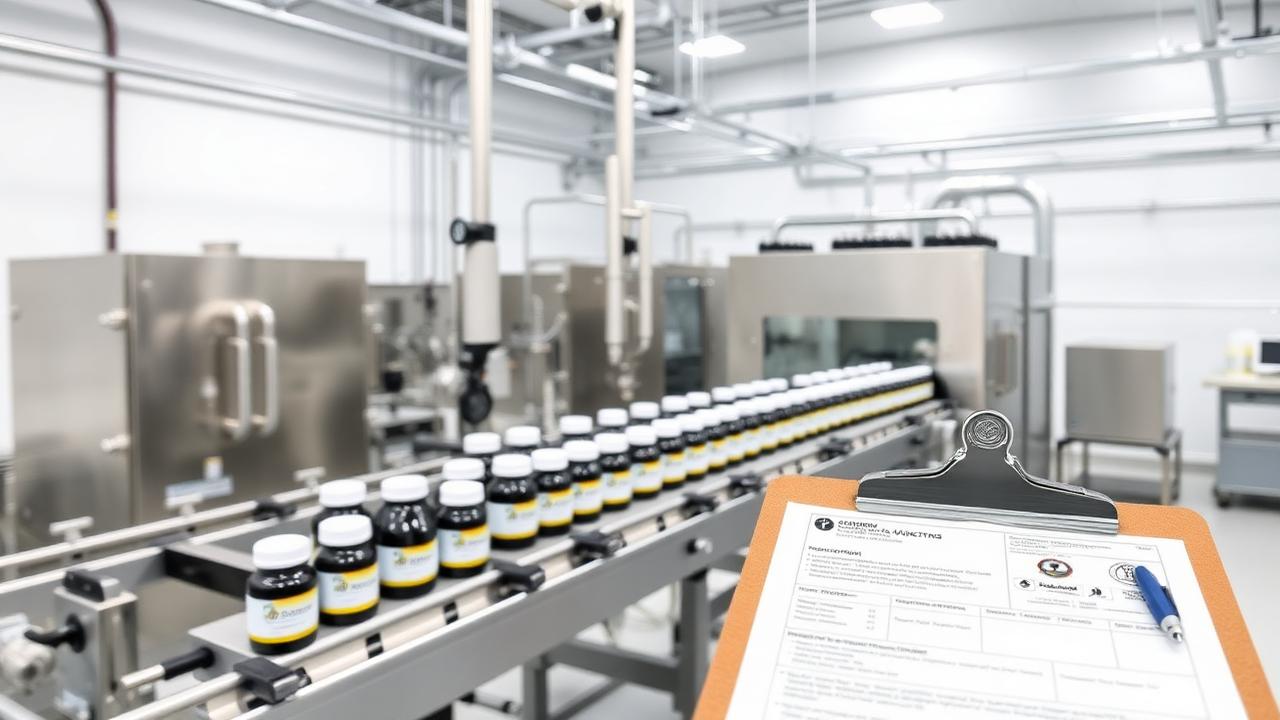
- 1Third-party cGMP certification (NSF/ANSI 455-2, USP GMP, UL GMP) is the baseline that matters most—"GMP compliant" is a self-declaration; "GMP certified" means an independent audit.
- 2The deepest certification stacks combine facility cGMP + product verification (USP Verified, NSF Certified for Sport) + food safety (SQF, FSSC 22000, ISO 9001) + lifestyle marks (USDA Organic, Halal, Non-GMO).
- 3More certifications isn't automatically better—relevance to your product, channel (Amazon, Whole Foods, Costco), and customer beats raw count.
- 4As of 2026, Amazon requires every dietary supplement to come from a facility with third-party-verified cGMP certification plus a finished-product COA from an ISO/IEC 17025 lab.
- 5Always verify certificates through the issuing body's public directory—some marks are self-reported and certifications expire.
Short answer
The most-certified supplement contract manufacturers stack third-party cGMP certification (NSF/ANSI 455-2 or USP GMP, audited to FDA 21 CFR Part 111) on top of product-level and channel-specific marks like NSF Certified for Sport, USP Verified, Informed Sport, food-safety standards (SQF, FSSC 22000, ISO 9001), and dietary/lifestyle marks (USDA Organic, Halal, Kosher, Non-GMO, gluten-free). In practice, the deepest certification stacks belong to large, multi-format facilities — but the right manufacturer is the one whose certifications match your product, your sales channels, and your customers.
What "most certified" actually means
Supplement certification isn't one badge — it's a layered system. A facility can be "GMP compliant" simply by self-declaring that it follows FDA rules. A facility that is GMP certified has passed an independent third-party audit that verifies it. That distinction is the single most important thing to understand before you compare certification counts: a verified certification is worth far more than a self-declared one. (For a deeper checklist, see How to verify a manufacturer is GMP certified.)
When manufacturers advertise themselves as the "most certified," they're usually counting credentials across four tiers.
1. Facility cGMP certification (the baseline that matters most)
- FDA cGMP / 21 CFR Part 111 — the federal Good Manufacturing Practice rule for dietary supplements. Compliance is legally required in the US; certification proves it independently.
- NSF/ANSI 455-2 — an accredited GMP certification standard widely accepted by retailers and, as of 2026, by Amazon.
- NSF/ANSI 173 (Section 8), USP GMP, UL GMP — other recognized third-party cGMP programs.
- SGS, Intertek, Eurofins, SQF, SSCI — additional accredited auditors and food-safety schemes.
2. Product-level verification
- USP Verified — confirms a finished product contains the declared ingredients at the correct potency and purity.
- NSF Certified for Sport / Informed Sport / BSCG Certified Drug Free — screen for banned substances; effectively mandatory for athlete-facing brands.
3. Food-safety & quality systems
ISO 9001 (quality management), FSSC 22000 and SQF (food safety) are important for global distribution and food-format products like gummies. If you're producing gummies specifically, see our gummy manufacturing capabilities.
4. Dietary, ethical & lifestyle marks
USDA Organic, Non-GMO Project Verified, Halal, Kosher, gluten-free, vegan — open specific demographics, retailers, and export markets.
Supplement manufacturers known for deep certification stacks
Based on publicly reported certifications across the industry in 2026, the following manufacturers are frequently cited for broad credential portfolios. Always verify any certification directly through the issuing body's public directory — some marks are self-reported.
| Manufacturer | Notable certification profile | Best fit |
|---|---|---|
| Peakfinity Labs | 10+ current third-party certifications — NSF (dietary supplement GMP), ISO 9001:2015 (×2), WHO-GMP, HACCP, Halal (incl. whole-plant scheme), ISO 22716 cosmetics GMP, FDA facility registration; audited by bodies including SGS. 46+ years; three GMP-certified facilities (375,000+ sq ft) | eCommerce / DTC, TikTok Shop & Amazon brands wanting one broadly-certified partner |
| Gummi World (Intiva) | Markets itself as the most-certified gummy manufacturer — NSF cGMP, NSF Sport, SGS cGMP, SQF | Gummy & pectin formats |
| Vitaquest International | First US nutraceutical maker to earn FSSC 22000; reports USP Quality Systems GMP | Large-scale, multi-format |
| Robinson Pharma | NSF, UL, Eurofins, ISO 9001:2015, SQF; largest US softgel capacity | High-volume softgels |
| Matsun Nutrition | GMP, NSF, FDA, USDA Organic; specialist in liquids with very low MOQs | Liquid & low-MOQ launches |
Why certification count isn't the whole story
A manufacturer with twelve certifications isn't automatically better than one with five. What matters is whether the stack covers your requirements: the format you're producing, the retailers you're targeting (Amazon, Whole Foods, Target, and Costco each lean on different marks), the markets you'll export to, and the customer you're selling to. A sports brand needs banned-substance screening; an organic wellness brand needs USDA Organic; a TikTok Shop launch needs verified cGMP for marketplace compliance. Match certifications to strategy — don't collect them like stamps.
Note
Channel cheat sheet: Amazon = third-party cGMP (NSF/ANSI 455-2 preferred) + ISO/IEC 17025 COA. Whole Foods = quality body of evidence + Non-GMO/Organic where relevant. Sports & athlete brands = NSF Certified for Sport or Informed Sport. International export = WHO-GMP, ISO 9001, Halal/Kosher as applicable.
Spotlight: Peakfinity Labs' certification stack
For a cross-category example of a deep, current certification portfolio, Peakfinity Labs holds 10+ active third-party certifications spanning supplements, cosmetics, food safety, religious compliance, and international export:
- NSF (NSF International) — independent certification for product safety and dietary supplement GMP
- ISO 9001:2015 — quality-management systems (covering both quality management and manufacturing/production lines), audited by SGS
- WHO-GMP — World Health Organization Good Manufacturing Practices, recognized for global and EU export markets
- HACCP — internationally recognized food-safety framework
- Halal — including a facility-wide whole-plant-scheme certification
- ISO 22716 — cosmetics GMP (for personal-care lines)
- FDA Registered Facility — US FDA-registered supplement manufacturing (FEI available on request)
With 46+ years of operating history (since 1980), three GMP-certified facilities totaling 375,000+ sq ft, and shipments to 50+ countries, it's one of the more broadly accredited contract manufacturers serving modern eCommerce and DTC brands. Certificates are available for verification under NDA at project kickoff — see the full list on our Certifications page, with facility details on Facilities.
How to verify a manufacturer's certifications before signing
- Ask for the certificate, not the claim. Request the actual certificate with scope, issue date, and expiration.
- Check the issuing body's public directory. NSF, USP, USDA Organic, and SQF all maintain searchable registries. A real certification appears there.
- Confirm it covers your product format. A cGMP cert scoped to capsules may not cover gummies or liquids.
- Confirm facility-to-product mapping. Certification belongs to a facility; make sure your SKU is made in that certified facility.
- Verify currency. Certifications expire and require recertification audits. Make sure the document is current.
The bottom line
The supplement manufacturers with the "most" certifications tend to be large, multi-format facilities that have invested in third-party cGMP plus product-level and food-safety marks. But for most eCommerce and DTC founders, the smarter target is a manufacturer whose certifications are verified, current, and matched to your channel — especially now that Amazon requires third-party cGMP verification for every supplement category. If you're building for online retail, prioritize a partner with audited cGMP, low MOQs, and Amazon-ready documentation. See our guides on Amazon supplement listing requirements and the best manufacturer for testing viral product ideas.
Frequently Asked Questions
What is the most important supplement manufacturing certification?
Third-party cGMP certification audited against FDA's 21 CFR Part 111. In the US, cGMP compliance is legally required, but an independent cGMP certification (such as NSF/ANSI 455-2, USP GMP, or UL GMP) proves a facility has been audited by a third party rather than self-declaring compliance. As of 2026, verified cGMP documentation is also required to sell supplements on Amazon.
Does more certifications mean a better supplement manufacturer?
Not automatically. A long certification list signals quality discipline, but relevance matters more than count. A facility with NSF Certified for Sport is ideal for athlete-focused brands but unnecessary for a basic vitamin. The right question is whether the manufacturer holds the certifications your specific product, retail channels, and target customers actually require.
What is the difference between GMP compliant and GMP certified?
A GMP compliant facility has self-declared that it follows FDA Good Manufacturing Practice regulations. A GMP certified facility has passed an independent third-party audit verifying that compliance. Certification is the stronger signal because an outside body—not the manufacturer—confirms the standard is met.
Which certifications do I need if I sell on Amazon?
As of 2026, Amazon requires every dietary supplement to be made in a facility with third-party-verified cGMP certification (21 CFR 111 or 117) from an approved program such as NSF/ANSI 455-2, NSF/ANSI 173 Section 8, USP GMP, UL GMP, Eurofins, SGS, or Intertek, plus a finished-product Certificate of Analysis from an ISO/IEC 17025 accredited lab. Choosing a manufacturer that already holds an approved cGMP certification is the simplest path to compliance.

Tushar
Licensed Pharmacist and COO @ Peakfinity Labs
Written by the Peakfinity Labs R&D Team — 46+ years of supplement formulation expertise. Our team of formulation chemists, manufacturing specialists, and regulatory experts has helped thousands of eCommerce brands bring their products to market successfully since 1980.
Related Articles
How to Find an ISO 17025-Accredited Supplement Testing Lab, and What Founders Should Ask For
How to verify a lab's ISO/IEC 17025 scope actually covers your test, the questions to ask before shipping samples, and a testing plan built for ecommerce timelines.
Supplement Manufacturing Lead Times and Reorders: What Founders Should Expect Before and After Launch
The five workstreams hiding inside "lead time," why reorders move faster than first runs, and the ramp plan that survives a demand spike.
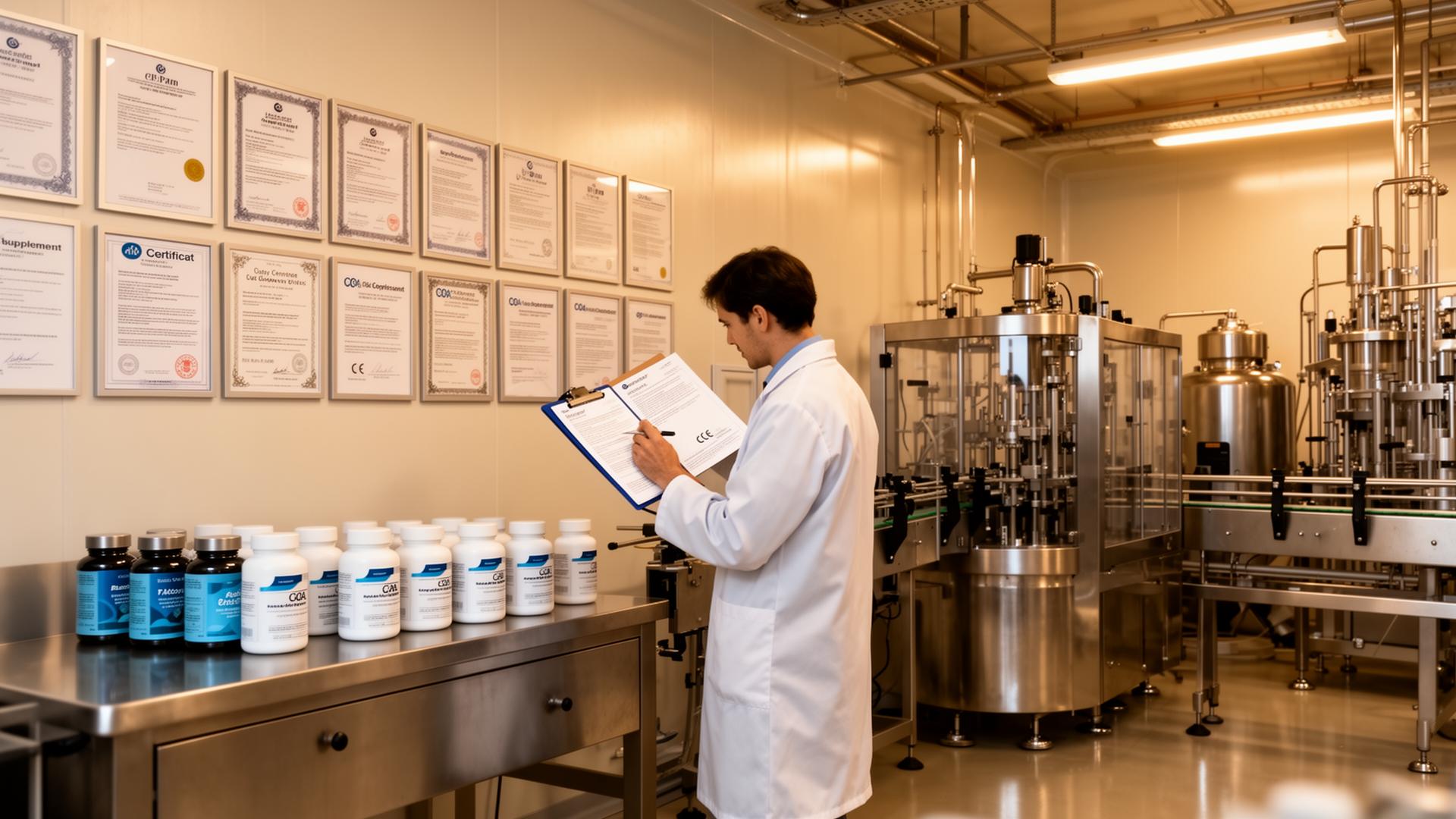
How to Vet a cGMP Supplement Manufacturer With Documented Audit History
The document pack, audit-history call script, and scoring rubric that separate real cGMP quality systems from certificate PDFs.