Clean Label Explained: What It Means for Supplement Quality
We break clean label supplements meaning into 7 verifiable checks—ingredients, excipients, testing, certs, packaging, allergens, compliance. See which matter.
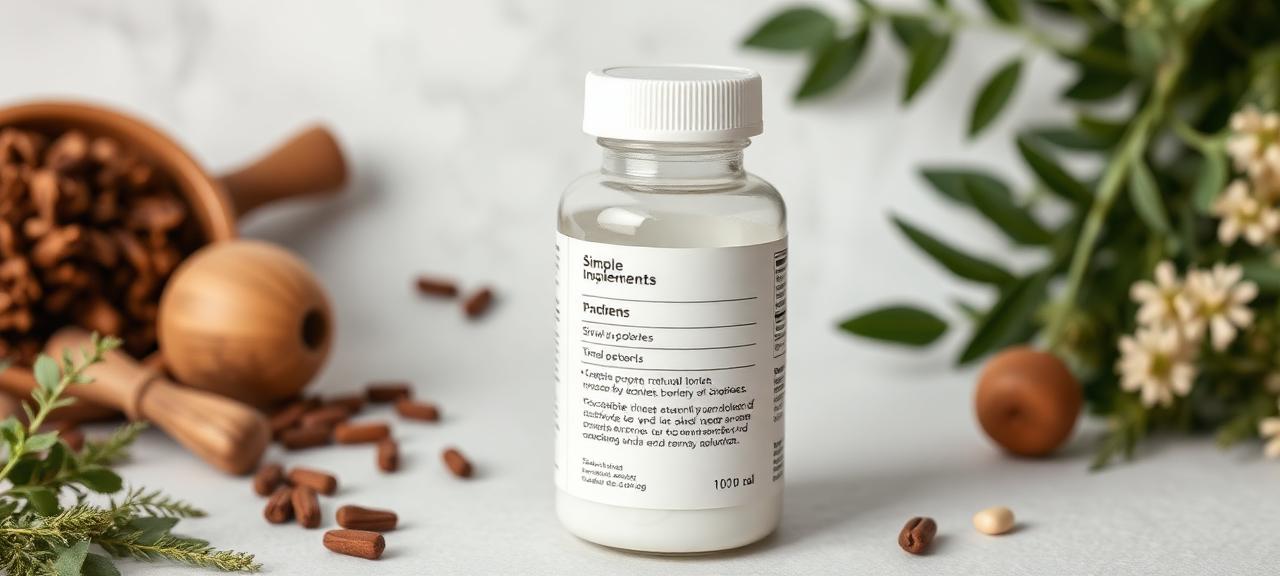
- 1“Clean label” sells supplements—but it also confuses customers, founders, and even experienced operators. That’s because clean label is not a
- 2In supplements, “clean label” usually means a product is designed to feel simpler, safer, and more transparent than the category average. But because
- 3Clean label can improve perceived quality, but quality comes from controls: GMP manufacturing, validated specs, controlled allergens, and consistent
- 4If you want clean-label claims that hold up on Amazon, TikTok, retail, and under scrutiny, you need a documentation stack that maps to each claim. We
- 5Many founders start with “no excipients.” Then they run into reality: powders don’t flow, capsules don’t fill consistently, tablets cap, gummies
Introduction
“Clean label” sells supplements—but it also confuses customers, founders, and even experienced operators. That’s because clean label is not a regulated legal definition in the U.S. supplement category. One brand uses it to mean “no artificial colors.” Another means “vegan capsules and no titanium dioxide.” Another means “third-party tested, Non-GMO, and minimal excipients.”
The result: shoppers think they’re buying “clean,” but they can’t tell what that actually guarantees about quality, safety, or sourcing. And brands feel pressure to make clean-label claims fast—often before they have the documentation to back them up.
This guide breaks clean label down into practical, verifiable parts: ingredients, excipients, allergens, sourcing, testing, packaging, and compliance. You’ll also see where “clean” marketing crosses into legal risk, and what we recommend if you want a product that is compliant, ecommerce-ready, and built to scale. At Peakfinity Labs, we design clean-label projects for speed—often 3–4 weeks from formulation to finished goods—without skipping the paperwork that protects your brand long-term.
What does “clean label” actually mean in the supplement industry?
In supplements, “clean label” usually means a product is designed to feel simpler, safer, and more transparent than the category average. But because there’s no single legal definition, the only version that matters is the one you can prove on your label, in your specs, and in your supplier files.
In practice, clean label claims cluster into six buckets:
- Ingredient standards: recognizable actives, fewer additives, no artificial colors/flavors/sweeteners (as defined by your brand standard).
- Excipients policy: minimal “other ingredients,” and clear reasons for anything included.
- Dietary identity: vegan/vegetarian/plant-based, allergen-free positioning, kosher/halal where applicable.
- Sourcing signals: Non-GMO, organic, traceable supply chain, country-of-origin clarity.
- Testing signals: identity, potency, micro, heavy metals, and contaminant testing with documented limits.
- Packaging + sustainability: recyclable/compostable choices and defensible environmental claims.
Contrarian but true: a “clean” formula can still be low quality if the brand skips identity testing, uses weak specifications, or relies on supplier COAs without verification. Clean label is not a substitute for quality systems.
Clean label vs. supplement quality: what clean can (and can’t) guarantee
Clean label can improve perceived quality, but quality comes from controls: GMP manufacturing, validated specs, controlled allergens, and consistent testing. A clean-looking label with poor controls is a liability.
Here’s a practical way to separate marketing language from quality reality:
| What consumers hear | What it should mean operationally | What to ask your manufacturer |
|---|---|---|
| “No fillers” | Minimal excipients, each justified for flow, stability, or capsule performance | Which excipients are required for this dosage form, and why? |
| “Third-party tested” | Defined test panel + frequency + pass/fail limits + traceable reports | Can I see sample COAs and the specification sheet with limits? |
| “Non-GMO” | Documented non-GMO status for each relevant input (and controls for high-risk materials) | Do you collect non-GMO affidavits per lot or per supplier? Any PCR testing? |
| “Organic” | USDA organic supply chain + certified handling/processing where required | Are you certified to handle/produce organic? How do you segregate lots? |
| “Eco-friendly packaging” | Specific material choice + end-of-life pathway + defensible claim language | Is the package actually recyclable in most U.S. curbside streams? |
How brands verify clean label claims for consumers (the documentation stack)
If you want clean-label claims that hold up on Amazon, TikTok, retail, and under scrutiny, you need a documentation stack that maps to each claim. We treat this as part of the build, not an afterthought, because claims often drive your packaging layout and your ad approvals.
A clean-label verification stack typically includes:
- Finished product specification: target potency, allowable ranges, micro limits, heavy metal limits, allergen statements, and appearance standards.
- Raw material specifications: identity methods, potency ranges, micro limits, and contaminant limits for each ingredient.
- COAs (Certificates of Analysis): for raw materials and finished goods; ideally with lot numbers and test methods listed.
- Supplier qualification: supplier audits, certifications (GMP/ISO where relevant), and risk-based verification testing.
- Label claim substantiation: documentation for “vegan,” “non-GMO,” “organic,” allergen claims, and any sustainability claims.
- Change control + traceability: what happens if an ingredient source changes, a capsule supplier changes, or a packaging resin changes.
Our practical recommendation: if a claim will appear on the front panel, build the proof file before you finalize packaging. Reprints are slower and more expensive than doing the claim review early—especially on ecommerce timelines.
Clean label formulation: excipients are not the enemy (but they must be justified)
Many founders start with “no excipients.” Then they run into reality: powders don’t flow, capsules don’t fill consistently, tablets cap, gummies sweat, and flavors separate. The clean-label goal shouldn’t be “zero other ingredients.” It should be only what’s necessary, with choices that match your positioning.
How do brands handle excipients in clean label formulations?
We start by selecting the dosage form and performance requirements, then we use the minimum excipients needed for consistency and shelf stability. That often means choosing between a shorter label and a product that actually meets weight variation and potency targets lot after lot.
Common clean-label excipient decisions by format:
- Capsules: flow aids may be needed for high-dose minerals or sticky extracts; capsule shells may be HPMC (plant-based) or gelatin.
- Tablets: binders and lubricants matter; “no stearates” can be doable in some formulas but can increase manufacturing risk in others.
- Powders: anti-caking and flavor systems matter; “no artificial sweeteners” often pushes brands to stevia/monk fruit, which can create taste challenges at scale.
- Gummies: pectin vs gelatin affects vegan status, texture, and heat sensitivity; color systems must match your clean standard.
Brand-specific insight: when a brand demands an ultra-short “Other Ingredients” line, we often recommend starting with a small-batch pilot run and stability check first. It reduces the risk of a clean label that fails in the bottle (clumping, separation, or inconsistent fills) once you scale.
Vegan vs vegetarian vs plant-based supplements (and why shoppers get misled)
These three terms overlap, but they are not the same. If you sell on Amazon or through influencer content, you need the distinction clear because customers will screen-shot your label.
| Term | What it usually means | Common “gotchas” in supplements |
|---|---|---|
| Vegan | No animal-derived ingredients or processing aids (depending on the standard) | Gelatin capsules, carmine color, shellac glaze, lactose carriers, some omega sources |
| Vegetarian | No meat/fish; may allow dairy/eggs depending on interpretation | Still might use dairy-derived excipients or enzymes; unclear capsule source |
| Plant-based | Primarily plant-derived; not always a strict exclusion standard | Marketing term that can be vague; may still include animal-derived minor ingredients |
For clean label, “plant-based” is often the easiest to market and the hardest to defend. If you want fewer customer disputes and fewer returns, we recommend using vegan only when you can substantiate it cleanly with supplier declarations for every input, including the capsule shell.
How brands certify supplements as vegan (what it requires)
Some brands self-declare vegan. Others use third-party certifications. Either way, you need the same operational foundation: control the ingredient list, confirm processing aids, and prevent cross-contact where practical.
To support a vegan claim, brands typically need:
- Complete ingredient mapping: not just actives, but carriers, flavors, colors, capsule shells, and coating systems.
- Supplier declarations: vegan statements for each ingredient and packaging component where relevant (for example, some adhesives and inks have animal-derived inputs).
- Allergen and cross-contact plan: documented handling to reduce risk of animal-derived cross-contact in shared facilities.
- Label review: ensure “vegan” language matches substantiation and doesn’t imply disease treatment.
Where brands get stuck: capsule shells. HPMC capsules solve the gelatin issue, but you still need documentation on processing aids and the capsule color system. If you want speed, decide capsule type early—capsule supply can become the longest lead-time item in a clean-label build.
Non-GMO Project Verified vs “non-GMO”: how sourcing really works
“Non-GMO” is often a supplier affidavit. Non-GMO Project Verified is a structured program with audits and traceability. If your target customer is label-driven, the Verified butterfly can convert—but it adds time, cost, and admin.
How do brands source Non-GMO Project Verified ingredients?
Brands typically start by selecting ingredients that already have Non-GMO Project Verified status or have strong identity preservation documentation, then they build a supply chain file that covers high-risk crops (like corn, soy, canola, sugar beets, and some enzymes). The key is to prevent a single non-verified minor ingredient (like a carrier) from blocking the claim.
Operationally, we recommend a two-tier approach:
- Tier 1 (high-impact): choose verified or strongly documented sources for the ingredients customers care about most and that have high GMO risk.
- Tier 2 (hidden blockers): screen “inactive” ingredients like maltodextrin carriers, flavor bases, and capsule colors, because they often come from corn or other high-risk sources.
Helpful reference: Non-GMO Project’s program overview and standards are published here: https://www.nongmoproject.org/.
Organic supplements: what USDA organic does (and doesn’t) cover
Organic is one of the most regulated “clean label” signals, but it’s also one of the easiest to misunderstand. USDA organic certification applies to agricultural ingredients and certified handling. It does not automatically mean “cleaner,” “safer,” or “more potent.”
How do brands handle organic certification for supplements?
Brands typically formulate around available certified-organic ingredients, confirm that the manufacturer can handle organic under certification, and maintain segregation and traceability from receiving through packaging. The hard part is balancing organic inputs with functional requirements—some popular actives simply aren’t available as organic at commercial scale.
Start with the USDA basics and certification structure here: https://www.ams.usda.gov/services/organic-certification.
Sustainable packaging: what’s behind the rise (and what actually works)
Packaging has become part of clean label because customers see it first, and because brands compete in scroll-based ecommerce. The shift toward sustainable supplement packaging is driven by three factors: consumer pressure, retailer requirements, and brand CAC economics (packaging that improves conversion can pay for itself).
But there’s a catch: many “eco” materials don’t perform well for supplements. Moisture and oxygen control matter for potency and shelf life.
What’s behind the rise of glass over plastic supplement packaging?
Glass signals premium and reusability, and it can improve oxygen and moisture barrier performance depending on the closure system. The tradeoffs are shipping weight, breakage risk, higher freight costs, and a larger transport footprint—so glass isn’t automatically “greener” in every scenario.
Our recommendation for most ecommerce brands: start with a recyclable, light-weight format that protects the product (often HDPE or PET with the right barrier and induction seal), then test premium formats like glass once you have repeat purchase data.
Compostable vs recyclable: how brands package supplements without creating returns
Compostable packaging sounds clean, but many compostable films and pouches have weaker moisture barriers. For hygroscopic powders, probiotics, and certain botanical extracts, the wrong package can cause clumping, loss of potency, or odor transfer.
When brands ask us how to package supplements in compostable or recyclable materials, we start with product sensitivity:
- High moisture sensitivity: prioritize proven barrier packaging, desiccants, and tight seals.
- Moderate sensitivity: explore recyclable jars, PCR content options, and right-sized bottles to reduce plastic per serving.
- Low sensitivity: pouches and lighter-weight formats become more realistic.
Unique angle from manufacturing: “sustainable” that increases returns is not sustainable. A 2–3% return-rate increase from clumping or broken seals can erase the benefit of a greener material and hurt your seller metrics.
Upcycled ingredients in clean label supplements (where they fit, where they don’t)
Upcycled ingredients can support a clean-label story by reducing food waste and giving brands a concrete sustainability claim. They work best when the ingredient has consistent specifications and a stable supply stream.
Where upcycled ingredients often fit well:
- Fiber and polyphenol concentrates from fruit and vegetable streams
- Plant proteins from existing food production outputs
- Natural flavors with traceable inputs
Where they can be risky: when the input stream varies seasonally and the supplier can’t hold consistent potency, color, or sensory specs. If you want to scale a viral product, consistency matters more than the story.
How to prove environmental sustainability claims legally (and avoid greenwashing)
Sustainability claims sit under the same basic rule as other marketing: don’t mislead. In the U.S., the FTC’s Green Guides explain how the agency evaluates environmental marketing claims like “recyclable,” “compostable,” and “carbon neutral.” If you can’t substantiate a claim, you should soften the language or remove it.
Practical ways to market sustainability without greenwashing accusations:
- Use specific claims: “Bottle made with 50% PCR plastic” is clearer than “eco-friendly bottle.”
- Disclose limits: “Recyclable where facilities exist” may be necessary for certain materials.
- Keep proof on file: supplier letters, resin specs, and any third-party certification documents.
- Avoid broad “planet safe” language: it’s hard to prove and easy to challenge.
Authoritative reference: FTC Green Guides overview: https://www.ftc.gov/business-guidance/resources/green-guides.
Carbon neutral certification: what it is and what it requires
Carbon neutral claims can be valid, but they require careful boundaries. In most cases, brands measure emissions (often scopes defined by the program), reduce where possible, then offset the remainder through verified offset projects.
Operationally, the biggest failure point is unclear scope. If you say “carbon neutral product,” you need to define whether that includes manufacturing energy, packaging production, and shipping, or just part of the footprint. Put the boundary in writing and keep the calculation and offset certificates in your compliance file.
FDA and FTC rules that apply to clean label marketing
Clean label intersects with two major risk areas: labeling and advertising. FDA regulates dietary supplement labeling under DSHEA and related rules, and FTC regulates advertising claims (including influencer and paid social).
Key practical rules for clean-label brands:
- You must list “other ingredients”: excipients, capsule materials, colors, flavors—no hiding them.
- Structure/function claims need substantiation: and must avoid disease claims. Many “clean” pages accidentally imply disease treatment.
- Allergen statements must match reality: don’t claim “free from” without controls and documentation.
- Environmental claims must be substantiated: avoid broad or implied claims you can’t prove.
Helpful starting points: FDA supplement overview: https://www.fda.gov/food/dietary-supplements and FTC advertising guidance: https://www.ftc.gov/business-guidance/advertising-marketing.
Trending clean label ingredients showing up in 2026 (what we’re seeing)
Ingredient trends change fast, but clean-label winners usually share three traits: simple story, easy-to-understand benefit framing, and manufacturable supply at scale.
Trends we expect to keep growing into 2026:
- Clinically positioned probiotics and postbiotics with strain IDs and clear CFU-at-expiry targets
- Greens + fiber blends that prioritize taste and mixability with fewer additives
- Plant-based proteins with improved mouthfeel and simpler flavor systems
- Mineral forms chosen for label clarity (for example, citrate or glycinate forms where appropriate)
- Botanical extracts with traceability where the supply chain can support consistent marker compounds
Fast, practical note: if you’re building for TikTok or Amazon, pick actives that won’t force a long “Other Ingredients” line to make the product usable. We’d rather simplify flavor and keep performance consistent than chase a trendy active that destabilizes the formula.
What to look for in a clean label supplement manufacturer
Choosing a manufacturer is where clean label becomes real. Your partner controls your specs, your lot traceability, your testing cadence, and your ability to scale without changing the label.
Use this checklist to reduce risk—especially if you’re switching manufacturers or protecting IP:
- GMP-certified and ISO-certified operations: ask what certifications apply to which facility and scope.
- Low MOQ + small-batch capability: enables testing and iteration without overbuying inventory.
- Fast, reliable lead times: you need timelines that match ecommerce launch calendars (we target 3–4 weeks from formulation to finished goods for many projects).
- Clear specs and COAs: you should see pass/fail limits and sample documentation before you commit.
- Confidentiality and IP controls: NDAs, restricted formula access, and documented change control.
- Turnkey services: formulation, packaging, labeling, and compliance support so you don’t manage five vendors.
- Ecommerce-ready packaging execution: label application consistency, scannable barcodes, induction seals, lot/expiry coding, and ship-ready packs.
Our operational stance at Peakfinity Labs: we plan clean label projects backwards from your launch date. That means locking claims early, selecting capsule and packaging components early, and building the documentation file as we formulate—so you can scale fast without relabeling later.
Where to start (a practical, low-risk clean label roadmap)
If you want clean label without getting stuck in endless sourcing loops, start with decisions that reduce rework.
- Define your clean label standard in writing. List your “no” ingredients (for example: artificial colors, titanium dioxide, certain sweeteners), your dietary identity (vegan vs plant-based), and your must-have proofs (COAs, allergen statements).
- Pick the dosage form that matches your claim set. Vegan gummies and ultra-low additive gummies often conflict. Same for high-dose minerals in “no excipient” capsules.
- Build the claim file before design. If it’s on the front label, collect the proof first.
- Run a small-batch pilot. Confirm flow, fill weights, taste, and stability before you scale.
- Lock packaging based on sensitivity, not aesthetics. Barrier and seal quality protect reviews and reorder rate.
This approach supports fast iteration, low MOQ testing, and scalable manufacturing once the product wins.
Conclusion: clean label is a system, not a slogan
Clean label only builds trust when it’s backed by specs, testing, traceability, and compliant marketing. The strongest brands treat “clean” as an operating standard: fewer unnecessary additives, clear dietary identity, defensible sourcing claims, and packaging that protects product quality through shipping and shelf life.
If you want to move fast without increasing risk, the next steps are simple: write your clean label standard, lock your claims early, validate the formula in a small batch, and choose a GMP-certified, ISO-certified, turnkey manufacturer that can deliver fast timelines with low MOQ flexibility. That’s how you launch an ecommerce-ready clean label product you can scale—without rewrites, reprints, or trust issues later.
Frequently Asked Questions
What does "clean label" actually mean for supplements in the U.S.?
There is no single legal definition; it only means what a brand can substantiate with specifications, supplier documentation, and testing records. Define your clean-label standard (e.g., no artificial colors, vegan capsule, third-party tested) and keep a proof file for each claim.
How do brands verify clean label claims for consumers?
Brands build a documentation stack tying each claim to proof: finished-product and raw-material specifications, lot-traceable COAs, supplier affidavits for claims like vegan/non-GMO, and a defined test panel with pass/fail limits. Require documentation for any front-panel claim before finalizing packaging.
What’s the difference between vegan, vegetarian, and plant-based supplements?
Vegan excludes animal-derived ingredients and processing aids (e.g., gelatin capsules), vegetarian typically excludes meat/fish but may allow dairy or eggs, and plant-based is a looser marketing term that may allow minor animal-derived inputs. Use "vegan" only when you can document every input, including capsule shells and color systems.
What FDA and FTC rules apply to clean label marketing?
FDA regulates dietary supplement labeling (including listing all "other ingredients" and prohibiting disease claims), while the FTC requires advertising claims to be truthful and substantiated. Environmental and sustainability claims also require proof. Review label and ad copy together to avoid mismatches and unsupported claims.
What should I look for in a clean label supplement manufacturer?
Choose a GMP- and ISO-certified partner with low-MOQ small-batch capability, fast reliable lead times (many projects target 3–4 weeks to finished goods), clear specifications and COAs, confidentiality and change-control processes, turnkey formulation/packaging/compliance services, and ecommerce-ready packaging execution. Ask to see sample spec sheets and COAs before ordering.

Tushar
Licensed Pharmacist and COO @ Peakfinity Labs
Written by the Peakfinity Labs R&D Team — 46+ years of supplement formulation expertise. Our team of formulation chemists, manufacturing specialists, and regulatory experts has helped thousands of eCommerce brands bring their products to market successfully since 1980.
Related Articles
Private Label Supplement Markup: Typical Margins for DTC, Amazon, and Wholesale
Typical markup ranges for DTC, Amazon, and wholesale, plus the landed-cost model that decides whether your margin is real.

How to Compare Quotes From Supplement Manufacturers Without Missing Hidden Costs
A six-bucket framework and paste-ready RFQ table that surfaces hidden costs before you sign with a manufacturer.
When Is a Supplement Brand Ready to Move From Private Label to Custom?
Nine readiness signals, the custom-light middle path, and a seven-step switch plan that avoids stockouts and claim issues.