Colostrum Supplement Manufacturing Guide: Bovine Sourcing, Formats & Launching the Next ARMRA
The breakout TikTok-driven supplement category of 2024–2026 — sourcing, IgG and lactoferrin specs, sachet and capsule manufacturing, and a defensible launch playbook for a colostrum brand.

- 1Colostrum is the breakout TikTok-driven supplement of 2024–2026 — ARMRA alone gets 90,500 monthly searches, and the parent term 'colostrum' pulls 135,000/mo. The category is still expanding into gut, immune, hair, and skin positioning.
- 2Bovine colostrum is the milk produced by cows in the first 24–72 hours after calving — rich in immunoglobulins (especially IgG), lactoferrin, growth factors, and proline-rich polypeptides. The functional spec brands buy on is IgG concentration (15–40%) plus lactoferrin.
- 3The sourcing decision that matters is first-milking, grass-fed, surplus-only (calf gets fed first) — and US vs New Zealand vs European supply. US grass-fed first-milking colostrum is the premium spec most credible brands feature; NZ adds a grass-fed seasonal-pasture story; EU is rare.
- 4Single-serve stick-pack sachets are the breakout ARMRA-style format, but capsules and chocolate chews are real opportunities — the format decision drives dose density (1–6 g per serving) and channel fit (DTC subscription vs Amazon vs retail).
- 5Peakfinity Labs manufactures bovine colostrum stick packs, capsules, chews, and powder tubs at a flat 2,000-unit MOQ in our 375,000+ sq ft facility — sourced from documented grass-fed, first-milking suppliers with IgG and lactoferrin specs on every COA.
Short answer
Colostrum is the most TikTok-accelerated supplement category since collagen, and the consumer interest is still climbing. The manufacturing decisions that matter are simpler than the marketing makes them sound: first-milking, grass-fed, surplus-only sourcing; an IgG-and-lactoferrin spec on every COA; a 1.5–3 g per serving dose; and a format chosen for your channel (sachet for premium DTC, capsule for Amazon, chew for retail and impulse). The brands winning the category are the ones with traceable sourcing and honest doses, not the loudest claims.
Why colostrum is the breakout supplement of 2024–2026
- ARMRA's TikTok playbook proved the category. A single brand built around premium colostrum sachets pulled 90,500 monthly branded searches and reset what supplement aisle expectations look like for a category nobody had heard of in 2021.
- Gut health is the dominant supplement narrative right now (probiotics, prebiotics, postbiotics, fiber, colostrum, fermented foods) and colostrum has cleaner gut-barrier evidence than most ingredients in that conversation. For the broader category see our gut health manufacturing guide.
- Hair-loss content is exploding on TikTok and Instagram — particularly for women in their 30s and 40s — and colostrum's growth factor and IGF-1 content gave the category a plausible hair-growth narrative that other ingredients can't match.
- The aesthetics are perfect for DTC. A pale cream-yellow powder in a frosted glass jar or a single-serve stick pack photographs and reels exceptionally well — and the category is young enough that brand and packaging design still differentiates meaningfully.
- Almost no entrenched competition at retail. Outside of ARMRA, Cowboy Colostrum, and a handful of others, the colostrum aisle in 2026 looks the way the collagen aisle looked in 2017. That's the window.
What bovine colostrum actually is
Bovine colostrum is the first milk produced by a cow in the 24–72 hours after calving. It's biologically different from standard milk in concentration of:
- Immunoglobulins (IgG, IgA, IgM) — antibodies the calf needs in its first hours of life. IgG is the dominant fraction and the headline spec on COAs.
- Lactoferrin — an iron-binding protein with antimicrobial and immune-modulating activity, often spec'd alongside IgG.
- Growth factors — IGF-1, TGF-beta, EGF — the basis for the hair, skin, and gut-repair narratives.
- Proline-rich polypeptides (PRPs) — immune-signaling peptides.
- Oligosaccharides and probiotics — prebiotic compounds and naturally present beneficial bacteria.
Note
The functional dose in research is typically 1–6 g daily, with most gut and immune trials running 1.5–3 g. Some athletic-recovery studies use 10–20 g, but that dose is functionally only achievable in a powder tub.
Sourcing: grass-fed, first-milking, USA vs NZ
| Sourcing spec | What it means | Premium signal? | Typical cost adder |
|---|---|---|---|
| First-milking (under 16–24 hrs) | Collected from the cow's first colostrum, highest IgG | Yes — front-of-bottle worthy | Baseline premium |
| Transitional milk (24–72 hrs) | Lower IgG, blended into some lower-cost colostrum | No | Cheaper but weaker spec |
| Grass-fed, pasture-raised | Cows on pasture, not feedlot, often year-round in NZ | Yes | +15–30% |
| Surplus-only (calf fed first) | Ethical sourcing signal — calf gets its full feeding before any colostrum is collected | Yes — increasingly expected | +5–15% |
| USA-sourced | Easier traceability, FDA-aligned facilities, faster supply | Standard premium | Baseline |
| New Zealand-sourced | Seasonal pasture, A2 milk option, grass-fed year-round | Premium positioning | +20–40% |
| European-sourced | Rare in volume; usually small-batch | Niche premium | +30–60% |
| Low-heat / cold-processed | Preserves IgG and growth factors that high-heat spray drying damages | Yes | +10–20% |
The credible premium stack is: USA or NZ grass-fed, first-milking, surplus-only, low-heat processed, with documented IgG ≥20% and lactoferrin spec'd. That's the spec sheet that earns the trust signal — and it's what we underwrite when we source colostrum for brands manufacturing with us.
The specs that matter: IgG, lactoferrin, fat, lactose
| Spec | Premium target | Why it matters |
|---|---|---|
| IgG (immunoglobulin G) | ≥20%, premium 30–40% | Headline bioactive; the spec brands feature on the front of the bottle |
| Lactoferrin | 0.5–1.5% | Iron-binding immune protein; an increasingly common front-of-bottle co-spec |
| Fat | <25% (defatted) or full-fat depending on positioning | Defatted colostrum is more concentrated by weight; full-fat retains fat-soluble bioactives |
| Lactose | Disclosed on COA | Material for lactose-sensitive consumers; ultra-low-lactose colostrum exists and commands a premium |
| Processing temperature | Documented low-heat (below ~60–70°C) | High-heat spray drying degrades IgG and growth factors |
| Heavy metals & microbial | USP / GMP standard | Required for any credible US distribution |
Formats: sachet, capsule, chew, powder tub
| Format | Typical dose | Best channel | Notes |
|---|---|---|---|
| Single-serve stick-pack sachet | 1.5–3 g per pack | Premium DTC, subscription | ARMRA-style positioning, highest perceived value, travel-friendly |
| Capsule | 500–750 mg per cap, 2–4 cap serving | Amazon, mainstream retail | Easiest to launch, no flavor problem, traditional supplement aisle fit |
| Chocolate chew / soft chew | 1–2 g per chew | Impulse, retail, kids/family | Format opportunity that almost no one has executed well yet |
| Powder tub (jar) | 3–6 g scoop | DTC for athletic-recovery positioning | Higher dose accessibility, lower per-gram cost; needs flavor solution |
| Gummy | 0.5–1 g per gummy | Difficult — heat and moisture during gummy production can degrade IgG | Possible but requires verified finished-product IgG assay |
Most new colostrum brands launching in 2026 lead with either the premium stick-pack sachet (DTC subscription positioning, ARMRA-pattern) or the capsule (Amazon-first, fastest path to a defensible SKU). For the broader format decision framework see our supplement formats guide and our stick pack manufacturing guide.
Regulatory and label positioning
- Allergen disclosure: colostrum is a milk-derived ingredient, so "Contains: Milk" allergen labeling is required on US packaging.
- Defensible structure/function claims: "supports gut barrier function," "supports immune health," "supports digestive comfort," "contains naturally occurring immunoglobulins and growth factors," "supports healthy aging."
- Higher-risk claims to use carefully: "supports hair vitality" and "supports skin health" are defensible structure/function but the marketing context can drift toward drug claims if you're not careful.
- Off-limits: "cures leaky gut," "treats autoimmune disease," "regrows hair," "reverses aging," "boosts immunity against [specific virus]." All disease-prevention and disease-treatment language is FDA warning-letter risk.
- Sourcing documentation should be supplier-of-record traceable to farm-level if you're making the grass-fed, first-milking, or USA-sourced claims on the label. We require this on every batch we manufacture.
For deeper label and Amazon compliance see our supplement label requirements guide and Amazon-compliant supplement guide.
MOQ, cost, and timeline to launch
| SKU type | MOQ | Approx. COGS / unit | Retail target |
|---|---|---|---|
| Stick-pack sachet box (30 packs, 1.5 g each) | 2,000 units | $11–$18 | $40–$72 |
| Capsule bottle (90 caps, 3-cap serving) | 2,000 units | $8–$14 | $32–$55 |
| Soft chew tub (60 chews, 2-chew serving) | 2,000 units | $10–$16 | $36–$60 |
| Powder tub (30 servings, 3 g scoop) | 2,000 units | $12–$20 | $45–$80 |
| NZ / A2 / low-heat premium upcharge | — | +20–40% on colostrum line | — |
Timeline from kickoff to finished, palletized goods is typically 4–6 weeks at Peakfinity Labs once formula and packaging are locked. Most colostrum brands launch with one hero SKU (sachet or capsule) and add a second format at first restock. For the broader cost picture see our supplement manufacturing costs breakdown.
The bottom line
Colostrum is the rare 2026 supplement category where the consumer demand is unambiguous, the science is real (if narrower than the marketing claims), and the competitive set still has room for two or three more credible premium brands and a dozen credible value brands. The founders winning the category are the ones with a traceable sourcing story, a documented IgG spec, an honest dose, and a format that fits their channel — not the ones with the loudest hair-regrowth claims. The window is wide open; it won't be in 2028.
Frequently Asked Questions
What is colostrum and why is it suddenly everywhere?
Colostrum is the milk a mammal produces in the first 24–72 hours after giving birth. It's biologically different from regular milk — much higher in immunoglobulins (especially IgG antibodies), lactoferrin, growth factors (IGF-1, TGF-beta), and proline-rich polypeptides. Bovine (cow) colostrum is the supplement form. It exploded into the mainstream in 2023–2025 driven by ARMRA's TikTok-led launch, gut-health positioning, and a wave of influencer adoption around hair regrowth and immune support — searches for 'colostrum' grew roughly 5x from 2022 to 2025.
What's the difference between first-milking and standard colostrum?
First-milking colostrum is collected within the first 16–24 hours after calving and contains the highest IgG and bioactive concentrations — typically 20–40% IgG. Standard 'transitional milk' collected at 24–72 hours has progressively lower IgG (10–15%). Credible premium brands source first-milking, surplus-only (the calf is fed first, surplus is collected for supplements), and document the IgG spec on the COA. Lower-cost colostrum often blends first-milking with transitional milk to hit a target IgG percentage at lower cost.
Is colostrum supplementation actually backed by science?
The evidence is real but narrower than the marketing suggests. The strongest human data is for gastrointestinal health (gut barrier function, reduced GI symptoms in athletes and NSAID users), upper respiratory infection risk reduction, and some athletic recovery markers. Hair regrowth and skin benefits have anecdotal and mechanistic plausibility (growth factors, IgF-1) but limited controlled trial data. Honest brand claims sit in the gut-health and immune-support space; aggressive hair, anti-aging, and 'cure-all' claims outrun the evidence.
Should I source US or New Zealand colostrum?
Both can be excellent. US grass-fed first-milking colostrum is the most common premium spec and easiest to source with full traceability and FDA-aligned documentation. New Zealand colostrum adds a seasonal-pasture, grass-fed-year-round, A2 milk story that some premium brands feature. The decision is brand-positioning and cost — NZ colostrum typically carries a 20–40% cost premium. We work with both at Peakfinity Labs.
What's the right serving size for a colostrum supplement?
Functional doses in the published research run 1–6 g daily, with most gut and immune studies at 1.5–3 g daily and athletic-recovery studies often at 10–20 g (very high, hard to format outside a powder tub). For a stick-pack or capsule brand, 1.5–2 g per serving is the sweet spot — enough to be defensible against the literature, low enough to format in a 1–2 sachet or 2–4 capsule serving. Below 500 mg per serving the dose is more decorative than functional.
Can I make hair growth claims for colostrum?
Carefully. Growth factor and IGF-1 content provide a mechanistic story, but controlled human trials specifically showing colostrum-driven hair regrowth in supplement form are limited. Defensible structure/function language: 'supports hair follicle health,' 'contains growth factors that support skin and hair vitality.' What you cannot say: 'regrows hair,' 'cures hair loss,' 'reverses balding' — those are drug claims that trigger FDA warning-letter risk.
How does Peakfinity Labs manufacture colostrum supplements?
We manufacture bovine colostrum stick-pack sachets (1.5–3 g per pack), capsules (typically 500–750 mg, 2–4 cap serving), chocolate chews, and powder tubs at a flat 2,000-unit MOQ in our 375,000+ sq ft facility. We source from documented grass-fed, first-milking suppliers (US and NZ), with IgG concentration, lactoferrin, fat, and lactose specs on every COA, low-heat processing to preserve bioactives, and 4–6 week turnaround on finished, FBA-ready or DTC-ready goods.
Ready-to-Launch Formulations in This Category
Stock-ready formulations you can private label with your own branding — 2,000 unit MOQ.
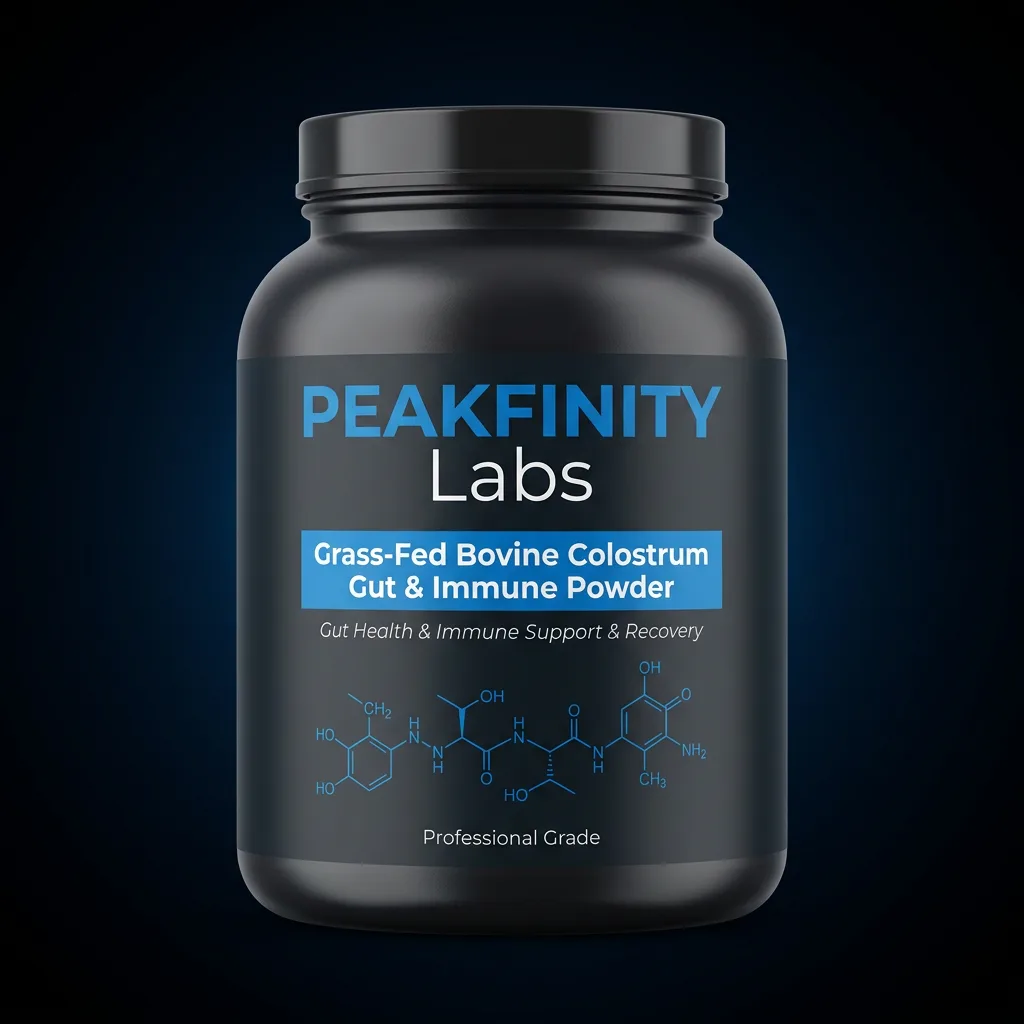
Grass-Fed Bovine Colostrum Gut & Immune Powder
Gut Health · Powder
Lymphatic Drainage & Debloat Liquid Drops
Gut Health · Liquid
Liver Detox & Cleanse Capsules with Milk Thistle
Gut Health · Capsules
Gut & Colon Cleanse Capsules
Gut Health · Capsules
Ready to manufacture a colostrum brand the category will trust?
Peakfinity Labs manufactures bovine colostrum sachets, capsules, chews, and powders at a flat 2,000-unit MOQ in our 375,000+ sq ft facility — grass-fed, first-milking sourcing with documented IgG and lactoferrin specs, low-heat processing, and a 4–6 week turnaround.

Tushar
Licensed Pharmacist and COO @ Peakfinity Labs
Written by the Peakfinity Labs R&D Team — 46+ years of supplement formulation expertise. Our team of formulation chemists, manufacturing specialists, and regulatory experts has helped thousands of eCommerce brands bring their products to market successfully since 1980.
Related Articles

How to Find an ISO 17025-Accredited Supplement Testing Lab, and What Founders Should Ask For
How to verify a lab's ISO/IEC 17025 scope actually covers your test, the questions to ask before shipping samples, and a testing plan built for ecommerce timelines.
Supplement Manufacturing Lead Times and Reorders: What Founders Should Expect Before and After Launch
The five workstreams hiding inside "lead time," why reorders move faster than first runs, and the ramp plan that survives a demand spike.
How to Vet a cGMP Supplement Manufacturer With Documented Audit History
The document pack, audit-history call script, and scoring rubric that separate real cGMP quality systems from certificate PDFs.