Stick Packs Growth: Why Sachets Are Dominating Supplements
We tested 8 stick packs and outline costs, packaging materials, low MOQ options, co-packer vs powder blender choices, plus tips to prevent powder clumping.
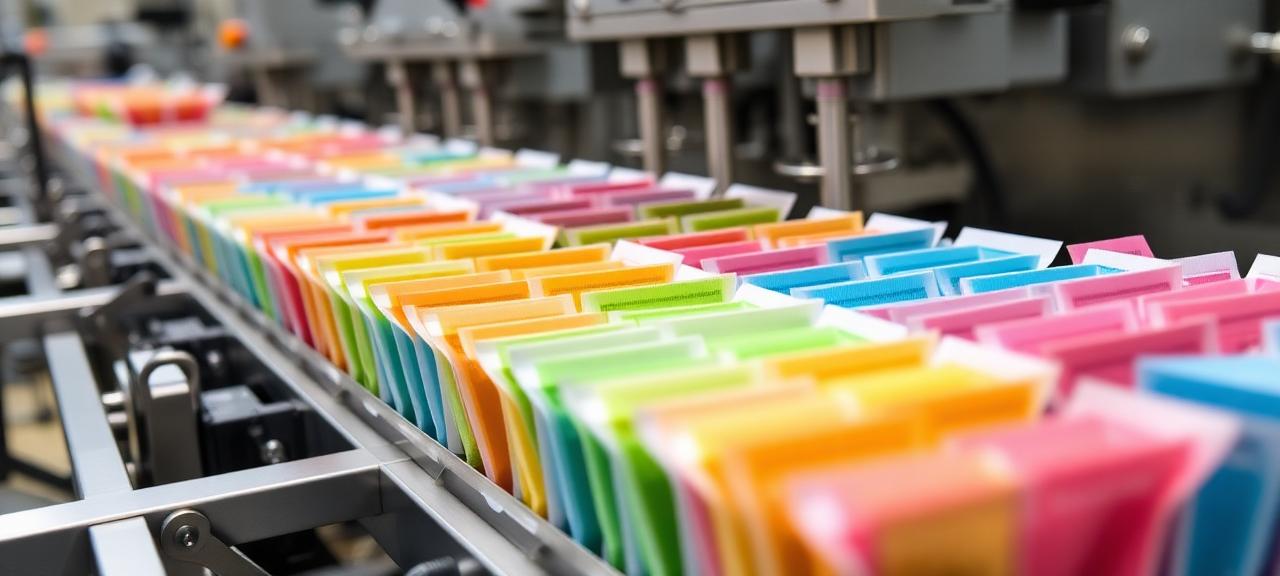
- 1Stick packs and sachets used to be “nice-to-have” formats for big brands with big budgets. That changed. In the last few years, single-serve powder
- 2Single-serve packs are winning because they match how consumers buy and use supplements right now. Convenience matters, but the bigger drivers are
- 3Choosing between tubs and sachets is not only a cost question. It’s a channel and customer-experience decision. If you sell in ecommerce, your
- 4“Stick pack manufacturing” is not one step. It’s a chain where small mistakes show up later as clumping, off-taste, leakage, or weight variation. A
- 5This distinction trips up new founders. A powder blender can mix your formula in bulk, but they may not have stick pack equipment, film sourcing,
Introduction
Stick packs and sachets used to be “nice-to-have” formats for big brands with big budgets. That changed. In the last few years, single-serve powder packs became the default launch format for hydration, greens, collagen, creatine blends, and energy drink mixes—especially for ecommerce brands that need fast creative testing and predictable fulfillment.
The reason is simple: single-serve packaging solves real problems that tubs can’t. It tightens dose accuracy, makes the product portable, improves first-time trial, and often reduces customer support issues tied to clumping and messy scoops. It also fits the way products get discovered now—TikTok, Amazon, and subscription bundles—where the first purchase is often a “try it” order, not a 30-serving tub commitment.
At Peakfinity Labs, we see the same pattern repeat: brands start with a low MOQ, small-batch run of stick packs, validate taste and retention, then scale quickly once the winning flavor and claim set are clear. This guide breaks down why stick packs and sachets are growing so fast, what’s involved in manufacturing them, and how to choose between a bulk tub and single-serve formats without getting burned on timelines, quality, or packaging failures.
Why stick packs and sachets are growing so fast in the supplement market
Single-serve packs are winning because they match how consumers buy and use supplements right now. Convenience matters, but the bigger drivers are trial, compliance, and ecommerce operations.
- Lower commitment for first purchase: A box of 15–30 sticks feels less risky than a tub, which helps conversion on Amazon and DTC.
- Better routine adherence: Consumers can keep a stick in a bag, car, desk, or gym kit. That increases “days used,” which improves repurchase rates.
- Cleaner dosing: No scoop variability, no “heaping vs level” confusion, and fewer complaints about serving size accuracy.
- Sampling and bundles are easier: Variety packs, influencer mailers, and subscription add-ons ship well and photograph well.
- Fewer humidity surprises at home: A tub gets opened 30+ times. A stick pack gets opened once. That difference matters for hygroscopic formulas.
A contrarian point: stick packs are not always cheaper per serving. They often cost more in packaging and packing labor. Brands still pick them because they can grow faster when acquisition is the bottleneck and the format increases conversion, retention, and reviews.
Bulk tubs vs single-serve sachets: how brands should choose
Choosing between tubs and sachets is not only a cost question. It’s a channel and customer-experience decision. If you sell in ecommerce, your packaging has to survive parcel shipping, stay compliant, and reduce returns.
| Decision factor | Bulk tub | Stick packs / sachets | Best fit |
|---|---|---|---|
| Trial + gifting | Harder to sample | Easy variety packs and mailers | New brands, TikTok-driven demand |
| Dose accuracy | Scoop variance is common | Fixed dose per stick | Electrolytes, caffeine mixes, clinical-dose actives |
| Moisture exposure at home | Opened repeatedly | One-time exposure per serving | Greens, amino blends, hygroscopic minerals |
| Cost per serving | Usually lower | Usually higher | Price-sensitive categories, retail tubs |
| Shipping + fulfillment | Bulkier dimensional weight | Compact, packable | Subscription, bundles, cross-sells |
| Brand experience | “Kitchen counter” product | “On-the-go” product | Hydration, energy, travel wellness |
Verdict: If you need fast adoption and repeat usage, start with stick packs or sachets. If you already have stable demand and want the lowest cost per serving, tubs can win—especially for proteins and high-gram formulas where single-serve packaging becomes bulky.
What’s involved in stick pack manufacturing for supplements (the real workflow)
“Stick pack manufacturing” is not one step. It’s a chain where small mistakes show up later as clumping, off-taste, leakage, or weight variation. A reliable partner runs it as a controlled system.
- Formula design for flow + taste: Ingredient selection and particle size matter as much as the label claims.
- Powder blending: The blend must be uniform so each stick hits the same active dose.
- Sieving / de-lumping: Prevents bridges and inconsistent fills.
- Metal detection / foreign material controls: Standard for GMP-certified production.
- Film selection and seal validation: Match barrier properties to moisture sensitivity and oil content.
- Stick forming, filling, and sealing: Tight controls on fill weight, seal temp, dwell time, and tear notches.
- Secondary packing: Cartons, display boxes, or pouches with correct counts and lot coding.
- Compliance checks: Supplement Facts, allergen statements, claims support, and net contents.
Peakfinity Labs runs projects as turnkey: formulation, packaging, labeling, and compliance support in GMP & ISO-certified facilities. Brands pick this route because it reduces handoffs that cause delays and confidentiality risk.
Co-packer vs powder blender: what’s the difference (and why it affects your timeline)
This distinction trips up new founders. A powder blender can mix your formula in bulk, but they may not have stick pack equipment, film sourcing, carton packing, or labeling controls.
| Capability | Powder blender | Co-packer (stick packs/sachets) |
|---|---|---|
| Blend powders to spec | Yes | Yes (or integrated partners) |
| Fill + seal stick packs | Often no | Yes |
| Packaging film expertise | Limited | Core competency |
| Secondary packaging (cartons, counts) | Often no | Yes |
| Lot coding + traceability | Varies | Standard expectation |
| Compliance support | Limited | Common in turnkey programs |
Practical recommendation: If your goal is an ecommerce-ready finished good, choose a co-packer that controls blending through final pack-out. If you split blending and packing across vendors, you add shipping, scheduling, and responsibility gaps—exactly where timeline slippage happens.
Low MOQ reality check: what’s a typical MOQ for a supplement drink mix?
MOQs vary by equipment, format, and how custom your packaging is. The “hidden driver” is not always powder—it’s printed film and cartons, which can have their own minimums.
- Powder blend MOQ: Often driven by batch size and blender validation.
- Stick pack run MOQ: Driven by machine setup time, waste during dial-in, and required QC pulls.
- Printed packaging MOQ: Driven by the print vendor’s roll and plate minimums.
Our approach is to keep launches small-batch and scalable by planning packaging early. When we target low MOQ stick packs, we also design the packaging bill of materials to avoid forcing a brand into “too much film” on day one.
How to stop powder supplements from clumping in the package
Clumping is usually a moisture and particle-engineering problem, not a “bad batch” problem. The fix depends on the formula and the package barrier.
- Control moisture pickup: Use the right film barrier (often foil structures for sensitive blends), and keep humidity controlled during packing.
- Choose better powder forms: Some minerals and fibers grab water fast. Switching grade or supplier can reduce caking.
- Improve powder flow: Add flow aids where compliant and appropriate, and avoid oily flavor loads that create wet spots.
- Use agglomeration/instantizing when needed: Better dispersion often reduces consumer “lumps,” which get reported as clumps.
A real-world detail: we often see clumping complaints spike when brands move from tubs to sticks without changing the powder spec. Sticks have smaller headspace and different compression behavior, so the same blend can behave differently. Plan a pilot run to confirm shelf behavior before scaling.
Agglomerated vs instantized powders: what’s the difference?
People use these terms interchangeably, but they solve slightly different issues in drink mixes.
| Term | What it means in practice | What it improves | Common use |
|---|---|---|---|
| Agglomerated | Fine particles are bound into larger, porous granules | Flow, dust reduction, wetting | Electrolytes, greens bases, fiber blends |
| Instantized | Powder is treated (often with a wetting agent process) to disperse fast | Mixability, reduced floating | Proteins, collagen creamers, some amino blends |
Recommendation: If your customer will mix with a shaker bottle and cold water, prioritize instantized behavior. If your biggest pain is poor filling and inconsistent weights on the stick line, agglomeration can make production more stable.
How flavor systems work in supplement drink mixes (and why “tastes good” is engineered)
A good hydration or energy mix does not rely on “one flavor.” It uses a system that balances top notes, acidity, sweetness, and masking.
- Top notes: The first smell/taste hit (citrus oils, fruit esters). Too much can taste like candy.
- Acid system: Citric, malic, or tartaric acid shapes brightness and helps hide mineral bitterness.
- Sweetener stack: Brands often blend sweeteners to reduce aftertaste and keep sweetness stable across temperature.
- Masking: Minerals, caffeine, some amino acids, and certain botanicals need masking or they dominate the finish.
- Salt/mineral balance: Sodium, potassium, and magnesium change flavor directly; the right ratio matters as much as the dose.
Our practical take: “flavor” is also about mouthfeel. Some formulas feel thin in water, which makes them taste harsher. A small change in solids, acid balance, or flavor carrier can make the same label claims taste much better.
How brands formulate hydration drink mixes that actually taste good
Hydration is crowded. Taste and mixability drive reviews, and reviews drive scale. That means you have to design around the hard parts: minerals, acids, and sweeteners.
- Start with a clear taste target: “Light and crisp” needs a different acid-salt profile than “bold sports drink.”
- Balance sodium without making it briny: Sodium is functional, but it can taste harsh if the acid and sweetener system is off.
- Be careful with magnesium forms: Some forms are more bitter or astringent. Taste testing should include warm water and cold water.
- Design for real mixing: Consumers stir with a spoon in a cup. If it needs a blender, expect returns.
One growth-focused move we recommend is building a two-flavor test plan instead of launching with one. Brands often find that one flavor wins TikTok, while the other wins subscriptions. With low MOQ production, you can test both without betting your entire inventory.
Greens powders are popular again, but the format is changing
Greens never went away, but the market shifted. Consumers now want greens that mix fast, travel well, and do not taste like lawn clippings.
- Single-serve is cleaner: Greens attract moisture and smell. Sticks reduce repeated exposure and keep the experience consistent.
- “Daily” positioning beats “mega-dose”: Many brands are moving to smaller, repeatable servings that fit a routine.
- Flavor realism matters: Citrus and berry profiles with controlled bitterness typically outperform earthy flavors in reviews.
Contrarian insight from production: very high greens loading can look good on the label but cause real manufacturing and customer experience issues (dusting, poor flow, higher seal contamination). A slightly lower loading with better mixability often scales better in ecommerce.
What packaging materials are best for stick packs and sachets?
The “best” material depends on moisture sensitivity, oxygen sensitivity, and whether the formula contains oils or aggressive acids. Most failures come from using a film that is fine for candy but wrong for supplements.
| Film type | Barrier performance | Best for | Watch-outs |
|---|---|---|---|
| Foil laminate (high barrier) | Excellent moisture + oxygen barrier | Greens, probiotics-sensitive blends, hygroscopic minerals | Higher cost; can be stiffer; recyclability limits |
| Metallized film | Good barrier | Most hydration and energy mixes | Barrier varies by structure; validate shelf life |
| Clear/white film (lower barrier) | Lower barrier | Less sensitive powders with fast turnover | Higher clumping risk if formula is moisture prone |
Rule of thumb: If your powder clumps in a tub, do not “solve it” with a low-barrier stick film. Choose barrier first, then design graphics around it.
Moisture, shelf life, and shipping: what brands miss
Even a perfect stick pack can fail in the field if you ignore distribution conditions. Ecommerce puts products through hot trucks, humid porches, and long warehouse dwell times.
- Target a realistic shelf life: Tie it to ingredient stability and sensory changes, not just the longest date you can print.
- Validate seals under stress: Heat and vibration during shipping can expose weak seals.
- Plan secondary packaging: Cartons prevent punctures and help with count accuracy in fulfillment.
We prefer to confirm package fit with the formula early because changing film late can add weeks. If your marketing calendar is tight, packaging decisions are part of formulation—not an afterthought.
Dose uniformity: why it matters in drink mixes
Dose uniformity means each serving contains the intended amount of actives, not just “close enough on average.” It matters more in stick packs because every pack is a promise of a fixed dose.
- Consumer trust: If one stick feels weak and the next feels strong, reviews get ugly fast.
- Compliance and risk: Caffeine and other stimulants raise the stakes for uniformity.
- Manufacturing reality: Uniformity depends on particle size compatibility, blend time, and segregation control during transfer and filling.
Practical note: segregation can happen after a perfect blend if the powder travels through long drops, vibration, or poorly designed hoppers. A good stick pack manufacturer designs the process to prevent “Brazil nut effect” separation.
How brands prevent stick packs from leaking or tearing
Leaks usually come from three causes: wrong film, powder in the seal area, or bad sealing parameters. Tearing problems often come from notch design and film orientation.
- Keep the seal area clean: Dust control and proper fill funnels reduce seal contamination.
- Validate seal settings: Temperature, dwell time, and pressure must match the film structure.
- Use the right tear notch: A notch that is too deep causes bursts; too shallow frustrates customers.
- Design for shipping: Secondary packaging and correct headspace reduce punctures and abrasion.
If you see pinholes or edge leaks, do not “just run faster.” Slow down, isolate the failure mode, and lock the settings. Fast scale only works when the process is stable.
How scoop size affects consumer experience and dose accuracy (and why sticks avoid this)
Scoops look simple, but they create two problems: inaccurate dosing and messy usage. A bigger scoop also forces bigger jars, which increases shipping costs.
- Heaping scoops are normal: Many users do not level. That changes actives per serving.
- Powder density changes over time: Settling during shipping can change how a “scoop” weighs.
- Sticks remove the variable: Each serving is pre-measured, which improves consistency and reviews.
Settling during shipping: how to handle it in powder supplements
Powders settle. The question is whether settling changes the customer’s experience or your labeled servings.
- Formulate for stable bulk density: Agglomeration can reduce excessive settling and dusting.
- Choose the right headspace: Too much empty space increases movement and separation.
- Use stick packs for fixed servings: Even if the carton shakes, each stick still delivers a consistent dose.
Trending ingredients showing up in stick packs in 2026 (what we’re seeing)
Trends change, but stick packs keep winning because they work for ingredients consumers want “on demand.” Here are patterns we see brands requesting for 2026 planning.
- Electrolyte hydration with functional add-ons: Think hydration + calming, hydration + focus, or hydration + beauty positioning.
- Greens with lighter daily doses: Smaller serving sizes with better taste and mixability for routine compliance.
- Caffeinated drink mixes with cleaner energy feel: Moderate caffeine, smoother flavor masking, and less bitterness.
- Creatine blends for convenience: Single-serve sticks for gym bags and travel.
We avoid building formulas that depend on extreme bitterness or gritty textures “because it’s potent.” In ecommerce, experience is performance. Bad taste kills repeat purchases faster than a slightly smaller claim set.
What to look for in a stick pack manufacturer (so you don’t get burned)
Founders worry about reliability, quality, timeline slippage, and IP exposure. Those are valid concerns. You can reduce risk by vetting the manufacturer’s process, not just their marketing.
- Certifications: Confirm GMP-certified and ISO-certified operations, and ask what those certifications cover.
- Turnkey scope: Make sure they can handle formulation, film, filling, cartons, labeling, and compliance support.
- Timeline discipline: Ask for a written critical path that includes packaging lead times and formula approval gates.
- QC specifics: Ask how they check fill weights, seal integrity, and blend uniformity for actives like caffeine.
- Confidentiality: Use NDAs, limit formula distribution, and confirm who owns the formula and flavor work product.
- Ecommerce readiness: They should understand lot coding, scannable barcodes, carton durability, and Amazon/TikTok timelines.
At Peakfinity Labs, we build programs for brands that need fast iteration: 3–4 week turnaround from formulation to finished goods (depending on packaging choices), low MOQ options for testing, and scalable systems when a product goes viral.
Where to start: a practical launch plan for stick packs
If you want to move quickly without creating quality issues, follow a simple sequence that matches how stick pack projects succeed.
- Define the channel: Amazon, TikTok Shop, DTC subscription, or retail all change packaging and claim strategy.
- Pick the serving size and number of sticks: Common boxes are 15, 20, or 30 sticks. This affects unit economics and ship costs.
- Lock the “must-have” claims: Decide what cannot change so formulation does not drift during flavor work.
- Run a pilot with two flavors: Test conversion and repeat purchase, not just “which tastes best in the office.”
- Choose barrier film early: Avoid late changes that push your launch date.
- Plan for scale: Make sure the stick format, film, and carton can scale without a full redesign.
Conclusion: the fastest path to a scalable stick pack launch
Stick packs and sachets are dominating supplements because they help brands win where growth happens now: ecommerce trial, routine adherence, and fast creative-driven demand. They also solve real product issues like scoop variance, humidity exposure, and messy use.
If you want to launch quickly, start with a small-batch, low MOQ run, pick the right barrier film early, and validate taste in real mixing conditions. Then scale only after you confirm reviews and repeat purchase.
Next steps: Build a one-page brief with your target serving size, flavor direction, claims, and channel. Then choose a GMP-certified, ISO-certified, turnkey partner that can move fast (3–4 weeks) without losing control of quality, compliance, or confidentiality.
Frequently Asked Questions
Why are stick packs and sachets growing so fast in the supplement market?
Single-serve formats improve trial, portability, and dosing by lowering first-purchase commitment, delivering consistent servings without scoop error, and shipping efficiently for Amazon, TikTok, and subscription bundles. Brands should weigh conversion rate, review quality, and repeat usage as growth drivers—not just cost per serving.
What’s the difference between a co-packer and a powder blender?
A powder blender mixes your formula in bulk, while a co-packer produces the finished good by filling and sealing stick packs or sachets and packing them into retail-ready cartons with lot coding and traceability. Choosing a co-packer that controls blending through final pack-out reduces handoffs, timeline risks, and quality disputes.
How do brands choose between bulk tubs and single-serve sachets?
The choice affects conversion, shipping costs, and post-delivery experience. Brands usually pick tubs for the lowest cost per serving and sachets/stick packs for easier trial, portability, and fixed-dose accuracy for actives like electrolytes or caffeine. A practical approach is a small-batch sachet test first, then add tubs after confirming retention and flavor-market fit.
How do you stop powder supplements from clumping in the package?
Clumping is typically a moisture and particle-engineering issue. Reduce it by matching the powder spec to the packaging barrier, controlling humidity during filling, testing higher-barrier films (often foil laminates), and adjusting powder form (e.g., agglomeration or instantizing) or supplier/grades to improve flow and reduce caking.
What’s involved in stick pack manufacturing for supplements?
Stick pack manufacturing includes formula design for flow and taste, validated blending for dose uniformity, sieving/de-lumping, stick forming/filling/sealing with tight weight and seal controls, secondary packing into cartons with labeling and lot coding, plus metal detection and compliance checks. Vet manufacturers on fill-weight consistency and seal integrity to prevent field complaints.
Ready-to-Launch Formulations in This Category
Stock-ready formulations you can private label with your own branding — 2,000 unit MOQ.
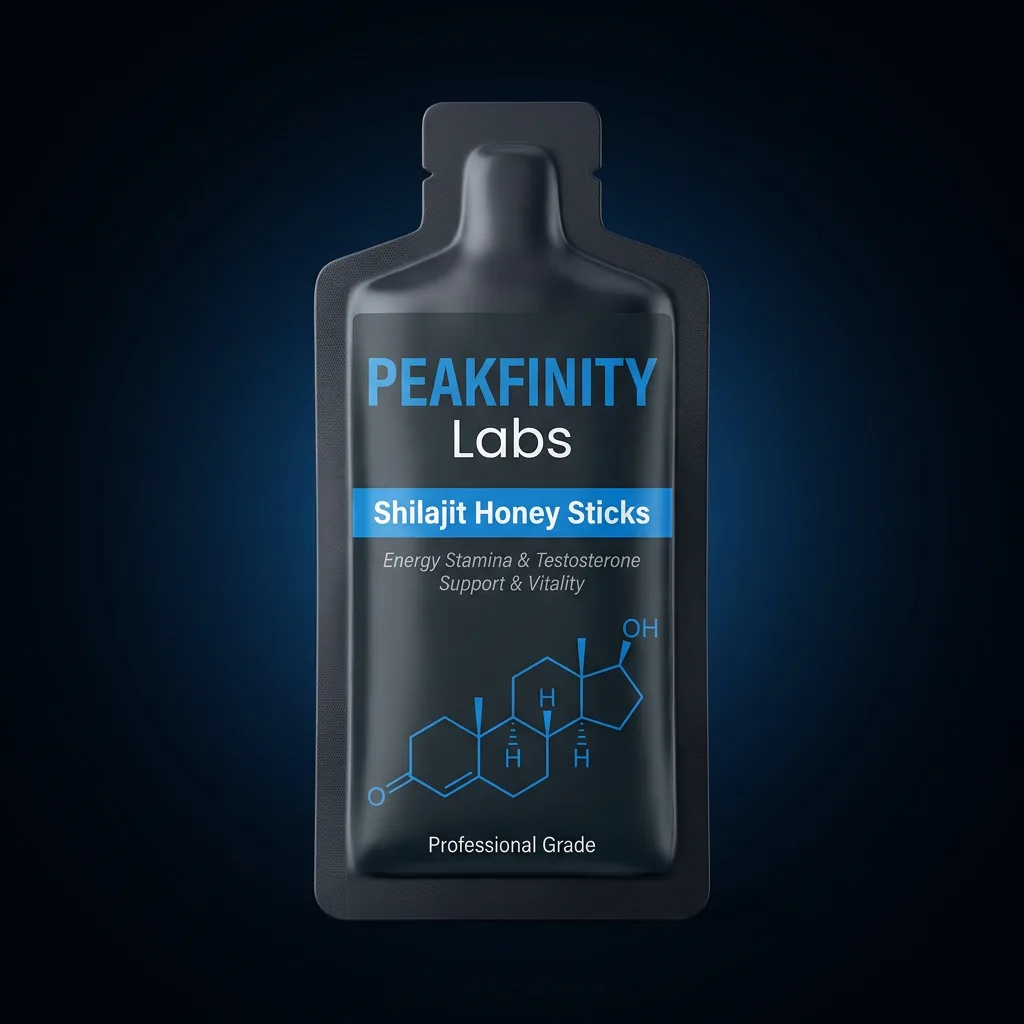
Shilajit Honey Sticks
Mens Health Supps · Sachet
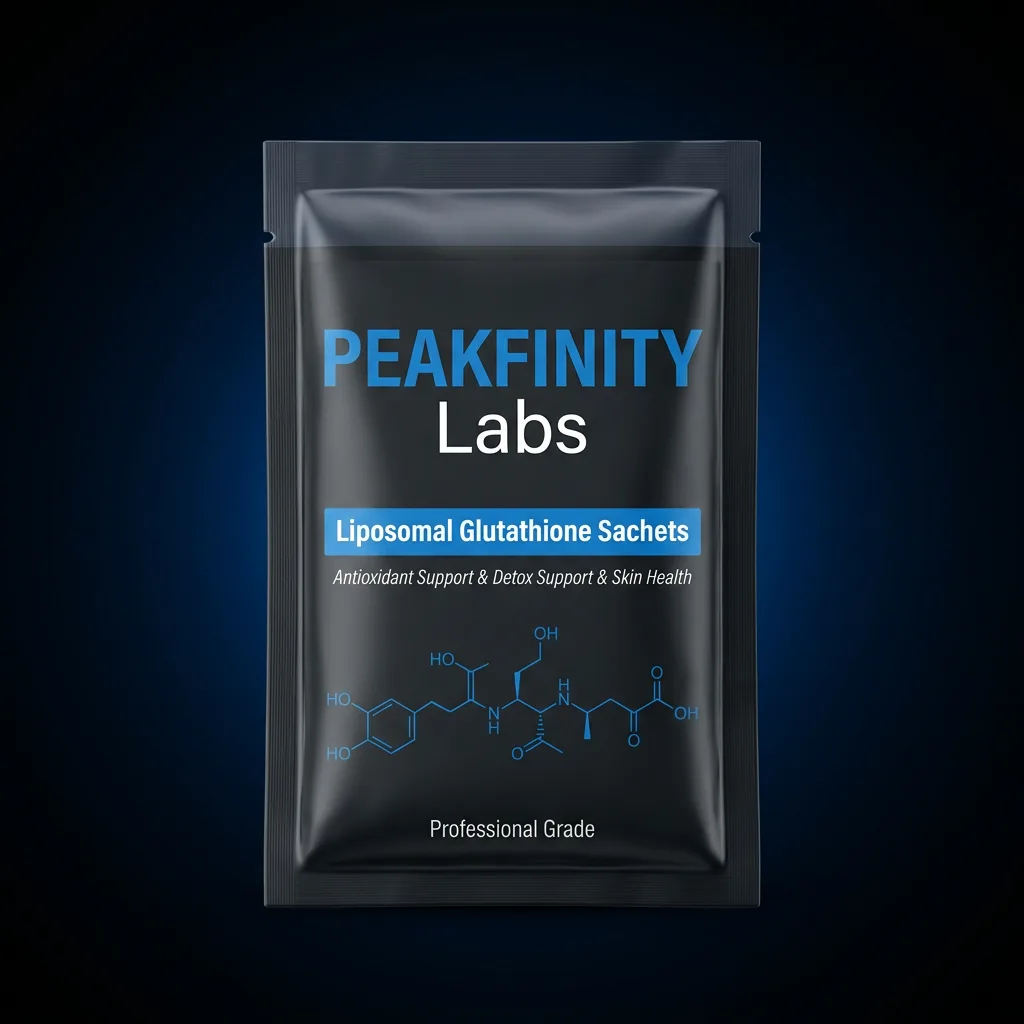
Liposomal Glutathione Sachets
General Wellness · Sachet
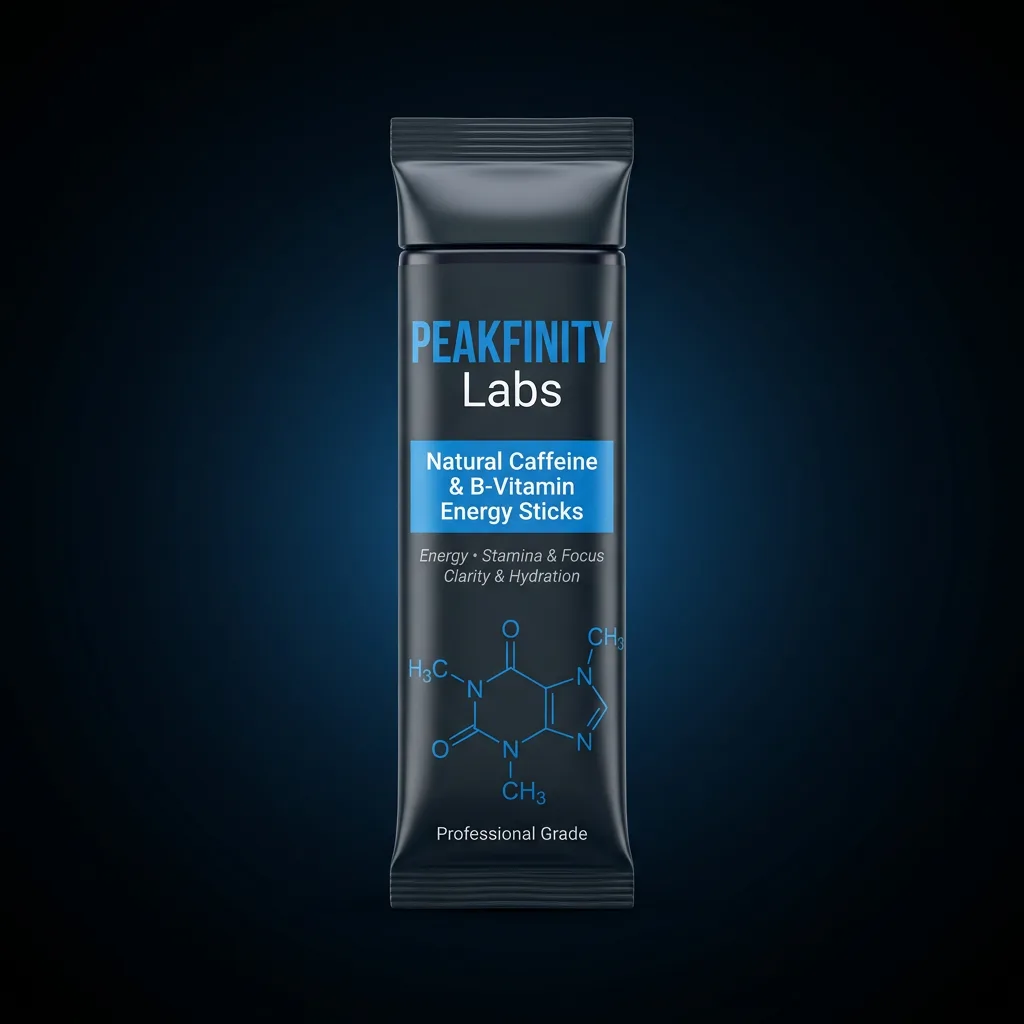
Natural Caffeine & B-Vitamin Energy Sticks
Energy Focus · Powder Stick
Hydration + Collagen Electrolyte Sticks
Beauty Supps · Powder Stick

Tushar
Licensed Pharmacist and COO @ Peakfinity Labs
Written by the Peakfinity Labs R&D Team — 46+ years of supplement formulation expertise. Our team of formulation chemists, manufacturing specialists, and regulatory experts has helped thousands of eCommerce brands bring their products to market successfully since 1980.
Related Articles

Private Label Supplement Markup: Typical Margins for DTC, Amazon, and Wholesale
Typical markup ranges for DTC, Amazon, and wholesale, plus the landed-cost model that decides whether your margin is real.

How to Compare Quotes From Supplement Manufacturers Without Missing Hidden Costs
A six-bucket framework and paste-ready RFQ table that surfaces hidden costs before you sign with a manufacturer.
When Is a Supplement Brand Ready to Move From Private Label to Custom?
Nine readiness signals, the custom-light middle path, and a seven-step switch plan that avoids stockouts and claim issues.