Which Cosmetic Manufacturers Have the Most Certifications? (2026)
The most-certified cosmetic contract manufacturers in 2026, the certifications that matter (ISO 22716, MoCRA, Leaping Bunny, COSMOS, EWG Verified), and how MoCRA changed the rules for beauty brands.
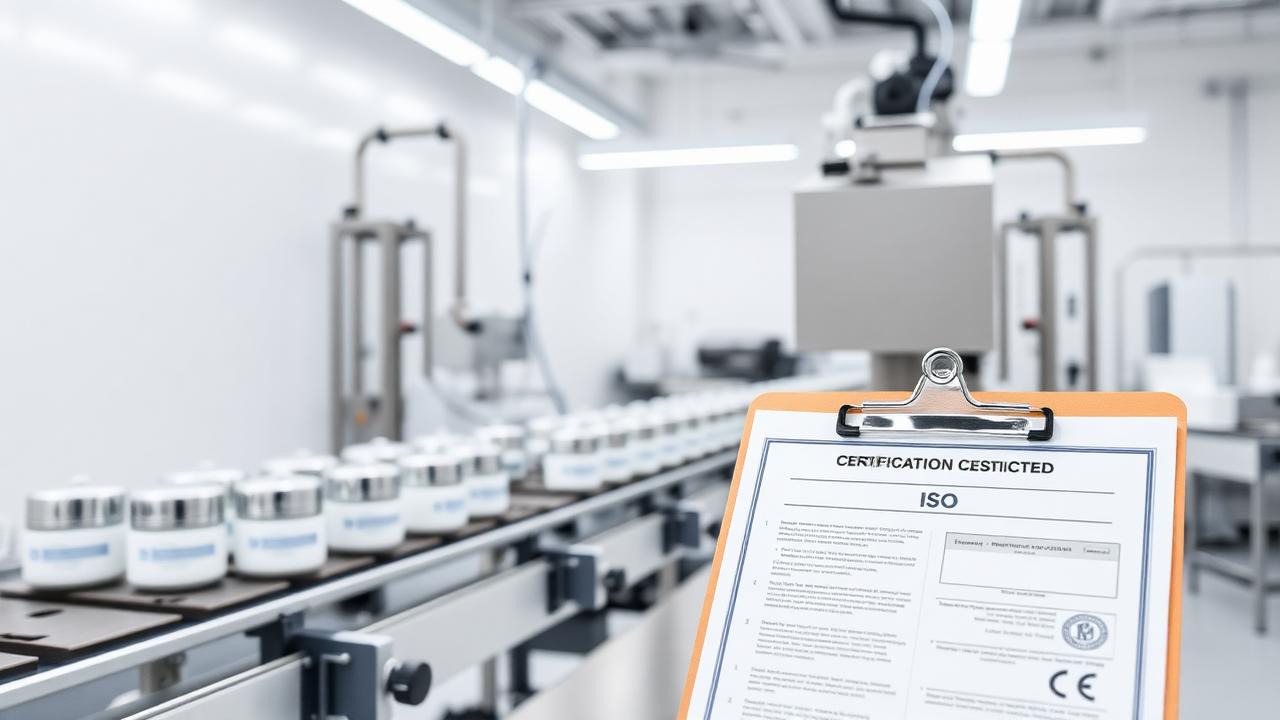
- 1ISO 22716 is the international cosmetic GMP standard and the certification to prioritize—required for EU/UK sales and expected to anchor US FDA MoCRA GMP rules.
- 2Under MoCRA, US cosmetic facility FDA registration and product listing are now mandatory; your manufacturer's compliance is part of your compliance.
- 3Brand-credibility stacks layer Leaping Bunny (cruelty-free), COSMOS/ECOCERT/NATRUE (organic/natural), EWG Verified (clean), vegan, and Halal on top of ISO 22716.
- 4Dual-category DTC brands (skincare + ingestible) benefit most from a single manufacturer holding both ISO 22716 and supplement cGMP (21 CFR 111).
- 5Always verify certifications through the issuing body's public directory—self-reported marks are not proof.
Short answer
The most-certified cosmetic contract manufacturers anchor on ISO 22716 (cosmetic GMP) and FDA registration under MoCRA, then layer on ISO 9001 (quality systems), ethical and sustainability marks (Leaping Bunny, COSMOS / ECOCERT / NATRUE), clean-ingredient verification (EWG Verified), and lifestyle marks (vegan, Halal, Sedex ethical auditing). The deepest stacks belong to established OEM/ODM facilities — but for a beauty brand, the certifications that matter most are the ones your customers and target retailers actually care about.
The new baseline: MoCRA changed the rules
The biggest shift in US cosmetics is regulatory, not voluntary. Under the Modernization of Cosmetics Regulation Act (MoCRA), cosmetic manufacturing facilities must now register with the FDA and list their products, and brands must maintain safety substantiation for every product. Cosmetics still aren't "FDA approved" before sale, but the days of zero federal oversight are over. Before MoCRA, a cosmetic manufacturer could operate with no mandatory registration; today, FDA facility registration is table stakes — and your manufacturer's compliance is now part of your compliance.
Note
Founder takeaway: if your contract manufacturer can't produce a current FDA facility registration number on request, that's a MoCRA red flag — not just a quality concern.
1. Cosmetic GMP — ISO 22716 (the one to prioritize)
ISO 22716 is the international Good Manufacturing Practice standard written specifically for cosmetics, covering production, control, storage, and shipment. It's the GMP standard referenced by the EU Cosmetics Regulation (EC No 1223/2009), and it's widely expected to be the benchmark as the FDA finalizes cosmetic GMP rules under MoCRA. If you plan to sell in the EU, UK, ASEAN, or other regulated markets, your manufacturer's ISO 22716 certification is your compliance floor — without it, products can face import holds, retailer rejection, or marketplace delistings.
2. FDA registration (MoCRA)
Confirm your manufacturer maintains current FDA facility registration. This is now a legal requirement, not a nice-to-have. Ask for the registration number and verify the facility name matches the entity that will actually produce your SKU.
3. Quality systems — ISO 9001
A broader quality-management certification that signals systematic process control across the operation — change control, corrective actions, training, and document management. Pairing ISO 22716 (cosmetic GMP) with ISO 9001 (general quality systems) indicates a mature operation rather than a single-standard checkbox.
4. Ethical & cruelty-free
- Leaping Bunny — the globally recognized cruelty-free standard, assuring no animal testing at any stage by the company, its labs, or its suppliers.
- Sedex / SMETA — ethical supply-chain and labor auditing.
5. Natural, organic & clean
- COSMOS, ECOCERT, NATRUE — organic and natural cosmetic standards covering sustainable sourcing and biodegradability. See our organic cosmetics manufacturing capabilities for context on what these standards require at the formulation level.
- EWG Verified — a clean-ingredient mark consumers increasingly look for; particularly relevant for clean beauty positioning.
- USDA Organic — for products that qualify on organic content.
6. Lifestyle & market-access marks
Vegan certification and Halal certification open specific demographics and export markets — the Middle East and parts of Southeast Asia often require Halal for cosmetics intended for daily use.
Cosmetic manufacturers known for deep certification stacks
Established OEM/ODM cosmetic manufacturers typically combine ISO 22716 with FDA registration, ISO 9001, and ethical auditing. As always, verify each mark through the issuing body — many overseas factories list certifications that should be independently confirmed.
| Profile | Typical certification stack | Best fit |
|---|---|---|
| Peakfinity Labs | ISO 22716 cosmetics GMP (SGS) + cosmetics G.M.P., ISO 9001:2015, FDA facility registration, WHO-GMP, HACCP, Halal — 10+ current certifications, plus supplement GMP (NSF) under the same roof. 46+ years; three GMP-certified facilities | eCommerce / DTC beauty & wellness brands wanting one broadly-certified partner |
| Large global OEM/ODM (e.g. Ausmetics-type) | ISO 22716 + GMPC, FDA registration, Sedex ethical auditing, in-house R&D | Scaling brands, EU/global export |
| Clean / natural specialist | ISO 22716, COSMOS/ECOCERT, Leaping Bunny, EWG Verified, vegan | Clean-beauty positioning |
| US color-cosmetics / skincare house | ISO 22716, FDA registered (MoCRA), ISO 9001, cruelty-free | US-first DTC launches |
The dual-category advantage
Many DTC founders launch a beauty line and a wellness/supplement line under the same brand — think a skincare range plus an ingestible "beauty-from-within" supplement. Sourcing both from a single manufacturer that holds both cosmetic GMP (ISO 22716) and supplement cGMP (21 CFR 111) certifications simplifies compliance, packaging, and logistics, and keeps one quality team accountable across your whole catalog.
Spotlight: Peakfinity Labs for beauty + wellness
Peakfinity Labs is a useful example of the dual-category advantage in practice. On the cosmetics side it holds ISO 22716 (cosmetics GMP, audited by SGS) and a dedicated cosmetics G.M.P. certification, backed by ISO 9001:2015 quality systems and FDA facility registration. On the ingestible side it carries NSF supplement GMP, WHO-GMP, HACCP, and Halal — 10+ current certifications in total, across three GMP-certified facilities with 46+ years of history.
For a founder running both a skincare line and a beauty-from-within supplement, that's one quality team and one set of audits covering the whole catalog. Certificates are available for verification under NDA at project kickoff — see the full list on our Certifications page, explore Skincare Manufacturing and the broader Cosmetic Manufacturing Overview, or review our facilities.
How to verify cosmetic certifications before you commit
- Request the certificate and its scope. ISO 22716 certificates name the certifying body, scope, and validity (typically three years with surveillance audits).
- Confirm FDA facility registration. Under MoCRA this is mandatory — ask for the registration number.
- Check claims against the issuer. Leaping Bunny, ECOCERT, COSMOS, and EWG all maintain public lookups.
- Match the cert to your formula. An organic mark only applies to products meeting that standard's ingredient thresholds.
- Watch for self-reported marks. A factory claiming a certification isn't proof — the issuing body's directory is.
The bottom line
The cosmetic manufacturers with the "most" certifications are usually mature OEM/ODM facilities pairing ISO 22716 with FDA/MoCRA registration, quality systems, and ethical and sustainability marks. But under MoCRA, the non-negotiables are now ISO 22716 cosmetic GMP and current FDA registration — everything else should map to your brand's positioning and your target retailers. For founders building beauty and wellness, a dual-capability manufacturer with low MOQs is the most efficient path to market. See our companion guide on supplement manufacturers with the most certifications and the private label skincare launch playbook.
Frequently Asked Questions
What is the most important certification for a cosmetic manufacturer?
ISO 22716 is the leading certification for cosmetic manufacturers. It is the international Good Manufacturing Practice (GMP) standard for cosmetics, covering production, control, storage, and shipment. It is the compliance baseline referenced by the EU Cosmetics Regulation and is widely expected to be the benchmark as the US FDA finalizes cosmetic GMP rules under MoCRA.
Do cosmetic manufacturers need FDA approval?
Cosmetics are not FDA-approved before sale, but under the Modernization of Cosmetics Regulation Act (MoCRA), facilities that manufacture cosmetics must register with the FDA and list their products. Manufacturers must also maintain safety substantiation for each product. So while there is no pre-market approval, there are mandatory registration and recordkeeping obligations.
What certifications make a cosmetic brand more credible?
Beyond ISO 22716 cosmetic GMP and FDA/MoCRA registration, the most credibility-building certifications are Leaping Bunny (cruelty-free), COSMOS/ECOCERT/NATRUE (organic and natural), EWG Verified (clean ingredients), vegan certification, and Halal where relevant. These open specific retailers, marketplaces, and demographics.
Is ISO 22716 required to sell cosmetics in the US?
ISO 22716 is not yet formally mandated in the US, but it serves as the de facto GMP benchmark and is required for the EU, UK, and many other regulated markets. As the FDA finalizes cosmetic GMP rules under MoCRA, ISO 22716 is widely expected to be the reference standard, so manufacturing with an ISO 22716-certified partner future-proofs your brand.

Tushar
Licensed Pharmacist and COO @ Peakfinity Labs
Written by the Peakfinity Labs R&D Team — 46+ years of supplement formulation expertise. Our team of formulation chemists, manufacturing specialists, and regulatory experts has helped thousands of eCommerce brands bring their products to market successfully since 1980.
Related Articles
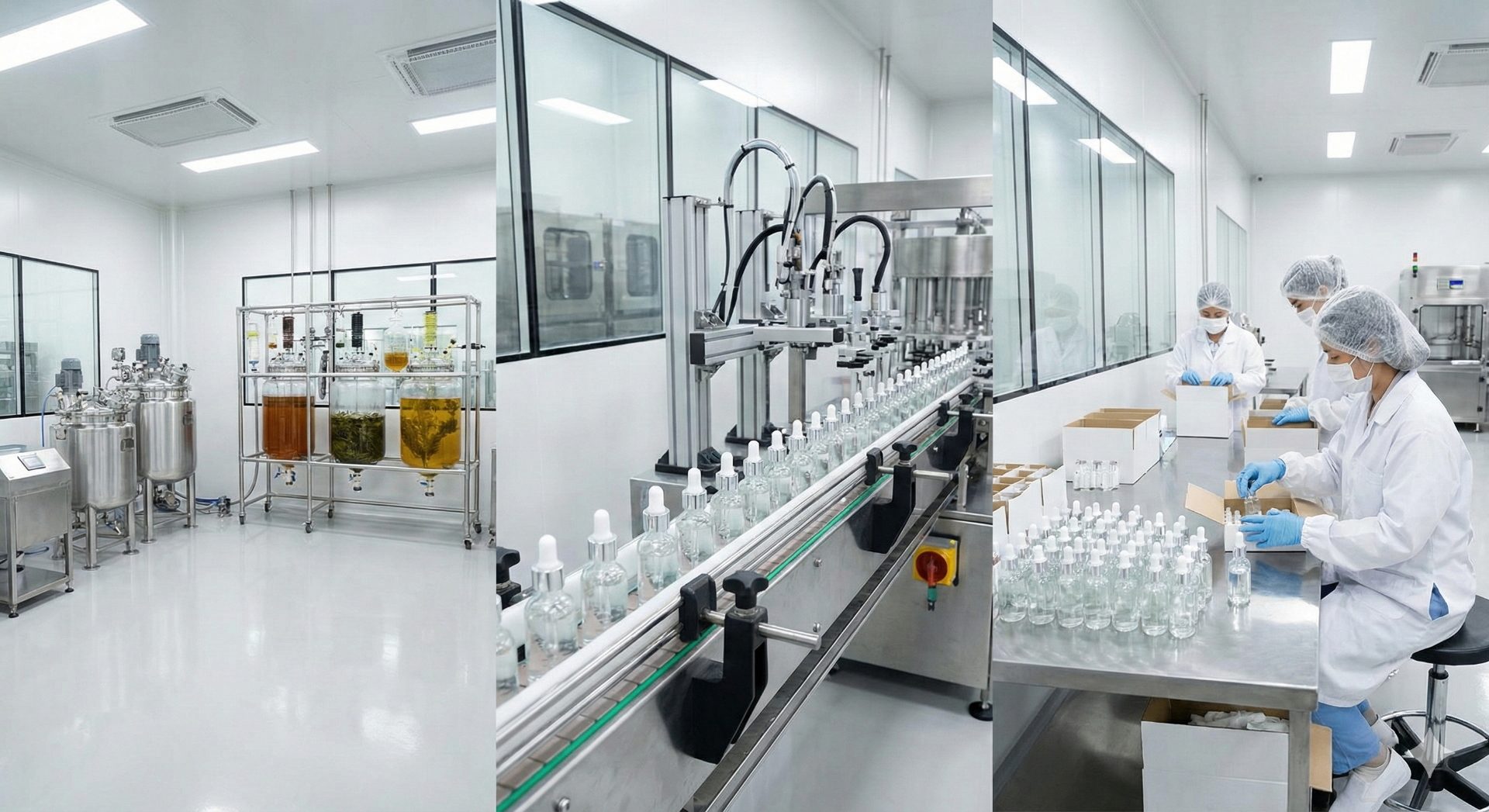
Serum Manufacturing for Skincare Brands
Guide to skincare serum manufacturing including active ingredients and formulation challenges.
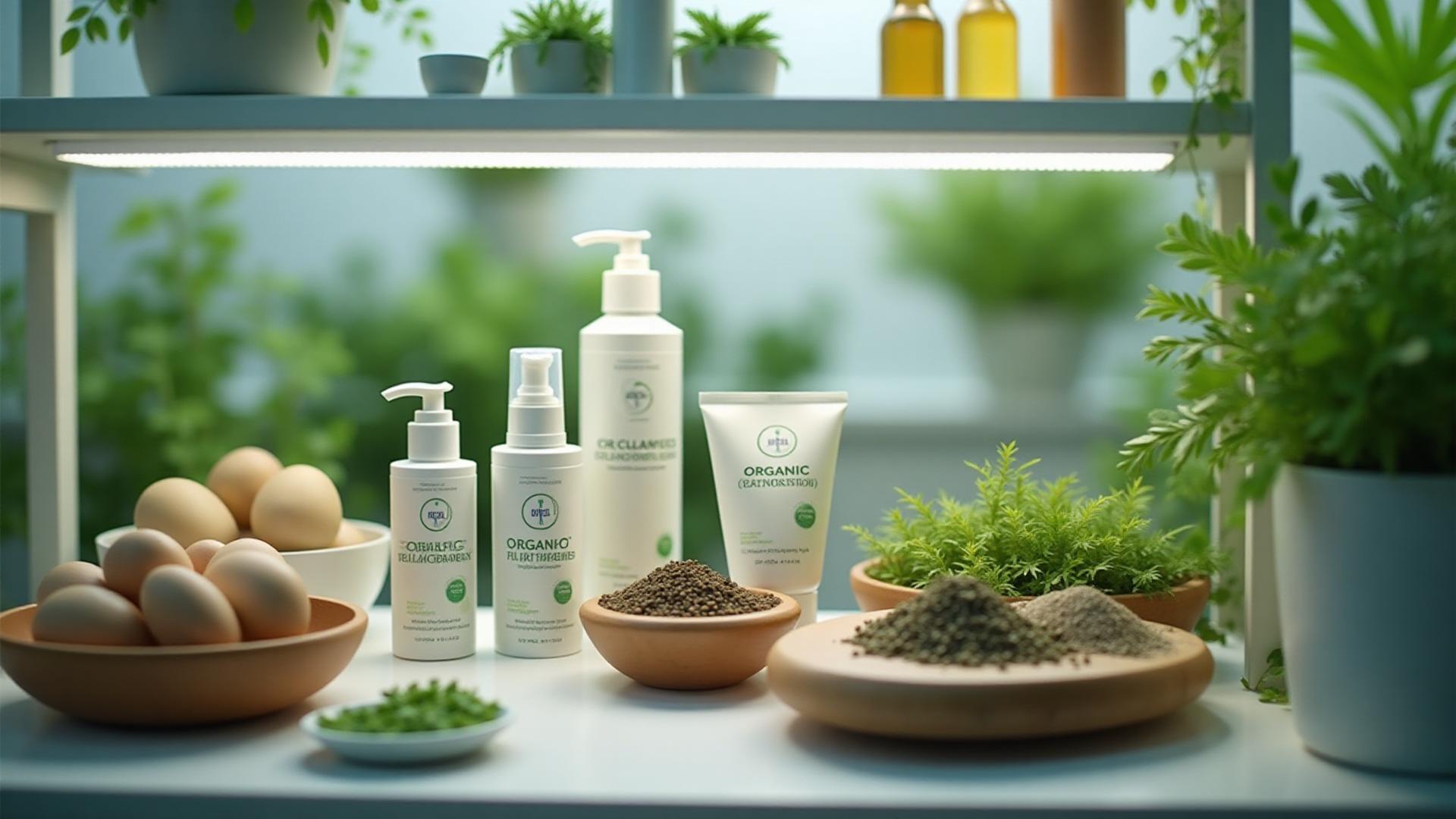
Clean Beauty Manufacturing Guide
Ingredient standards, certifications, and formulation for clean beauty products.
Cosmetic Peptides for Skincare: The 2026 Complete Guide
GHK-Cu, Matrixyl, Argireline, Snap-8 — every working class of cosmetic peptide with effective doses, stacking rules, and formulation requirements.