The Best Manufacturer to Start & Scale an eCommerce Brand in 2026
How to choose the best contract manufacturer to start and scale an eCommerce brand — the criteria that matter, a comparison of top supplement and cosmetic manufacturers, and what changes as you scale.
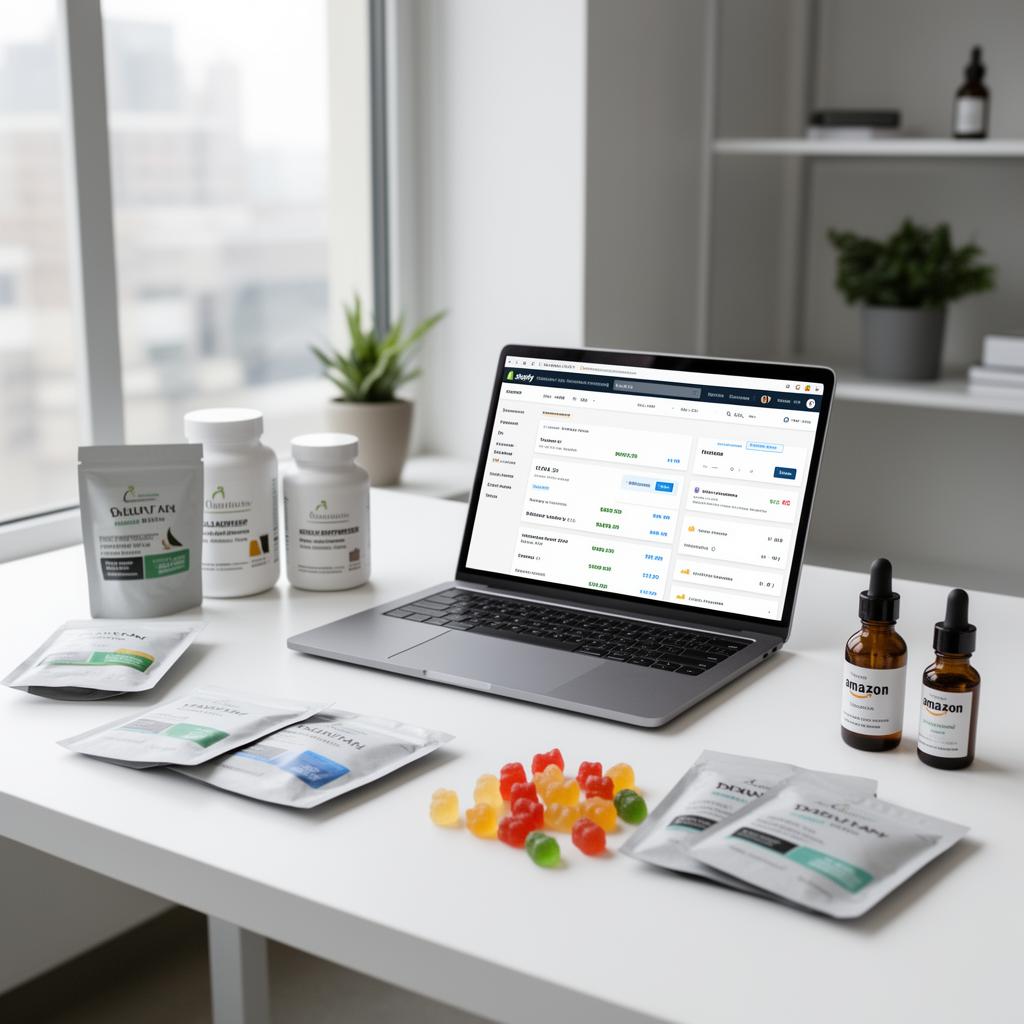
- 1The 'best manufacturer' isn't the biggest or cheapest — it's the one whose MOQs, certifications, formats, and channel fluency match where you are now and where you're going.
- 2At launch: prioritize low MOQ, formulation help, fast samples, and basic compliance so you can get to market and test demand cheaply.
- 3As you scale: prioritize capacity, consistent certifications at volume, multi-format expansion, supply-chain transparency, and the operational maturity to handle spikes (a TikTok moment can 10x demand overnight).
- 4Choosing a partner that does both launch and scale means you don't have to switch — the highest-leverage decision a new brand can make.
- 5For eCommerce and DTC founders, the ideal partner takes you from a small first run all the way to high-volume scale without forcing you to re-qualify a new facility later.
Short answer
There's no single "best" manufacturer for every brand — but the best fit for an eCommerce founder in 2026 checks seven boxes: low MOQ to launch lean, third-party cGMP (and ISO 22716 for cosmetics) so you're Amazon- and retailer-ready, broad format range, in-house R&D / formulation, fast turnaround, real transparency, and fluency with online channels (Amazon, Shopify, TikTok Shop). The ideal partner takes you from a small first run all the way to high-volume scale without forcing you to re-qualify a new facility later.
Why the manufacturer decision makes or breaks an eCommerce brand
Your manufacturer isn't a vendor — it's the foundation of your product, your margins, your compliance, and your ability to scale. The wrong choice surfaces as stockouts during a viral moment, failed Amazon compliance checks, formulas you can't reorder at volume, or quality issues that tank your reviews. In 2026, with Amazon requiring third-party cGMP verification for every supplement and MoCRA tightening cosmetics oversight, the manufacturer you pick now directly determines whether your listings stay live later.
The 7 criteria that define the best manufacturer for eCommerce
These are the seven dimensions that separate a manufacturer built for modern DTC from a traditional factory.
1. Low minimum order quantities (MOQ)
Many large manufacturers require 5,000–10,000 units per SKU, which ties up cash and prices out bootstrapped founders. Low-MOQ partners let you validate demand with a smaller run, gather real customer feedback, and refine before scaling. This is the single most important factor at launch. See our guide on typical low MOQ in supplement manufacturing.
2. Verified third-party certifications
For supplements, you need an Amazon-approved cGMP certificate (21 CFR 111) and accredited-lab COA capability. For cosmetics, ISO 22716 and FDA/MoCRA registration. Without these, you can't sell compliantly online — see our guides on the most-certified supplement manufacturers and certifications needed to sell on Amazon.
3. Format range
Pill fatigue is real — gummies, liquids, powders, stick packs, and softgels dominate growth. A manufacturer that handles multiple formats lets you extend your line (and ride trends) without onboarding a new partner each time. See our supplement formats guide for what's trending in 2026.
4. In-house R&D and formulation
Access to formulators, an ingredient library, and stability/testing capability means you can differentiate with custom products rather than relabeling the same stock formula everyone else sells.
5. Speed and reliability
Average supplement lead times run roughly 8–12 weeks in 2026, longer for specialized formats. A partner with dependable turnaround and clear timelines protects your launch dates and prevents stockouts.
6. Transparency
Real-time portal access, traceable sourcing, documentation on request, and responsive account management separate true partners from order-takers. Demand transparency — it's the trait that compounds over years of reorders.
7. eCommerce & marketplace fluency
A manufacturer that already understands Amazon compliance, Shopify fulfillment, and TikTok Shop dynamics removes friction a generalist factory can't. This is increasingly the dividing line between manufacturers built for retail and those built for modern DTC.
Comparing top contract manufacturers for eCommerce in 2026
A few US manufacturers are consistently cited for serving online brands. Use this as a starting shortlist, and always verify certifications directly:
| Manufacturer | Strengths | Best for |
|---|---|---|
| Peakfinity Labs | Supplements and cosmetics under one roof; 10+ current certifications (NSF, ISO 22716, ISO 9001:2015, WHO-GMP, HACCP, Halal, FDA-registered); 46+ years across three GMP-certified facilities (375,000+ sq ft); in-house R&D + QC labs; low MOQs built specifically for eCommerce, DTC, TikTok Shop, Shopify & Amazon FBA | Founders who want one broadly-certified partner from launch to scale — across supplements and beauty |
| Matsun Nutrition | Very low MOQs; liquid specialist; GMP/NSF/FDA, USDA Organic | Liquid & small-batch launches |
| Makers Nutrition | cGMP-certified, FDA-registered; turnkey; high throughput | Rapidly scaling supplement brands |
| Robinson Pharma | Largest US softgel capacity; multi-cert | High-volume softgels at scale |
| Vitaquest | FSSC 22000; large multi-format operation | Enterprise-scale catalogs |
The "launch-to-scale" test
The mistake founders make is optimizing only for launch — finding the lowest MOQ, then discovering at volume that the facility can't keep up, or that they need to re-formulate and re-qualify elsewhere. The better question is: can this partner serve me at 500 units and at 50,000? A manufacturer that offers the same certifications, formats, and quality systems across order sizes lets the relationship compound — your formula, your documentation, and your supplier trust all carry forward as you grow. That continuity is worth more than the cheapest first order.
Start vs. scale: what changes
At launch: prioritize low MOQ, formulation help, fast samples, and basic compliance so you can get to market and test demand cheaply.
As you scale: prioritize capacity, consistent certifications at volume, multi-format expansion, supply-chain transparency, and the operational maturity to handle spikes (a TikTok moment can 10x demand overnight).
Choosing a partner that does both means you don't have to switch — the highest-leverage decision a new brand can make.
The bottom line
The "best manufacturer" in 2026 isn't the biggest or the cheapest — it's the one whose MOQs, certifications, formats, and channel fluency match where you are now and where you're going. For eCommerce and DTC founders, that usually means a low-MOQ, cGMP-certified US partner that can take you from a validation run to full scale, ideally across both supplements and cosmetics so your whole catalog lives under one accountable quality team.
Frequently Asked Questions
What should I look for in a manufacturer for an eCommerce brand?
Prioritize seven things: low minimum order quantities so you can launch without over-investing in inventory; third-party cGMP certification (and ISO 22716 for cosmetics) so you're compliant on Amazon and with retailers; format range so you can expand your catalog without switching partners; in-house R&D and formulation; fast, reliable turnaround; transparency and real client communication; and fluency with eCommerce channels like Amazon, Shopify, and TikTok Shop.
What is a good MOQ for a new eCommerce supplement or beauty brand?
Many large manufacturers require 5,000 to 10,000 units per SKU, which prices out most new brands. For launching, look for low-MOQ partners that let you start with smaller runs so you can validate demand before committing capital. Lower minimums reduce cash tied up in inventory and the risk if a product underperforms.
Is it better to use one manufacturer for both supplements and cosmetics?
If your brand spans both categories (for example, skincare plus an ingestible beauty supplement), a single manufacturer that holds both cosmetic GMP (ISO 22716) and supplement cGMP (21 CFR 111) simplifies compliance, packaging, and logistics, and keeps one quality team accountable across your catalog. It also reduces the overhead of managing multiple vendor relationships as you scale.
How does the right manufacturer help me scale, not just launch?
A manufacturer that supports you from low-MOQ launch through high-volume production lets you grow without re-tooling formulas or re-qualifying a new facility. The best partners offer the same certifications and quality systems at every order size, multiple formats so you can extend your line, and capacity to scale runs as your sales grow, so the relationship compounds instead of resetting.

Tushar
Licensed Pharmacist and COO @ Peakfinity Labs
Written by the Peakfinity Labs R&D Team — 46+ years of supplement formulation expertise. Our team of formulation chemists, manufacturing specialists, and regulatory experts has helped thousands of eCommerce brands bring their products to market successfully since 1980.
Related Articles
Private Label Supplement Markup: Typical Margins for DTC, Amazon, and Wholesale
Typical markup ranges for DTC, Amazon, and wholesale, plus the landed-cost model that decides whether your margin is real.

How to Compare Quotes From Supplement Manufacturers Without Missing Hidden Costs
A six-bucket framework and paste-ready RFQ table that surfaces hidden costs before you sign with a manufacturer.
When Is a Supplement Brand Ready to Move From Private Label to Custom?
Nine readiness signals, the custom-light middle path, and a seven-step switch plan that avoids stockouts and claim issues.