Oral Peptide Bioavailability: Why Most Ingestible Peptides Don't Work (and the Ones That Do)
A formulator's reality check on the booming 'oral peptide' supplement category — why most intact peptides don't survive digestion, what actually gets absorbed, and which formats have real evidence behind them.
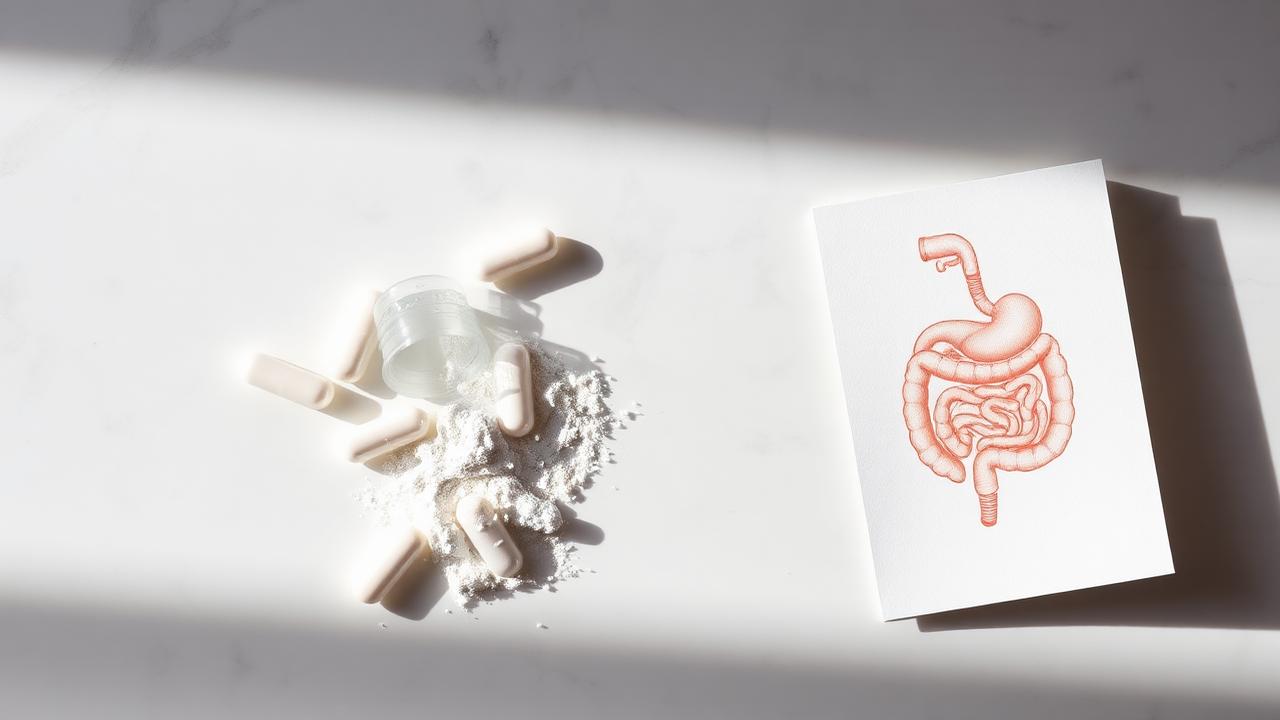
- 1Most intact peptides taken orally are degraded by stomach acid and digestive proteases within minutes — they never reach the bloodstream as the molecule on the label.
- 2What does work orally is either small, stable peptide fragments (collagen di- and tripeptides, casein-derived bioactive peptides, soy peptides) or precursor amino acids the body uses to build endogenous peptides.
- 3True intact-peptide oral bioavailability requires advanced delivery: enteric-coated capsules with permeation enhancers (semaglutide oral), liposomal encapsulation, or sublingual/buccal formats — all of which add 3–10x to manufacturing cost.
- 4Marketing claims around oral BPC-157, oral GHK-Cu, oral 'thymosin,' and most research-peptide knockoffs are mechanistically wrong: those peptides are designed for subcutaneous or topical delivery and do not survive oral digestion intact.
- 5Honest oral peptide supplements are built around collagen peptides (10–20 g hydrolyzed), milk and soy bioactive peptides (1–3 g), or amino-acid stacks designed to support endogenous peptide synthesis — at Peakfinity Labs we manufacture all three formats at 2,000-unit MOQ.
Short answer
Most peptides taken orally are destroyed by the digestive system before they reach the bloodstream — that's not a flaw, it's the digestive system doing exactly what it evolved to do. The oral peptide products that do work fall into a narrow set: hydrolyzed collagen and bioactive food peptides (absorbed as small fragments through specific transporters), and a tiny number of pharmaceutical peptides formulated with enteric coatings and permeation enhancers (oral semaglutide is the canonical example). Most "oral GHK-Cu," "oral BPC-157," and "oral thymosin" supplements are marketing built on a mechanism that doesn't hold.
Why oral peptides have a bioavailability problem
The human gut is, mechanically, an extraordinarily effective peptide destroyer. A peptide swallowed in a capsule encounters, in order:
- Stomach acid (pH 1.5–3.5) — denatures secondary and tertiary structure within minutes.
- Pepsin — a gastric protease that cleaves peptide bonds preferentially at aromatic and hydrophobic residues.
- Pancreatic proteases in the duodenum — trypsin, chymotrypsin, elastase, and carboxypeptidases working in concert.
- Brush-border peptidases on the small intestinal wall — finish the job, cleaving most peptides down to free amino acids and a small pool of di- and tripeptides.
- The intestinal epithelium itself — a tight barrier that only admits small peptides through the PEPT1 transporter (di/tripeptides) and free amino acids through dedicated amino-acid transporters.
The result: an intact "active" peptide of more than ~3 amino acids almost never reaches systemic circulation orally without help. Bioavailability for most intact peptides taken orally is well under 1% — and often functionally zero.
What actually survives the gut
- Di- and tripeptides — small enough to be absorbed intact through PEPT1. This is why hydrolyzed collagen (di/tripeptide rich) works orally while intact collagen protein mostly doesn't.
- Free amino acids — absorbed through dedicated transporters and reassembled into endogenous proteins and peptides by the body's own synthetic machinery.
- Certain protease-resistant bioactive peptides — naturally evolved short peptides (casein-derived IPP and VPP, soy lunasin) that survive digestion well enough for measurable systemic effect.
- Peptides protected by formulation technology — liposomal vesicles, enteric coatings, and permeation enhancers can shepherd a small fraction of intact peptide across the gut wall. This is the basis of oral semaglutide.
Note
The honest framing: oral peptide supplements work by delivering precursors and small fragments the body uses to build its own peptides — not by delivering the named peptide on the label to a specific receptor. That precursor framing is mechanistically correct and still produces real benefits.
Delivery technologies that move the needle
| Technology | How it works | Best for | Manufacturing cost adder |
|---|---|---|---|
| Enteric coating | Capsule shell resists stomach acid, opens at small-intestine pH | Acid-labile peptides and probiotics | 1.5–3x base capsule cost |
| Liposomal encapsulation | Phospholipid vesicles protect cargo through GI and assist absorption | Small peptides, glutathione, NAD precursors | 3–6x base liquid cost |
| Permeation enhancers (SNAC, caprate) | Transiently open intestinal tight junctions | Pharmaceutical peptides (oral semaglutide model) | Pharma-only at the moment |
| Sublingual / buccal | Bypasses GI entirely via oral mucosa absorption | Very small peptides, hormones | 2–4x base tablet cost |
| Nanoemulsion delivery | Sub-100 nm droplets improve uptake of lipophilic actives | Lipid-soluble actives, not peptides | 2–4x base liquid cost |
Oral peptide ingredients: which ones work
| Ingredient | Works orally? | Effective daily dose | Mechanism |
|---|---|---|---|
| Hydrolyzed collagen peptides (bovine/marine/chicken) | Yes | 10–20 g | Di/tripeptide absorption via PEPT1; substrate for endogenous collagen synthesis |
| Casein-derived IPP/VPP | Yes | 4–6 mg | ACE inhibition for blood pressure support |
| Soy peptide hydrolysate | Yes | 1–3 g | Antioxidant + satiety support |
| Whey protein hydrolysate | Yes | 20–30 g | Branched-chain amino acid and small peptide pool for muscle protein synthesis |
| Glutathione (tripeptide) | Partial — better liposomal/sublingual | 250–500 mg | Direct antioxidant; liposomal improves bioavailability |
| Carnosine (β-alanyl-L-histidine) | Yes (dipeptide) | 500–1,000 mg | Buffering and antioxidant |
| BPC-157 (oral) | Largely no | — | Possible local gut effect; not systemic at intact-peptide level |
| GHK-Cu (oral) | No (intact) | — | Designed for topical/subcutaneous; oral degraded to amino acids |
| Thymosin alpha-1 (oral) | No | — | Pharmaceutical injectable; not orally bioavailable as intact peptide |
| Semaglutide (oral, pharma) | Yes — with SNAC permeation enhancer | Prescription only | Tablet with caprate-class enhancer; ~1% bioavailability is enough at pharma potency |
Marketing claims vs. mechanism
A useful test for any "oral peptide" product: ask the manufacturer to explain the absorption mechanism. If the answer is "advanced delivery technology" without specifics, or "the peptide is small enough to absorb intact" for a peptide longer than ~3 amino acids, the mechanism doesn't hold. The legitimate answers sound like:
- "It's a di/tripeptide absorbed through PEPT1." True for hydrolyzed collagen, carnosine, casein-derived peptides.
- "It's a precursor — the body uses the amino acids to build its own version." True for collagen, whey hydrolysates, and amino-acid stacks.
- "It's protected by [specific] enteric coating or [specific] liposomal system, with bioavailability data from [specific] study." Acceptable if the references and data exist.
- "It's just very small / very pure / very advanced." Not an answer; not a mechanism.
Formulating an honest oral peptide supplement
- Pick the right peptide for the route. If the goal is oral, use peptides with evidence of oral absorption — hydrolyzed collagen, bioactive food peptides, carnosine — not topical or injectable peptides.
- Dose to the literature. Hydrolyzed collagen needs 10–20 g/day, which means a stick pack or scoop format, not a capsule. Two 500 mg capsules of collagen is a label decoration, not a functional dose.
- Build the format around the dose. Powders, stick packs, and gummies work for gram-scale doses. Capsules and softgels work for milligram-scale bioactives (IPP/VPP, carnosine).
- Verify with COA and molecular weight distribution. For collagen peptides, the MW distribution (target: average MW under 5,000 Da, with significant fraction under 2,000 Da) is the spec that predicts bioavailability — not just "hydrolyzed."
- Claim what the mechanism supports. "Supports skin elasticity" with collagen at 10 g/day is defensible. "Reverses aging" or "rebuilds DNA" is a warning-letter draft.
For the precursor framework see our collagen manufacturing guide and our types of collagen guide. For the broader oral peptide category, see our peptide supplement manufacturing guide.
What to avoid when formulating
- Unapproved research peptides — BPC-157, TB-500, GHK-Cu (oral), thymosin alpha-1, melanotan, and similar are not generally recognized as safe for dietary supplement use in the US and several have explicit FDA action. Don't formulate them.
- Topical or injectable peptides repurposed as oral — if the literature is exclusively topical or subcutaneous, the oral product is mechanism-free.
- "Liposomal" without verification — many "liposomal" supplement claims are unverified emulsions, not true phospholipid vesicles. If you market liposomal, verify vesicle size and stability with the supplier.
- Sub-therapeutic doses dressed up with hero ingredient names — 100 mg of "marine collagen peptides" on a multi-ingredient label is a marketing decision, not a functional one.
The bottom line
The oral peptide category is having a moment, and most of the products riding it are mechanistically wrong. The brands that will be standing in five years are the ones built on peptides that actually survive digestion — hydrolyzed collagen at real doses, casein-derived bioactives at evidence-based doses, carnosine and small dipeptides — with claims that match the absorption story. The brands selling oral copies of topical or injectable research peptides are running a marketing arbitrage that the FDA, the literature, and informed consumers will close.
Frequently Asked Questions
Do oral peptides actually work?
It depends entirely on which peptide. Hydrolyzed collagen peptides (10–20 g daily) have strong evidence for skin elasticity, joint comfort, and bone density — the di- and tripeptide fragments are absorbed intact through specific intestinal transporters. Milk- and soy-derived bioactive peptides have meaningful evidence for blood-pressure and immune support. Most other 'oral peptides' marketed online — BPC-157, TB-500, GHK-Cu, thymosin — do not survive oral digestion intact and the marketing claims around them are mechanistically incorrect for the oral route.
Why are most peptides destroyed by digestion?
Peptide bonds are the same bonds that link amino acids in dietary protein, and the human digestive system is purpose-built to break exactly those bonds. Stomach acid (pH 1.5–3.5) denatures peptide structure; pepsin in the stomach cleaves it; trypsin, chymotrypsin, and elastase in the small intestine continue the work; and brush-border peptidases on the intestinal wall finish the job. The end products are mostly free amino acids and a smaller pool of di- and tripeptides — which is what the body actually absorbs.
What's the difference between collagen and 'oral peptides' marketed for anti-aging?
Hydrolyzed collagen is collagen protein that's been enzymatically broken down into di- and tripeptide fragments small enough to be absorbed through the PEPT1 transporter in the small intestine. Once absorbed, the body uses those amino acids and small peptides to support its own collagen synthesis. By contrast, 'oral GHK-Cu' or 'oral BPC-157' products claim to deliver a specific bioactive peptide intact to a specific receptor — and the digestive system makes that essentially impossible without an advanced delivery vehicle. Collagen is a precursor strategy; the rest is usually marketing.
Can you take BPC-157 orally?
There is animal-model evidence that BPC-157 may have some local effect in the gut (which is the only place it's actually present after oral dosing — it does not reliably enter systemic circulation intact). Marketing that promises 'systemic' or 'muscle recovery' benefits from oral BPC-157 capsules is not supported by human bioavailability data. BPC-157 was studied as a subcutaneous injectable, and 2026 US regulatory status is that it remains a research compound, not an approved or generally-recognized-as-safe ingredient for dietary supplements. Manufacturers should not formulate it.
What about liposomal or enteric-coated peptide supplements?
Liposomal encapsulation and enteric coating do improve oral bioavailability — that's exactly how oral semaglutide (Rybelsus) achieves any systemic absorption at all, using a permeation enhancer called SNAC. But: real liposomal delivery requires verified vesicle size and stability (most supplement 'liposomal' claims are unverified), enteric coating adds significant manufacturing cost, and even with both technologies the absolute bioavailability of an intact peptide rarely exceeds 1–5%. For a few high-value peptides this still moves the needle; for most supplement-grade peptides it doesn't justify the cost.
What oral peptide formats actually work in supplements?
Three formats with real evidence and clean regulatory standing: (1) hydrolyzed collagen peptides at 10–20 g daily, sold as a powder, gummy, or stick pack; (2) marine collagen di- and tripeptides at 5–10 g daily; (3) functional bioactive peptides like casein-derived IPP/VPP for blood pressure (4–6 mg daily) or soy peptide hydrolysates for satiety and antioxidant support (1–3 g daily). All three have human trial data, intestinal transporter mechanisms that explain absorption, and well-understood manufacturing.
How does Peakfinity Labs manufacture oral peptide supplements?
We manufacture hydrolyzed collagen peptide stick packs, powders, gummies, and capsules at a flat 2,000-unit MOQ in our 375,000+ sq ft facility — sourcing bovine, marine, and chicken collagen peptides with documented molecular weight distributions and full COAs. We also formulate functional peptide blends (casein, soy, whey-derived) and amino-acid stacks designed to support endogenous peptide synthesis. We do not formulate unapproved research peptides like BPC-157, TB-500, or oral GHK-Cu.
Ready to manufacture an oral peptide supplement built on real bioavailability?
Peakfinity Labs manufactures hydrolyzed collagen peptide powders, stick packs, gummies, and bioactive peptide capsules at a flat 2,000-unit MOQ in our 375,000+ sq ft facility — documented MW distribution, batch COA, and a 4–6 week turnaround.

Tushar
Licensed Pharmacist and COO @ Peakfinity Labs
Written by the Peakfinity Labs R&D Team — 46+ years of supplement formulation expertise. Our team of formulation chemists, manufacturing specialists, and regulatory experts has helped thousands of eCommerce brands bring their products to market successfully since 1980.
Related Articles
How to Find an ISO 17025-Accredited Supplement Testing Lab, and What Founders Should Ask For
How to verify a lab's ISO/IEC 17025 scope actually covers your test, the questions to ask before shipping samples, and a testing plan built for ecommerce timelines.
Supplement Manufacturing Lead Times and Reorders: What Founders Should Expect Before and After Launch
The five workstreams hiding inside "lead time," why reorders move faster than first runs, and the ramp plan that survives a demand spike.
How to Vet a cGMP Supplement Manufacturer With Documented Audit History
The document pack, audit-history call script, and scoring rubric that separate real cGMP quality systems from certificate PDFs.