'Made in USA' Supplement Labels Explained
We break down 6 practical rules and a simple proof checklist for made in usa supplement labels, plus how domestic manufacturing compares to overseas.
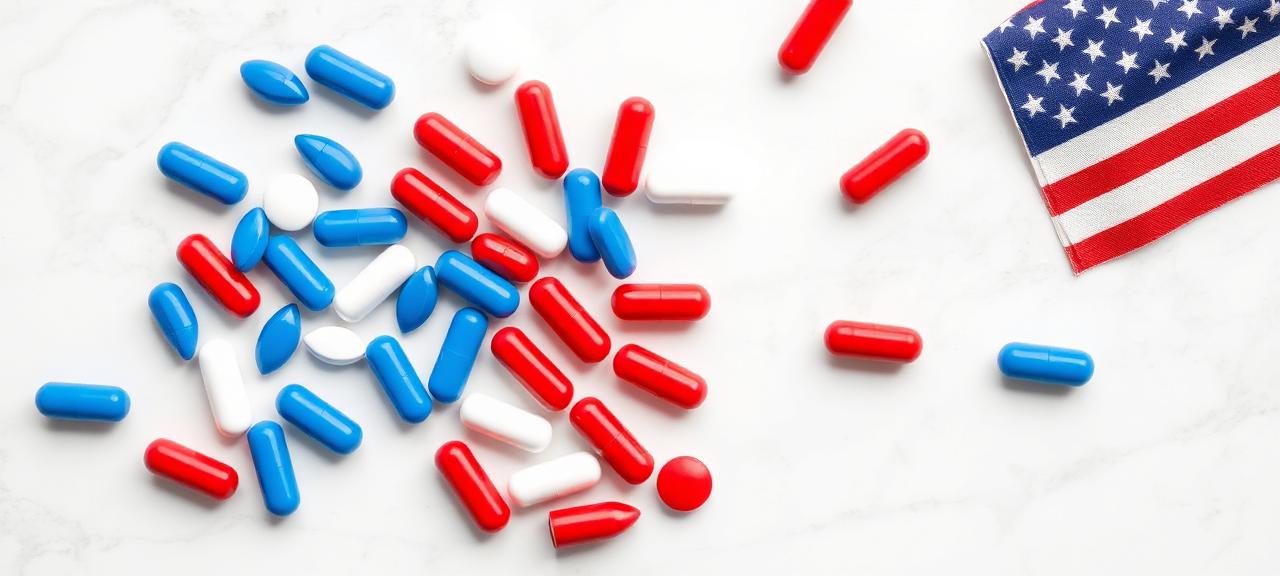
- 1“Made in USA” sells supplements. It can lift conversion, reduce return risk, and make shoppers feel safer about what they put in their
- 2For supplements, “Made in USA” is mainly a marketing claim, not a Nutrition Facts-style label rule. The FTC is the primary agency that polices
- 3There isn’t a single “certificate” you apply for. The legal requirement is that your claim must be truthful, not misleading, and substantiated before
- 4Consumers often assume U.S.-made equals higher quality. Sometimes it does, but not because of geography
- 5U.S. supplement manufacturers must follow FDA dietary supplement cGMPs (21 CFR Part 111). The FDA can inspect domestic facilities, issue Form 483
Introduction
“Made in USA” sells supplements. It can lift conversion, reduce return risk, and make shoppers feel safer about what they put in their body.
But the phrase also creates brand risk. We routinely see founders assume “manufactured in the U.S.” automatically equals a safe “Made in USA” claim. It doesn’t. The FTC, not the FDA, sets the main standard for U.S.-origin marketing claims, and the line between an allowed claim and a misleading one often comes down to your ingredients, processing steps, and proof on file.
This guide breaks down what “Made in USA” actually means for supplement labels, what counts as “all or virtually all” U.S. content, what documentation you need, and how domestic manufacturing really compares to offshore options on quality, speed, pricing, and supply chain control. We’ll also share the practical approach we use at Peakfinity Labs: build claims that are compliant, defensible, and still strong enough to support ecommerce growth—especially when you’re moving fast, running low MOQ tests, and scaling a winner without relabeling.
What “Made in USA” actually means for supplement labels
For supplements, “Made in USA” is mainly a marketing claim, not a Nutrition Facts-style label rule. The FTC is the primary agency that polices U.S.-origin claims in advertising and labeling, including on ecommerce product pages.
The FTC’s core standard is simple to say and hard to execute: an unqualified “Made in USA” claim generally means the product is “all or virtually all” made in the United States. That includes the product’s components (ingredients and inputs) and processing.
Key point for supplements: many actives are globally sourced. If your hero ingredient is imported (common for botanicals, amino acids, and many vitamins), an unqualified “Made in USA” may be hard to support even if you blend, encapsulate, and bottle domestically.
Unqualified vs. qualified claims (what you can say)
- Unqualified: “Made in USA” (no extra wording). Highest bar; most legally risky if you can’t prove “all or virtually all.”
- Qualified: “Made in USA with imported ingredients” or “Manufactured in the USA from global ingredients.” Lower risk if accurate and supported.
- Assembly/processing claims: “Blended and packaged in the USA” or “Encapsulated in the USA.” Useful when ingredients are imported but processing is domestic.
FTC guidance changes over time, but the compliance strategy doesn’t: match the claim to what you can document, and keep the claim consistent across label, Amazon listing, and Shopify PDP.
Authoritative reference: FTC guidance on Made in USA claims.
Legal requirements: what you need to claim “Made in USA” on a supplement
There isn’t a single “certificate” you apply for. The legal requirement is that your claim must be truthful, not misleading, and substantiated before you make it.
In practice, that means you should be able to show, if challenged, that:
- The final significant transformation (the key manufacturing steps that create the finished supplement) happens in the U.S.
- The inputs (ingredients, excipients, capsules, bottles, labels) are predominantly U.S. in a way that supports your specific wording.
- You have records that back the above: supplier origin statements, Bills of Materials, purchase orders, and manufacturing batch records.
Also remember the split in oversight: the FTC evaluates the origin claim itself, while the FDA evaluates the supplement’s compliance under dietary supplement rules (cGMP, labeling content, adulteration, etc.).
FDA cGMP baseline: 21 CFR Part 111 (Dietary Supplement cGMP).
Contrarian truth: “Made in USA” does not automatically mean better quality
Consumers often assume U.S.-made equals higher quality. Sometimes it does, but not because of geography alone.
Quality comes from systems: cGMP execution, incoming ingredient testing, validated cleaning, allergen controls, stability logic, and a clean chain of custody. We’ve seen excellent offshore producers and weak domestic ones.
Here’s the practical difference: if something goes wrong, U.S.-based operations are usually easier to audit, easier to pressure into corrective actions, and faster to rework—especially when you’re on ecommerce timelines.
How cGMP enforcement differs in the U.S. vs offshore facilities
U.S. supplement manufacturers must follow FDA dietary supplement cGMPs (21 CFR Part 111). The FDA can inspect domestic facilities, issue Form 483 observations, and take enforcement action.
Offshore facilities may still follow cGMP standards, but enforcement and inspection cadence can be uneven. The bigger operational issue for brands is visibility: it’s harder to verify day-to-day controls when your team can’t visit, language barriers exist, and records are not standardized to U.S. expectations.
Whether you manufacture domestic or offshore, ask for documentation that maps to Part 111: master manufacturing records, batch production records, specifications, COAs, and complaint handling procedures.
Related reading: Understanding cGMP: Essential for Dietary Supplement Manufacturing.
Are U.S.-made supplements always made with U.S.-sourced ingredients?
No. “Made in USA” and “U.S.-sourced ingredients” are different claims.
Many of the most common supplement inputs are routinely imported: gelatin or HPMC capsules, certain probiotics, magnesium forms, herbal extracts, and specialty actives. Even when a raw material is grown domestically, extraction or standardization may happen abroad.
If your brand story depends on ingredient origin, build the claim carefully. In our experience, the safest path is often a qualified statement like “Manufactured in the USA with globally sourced ingredients,” paired with a tighter ingredient-origin callout only for the items you can prove (for example, “U.S.-sourced collagen” if that’s actually true and documented).
Supply chain advantages of manufacturing supplements domestically
Domestic production can reduce risk in three places that hit ecommerce brands hardest: timing, rework, and inventory exposure.
- Shorter lead times: fewer handoffs and less ocean freight variability.
- Faster iteration: you can adjust flavor, capsule size, label copy, or serving count without waiting months.
- Lower inventory risk: low MOQ, small-batch production supports test-and-scale instead of betting big on the first run.
- Smoother compliance coordination: label edits, claim substantiation, and documentation tend to move faster with U.S. teams working in the same regulatory context.
At Peakfinity Labs, this is where our model matters: fast 3–4 week turnaround from formulation to finished goods (as stated), low MOQ for testing, and turnkey packaging/labeling support so you can ship ecommerce-ready units without running a separate co-packer.
If you want the full process overview, see our supplement manufacturing overview.
Domestic vs offshore: speed, cost, and control (practical comparison)
| Factor | U.S. manufacturing (typical outcome) | Offshore manufacturing (typical outcome) | What it means for ecommerce brands |
|---|---|---|---|
| Lead time | Often weeks; easier to expedite | Often months when you include freight, customs, and port delays | Domestic supports faster creative testing and reorders |
| MOQ | More likely to offer low MOQ / small-batch | Often higher MOQs to make runs economical | Low MOQ reduces cash tied up in inventory |
| Unit cost | Higher labor and overhead; fewer freight surprises | Sometimes lower ex-works; landed cost can swing | “Cheaper” can vanish after rework, delays, or failed inspections |
| Quality visibility | Easier audits, faster CAPAs, shared standards | Varies widely; harder oversight at distance | Visibility matters when reviews and chargebacks spike |
| Compliance responsiveness | Faster label changes and documentation turnaround | May require longer approval cycles and translations | Domestic helps when platforms flag claims |
| IP/confidentiality control | Typically clearer contracts and enforceability | Enforcement can be harder cross-border | Critical for unique flavors, blends, and positioning |
How tariffs and trade policy affect supplement manufacturing supply chains
Tariffs rarely hit “supplements” as a single category. They hit inputs (certain chemicals, botanicals, packaging components) and finished goods based on classification and country of origin.
The business impact shows up as volatility. Brands that price tightly on Amazon can’t absorb sudden landed-cost jumps without hurting rank or margin.
Even if you manufacture in the U.S., you may still face tariff-driven cost changes if you import key actives. That’s another reason qualified “Made in USA” language is often smarter: it aligns with the reality of global ingredients while still giving you a domestic manufacturing story.
What’s the impact of U.S. labor costs on supplement pricing?
U.S. labor costs are higher, and that often raises the per-unit manufacturing price. But the more useful metric is total landed cost + cost of delay.
Here’s what brands miss: when a viral product pops, the “cost” of being out of stock for 30 days can exceed the labor savings of offshore production. Lost ranking, paid traffic reset, and customer churn are real costs.
If you sell direct-to-consumer or on Amazon, domestic manufacturing can be the margin-preserving move when it prevents stockouts, reduces air-freight emergencies, and avoids large MOQ cash drains.
What regions of the U.S. are supplement manufacturing hubs?
Supplement manufacturing clusters form around logistics, workforce, and existing packaging ecosystems. In the U.S., common hubs include:
- Utah (large supplement manufacturing footprint and talent pool)
- California (innovation ecosystem, but often higher operating costs)
- Florida (distribution advantages and a strong nutraceutical presence)
- New Jersey / Pennsylvania (legacy pharma-adjacent manufacturing talent, co-packer density)
- Texas (growing manufacturing base and central logistics)
Hub choice matters less than systems. A GMP-certified, ISO-certified facility with strong documentation will outperform a “good location” plant with weak controls.
How “Made in USA” claims affect trust and conversion (and how to use them without getting flagged)
A U.S.-origin claim can improve trust, but it can also trigger scrutiny on Amazon, paid ads, or competitor complaints.
What works best in ecommerce is claim hierarchy:
- Put your most defensible U.S. statement on the label (often a qualified claim).
- Use more detail on your PDP: where it’s made, what certifications apply (GMP-certified, ISO-certified), and what testing you do.
- Keep the phrasing consistent across label, A+ content, and ads to avoid platform mismatches.
We also recommend building a “proof folder” before launch: supplier origin letters, latest COAs, and your manufacturing batch records. If a platform or retailer asks, you respond fast instead of scrambling.
If you need help aligning packaging and compliance, see supplement packaging label design.
American-owned vs U.S.-manufactured: what’s the difference?
“American-owned” speaks to who owns the company. It does not tell the customer where the product was made.
“Manufactured in the USA” speaks to the location of production steps, which is usually what shoppers mean when they ask about U.S.-made supplements.
Don’t mix them. If you say “Made in USA” but mean “U.S.-owned brand,” you create avoidable compliance and reputation risk.
How to verify a manufacturer is actually U.S.-based (and not just a mailbox)
If you’re worried about reliability, timeline slippage, or confidentiality during a transition, verification is non-negotiable. Here’s a practical checklist that catches most red flags fast:
- Request the manufacturing address and confirm it’s a real plant (not a shared office suite).
- Ask for certifications: GMP-certified and ISO-certified documentation, with the site name/address matching the certificate.
- Ask who holds the batch records and whether you can receive copies with each lot.
- Review a sample COA for a recent batch and confirm test methods and specs look complete.
- Confirm who buys raw materials (you, them, or both) and how they qualify suppliers.
- Sign an NDA before sharing formulas, and make sure it covers subcontractors.
For FDA context, you can also review the FDA’s public information on inspections and compliance approach, but note that not every facility will show up in a simple consumer-facing search the way people expect.
How to transition supplement production from China (or any offshore site) to the USA
Most transitions fail for one of two reasons: brands try to copy-paste the old formula without mapping equivalency, or they underestimate how packaging and labeling specs change when you need a defensible origin claim.
Here’s the transition path we recommend when speed matters and you want to protect IP:
- Lock your target label claims and “Made in USA” wording first. Your claim drives ingredient sourcing and documentation needs.
- Rebuild the Bill of Materials (BOM). Include every input: actives, excipients, capsule shell, desiccant, bottle, cap, label, carton.
- Run an equivalency pilot at low MOQ. For powders and gummies, flavor systems and processing changes can shift taste and texture even when actives match.
- Set acceptance specs before the first run. Potency ranges, micro limits, heavy metals, and organoleptic specs (color/taste/odor) should be written down, not “expected.”
- Plan for compliance artifacts. Batch records, COAs, stability logic, and claim substantiation should be ready for Amazon/retail requests.
This is where domestic, turnkey manufacturing helps: you can move from pilot to scalable production without changing vendors for formulation, packaging, and labeling. It reduces the number of parties who touch your IP.
If your main sales channel is Amazon, see Amazon FBA supplement manufacturing.
Where to start: the simplest compliant path for most brands
If you want the conversion benefit of domestic manufacturing without the legal risk of over-claiming, start here:
- Use a qualified claim by default: “Manufactured in the USA with globally sourced ingredients.”
- Document your inputs: keep supplier origin statements and packaging origin records on file.
- Focus your marketing on what you can prove: GMP-certified facility, ISO-certified systems, batch testing, and fast turnaround.
- Scale with low MOQ gates: pilot run → first production → reorder triggers based on sell-through, not hope.
This approach fits how ecommerce actually works: you move fast, test creatives, and restock before you stock out—without triggering a relabel because a claim got too aggressive.
Conclusion: build a “Made in USA” claim you can defend and scale
“Made in USA” can be a growth lever, but only if the claim matches your real supply chain. For most supplement brands, the best path is a qualified claim paired with strong manufacturing proof: cGMP execution, clean documentation, and consistent wording across label and ecommerce listings.
If you’re launching or switching production, set the claim first, then source and document backward from it. Protect your IP with NDAs, require batch records, and use low MOQ runs to validate taste, potency, and packaging before you scale.
Next steps: write your exact origin statement, build a complete BOM (including packaging), and request documentation from your manufacturer that supports the claim. If you need a fast, turnkey path, choose a GMP-certified, ISO-certified partner that can do small-batch tests and scale without forcing a relabel when you win.
Frequently Asked Questions
Are U.S.-made supplements always made with U.S.-sourced ingredients?
No. “Made in USA” and “U.S.-sourced ingredients” are different claims; many common inputs (capsules, extracts, actives) are imported. If ingredient origin matters, use a qualified claim (e.g., “Manufactured in the USA with globally sourced ingredients”) and only call out specific U.S.-sourced inputs you can document.
What’s the impact of U.S. labor costs on supplement pricing?
Higher U.S. labor raises per-unit manufacturing price, but the relevant metric is total landed cost plus cost of delay. Domestic production can preserve margins by reducing lead times, avoiding stockouts, lowering emergency freight, and enabling smaller MOQs that cut inventory risk.
What regions of the U.S. are supplement manufacturing hubs?
Common U.S. hubs include Utah, California, Florida, New Jersey/Pennsylvania, and Texas. Hub choice matters less than the facility’s systems and documentation—GMP/ISO-certified sites with strong controls will outperform a well-located plant with weak systems.
American-owned vs U.S.-manufactured: what’s the difference?
“American-owned” refers to company ownership and does not indicate where production occurs. “Manufactured in the USA” refers to the location of production steps; conflating the two creates compliance and reputation risk, so don’t use ownership to justify a U.S.-origin manufacturing claim.
What does “Made in USA” actually mean for supplement labels?
An unqualified “Made in USA” claim generally means the product is “all or virtually all” made in the United States—including components and processing—and is policed by the FTC. Because many key actives are globally sourced, brands often need a qualified statement or strong documentation to support any U.S.-origin claim.
What are the legal requirements to claim “Made in USA” on a supplement?
There’s no certificate to apply for; the claim must be truthful, not misleading, and substantiated. You should be able to show the final significant transformation occurred in the U.S., that inputs support your exact wording, and maintain records such as supplier origin statements, BOMs, purchase orders, and batch records; the FTC evaluates origin claims while the FDA enforces cGMP and supplement safety.
Are U.S.-made supplements always higher quality than imported ones?
No. Quality depends on systems—cGMP execution, incoming testing, validated cleaning, allergen controls, stability, and chain of custody—not geography. U.S. sites can be easier to audit and quicker to remediate issues, but excellent offshore producers exist and weak domestic facilities can underperform.
How do U.S. supplement manufacturers compare in price to overseas options?
U.S. manufacturers often have higher per-unit costs due to labor and overhead, but may be competitive on total landed cost when faster shipping, fewer logistics surprises, lower MOQs, and reduced rework are considered. Brands should compare scenarios based on landed cost plus the financial impact of stockouts and delays, not just factory quotes.
How can I verify a supplement manufacturer is actually based in the USA?
Confirm the physical plant address and ensure it’s a real production site, verify GMP/ISO certificates match the site, request who holds batch records and sample COAs, confirm raw-material sourcing responsibilities, sign an NDA covering subcontractors, and schedule a virtual or in-person walkthrough to validate operations and documentation.

Tushar
Licensed Pharmacist and COO @ Peakfinity Labs
Written by the Peakfinity Labs R&D Team — 46+ years of supplement formulation expertise. Our team of formulation chemists, manufacturing specialists, and regulatory experts has helped thousands of eCommerce brands bring their products to market successfully since 1980.
Related Articles
Private Label Supplement Markup: Typical Margins for DTC, Amazon, and Wholesale
Typical markup ranges for DTC, Amazon, and wholesale, plus the landed-cost model that decides whether your margin is real.

How to Compare Quotes From Supplement Manufacturers Without Missing Hidden Costs
A six-bucket framework and paste-ready RFQ table that surfaces hidden costs before you sign with a manufacturer.
When Is a Supplement Brand Ready to Move From Private Label to Custom?
Nine readiness signals, the custom-light middle path, and a seven-step switch plan that avoids stockouts and claim issues.