Launch Supplements Without 10K Units
We mapped a startup-friendly path: 1,000-3,000 unit pilot runs, low-MOQ manufacturers, GMP quality, and ecommerce-ready packaging so you can test fast and scale.
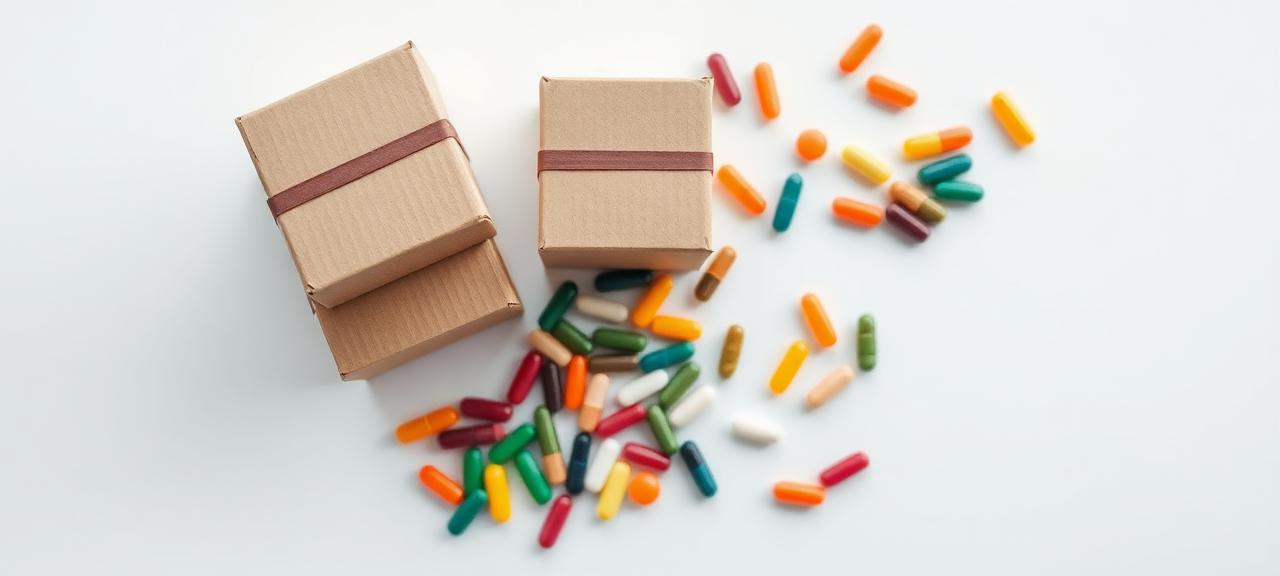
- 1Most first-time supplement founders don’t fail because the product idea is bad — they fail because they buy too much inventory too soon and get stuck with cash locked in bottles that won’t move.
- 2For a low-risk launch, choose a format that stays stable, ships well, and has predictable manufacturing steps. You can still differentiate through formula, brand, and positioning without exotic delivery systems.
- 3High minimums are rarely about greed. They’re a result of how factories schedule labor, clean equipment, and purchase raw materials — the right manufacturer can offer 1,500–2,000 unit runs without sacrificing quality.
- 4You can absolutely order small batches to test the market before scaling, as long as you design the first run around format, MOQ tier, and reorder cadence rather than maximum SKU count.
- 5Customers rarely see your inventory in ecommerce. They see brand trust signals: clean labels, polished packaging, GMP claims, and fast shipping — all achievable on a 1,500–2,000 unit launch.
Quick reference: MOQ, budget & timeline
If you only have 60 seconds, this is the short answer to “how do I start a supplement brand without spending thousands on inventory?” Use the three tables below as your launch cheat sheet. All numbers reflect what Peakfinity Labs sees with real eCommerce founders on Shopify, Amazon FBA, and TikTok Shop in 2026.
MOQ by format (first run)
| Format | Realistic first-run MOQ | Why this number |
|---|---|---|
| Capsules (stock formula) | 500–1,500 units | Stock blend + stock white bottle keeps packaging MOQs out of the way |
| Capsules (custom formula) | 1,500–2,000 units | Custom ingredient buy + QC testing sets the floor |
| Tablets | 2,000 units | Tooling setup and compression line time |
| Powders (tubs or stick packs) | 1,500–2,000 units | Blending batch sizes + flavor system dev |
| Gummies | 2,000+ units | Cook, deposit, cure, and stability windows |
| Softgels | 2,000+ units | Gel ribbon + die tooling minimums |
| Liquids / tinctures | 1,500–2,000 units | Fill line changeover + bottle case packs |
Budget tiers (all-in to land first inventory)
| Tier | All-in budget | What it covers | Best for |
|---|---|---|---|
| Pilot | $4K–$8K | 1 SKU, stock packaging, digital label, single pilot run | Existing audience or warm email list |
| Lean launch | $8K–$18K | 1–2 SKUs, custom formula, branded label, COAs, basic photography | First-time DTC / Shopify founder |
| Marketplace-ready | $18K–$35K | Amazon FBA prep, FNSKU labeling, 3PL receiving, Listing assets | Amazon-led or omni-channel brand |
| Funded launch | $35K+ | Multi-SKU, custom packaging, paid ads runway, influencer seeding | Brands raising or self-funding to scale |
Realistic timelines (formula approved → finished goods)
| Stage | Days (typical) | Notes |
|---|---|---|
| Formula + claims sign-off | 5–10 | Faster if you freeze the panel before label design |
| Label design + compliance review | 7–14 | Digital labels remove plate fees and shave 1–2 weeks |
| Component procurement (stock) | 10–14 | Custom bottles can add 4–8 weeks |
| Manufacturing + fill | 14–21 | Peakfinity Labs targets 4–6 weeks total project-dependent |
| QC release + ship to 3PL | 5–7 | COAs and FBA prep happen here |
Verdict: a focused founder can land a compliant, Amazon-ready pilot in roughly 4–6 weeks for $8K–$18K all-in when they pick capsules, stock components, and a single hero SKU. See our certifications, quality standards, and the Amazon FBA supplement manufacturer hub before you commit to a partner.
Introduction
Most first-time supplement founders don’t fail because the product idea is bad. They fail because they buy too much inventory too soon, then get stuck with cash locked in bottles that won’t move. The “10,000 units minimum” pitch sounds normal until you do the math: label approvals, shipping, fulfillment, ad testing, refunds, and chargebacks all hit before you learn what your market will actually buy.
You can launch a compliant, ecommerce-ready supplement without tying up your capital in a massive first run. The key is to treat your first production as a small-batch market test, not a forever commitment. That means low MOQ manufacturing, fast turnaround, and packaging that works for Shopify, Amazon, and 3PLs from day one.
At Peakfinity Labs, we built our process around this reality: brands need fast iteration, turnkey execution, and a path from pilot run to scalable production without redoing everything. This guide breaks down exactly how to launch with a smaller first order, what inventory you really need, why many manufacturers push high minimums, and how to reduce risk without cutting corners on GMP-grade quality.
What “a few hundred units” actually looks like (by format)
“A few hundred units” means very different things on the warehouse floor depending on your format. Founders routinely under- or over-estimate pallet space, ship weight, and 3PL receiving fees because they picture bottles instead of cases. Use this table to set realistic expectations before you buy.
| Format (1,000 units) | Bottle / pack size | Approx. case count | Approx. pallet footprint | Ship weight |
|---|---|---|---|---|
| Capsules — 60ct in 150cc HDPE bottle | Standard white bottle | ~28 cases of 36 | Less than ¼ pallet | ~500–650 lb |
| Tablets — 90ct in 175cc bottle | Standard white bottle | ~28 cases of 36 | ~¼ pallet | ~600–800 lb |
| Powders — 30-serving tub (300g) | PET tub with induction seal | ~85 cases of 12 | ~½ pallet | ~800–1,000 lb |
| Powders — stick packs (30 × 5g cartons) | Folding carton with sticks | ~40 cases of 24 | ~¼ pallet | ~250–350 lb |
| Gummies — 60ct in 200cc bottle | PET bottle with foam liner | ~28 cases of 36 | ~⅓ pallet | ~700–900 lb |
| Softgels — 60ct in 150cc bottle | Amber HDPE bottle | ~28 cases of 36 | Less than ¼ pallet | ~500–700 lb |
| Liquids / tinctures — 2 oz dropper | Amber glass with dropper | ~42 cases of 24 | ~⅓ pallet | ~400–550 lb |
Why this matters for low-MOQ launches: 1,000 units of capsules fits in a corner of a 3PL bay and clears Amazon FBA receiving in days. 1,000 units of gummies takes more space, more padding, and more stability documentation. If you’re inventory-light, capsules and tablets give you the longest runway per dollar. Compare cost-per-bottle math in our supplement manufacturing costs breakdown and dial in format choice with the supplement formats guide.
Where to start: pick a launch format that can scale
If you want a low-risk launch, choose a format that stays stable, ships well, and has predictable manufacturing steps. You can still differentiate with flavor systems, excipients, packaging, and claims-compliant positioning, but you avoid early complexity that forces high MOQs.
- Capsules: fast to produce, easier stability, simpler flavor considerations.
- Powders: strong for performance niches, but flavor iteration can add time and cost.
- Gummies: popular, but typically higher minimums and longer lead times due to process complexity.
- Liquids: can work, but packaging and stability testing are less forgiving.
Practical recommendation: If this is your first SKU, start with capsules unless your audience demands a different format. Capsules let you run a clean pilot, validate pricing, and scale to larger runs with fewer reformulation headaches.
Why most manufacturers require such high minimum orders (and what’s behind the number)
High minimums are rarely about greed. They’re often a result of how factories schedule labor, clean equipment, and purchase raw materials.
- Line changeovers cost real time: cleaning, allergen controls, and documentation can take hours.
- Raw material supplier minimums: some ingredients come in large lots, and manufacturers don’t want leftovers on the shelf.
- Packaging components drive MOQ: custom bottles, lids, scoops, and labels often have print minimums.
- QC and compliance documentation: batch records, testing, and release steps add fixed overhead.
The contrarian truth: many “high MOQ” requirements are actually packaging MOQs disguised as manufacturing MOQs. If you standardize components for the pilot (stock bottles, standard caps, digitally printed labels), you can often start smaller without compromising product quality.
The low-MOQ launch plan (step-by-step)
This process is built for founders who want to know: “Can I order small batches to test the market before scaling?” Yes, if you design the first run like a test and remove the hidden MOQ traps.
Step 1: Define your “testable promise” (not your dream formula)
Your first SKU should prove one thing: that customers will pay for your promise and reorder. You do not need a 40-ingredient label to validate demand.
- Pick one customer outcome (sleep, focus, energy, gut comfort, hydration, beauty-from-within).
- Choose a dosage form and serving size that fits standard packaging.
- Set a target price and margin before you lock the formula.
What we see work in practice: brands that launch with a simple, compliant core formula and win on positioning + creatives learn faster than brands that spend months perfecting the “ultimate” panel.
Step 2: Build a compliant formula that fits your claims strategy
Most early delays come from claim problems, not manufacturing. If your website or label implies disease treatment, you create risk that can stop ecommerce ads and marketplace approvals.
- Use structure/function claims that are supportable and compliant.
- Match ingredients and dosages to the claim (don’t underdose and hope marketing covers it).
- Keep allergens and restricted ingredients clear from day one.
For U.S. supplement labeling requirements, refer to the FDA’s dietary supplement labeling guidance: https://www.fda.gov/food/dietary-supplements.
Step 3: Choose packaging that won’t force a 10,000-unit decision
Packaging is where “small-batch” launches get accidentally expensive. Your goal is ecommerce-ready packaging that protects the product and can ship without damage.
| Packaging choice | Best for | MOQ impact | Recommendation for first run |
|---|---|---|---|
| Stock bottles + standard caps | Capsules/tablets | Low | Best default for pilot runs |
| Digitally printed labels | Fast iterations | Low | Use for first 500–2,000 units |
| Custom-molded bottles/caps | Premium branding | High | Delay until you have repeatable demand |
| Full shrink sleeves | Strong shelf impact | Medium to high | Use only if minimums fit your cash plan |
Peakfinity Labs approach: we push founders to standardize components early because it protects cash and speeds up changes. For more on ecommerce-ready design decisions, see supplement packaging and label design. Your second run can upgrade packaging once you have conversion data and reorder signals.
Step 4: Plan a pilot run with a reorder trigger
Instead of asking “How many units should I buy?”, ask “What inventory level gives me enough data without trapping cash?” A good pilot run is big enough to measure CAC, conversion rate, returns, and reorder rate.
- Starter pilot: 500–1,000 units if you already have traffic (email list, community, affiliates).
- Paid ads pilot: 1,000–2,000 units if you plan to run consistent testing for 30–45 days.
- Marketplace-heavy: consider higher inventory because inbound shipping and check-in times can slow velocity.
Set a reorder trigger before you launch: for example, “When we hit 35–45% sell-through, we start the next batch.” With a fast 3–4 week turnaround, you don’t need 10,000 units “just in case.”
Step 5: Lock your critical path timeline (and protect it)
Timeline slippage usually happens in the same places: label copy revisions, missing compliance items, and packaging backorders. You can prevent most of it with a simple critical path.
| Stage | What can slow it down | How to keep it fast |
|---|---|---|
| Formula sign-off | Late ingredient swaps | Freeze formula before label design |
| Label compliance review | Claims that cross the line | Decide claims strategy first, then write copy |
| Packaging procurement | Custom components | Use stock components for pilot |
| Production + fill | Changeovers and queue | Book your slot early and keep specs stable |
| QC + release | Missing specs or COAs | Confirm testing plan at kickoff |
Peakfinity Labs is built for speed with a fast 3–4 week turnaround from formulation to finished goods (project-dependent), but speed only works if decisions stay tight. If you change the label three times, you will pay for it in time.
How to avoid excess inventory while still looking legit
Founders often fear that a small first run looks “small.” In ecommerce, customers rarely see your inventory. They see brand trust signals: clean packaging, compliant labeling, predictable shipping, and consistent product experience.
- Use a tight SKU strategy: one hero product first, then add a second SKU that increases AOV.
- Design for subscriptions: 30-serving bottles, clear usage instructions, and reorder timing.
- Keep your first batch narrow: avoid multiple flavors and sizes until you have data.
- Build a reorder buffer: plan your second run before the first one is gone.
One real-world detail that surprises founders: adding “just one more flavor” can double your packaging complexity and slow everything. If you need variation, start with one flavor and one unflavored option, not four flavors.
What is the lowest MOQ you can get for private label vitamins?
MOQs vary by format, ingredient cost, and packaging choices. “Private label vitamins” also means different things: stock formula with your label versus custom formula.
| Scenario | Typical lowest practical MOQ | What drives it |
|---|---|---|
| Stock/standard capsule formula + stock packaging | Often 500–1,000 units | Packaging and line time are minimized |
| Custom capsule formula + stock packaging | Often 1,000–2,000 units | Ingredient ordering + QC specs |
| Gummies (custom) | Often several thousand units | Cooking/molding process and stability requirements |
| Custom packaging (special bottles, sleeves, boxes) | Can push 5,000–10,000+ | Printer and component vendor minimums |
Verdict: If your goal is the lowest MOQ, choose capsules and stock packaging for the first run. If you’re weighing stock vs. custom approaches, private label supplements explained breaks down the tradeoffs. You can still create a premium brand with strong design and compliant messaging, then upgrade packaging after you validate repeat demand.
How to protect quality, reliability, and your IP when switching or starting with a new manufacturer
Your anxiety here is valid. A new manufacturer can be a risk if they lack documentation, run loose processes, or mishandle confidentiality.
- Ask for proof of GMP and ISO certifications and confirm the scope matches your product type.
- Require batch records and COAs for each lot, with clear release criteria.
- Control your specs: serving size, excipients, capsule size, allergen statements, and packaging configuration.
- Use an NDA and limit formula access to the people who need it.
- Do a first-run “golden sample” you keep as your reference for all future lots.
We also recommend founders keep a simple “formula passport” document: ingredient list with dosages, intended claims, label copy version, packaging specs, and the approved sample photos. It sounds basic, but it prevents 80% of painful back-and-forth during reorders or manufacturer transitions. If you’re vetting partners, review Peakfinity’s checklist for a GMP-certified supplement manufacturer.
Advanced: build a launch plan that matches digital marketing realities
Many manufacturers think in factory timelines. Ecommerce brands think in ad learning cycles and content calendars. If you want to scale, connect the two.
- Plan 6–8 weeks of content before inventory lands so you can start demand early.
- Pick packaging that survives shipping (seal integrity, scuff resistance, readable lot/expiry codes).
- Use a two-batch strategy: Batch 1 validates; Batch 2 improves (label tweaks, insert cards, bundling).
- Design for 3PL handling: standard case packs and clear SKU barcodes reduce receiving errors.
A Peakfinity Labs-specific insight: the brands that scale fastest treat packaging as a performance tool. If your label design makes key benefits hard to scan on mobile, your ads must work harder. We prefer clean front-panel hierarchy and a compliance-safe benefit line that matches your landing page headline.
Conclusion: a low-risk launch is a systems problem, not a budget problem
You don’t need to buy 10,000 units to look credible. You need a compliant product, ecommerce-ready packaging, and a tight reorder system that keeps cash moving.
If you want to launch fast and stay flexible, build your first run around low MOQ choices: capsules, stock components, digitally printed labels, and one clear promise. Then scale the moment your data proves it.
- Next step 1: decide your format, serving size, and target margin.
- Next step 2: draft compliant label copy and claims direction before design.
- Next step 3: plan a 500–2,000 unit pilot with a reorder trigger and a 30–45 day test plan.
Peakfinity Labs supports small-batch, scalable launches with GMP-certified and ISO-certified manufacturing, turnkey packaging and labeling support, and a process designed for fast iteration from pilot to scale. If you’re comparing partners and timelines, start with the supplement manufacturing overview and the low-MOQ manufacturing FAQ. When you’re ready to ship at scale, pairing production with a supplement 3PL can help prevent stockouts and fulfillment bottlenecks.
Frequently Asked Questions
How do I launch a supplement without buying 10,000 units upfront?
You can launch without 10,000 units by doing a small-batch pilot (often 500–2,000 units) using stock packaging and a finalized compliant label, then reordering once you hit a pre-set sell-through trigger. Set a reorder trigger like 35–45% sell-through and choose a manufacturer that can turn around finished goods fast enough to prevent stockouts.
What is the lowest MOQ I can get for private label vitamins?
The lowest practical MOQ for private label vitamins is often 500–1,000 units when you use a standard capsule formula and stock bottles with digitally printed labels. Custom formulas, custom packaging, or gummy formats usually increase minimums because ingredient purchasing and packaging vendor minimums drive the number.
Can I order small batches to test the market before scaling?
Yes. You can order small batches to test the market if you simplify packaging components, keep the first SKU to one format and one size, and plan a second batch before you sell out. A practical approach is a 1,000–2,000 unit run for a 30–45 day paid-ads test, then scale only after you see stable conversion and acceptable refund rates.
Why do most supplement manufacturers require high minimum orders?
Most manufacturers require high minimums because line changeovers, cleaning, documentation, and QC testing add fixed costs, and packaging suppliers often have print and component minimums. Using stock packaging and freezing specs early can often reduce the effective MOQ without sacrificing GMP-level process controls.
How much inventory do I really need to launch a supplement brand?
Most brands only need enough inventory to run a focused launch test and collect reliable data, often 500–2,000 units for a first SKU depending on traffic and sales channels. Map expected weekly sales, set a reorder point, and choose a manufacturing partner with a turnaround time that supports frequent reorders rather than one large upfront order.

Tushar
Licensed Pharmacist and COO @ Peakfinity Labs
Written by the Peakfinity Labs R&D Team — 46+ years of supplement formulation expertise. Our team of formulation chemists, manufacturing specialists, and regulatory experts has helped thousands of eCommerce brands bring their products to market successfully since 1980.
Related Articles
How to Find an ISO 17025-Accredited Supplement Testing Lab, and What Founders Should Ask For
How to verify a lab's ISO/IEC 17025 scope actually covers your test, the questions to ask before shipping samples, and a testing plan built for ecommerce timelines.
Supplement Manufacturing Lead Times and Reorders: What Founders Should Expect Before and After Launch
The five workstreams hiding inside "lead time," why reorders move faster than first runs, and the ramp plan that survives a demand spike.
How to Vet a cGMP Supplement Manufacturer With Documented Audit History
The document pack, audit-history call script, and scoring rubric that separate real cGMP quality systems from certificate PDFs.