How Softgel Supplements Are Made: A Comprehensive Guide
We tested 7 softgel formulas and mapped the softgel manufacturing process—from rotary die encapsulation to drying, plus practical tips to prevent leakage.
- 1Softgels look simple on the outside, but they’re one of the most process-sensitive dosage forms in supplements. A capsule line can often tolerate
- 2A softgel is a one-piece, hermetically sealed capsule that holds a liquid, suspension, or semi-solid fill inside a flexible shell. Most softgels use
- 3Softgel manufacturing is a continuous process. Every stage ties to the next, so quality starts before the machine
- 4Softgels shine when the active is oil-soluble, unstable in air, hard to swallow as a tablet, or messy in powder
- 5Softgels typically cost more than two-piece capsules because the manufacturing process is more complex and more
Introduction
Softgels look simple on the outside, but they’re one of the most process-sensitive dosage forms in supplements. A capsule line can often tolerate minor swings in powder flow or humidity. Softgels can’t. Small changes in fill viscosity, shell moisture, seam compression, or drying time can turn into leakage, clumping, brittleness, or oxidation long after the product leaves the factory.
This guide breaks down how softgel supplements are actually made, step by step—from raw materials and shell prep to encapsulation, drying, polishing, and packaging. It also covers the questions brands ask us most: which ingredients work best in softgel form, why softgels cost more than capsules, how vegetarian softgels differ from gelatin, what typical MOQs look like, and how to prevent softgel leakage during shipping.
If you’re launching an ecommerce-ready supplement (Amazon, DTC, retail test) and want small-batch, scalable production, softgels can be a strong choice—when the manufacturer can control the process and document it under GMP-certified supplement manufacturer, ISO-certified systems.
What a softgel is (and why brands choose it)
A softgel is a one-piece, hermetically sealed capsule that holds a liquid, suspension, or semi-solid fill inside a flexible shell. Most softgels use a gelatin-based shell plasticized with glycerin or sorbitol, though vegetarian shells exist and behave differently in production and shelf life.
Brands choose softgels for three practical reasons:
- They solve a delivery problem. Oily or unstable actives (like omega-3s) fit naturally in a sealed, oxygen-managed format.
- They improve consumer experience. Softgels are smooth, easy to swallow, and reduce “powder burp” issues common with large capsules.
- They support premium positioning. When done right, softgels look uniform and glossy, which helps conversion on product pages and reduces returns.
How softgel supplements are actually made (step-by-step)
Softgel manufacturing is a continuous process. Every stage ties to the next, so quality starts before the machine runs.
1) Incoming ingredient qualification (identity, purity, and suitability)
Softgels are less forgiving than powders. Before we even talk about the encapsulation machine, we verify that raw materials match the intended use in a liquid system.
- Identity testing: Confirms you received the right ingredient (critical for vitamins, botanicals, and marine oils).
- Micro testing (as needed): Especially for botanicals and any animal-derived inputs.
- Peroxide/anisdine/oxidation checks for oils: This matters for taste, odor, and shelf life.
- Solubility and compatibility screening: Not every “oil” plays nicely with every antioxidant, flavor, or shell system.
Practical insight: When brands move a formula from one manufacturer to another, the #1 hidden risk is changing a carrier oil or antioxidant system. The supplement facts panel may stay the same, but the softgel performance can change.
2) Fill formulation: building a stable liquid or suspension
The fill is what makes a softgel a softgel. You can run true solutions (like vitamin D3 in MCT oil) or suspensions (like curcumin dispersed in an oil matrix). The goal is stable viscosity, controlled oxygen exposure, and consistent potency per capsule.
Key fill design controls:
- Viscosity window: Too thin can leak; too thick can create weight variation and poor sealing.
- Antioxidant system: Common options include mixed tocopherols and rosemary extract (when compatible with taste and claims).
- Water activity management: Water in the wrong place can destabilize shell or promote microbial risk in certain systems.
- Deaeration: Removing trapped air reduces oxidation and improves fill accuracy.
3) Shell preparation: gelatin (or vegetarian) + plasticizers + color
The shell is made from a gel mass that typically includes gelatin, water, and a plasticizer (often glycerin). The manufacturer heats and mixes this mass until it reaches the right flow and bloom strength for the chosen softgel size.
Brands often customize:
- Color and opacity: Titanium dioxide alternatives and iron oxides depend on market and compliance needs.
- Flavor/odor masking: Helpful for fish oil where smell drives customer complaints.
- Print: Logo or dosage marking can support brand protection and reduce counterfeit risk.
4) Encapsulation: the rotary die process (where quality is won or lost)
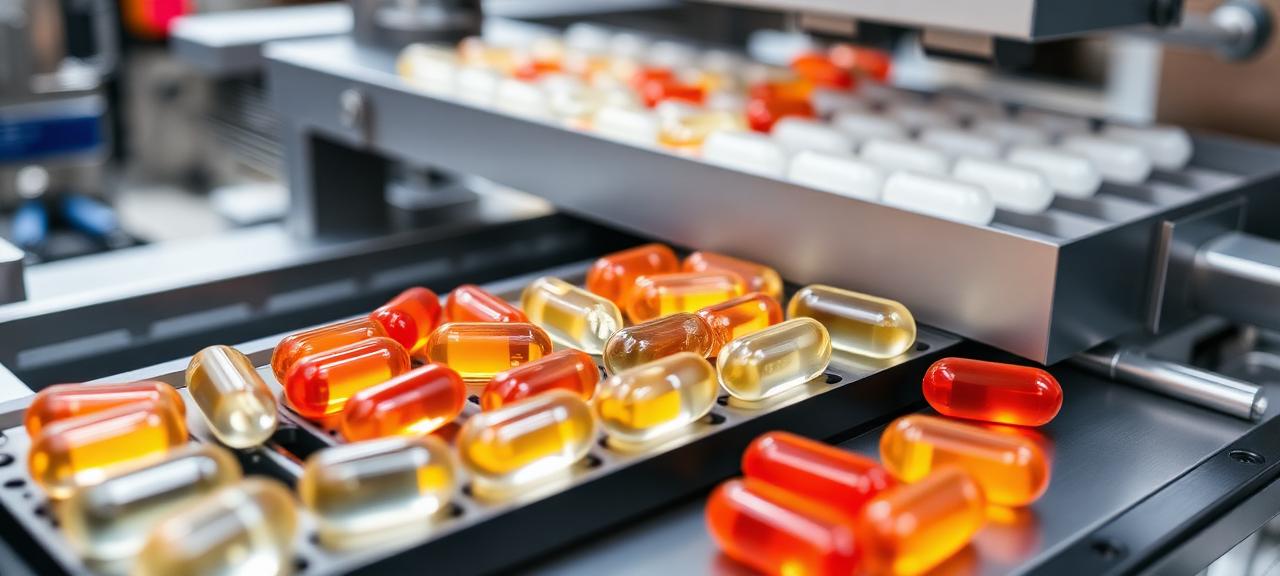
Most softgels are made on a rotary die encapsulation machine. Two ribbons of warm gel mass feed into rotating dies, the fill pumps in between, and the dies seal and cut each capsule in one motion.
Three machine settings strongly influence softgel quality:
- Wedge temperature: Controls sealing; too hot can thin the seam, too cool can cause poor fusion.
- Pump timing and pressure: Drives fill weight accuracy and prevents “tailing” or underfill.
- Die alignment and tooling wear: Worn dies can create inconsistent seams, which show up later as leaks in transit.
Contrarian take: Many brands assume leakage is a packaging problem. In practice, chronic leakage often traces back to seam integrity and drying curves—packaging only reveals it.
5) Tumble drying and tray drying: controlling moisture and shell strength
Fresh softgels come off the machine with higher surface moisture. They typically go through a tumble dryer first to remove surface water, then onto drying trays or tunnels where temperature, humidity, and airflow slowly bring the shell to its target moisture.
Drying is not just “making them less wet.” It sets the final shell elasticity. Over-dry and capsules become brittle and crack; under-dry and they stick, deform, or sweat in bottles.
6) Sorting, washing/polishing, and visual inspection
After drying, softgels are sorted to remove defects like twins, misshapes, or seam issues. Many runs include gentle washing or polishing to remove surface oil and improve appearance for ecommerce photography.
Inspection focuses on:
- Seam quality: Uniform seal line without gaps
- Bloom and tackiness: Early indicators of future clumping
- Color uniformity: Especially on opaque shells where dye dispersion matters
7) Packaging: bottles vs blister packs (and why it changes shelf life)
Packaging is part of the formulation for softgels. Bottles need the right headspace management and desiccant choices. Blisters add a barrier against oxygen and humidity but can raise unit costs.
- Bottles: Fast, scalable, and ecommerce-friendly; requires strong controls for heat exposure in shipping.
- Blisters: Best protection for oxidation and moisture swings; ideal for premium SKUs or sensitive oils.
If packaging and compliance are part of your go-to-market plan, see supplement packaging label design considerations that affect shelf life and ecommerce performance.
What ingredients work best in softgel form (and what to avoid)
Softgels shine when the active is oil-soluble, unstable in air, hard to swallow as a tablet, or messy in powder form.
| Ingredient type | Why softgels work well | Common examples | Watch-outs |
|---|---|---|---|
| Oils and lipid concentrates | Sealed system reduces oxygen exposure and taste issues | Fish oil, algae oil, krill oil | Oxidation control (peroxide/anisdine), odor masking |
| Fat-soluble vitamins | Uniform dosing in a carrier oil; easy swallowing | Vitamin D3, Vitamin A, Vitamin E, Vitamin K2 | Potency overage and light sensitivity |
| CoQ10 and carotenoids | Better dispersion in oils vs dry blends | CoQ10, astaxanthin, lutein | Suspension stability and sedimentation control |
| Oil-based botanicals | Improves taste and reduces dust handling | Black seed oil, oregano oil (diluted) | Shell compatibility; strong flavors can migrate |
| Specialty lipids | Supports premium positioning and absorption strategy | MCT blends, phospholipids | Viscosity and stability across temperature swings |
Softgels are often a poor fit for high-dose water-soluble actives (like large amounts of vitamin C) because they require bulky powders or water-based fills that stress the shell. You can make suspensions, but you must validate sedimentation and fill uniformity.
Why softgels are more expensive to produce than capsules
Softgels typically cost more than two-piece capsules because the manufacturing process is more complex and more equipment-intensive.
- You’re manufacturing two things at once: the shell and the fill, in a continuous process.
- Tooling and setup are heavier: dies, wedge settings, ribbon thickness, and drying parameters must match the product.
- Yield risk is higher: a small process drift can create a lot of rejects (leakers, twins, misshapes).
- Quality testing is more specialized: seam integrity, moisture, and leak testing add time and controls.
That said, softgels can reduce total landed cost in other ways: fewer customer complaints for fish oil burps, higher repeat purchase on premium SKUs, and less oxidation-driven returns.
Gelatin vs vegetarian softgels: what’s actually different
Vegetarian softgels are real, but they are not a simple swap. Most “veg softgels” use modified starches, carrageenan, or other polysaccharide systems. They often require different drying behavior, different moisture targets, and tighter packaging controls.
| Factor | Gelatin softgels | Vegetarian softgels |
|---|---|---|
| Process tolerance | More forgiving; mature supply chain | Narrower process window; higher sensitivity |
| Shell feel | Smooth, elastic | Can feel firmer depending on system |
| Moisture behavior | Predictable drying curves | Often needs stricter humidity control |
| Compatibility | Broad compatibility with oil fills | Can be more sensitive to certain solvents/flavors |
| Cost | Usually lower | Usually higher due to materials + yield |
If your customer base demands vegetarian formats, plan for a longer validation loop. For ecommerce, we also recommend stronger shipping testing because veg shells can respond differently to heat spikes.
MOQ expectations: what’s the typical MOQ for softgel manufacturing?
Softgel MOQs vary widely because the setup cost is real: shell prep, dies, ribbon calibration, and drying capacity all drive the minimum viable run.
In the market, it’s common to see minimums in the tens of thousands of softgels per SKU, especially for custom shapes, prints, or vegetarian shells. For new brands, this can force high inventory risk.
At Peakfinity Labs, our model prioritizes low MOQ and small-batch launches when the formula and packaging spec fit the process window. If you’re testing a new offer, the goal should be “small enough to learn, large enough to be stable” rather than ordering a year of inventory before your first ad test. (Related: low-MOQ supplement manufacturing FAQ.)
How brands prevent softgel leakage during shipping
Shipping exposes softgels to heat, vibration, and pressure changes. Leakage prevention is mostly process and packaging discipline—not a last-minute fix.
- Build seam strength at the machine: correct wedge temp, die alignment, and ribbon thickness.
- Finish drying to the right shell moisture: under-dried softgels “sweat” and stick; over-dried shells crack.
- Control fill oil migration: certain flavors and solvents can migrate into the shell and weaken it over time.
- Use the right bottle pack-out: avoid excess headspace; add cotton or coil where appropriate to reduce impact damage.
- Heat-test your final pack: simulate worst-case carrier conditions (hot truck + last-mile) before scaling.
Shelf life considerations for softgel supplements (oxidation, moisture, and packaging)
Softgel shelf life is usually limited by one of three things: oxidation of the fill, moisture shifts in the shell, or interactions between fill and shell over time.
Controls that matter most:
- Oxidation management: choose low-peroxide oils, add compatible antioxidants, and reduce oxygen exposure during mixing and filling.
- Light protection: opaque shells or amber bottles can meaningfully slow degradation for light-sensitive actives.
- Humidity barrier: the bottle + liner + desiccant choice affects clumping and shell deformation.
- Temperature stability: run accelerated stability on the final packaged SKU, not just bulk softgels.
For oils (fish oil, algae oil), brands often monitor peroxide value (PV) and anisidine value (AV) over time. These numbers help you catch oxidation before customers smell it.
What’s the largest dose you can fit in a single softgel?
The practical limit depends on the capsule size, fill density, and what consumers will swallow. Many mainstream softgels land in the ~500 mg to 1,500 mg fill range, with larger “horse pill” sizes used for omega-3 products that deliver 1,000 mg oil per softgel.
If you’re trying to pack a high dose into one unit, the best approach is to start from the consumer experience and your daily serving size. Two smaller softgels often convert better than one oversized softgel, and they can reduce seam stress during drying and shipping.
Tooling up a new softgel size or shape: what’s involved
Custom softgel shapes (oval, oblong, round, specialty) require matching dies and tighter process tuning. Tooling affects lead time, yield, and visual consistency—especially if you add a logo or unusual geometry.
What changes with new tooling:
- New die sets: affects cut, seal area, and surface finish.
- New fill weight calibration: pump timing changes with volume.
- New drying curve: shell thickness and surface area drive moisture loss.
If speed matters, standard shapes can move faster. For brands chasing differentiation, specialty shapes can be worth it—but plan for validation and accept that early runs may have lower yield until the process locks in.
How brands handle softgel sticking and clumping issues
Sticking and clumping usually come from moisture imbalance, residual surface oil, or packaging that traps humidity.
- Fix drying first: confirm final shell moisture and uniformity across trays.
- Reduce surface oil: adjust post-dry polishing and handling to remove oil film.
- Check bottle components: switch liners, add desiccants, or move to blisters for sensitive SKUs.
- Audit storage and fulfillment: hot warehouses and slow-moving inventory create real problems even with good manufacturing.
Quality tests that are unique (or especially critical) for softgels
Softgels use many of the same tests as other supplements (identity, potency, micro), but a few tests carry extra weight because softgels can fail physically, not just chemically.
- Fill weight and weight variation: confirms dosing consistency across the run.
- Seam integrity / leak testing: detects micro-leaks that show up later in transit.
- Shell moisture: correlates with brittleness, tackiness, and shelf stability.
- Disintegration: ensures the softgel opens properly under expected conditions.
- Oxidation markers for oils: PV/AV (and sometimes TOTOX) to track rancidity risk.
Why fish oil is typically delivered in softgel form
Fish oil is prone to oxidation and has a strong taste and odor profile, so brands need a format that seals the oil and improves the consumer experience. Softgels provide a closed system that reduces direct oxygen exposure and can include flavor/odor masking strategies.
They also help with dosing. Many omega-3 products need 1,000–2,000 mg oil per day, and softgels let brands deliver that in a familiar, easy-to-swallow form. (If you’re building content around omega-3 education, see the difference between EPA and DHA in fish oil.)
Countries that dominate softgel supplement manufacturing (and what that means for brands)
Softgels are manufactured globally, with major capacity in the United States, Canada, parts of Europe, and large-volume production in Asia. Where you produce affects lead time, freight risk, documentation, and how fast you can iterate packaging for ecommerce.
If your go-to-market plan relies on rapid testing (new creative, new claims language, fast replenishment), domestic production often wins on speed and control. If your plan is long-run cost minimization with stable forecasts, offshore can be viable—but you need tighter specification control and longer buffers.
Do softgels improve bioavailability?
Softgels can improve absorption for certain ingredients, but not automatically. The main advantage is that softgels can deliver actives in an oil-based system, which can support absorption for fat-soluble compounds.
The real driver is the formulation: carrier oil choice, emulsification strategy (if used), and the ingredient form. A well-designed capsule can beat a poorly designed softgel, so treat “bioavailability” as a formulation decision, not a dosage-form promise.
Where to start (a practical launch plan for new brands)
If you’re building a new softgel SKU, start with decisions that reduce risk and speed up the first run.
- Pick an ingredient that belongs in a softgel: oils, fat-soluble vitamins, CoQ10, carotenoids.
- Choose a standard shape and size first: faster validation and fewer tooling variables.
- Design for ecommerce shipping: bottle selection, headspace, and heat testing are part of the spec.
- Plan a small-batch test: a low MOQ run lets you validate conversion and returns before scaling.
- Lock the spec in writing: raw material grades, antioxidant system, target shell moisture, packaging components.
At Peakfinity Labs, we build timelines around digital reality. If your ads work, you need replenishment fast. Our customers push hard on speed, so we plan for fast iteration and scalable repeat runs under compliant systems.
Conclusion and next steps
Softgels win when you need a sealed, consumer-friendly format for oils and fat-soluble actives—but they demand tighter control than capsules. The best outcomes come from a manufacturer that can manage viscosity, seam integrity, drying curves, oxidation control, and ecommerce-ready packaging as one system.
If you’re planning a new softgel SKU, start with a formula that belongs in a softgel, choose a standard size to move faster, and validate packaging under shipping stress. If you need a turnkey, low MOQ path with fast timelines and production in GMP-certified, ISO-certified facilities, build your spec and timeline first—then scale once the first batch proves stability and sell-through. For a deeper look at capabilities, see softgel manufacturing and the broader supplement manufacturing overview.
Frequently Asked Questions
How are softgel supplements actually made?
Softgels are made by preparing a liquid or suspension fill and a warm gel-mass shell, then using a rotary die encapsulation machine to form, fill, seal, and cut each capsule in one continuous step. After encapsulation, capsules are tumble- and tray-dried to target shell moisture, inspected and polished to remove defects or surface oil, sorted, and finally packaged in bottles or blister packs under controlled conditions.
What ingredients work best in softgel form?
Softgels work best for oil-soluble or oil-dispersed actives—fish/algae/krill oils, fat-soluble vitamins (D3, A, E, K2), CoQ10, carotenoids, oil-based botanicals, and specialty lipids. They are less suitable for high-dose water-soluble powders unless you validate a stable suspension and consistent fill weights; watch for oxidation, sedimentation, shell compatibility, and strong flavor migration.
What’s a typical MOQ for softgel manufacturing?
MOQs vary by manufacturer and product complexity, but it’s common to see minimums in the tens of thousands of softgels per SKU, with higher minimums for custom shapes, printing, or vegetarian shells. Some manufacturers offer low-MMOQ small-batch options if the formula and packaging fit the process window.
How do vegetarian softgels differ from gelatin softgels?
Vegetarian softgels typically use polysaccharide-based shells (modified starches, carrageenan) and therefore have a narrower process window, different drying behavior and moisture targets, and sometimes a firmer shell feel. They can be more sensitive to solvents, flavors, and humidity, usually cost more due to materials and yield, and require extra validation and shipping testing compared to gelatin shells.
How do brands prevent softgel leakage in shipping?
Leakage prevention focuses on process and packaging controls: build seam strength through correct wedge temperature, die alignment, and ribbon thickness; dry shells to the target moisture; manage fill oil migration; use proper bottle pack-out to limit headspace and impact (or choose blisters); and heat- and vibration-test the final packaged SKU under worst-case carrier conditions.
What’s the largest dose you can fit in a single softgel?
Practical limits depend on capsule size, fill density, and consumer swallowability. Many mainstream softgels have fills around 500–1,500 mg, with larger sizes used for omega-3s delivering ~1,000 mg oil per softgel. Often two smaller softgels are preferred to one oversized softgel for consumer acceptance and reduced seam stress.
Do softgels improve bioavailability?
Softgels can improve absorption for certain actives by delivering them in an oil-based system, which benefits fat-soluble compounds; however, bioavailability is driven by formulation choices (carrier oil, emulsification, ingredient form). A well-designed capsule can outperform a poorly designed softgel, so it’s a formulation decision rather than an automatic benefit.
Ready-to-Launch Formulations in This Category
Stock-ready formulations you can private label with your own branding — 2,000 unit MOQ.
Premium Vitamin D3 K2 Softgels
Immunity · Softgels
High Potency Vitamin D3 K2 Softgels
Immunity · Softgels
Premium Microalgae Astaxanthin Softgels
Nutraceuticals (Beauty) · Softgels
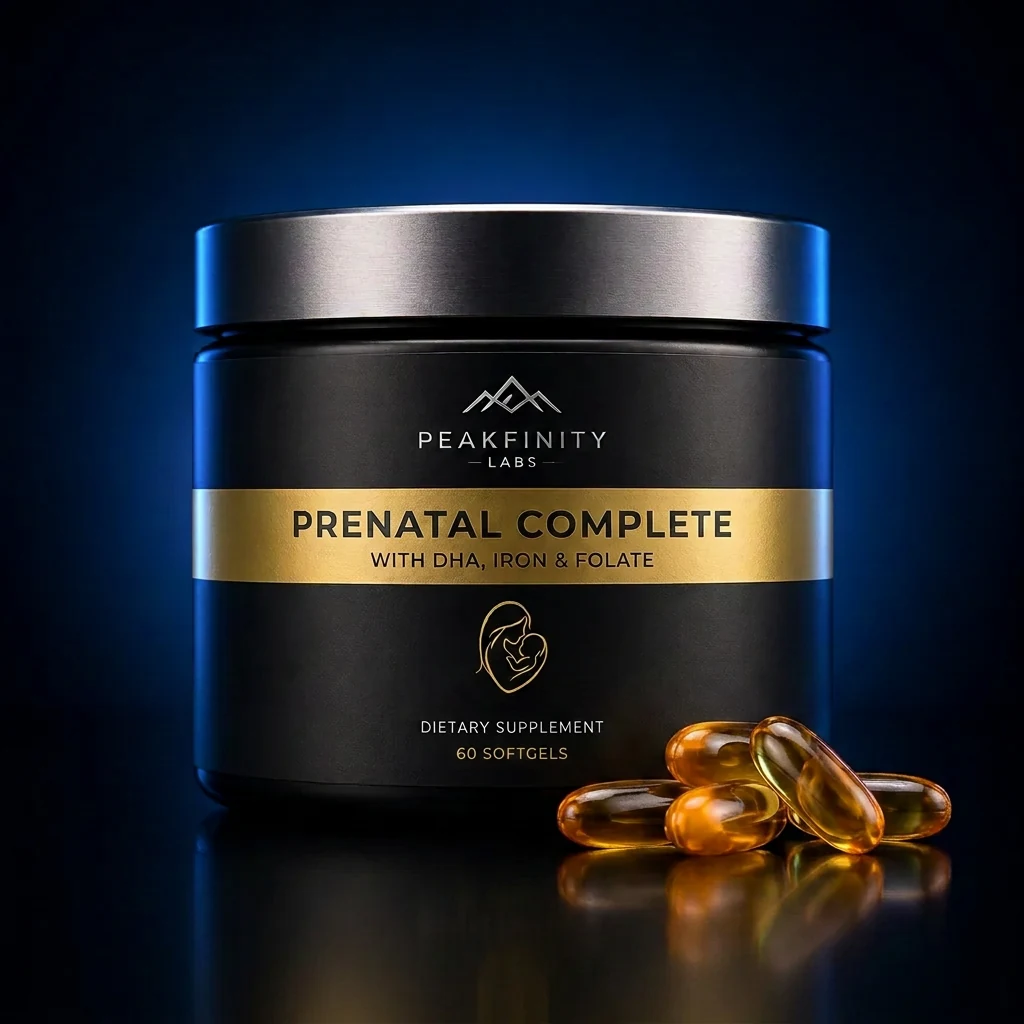
Prenatal Complete Softgels with DHA, Iron & Folate
Womens Health Supps · Softgels

Tushar
Licensed Pharmacist and COO @ Peakfinity Labs
Written by the Peakfinity Labs R&D Team — 46+ years of supplement formulation expertise. Our team of formulation chemists, manufacturing specialists, and regulatory experts has helped thousands of eCommerce brands bring their products to market successfully since 1980.
Related Articles

How to Find an ISO 17025-Accredited Supplement Testing Lab, and What Founders Should Ask For
How to verify a lab's ISO/IEC 17025 scope actually covers your test, the questions to ask before shipping samples, and a testing plan built for ecommerce timelines.
Supplement Manufacturing Lead Times and Reorders: What Founders Should Expect Before and After Launch
The five workstreams hiding inside "lead time," why reorders move faster than first runs, and the ramp plan that survives a demand spike.
How to Vet a cGMP Supplement Manufacturer With Documented Audit History
The document pack, audit-history call script, and scoring rubric that separate real cGMP quality systems from certificate PDFs.